
Last updated November 17, 2026
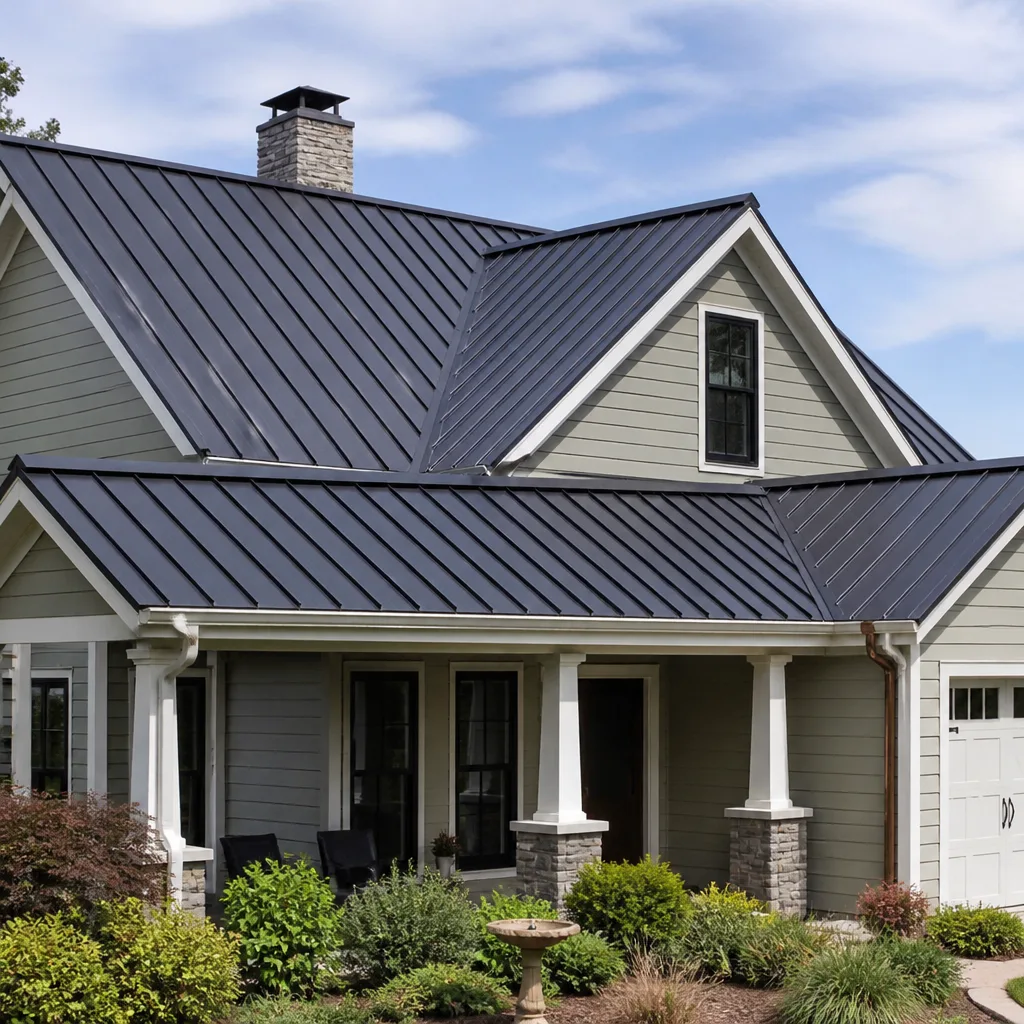 Metal roofing
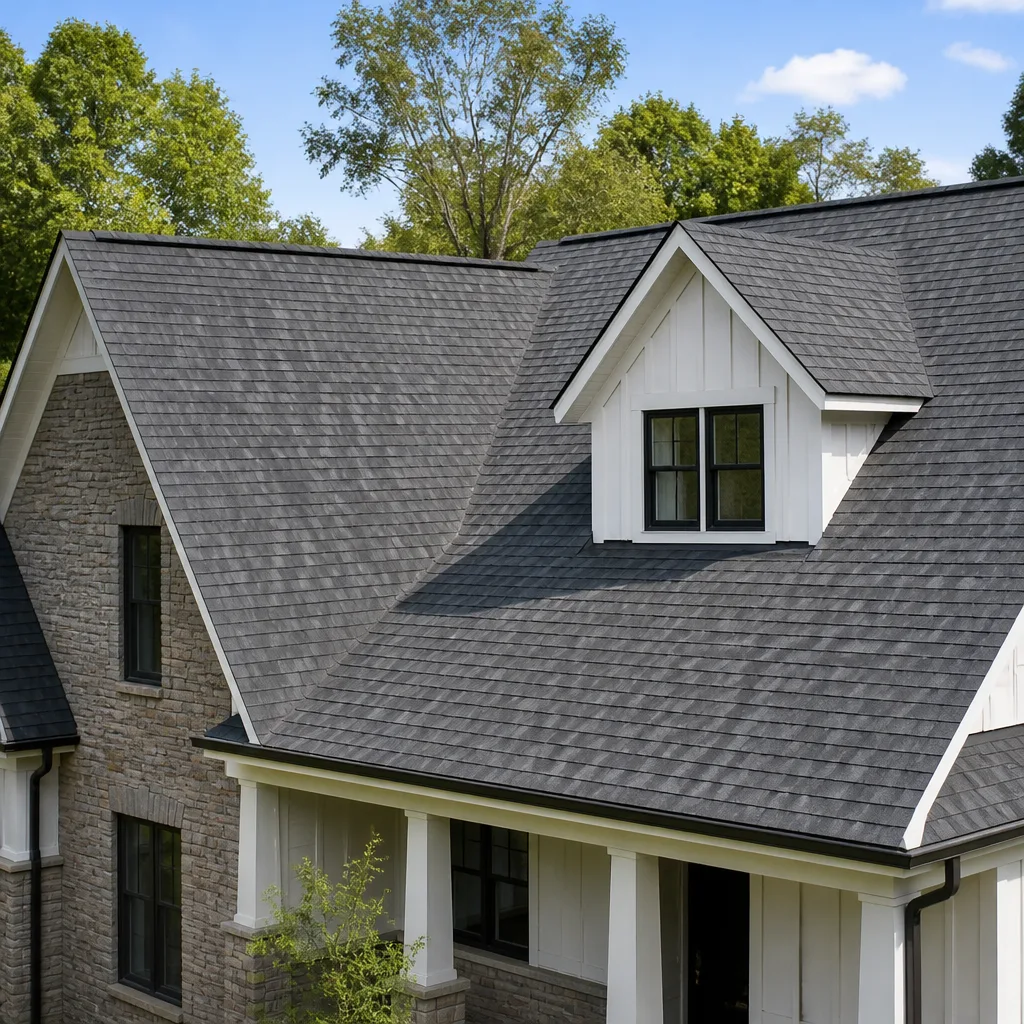 Architectural shingles
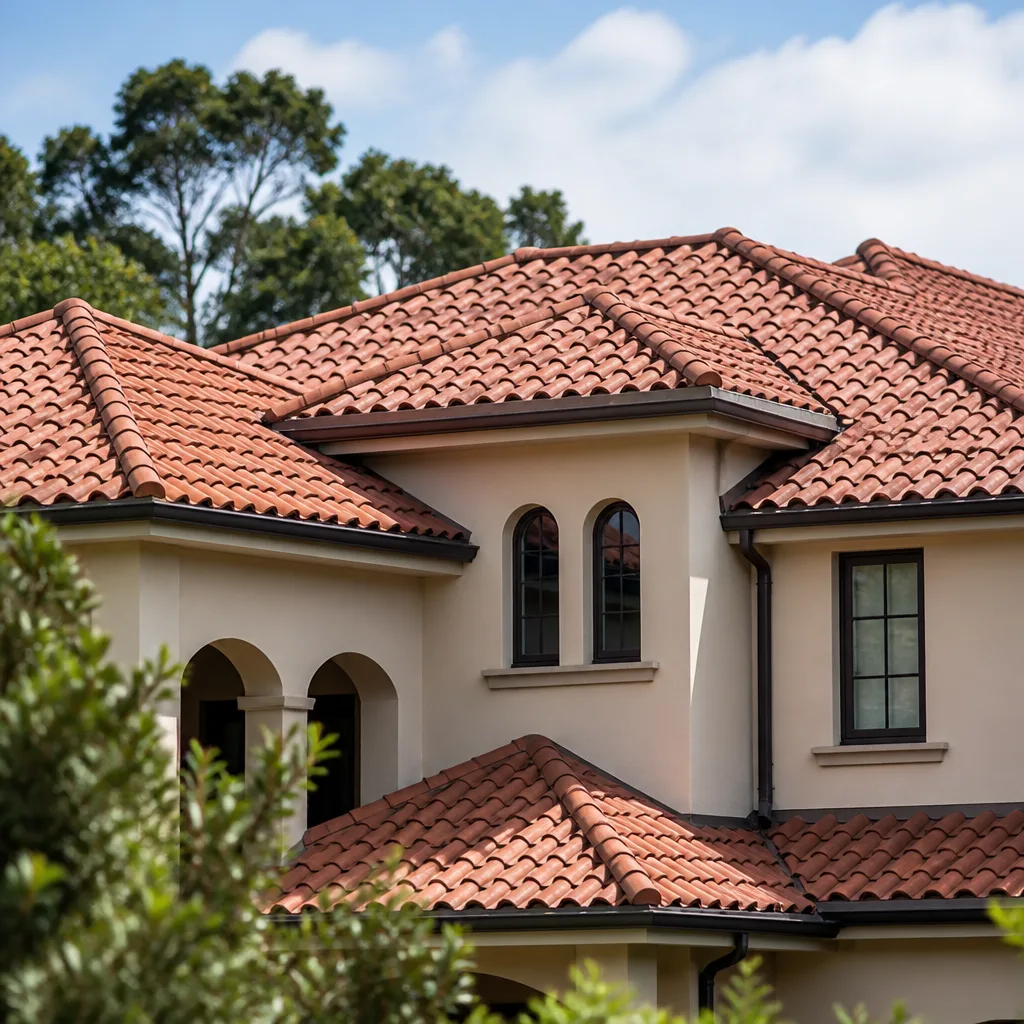 Tile roofing
 GAF
 Owens Corning
 Flat & low-slope
Free roof inspection with deck photos before we talk money - GAF and Owens Corning certified installation
Metal Roofing Maintenance Schedule: What to Do and When
I have never replaced a metal roof because the metal wore out. Not once. The panels themselves will outlast most of us. What I have replaced, more times than I’d like to count, are metal roofs where the sealant around every penetration was ignored for 15 years and the deck underneath rotted through. “Low maintenance” got sold to folks as “no maintenance,” and that one word has cost Paradise homeowners a lot of money. This guide lays out the actual year-by-year schedule: what you can skip, what you can’t, and the handful of small jobs that decide whether a metal roof lasts 30 years or 15.
Quick Answer
A metal roof needs a light inspection twice a year (after monsoon season and before summer heat), a fastener and sealant check every 5 to 7 years, and a full professional inspection every 10. The panels themselves need almost nothing. The sealant around vents and penetrations is the real maintenance item, and it fails faster in Paradise’s UV than most manufacturers admit.
Styles & brands we work with
- Architectural shingles
- Metal roofing
- Tile roofing
- GAF
- Owens Corning
- Flat & low-slope
Table of Contents
- The Annual Paradise Checklist
- Sealant Lifespan: The 5-to-7-Year Reality
- Fasteners and Thermal Expansion
- Coatings: Stone-Coated Steel vs. Bare Galvalume vs. Painted Steel
- What You Can Safely Do Yourself (and What You Can’t)
- The 10-Year Professional Inspection
- The Full Maintenance Timeline at a Glance
- Common Mistakes to Avoid
The Annual Paradise Checklist
Two visits a year covers almost everything a homeowner needs to look at. Time them to the season, not the calendar.
After monsoon season (roughly September through October): This is when we find the damage. Paradise gets wind events that lift panel edges and drive debris into valleys and against penetrations. Walk the roof, or have someone walk it, and look for lifted panel edges, loose ridge caps, and anything wedged in a valley that will hold water. Check gutters too. A handful of mesquite leaves packed into a valley is a slow leak waiting for the next rain.
Before peak summer heat (roughly March through April): This is the fastener and sealant check. Metal expands and contracts with temperature, and in Paradise that swing is significant. Fasteners back out a fraction over a season. Sealant dries and cracks. Catching both in spring, before the roof hits 150 degrees on a July afternoon, is the whole game. We check every exposed fastener, every pipe boot, every vent flashing, and every seam for separation.
That’s it for the annual routine. Two passes, a few hours each, and a metal roof stays sound. Most of the metal roofs we’re called to inspect in Paradise that are failing badly skipped both passes for years running.
Sealant Lifespan: The 5-to-7-Year Reality
Here’s the part the brochures leave out. The panels are permanent. The sealant is not. Most tube-applied sealants used around penetrations fail in 5 to 7 years under Nevada UV, and that’s on the optimistic end for west-facing slopes that take the afternoon sun.
When that sealant fails, water gets in at the penetration, runs along the panel underside, and finds the deck. Wood rots quietly. By the time you see a stain on the ceiling inside, you’re looking at more than a tube of caulk.
What we actually use on our own jobs, and reapply on maintenance visits:
- Polyurethane sealants (we favor the high-modulus types made for metal-to-metal and metal-to-masonry joints) for most penetrations and terminations. They hold up to UV better than the cheap stuff.
- Silicone sealant rated for high-movement joints, used specifically around pipe boots and anywhere the metal moves against something fixed.
- EPDM or neoprene pipe boots instead of relying on sealant alone wherever a pipe passes through. The boot does the work; the sealant is backup.
Plan on a sealant refresh every 5 years on the sun-baked slopes, every 7 on the shaded ones. If you’ve hit the 7-year mark and haven’t had anyone look, that’s the call to make. Metal roofing in Paradise only stays watertight when the sealant gets its due.
Fasteners and Thermal Expansion
Metal moves. A 20-foot panel in Paradise’s temperature swing can expand and contract a noticeable amount between a cold January morning and a hot July afternoon. That movement is normal and the roof is engineered for it. What isn’t normal is a fastener that worked loose a quarter-inch over five summers and never got tightened or replaced.
Here’s what a proper fastener check looks like:
- Walk the full roof, not just the visible slopes from the ladder.
- Check every exposed fastener head for backing out, stripped threads, or a missing neoprene washer.
- Replace any fastener with a damaged washer outright; don’t just snug it down.
- Confirm the fastener is the same type and length as the original, not whatever’s in the truck.
- Re-check the ridge, eave, and gable fasteners, which take the most wind load.
The nailing pattern and fastener placement earn the wind rating, not the shingle wrapper or the panel spec sheet. A roof rated for 130 mph is only rated for that if the fasteners are installed and maintained as specified. On our roof replacement and installation in Paradise work, we photograph the fastening pattern before the panels go down so the homeowner has a record.
Coatings: Stone-Coated Steel vs. Bare Galvalume vs. Painted Steel
Not all metal roofs age the same way. The maintenance schedule depends heavily on what you’ve got up there, and Paradise has all three types in good numbers.
Stone-coated steel looks like tile or shakes and has a granule surface over the steel. The granules wear away slowly on the sun-facing slopes, and once they thin, the coating underneath starts to dull and eventually chalk. Expect to need a recoat somewhere in the 15-to-20-year range on the southwest slopes, later on the north. The failure mode is granule loss and fading, not leaks, so it’s cosmetic for years before it’s functional.
Bare Galvalume is the unpainted zinc-aluminum coated steel you see on agricultural buildings and some low-slope metal roofs. It weathers to a flat gray and needs essentially zero finish maintenance. The weak point is cut edges and any place the coating got scratched during installation or a repair. Those spots can rust first. A touch-up with a zinc-rich coating on bare-cut edges every few years keeps it honest.
Painted steel (the standard pre-painted panels, often from Atlas, Tamko, or IKO) holds its color well but will chalk and fade over 20-plus years. The failure mode to watch is edge rust on cut panel ends and around fasteners. When you see rust on a painted panel edge, the paint film is gone and the steel underneath is exposed. Address it at the first sign, not the tenth.
What You Can Safely Do Yourself (and What You Can’t)
I’ll be straight with you because no one else will. On a single-story, low-slope metal roof, a homeowner can safely do a few things. On anything taller, steeper, or wet, they shouldn’t be up there. Period.
Safe DIY on a low, single-story roof:
- Blowing off leaves and debris from valleys and gutters using a leaf blower from the ladder or the ground.
- Visual inspection with binoculars from the ground, checking for lifted panels and obvious damage.
- Clearing debris from behind penetrations after a storm.
Not DIY, no exceptions:
- Any work on a roof over one story tall.
- Any work on a roof pitch steeper than low-slope (metal roofs are slippery even dry, worse when dusty).
- Fastener replacement or sealant work on a roof with significant fall exposure.
- Anything at all in windy conditions.
The honest liability context: falls are the leading cause of serious injury in construction, and a homeowner with a ladder and good intentions is at more risk than a trained roofer with a harness. A fall from even a single-story roof can be life-changing. It’s not worth it for a $20 tube of sealant. This is a genuinely dangerous task, and we recommend a trained professional for anything beyond the light debris clearing. On our roof repair in Paradise visits, we wear harnesses every time. So should anyone working on your roof.
The 10-Year Professional Inspection
A thorough professional inspection every 10 years is the single most valuable thing you can do for a metal roof, and it’s the thing a quick visual from the ground misses entirely. Here’s what a real inspection covers that a ground-level look does not:
- Sealant depth and adhesion at every penetration, checked by hand, not by eye.
- Fastener torque and washer condition on every fastener, edge to edge.
- Panel underside and deck condition at the penetrations and valleys, where rot starts first.
- Flashing detail at chimneys, skylights, and wall intersections, which is where most metal roof leaks originate.
- Drainage path in every valley and gutter run, checking for ponding or debris dams.
- Ridge, hip, and eave integrity, including the closure strips and fasteners at each.
- Coating and paint condition with a photo record so you can compare to the next inspection 10 years on.
The 10-year mark is when sealant is often due for a full refresh, fasteners need a real audit, and any small leak has had time to rot a deck without showing inside. Spending a few hundred dollars on an inspection at year 10 is far cheaper than a deck repair at year 15. It’s what we recommend to every Paradise homeowner with a metal roof, whether we installed it or not. We’re glad to give a free second opinion on any written estimate if another roofer has already been up there.
The Full Maintenance Timeline at a Glance
- Twice yearly: debris clearing and visual inspection (after monsoon, before summer heat).
- Every 5 to 7 years: sealant refresh at penetrations, fastener check, pipe boot inspection.
- Every 10 years: full professional inspection with photo documentation.
- Every 15 to 20 years (stone-coated steel only): plan for recoat on sun-exposed slopes.
- Every 20-plus years (painted steel): edge rust touch-up and paint condition check.
This is the schedule we hand to every homeowner whose metal roof we install or service. It’s not a lot of work. It’s just the work that has to happen.
Common Mistakes to Avoid
- Believing “maintenance-free.” The panels are close to that. Everything attached to them is not. Ignore the sealant and you’ll replace the roof a decade early.
- Power-washing a metal roof. It drives water under seams and strips coatings. Use a leaf blower and a garden hose, never a pressure washer.
- Slapping new caulk over old caulk. Sealant laid over a failed sealant only looks fine for a season. It has to be cut out and replaced. We see this all over Paradise.
- Skipping the fastener check because the roof “looks fine.” Backed-out fasteners are small and invisible from the ground until the panel lifts in a windstorm.
- Walking a metal roof in shoes with treads. Even dry, metal is slick and those treads are a slip hazard. Trained roofers wear soft-soled boots and a harness. Homeowners should stay off.
- Hiring a storm chaser for a metal roof repair. They’ll take the deposit and leave the county. The name on the truck should be the name on the license. Ask anyone on your street.
- Ignoring the deck. Every inspection should look under the panels at penetrations. The metal is fine; the board under it is what rots.
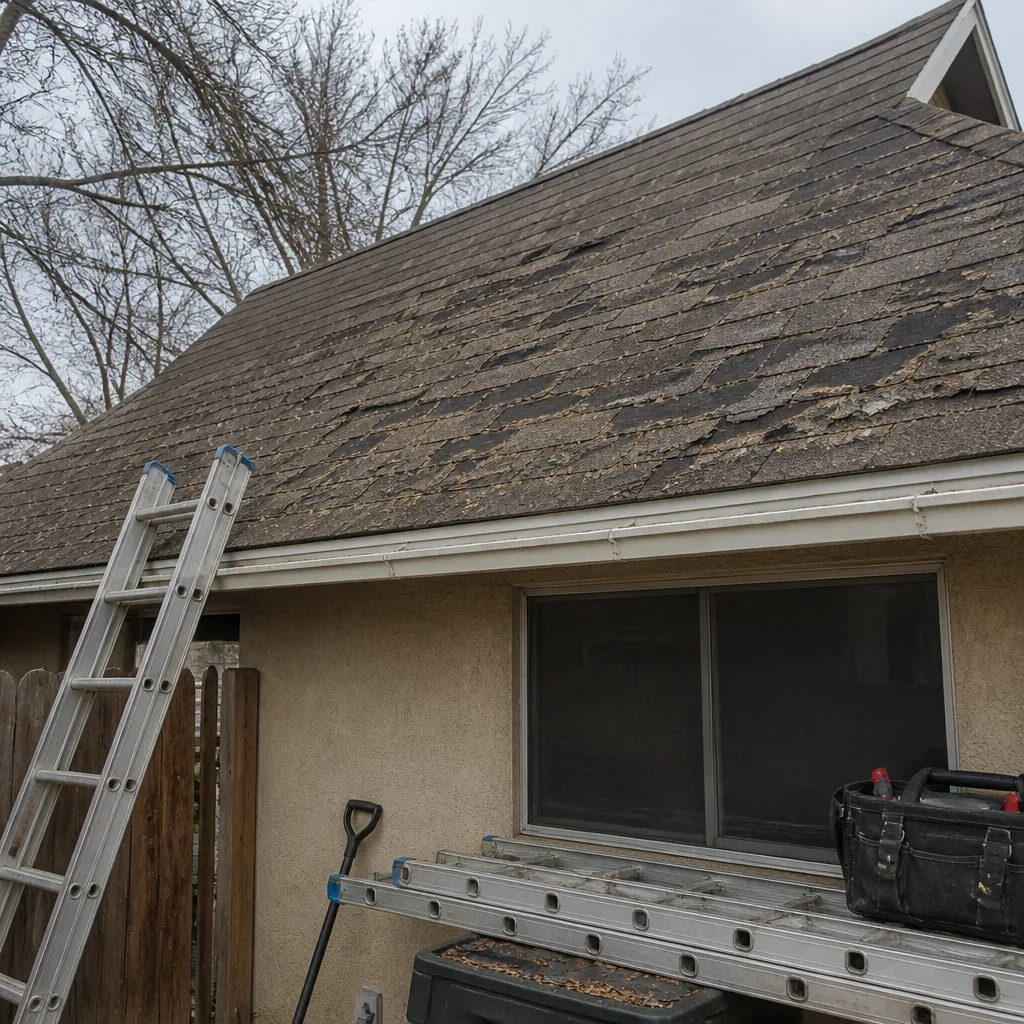
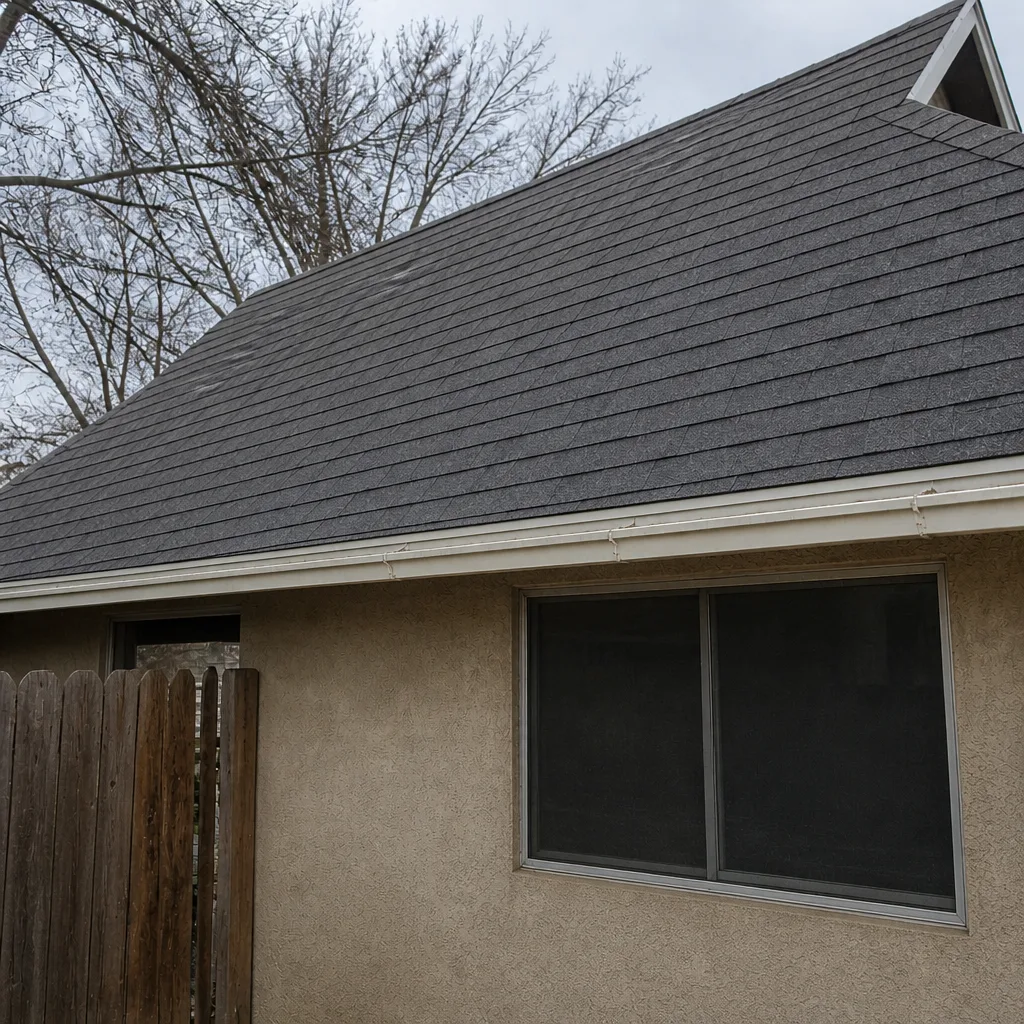
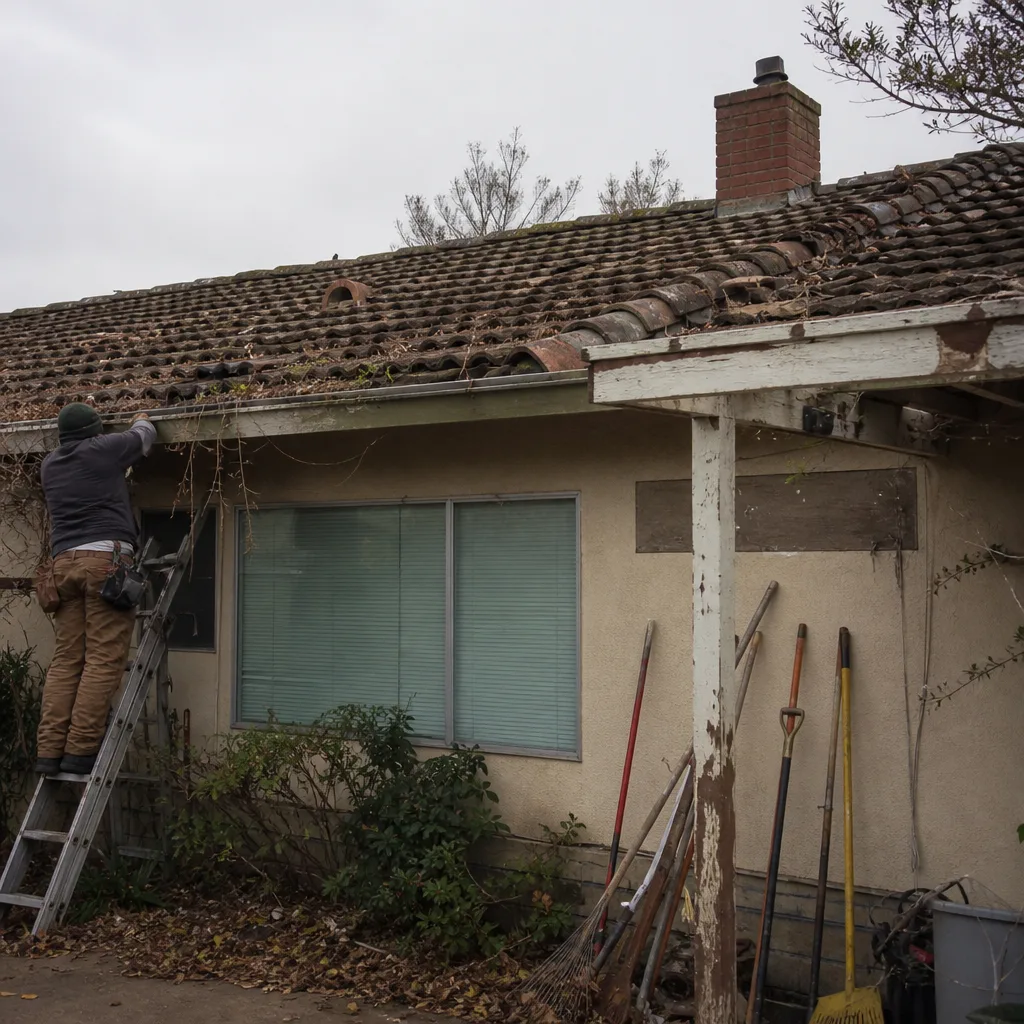
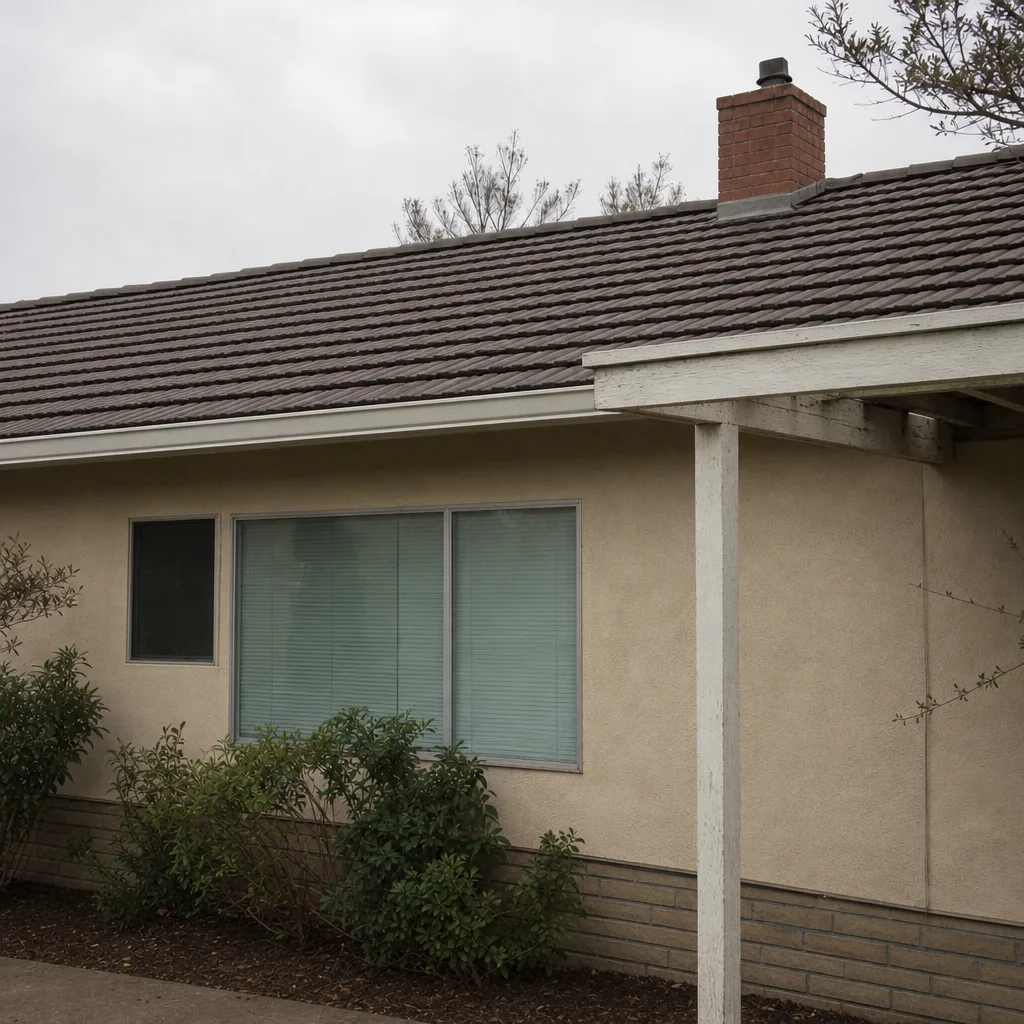
See the difference
 Before
 After
 Before
 After
 Before
 After
When to Call a Professional
Call us when you see a lifted panel, a fastener backing out, a ceiling stain, or anything that looks like rust on a painted panel edge. Call when the roof is over one story and you’re staring at a ladder. Call at the 5-to-7-year mark if you’ve never had a sealant refresh. Call at year 10 for the full inspection. And call if a storm just came through and you’re not sure what you’re looking at.
Shepherd & Sons Roofing Paradise offers free estimates in Paradise. We’re locally owned and owner-operated, with the same address since 1996 and a published license number you can look up. Every roofing job is backed by the written 90-Day Done Right Promise: if it’s not done right, one call brings Bill back. A real person answers the phone around the clock, not a call center. Call (833) 676-0557 for a free estimate.
Frequently Asked Questions
A metal roof in Paradise needs a light inspection twice a year, a sealant and fastener check every 5 to 7 years, and a full professional inspection every 10 years. The panels themselves need almost nothing. The sealant and fasteners are what carry the maintenance load. Call (833) 676-0557 for an inspection and a straight answer on what yours needs.
No. The metal panels are close to maintenance-free, but the sealant, fasteners, and flashing around every penetration all need attention on a schedule. Ignore them and a metal roof will fail at the seams and penetrations the same as any other roof. “Low maintenance” is accurate. “No maintenance” is not.
Most tube-applied sealants fail in 5 to 7 years under Nevada UV, shorter on west-facing slopes that take the worst sun. We use high-modulus polyurethane and UV-rated silicone on our jobs and plan a refresh on that same 5-to-7-year cycle. Call (833) 676-0557 if you’re not sure how old your sealant is.
Only if it’s single-story, low-slope, and dry, and only for light debris clearing with serious caution. Metal roofs are slick, and falls are genuinely dangerous. Anything taller, steeper, or involving actual repair work needs a trained professional with a harness. The risk isn’t worth it. We’ll come look for free.
A routine inspection and debris clearing typically runs a few hundred dollars, and a full sealant refresh depends on how many penetrations your roof has. We give written, upfront pricing before anyone touches the roof, and there’s no trip charge inside our own county. Call (833) 676-0557 for an exact number; estimates are free.
Most metal roofs we look at need repair, not replacement. The metal panels outlast everything attached to them, so sealant, fasteners, and flashing get replaced while the panels stay put. Replacement comes into play when the deck underneath has rotted through or the panels have been damaged beyond repair. A free inspection tells you which. We’ll show you photos before we talk money. Call (833) 676-0557.
The Bottom Line
A metal roof will outlast most of us, but only if the sealant, fasteners, and flashing get attention on a schedule. Two light inspections a year, a sealant refresh every 5 to 7 years, and a full professional inspection at year 10 keep it watertight and save you from replacing a deck. “Low maintenance” is the honest description. “No maintenance” is the sales pitch that costs Paradise homeowners their roofs. If you’re not sure where yours stands, we’ll come look. A real person answers the phone. Call (833) 676-0557 for a free estimate, or start with our Shepherd & Sons Roofing Paradise home page.
Written by the team at Shepherd & Sons Roofing Paradise.