
Last updated November 17, 2026
 Architectural shingles
 Metal roofing
 Tile roofing
 GAF
 Owens Corning
 Flat & low-slope
Free roof inspection with deck photos before we talk money - GAF and Owens Corning certified installation
Roof Repair Maintenance Checklist for Paradise Homeowners
A roofer in Portland checks for moss. A roofer in Minnesota checks for ice dams. Neither checklist applies to your Paradise home, where the number-one maintenance failure we see is cracked pipe boot flashing that baked dry over three summers while nobody looked. Desert heat doesn’t rot your roof the way rain does; it dries it out, shrinks the seals, and cracks the rubber collars around every pipe on the deck. By the time water shows up on your ceiling, the damage has been running for two seasons. This guide gives you a month-by-month calendar built around Paradise’s actual weather, a ground-level inspection routine you can do safely, and honest dollar numbers so you know what waiting costs.
Quick Answer
Paradise homeowners should inspect their roof from the ground once a month, clear debris before and after monsoon season, and have a licensed roofer check all flashing points, pipe boots, valley metal, and HVAC curbs every two to three years. In Paradise’s heat, the rubber and sealant on those flashings is the first thing to fail, usually long before the shingles wear out. Most of the expensive damage we see started as a $35 flashing repair that nobody scheduled.
Styles & brands we work with
- Architectural shingles
- Metal roofing
- Tile roofing
- GAF
- Owens Corning
- Flat & low-slope
Table of Contents
- Why Paradise Weather Breaks Roofs Differently
- Month-by-Month Checklist for Paradise
- How to Inspect Your Roof Safely From the Ground
- The Flashing Points That Fail First in Paradise Heat
- What Deferred Maintenance Actually Costs
- What You Can Fix Yourself vs. What Needs a License
- Common Mistakes to Avoid
- When to Call a Professional
Why Paradise Weather Breaks Roofs Differently
Paradise doesn’t get the slow, even wear that milder climates produce. It gets four distinct punches a year, and each one hits a different part of the roof. The pre-summer heat ramp is the big one. From roughly April into June, surface temperatures on a dark shingle roof in Paradise can climb well past 150 degrees. That heat cycle repeats every single day: expand by mid-afternoon, contract by 2 a.m. Sealant around pipe boots and vent stacks is the first material to give up, because it’s flexible by design and heat makes flexible things brittle.
Monsoon season, usually July through September, brings the second punch. A roof that’s been baking for three months gets hit with sudden rain and wind. Water doesn’t need a big hole to get in. It finds the hairline crack in a dried-out boot, runs down the pipe, and shows up as a stain on your ceiling two rooms away from where the actual leak is. We’ve seen homeowners chase ceiling stains for months before anyone got on the roof and found a five-dollar seal that had split.
After the monsoon, debris season sets in. Wind-driven sand, palm fronds, seed pods, and dried vegetation collect in valleys and behind HVAC curbs. That debris holds moisture against the roof surface and blocks the drainage path, which turns a small storm into a ponding problem.
Then comes the brief Paradise winter. Nights drop near or below freezing for a stretch, and that’s when freeze-thaw hits the flashing joints. Water gets into a joint during the day, freezes overnight, expands, and widens the gap. Repeat that twenty times over a winter and a tight joint becomes a leaking joint. None of this shows up in a generic “inspect in spring and fall” reminder. The Paradise calendar has to match Paradise weather.
Month-by-Month Checklist for Paradise
Here’s the schedule we’d hand a neighbor. You don’t need to climb anything for most of it. The real value is doing the right task at the right time so you catch problems in the cheap stage.
- January: After any freezing night, look at the flashing joints around your chimney and skylights from the ground. Watch for staining or bubbling at the caulk lines. This is freeze-thaw season in Paradise, and it’s the month small joint cracks turn into leaks.
- February: Check gutters and downspouts for the debris left over from winter wind. Confirm water actually flows away from the house.
- March: Before the heat ramp, walk the perimeter and photograph every pipe boot, vent, and HVAC curb. Save the photos. You’ll compare them in June, and the difference tells you what’s drying out.
- April: Schedule a professional flashing inspection if it’s been two or more years. This is the window before the heat makes sealant work harder to do correctly.
- May: Trim any tree limbs within a few feet of the roof. In Paradise, wind plus a dry limb is a shingle-scuffing machine.
- June: Compare this month’s photos with March’s. Look specifically at pipe boots and valley metal for cracking or shrinking. This is when we see the failures start.
- July: Before monsoon onset, clear all debris from valleys and behind curbs. Confirm downspouts are clear and attached.
- August: After the first big monsoon storm, do a careful ground-level look for lifted shingles, granules in the gutters, and new ceiling stains.
- September: Post-monsoon debris pass. Clear everything that washed or blew onto the roof and into the gutters.
- October: Check attic ventilation and look for daylight in the attic. Poor venting in Paradise shortens shingle life, and it’s easy to fix early.
- November: Before the first freeze, have any suspect flashing joints checked and sealed by a professional.
- December: Ground-level visual pass after any storm. Note anything that looks different and save the photos for your next inspection.
If your roof is older or you’ve been through a hailstorm, our Roof Repair in Paradise service is where most of these calendar items turn into actual work. If the inspection turns up widespread wear rather than a few flashings, it’s worth reading up on Roof Replacement & Installation in Paradise before you decide.
How to Inspect Your Roof Safely From the Ground
You don’t need to walk your roof to know a lot about it, and in Paradise you genuinely shouldn’t walk it unless you know what you’re doing. Foot traffic on a hot shingle surface can scuff granules and, on some products, void the material warranty. More importantly, a fall off a one-story roof is a serious injury. Here’s the ground-level routine we recommend to every homeowner.
- Start across the street or at the property line. Get far enough back to see the whole plane of the roof. Look for wavy lines, sagging, or shingles that look out of step with their neighbors. A straight roofline is a healthy roofline.
- Use binoculars. A cheap pair of binoculars from the hardware store turns a ground inspection into a real one. You can see cracked boots, lifted shingle tabs, and rusted vents without setting foot on the roof.
- Walk the perimeter and photograph everything. Take pictures of every pipe boot, vent stack, HVAC curb, valley, and flashing joint. Date the photos. Over a couple of seasons, these become your maintenance record.
- Look at the walls and soffits near the roofline. Water stains, bubbling paint, or a musty smell near the eaves mean water is getting behind the roof somewhere. Find it before it spreads.
- Check the gutters after a storm. Granules in the gutter are normal in small amounts. Whole shingle corners in the gutter are not.
- Look inside the attic. A flashlight and a quick scan for daylight, stains, or damp insulation tells you more than hours of staring at shingles from below. Do it after a rain, not during.
That routine takes about twenty minutes and costs nothing. It’s how most Paradise homeowners catch a problem in the $35 to $150 range instead of the four-figure range.
The Flashing Points That Fail First in Paradise Heat
If you remember one section of this guide, make it this one. In our experience, the vast majority of preventable leaks in Paradise start at three flashing points, not in the field of shingles. Shingles are tough; they’re designed to take sun. The flashings are where the weak links live.
Pipe boots. Every plumbing vent stack on your roof has a rubber or neoprene collar called a boot that seals the pipe where it passes through the roof. In a mild climate, a boot might last fifteen years. In Paradise heat, that same boot can crack and split in five to seven. Look for visible cracks, a boot that no longer hugs the pipe, or a boot that looks faded and chalky. A cracked boot lets water run straight down the pipe and into the attic.
Valley metal. Where two roof planes meet, a metal valley channels water off the roof. Heat, debris, and the constant expansion of the metal itself can pull the sealant away from the edges. You’ll see it as a dark gap or a lifted edge along the valley line. Debris trapped in the valley makes this worse, which is why the post-monsoon cleanup matters.
HVAC curbs and rooftop penetrations. Any rooftop unit sits on a curb, and that curb has seams and sealant. In Paradise, a rooftop HVAC curb gets baked all summer, and the sealant dries and pulls back. It’s one of the most common places we find an active leak that the homeowner didn’t know was starting. The attic scan usually catches it before the ceiling does.
When these fail, the repair is often minor if you catch it early. That’s the whole point of the calendar. For roofs where the damage has been going for a season or two, our guide on roof repair in Paradise walks through what a proper fix looks like.
What Deferred Maintenance Actually Costs
Here’s the dollar progression we see most often in Paradise when maintenance gets skipped. These are typical line-item ranges, and the point is the gap between the first number and the last.
- Cracked pipe boot, caught early: roughly $35 to $75 to replace. It’s a small piece of material and an hour of labor.
- Cracked pipe boot, ignored for a season: $150 to $400 once the leak has stained drywall and soaked insulation, because now there’s interior repair involved.
- Failed valley metal or flashing joint: $250 to $600 for a proper re-flash, depending on access and how much decking was affected.
- Rotting roof deck from a long-running leak: $900 to $4,200 or more to replace rotted sheathing once the water has been getting in behind it, plus interior repair.
- Full replacement pulled forward years early: the biggest number, and the one a couple of $35 repairs would have prevented.
The math is the same on every street in Paradise. A homeowner ignores a cracked boot because nothing’s leaking inside yet. Two summers later, that boot has soaked the deck around the pipe. Now it’s a deck replacement instead of a boot replacement. Deferred maintenance isn’t a savings; it’s a delayed payment with interest.
What You Can Fix Yourself vs. What Needs a License
Plenty of roof maintenance is a homeowner job. Some of it is not, and the difference matters for safety and for your warranty.
What a careful homeowner can handle:
- Clearing leaves, palm fronds, and debris from gutters and downspouts from the ground with a long-handled tool.
- Removing debris from roof valleys and behind curbs using a long pole from the edge, without walking the roof.
- Trimming tree limbs away from the roofline.
- Taking dated photos and keeping a simple maintenance log.
- Applying roofing caulk to a minor exposed nail head or a small seam that’s clearly accessible from a ladder on level ground, within reason.
What genuinely needs a licensed roofer:
- Replacing a pipe boot, re-flashing a vent, or re-sealing an HVAC curb. These are small jobs, but done wrong they leak for years.
- Anything involving valley metal or a joint between roof planes.
- Walking a roof above a single story, or any roof with a steep pitch.
- Any repair where you can’t see the full extent of the damage from the ground.
- Any work on a roof under a material warranty that requires a qualified installer to keep it valid.
One more safety note, and it’s not a lawyer talking. Roofs and ladders cause serious injuries every year, and heat makes it worse. If a task needs you on the roof, or up a tall ladder, don’t do it yourself. Call a professional. The repair is almost always cheaper than an emergency room visit.
Common Mistakes to Avoid
- Waiting for a ceiling stain before checking the roof. In Paradise, by the time water shows inside, the leak has usually been running for a season or two. Check the roof on the calendar, not on the stain.
- Assuming the shingles are the problem. Most Paradise leaks we find start at a boot or a flashing joint, not in the field of shingles. Have the flashings checked even if the shingles look fine.
- Skipping the post-monsoon debris pass. Debris left in valleys and behind curbs holds moisture and can clog drainage. September’s cleanup is one of the highest-value items on the list.
- Letting a ladder-and-caulk fix stand in for a real repair. Caulk over a cracked boot slows the leak for a few weeks at best. It doesn’t fix the flashing, and it can hide the damage from the next inspection.
- Using the generic “inspect twice a year” schedule you find online. That schedule was written for a wet climate. Paradise’s heat, monsoon, and freeze-thaw need a Paradise calendar.
- Hiring whoever knocks after a storm. Storm chasers follow hail through Paradise and leave a few weeks later. Ask any bidder for a local address and a license number you can look up before you sign anything.
- Not keeping a maintenance log. Dated photos and receipts make a real difference at resale and when a warranty question comes up. Twenty minutes of recordkeeping can save you an argument later.
See the difference
 Before
 After
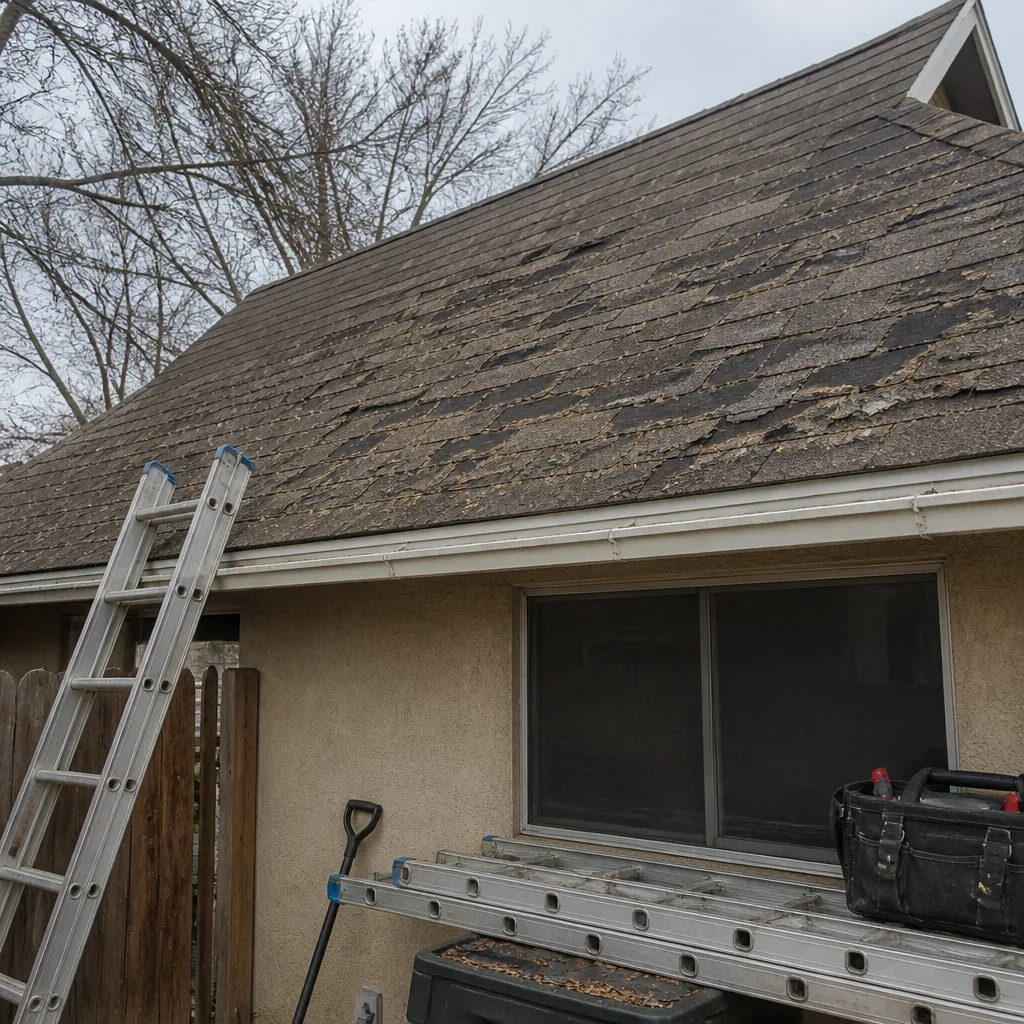 Before
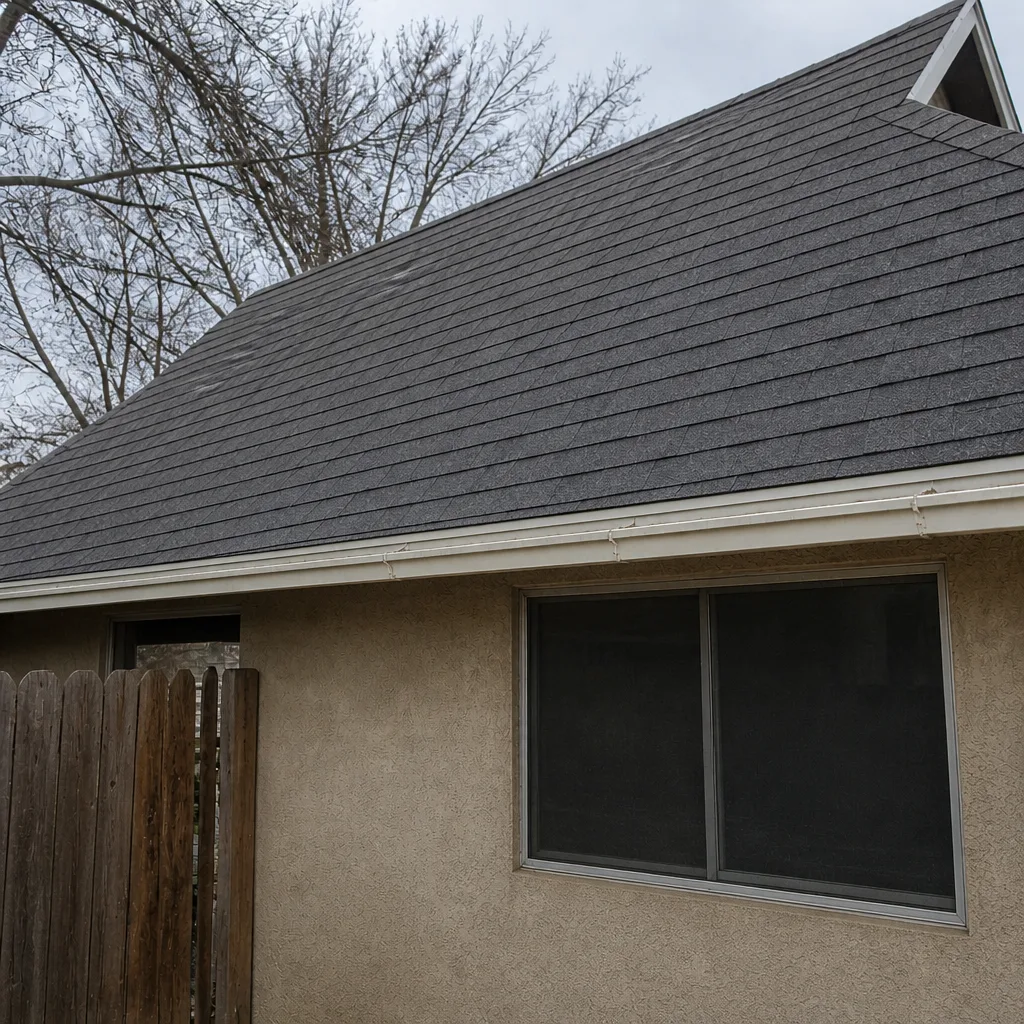 After
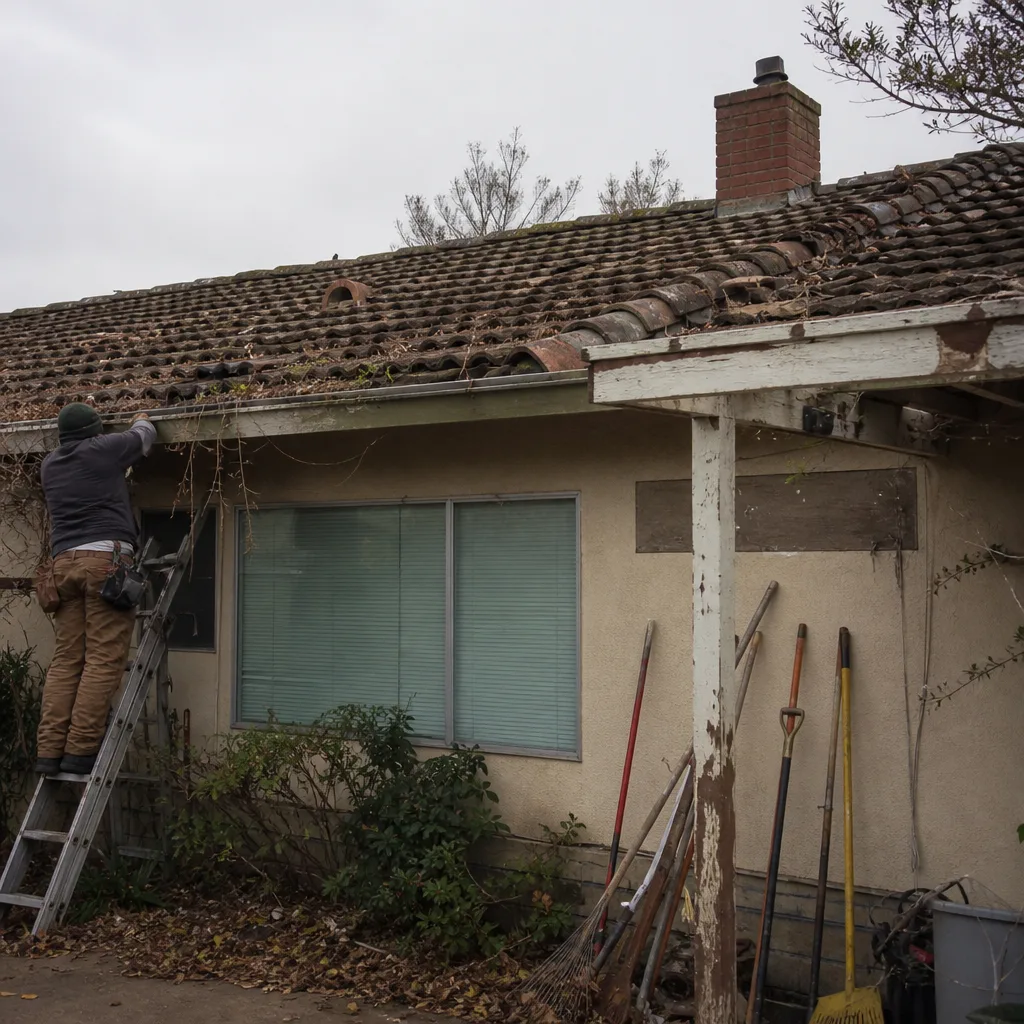 Before
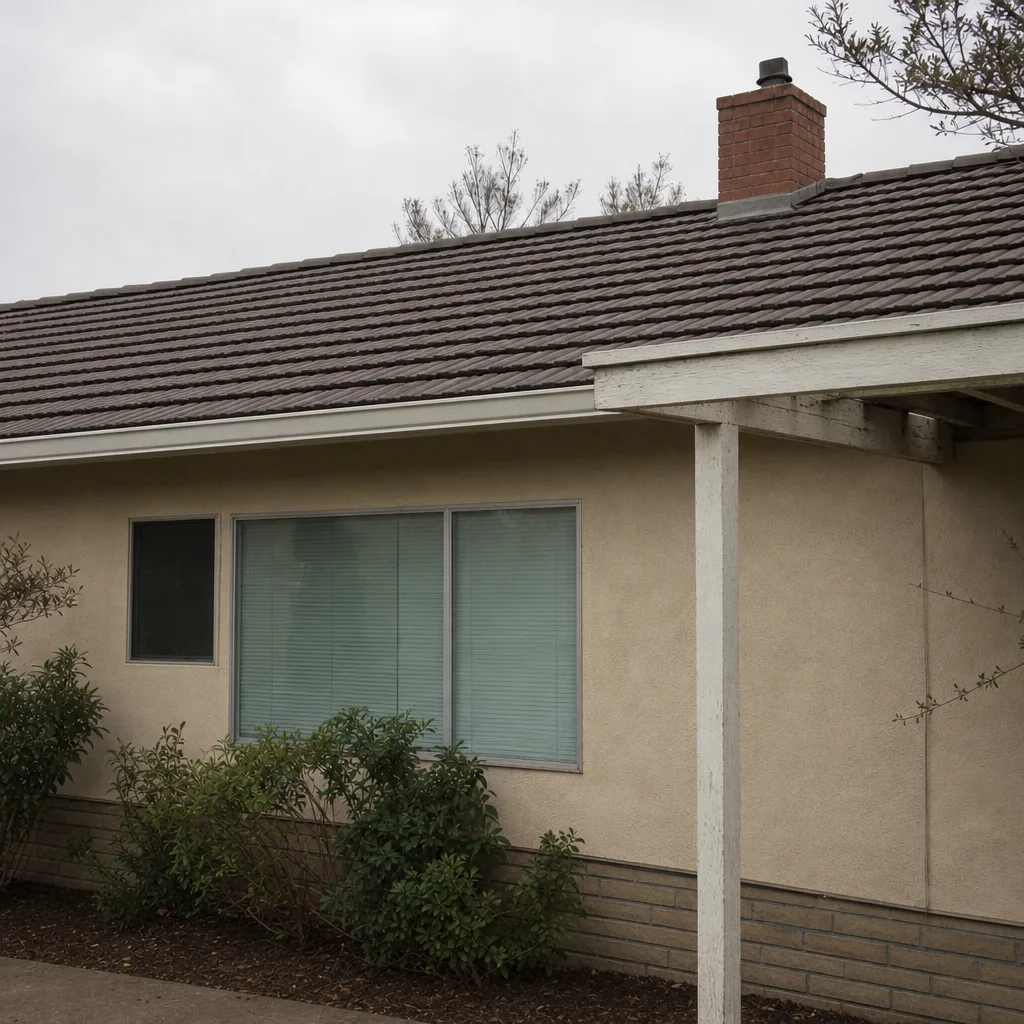 After
When to Call a Professional
Call a licensed roofer when you see cracked or missing pipe boots, lifted valley metal, a rooftop HVAC curb with dried or pulled sealant, water stains on a ceiling or wall, or granules collecting in your gutters in volume after a storm. Call if it’s been two or more years since anyone checked the flashings. Call after any hailstorm or wind event that leaves debris on your block. And call if you’re not comfortable on a ladder or seeing the roof clearly from the ground. None of these are emergencies on their own, but each one is far cheaper to fix now than after a full season of water working its way in.
Shepherd & Sons Roofing Paradise offers free estimates in Paradise. Call (833) 676-0557 and a real person will pick up. We’ll look at the roof, show you what we find, and give you an upfront price with no trip charge inside our own county.
Frequently Asked Questions
Once a year by a licensed roofer, plus a quick ground-level visual pass once a month. Paradise’s heat cycles crack flashing faster than a mild climate does, and the brief freeze-thaw in winter widens those cracks. Yearly professional inspections catch the flashings before they fail, which is where most of the money gets saved.
Cracked pipe boot flashing, by a wide margin. The rubber collar around a vent pipe bakes dry over about five to seven summers, then cracks and lets water run straight down the pipe. It’s a small, cheap repair caught early and an expensive one caught late. Call (833) 676-0557 for a free inspection if yours haven’t been checked in a couple of years.
Yes. Stand across the street or at the property line with a pair of binoculars, and photograph every pipe boot, vent, HVAC curb, and valley line. Walk the perimeter and check walls and soffits for stains, and scan the attic after a rain. You’ll catch most early failures without putting a foot on the roof.
It can. Some shingle manufacturers and warranty terms limit foot traffic, and hot shingle surfaces scuff easily. In Paradise heat, the risk is higher. It’s safer for your roof and for you to do your inspection from the ground and leave the walking to a licensed roofer.
A pipe boot replacement is typically around $35 to $75, and a re-flash is often in the $250 to $600 range depending on access. A full deck replacement from a long-running leak can run into the thousands. Call (833) 676-0557 for a free estimate with upfront pricing before anything gets touched.
Ask for a physical address and a license number you can look up, and check that the name on the bid matches the name on the license. Storm chasers come through after every hailstorm and are gone in weeks. A local roofer will answer the phone after the storm, and in our case, a written 90-Day Done Right Promise stands behind every job.
The Bottom Line
The four Paradise calendar events that damage roofs are the pre-summer heat ramp, monsoon onset, post-monsoon debris season, and the brief winter freeze-thaw. Each one hits a different part of the roof, which is why a generic spring-and-fall checklist doesn’t work here. The single most valuable habit is a monthly ground-level inspection with a pair of binoculars and your phone’s camera, focused on the flashings. Check your pipe boots, valleys, and HVAC curbs, follow the month-by-month list, and fix the small stuff before heat does the expensive damage. A $35 boot today is a $4,200 deck tomorrow. When in doubt, get a pro on the roof.
When you’re ready, our full roster of services, from repair to Metal Roofing in Paradise, starts with a free estimate, and everything we do is backed by our written 90-Day Done Right Promise. If you’re starting at the beginning, the Shepherd & Sons Roofing Paradise home page is the place to see how we work.
Call (833) 676-0557 for your free estimate. A live person answers the phone, day or night. Ask for a free second opinion on any written estimate and we’ll show you exactly what we find before we talk money.
Written by the team at Shepherd & Sons Roofing Paradise.