
Last updated November 17, 2026
 Architectural shingles
 Metal roofing
 Tile roofing
 GAF
 Owens Corning
 Flat & low-slope
Free roof inspection with deck photos before we talk money - GAF and Owens Corning certified installation
Roof Repair Troubleshooting: Common Problems and How to Fix Them
That brown ring on your bedroom ceiling? The leak causing it is probably not above your bedroom. I’ve pulled back shingles four feet from where the homeowner was certain the problem was and found the real entry point every time. Water doesn’t fall straight down once it gets under your roof – it runs along decking, follows rafters, and pools wherever gravity and wood grain take it. That’s why so many Paradise homeowners pay to patch the wrong spot and watch the stain come back after the next rain. This guide teaches you to trace water backward to its source before you call anyone.
Quick Answer
Most roof leaks start several feet from where the water shows up inside. To troubleshoot a roof problem, find the actual entry point by following the water’s travel path across the decking and rafters – not by staring at the ceiling stain. The three most common causes are failed flashing at transitions and penetrations, worn shingles, and ventilation problems that create moisture from the inside. A correct diagnosis saves you from paying twice for the same leak.
Styles & brands we work with
- Architectural shingles
- Metal roofing
- Tile roofing
- GAF
- Owens Corning
- Flat & low-slope
Table of Contents
- How Do You Find the Source of a Roof Leak?
- Flashing, Shingle, or Ventilation Failure: How to Tell Them Apart
- Why Flat-to-Pitch Transitions Fail on So Many Paradise Homes
- Is It a Bandage or a Real Fix?
- What Should You Check Before You Call Anyone?
- Questions to Ask a Roofer When the Diagnosis Doesn’t Add Up
How Do You Find the Source of a Roof Leak?
You trace it backward. Start at the stain, then figure out which way the water runs from above it. Roofs on this side of the valley are framed with rafters running from ridge to eave, and decking nailed across them. Water hitting a rafter doesn’t drip through it – it rides the side of the rafter downhill until something stops it. Find that stopping point and you’ve found your entry.
Here’s the process we walk homeowners through on a free second opinion:
- Mark the stain and note which side of the ceiling it’s on. A stain near an exterior wall usually means the water entered uphill and ran along the wall plate.
- Go into the attic (or wherever you can see the decking) during or just after rain. Look for dark streaks on the underside of the sheathing – those streaks point to the entry point.
- Follow the streaks uphill until they stop. That stopping point, or the highest point of the wet area, is your suspect zone. It’s often at a penetration or a transition where two roof planes meet.
- Check the roof surface above that zone, not above the stain. Look for cracked, lifted, or missing shingles, exposed nails, or failed sealant around vents, pipes, and chimneys.
In Paradise, we see this pattern constantly after summer storms roll off the mountains. Wind-driven rain pushes sideways into seams that look perfectly fine from the ladder. The homeowner sees the stain in the hallway and swears the problem is directly overhead. It’s usually fifteen inches uphill and one ridge over.
If the stain appears during humid weather with no rain at all, stop looking at the roof surface. That’s a ventilation problem, and we’ll get to it below.
Flashing, Shingle, or Ventilation Failure: How to Tell Them Apart
Three things cause almost every leak we’re called out to diagnose: failed flashing, failed shingles, and trapped moisture from poor ventilation. From the inside, they can all look like the same brown ring. They aren’t the same repair, and misdiagnosing them is how homeowners end up paying for the same leak twice.
Flashing failure is the most common and the most misread. Flashing is the metal that seals the joints around chimneys, skylights, valleys, and wall intersections. When the sealant under flashing dries and cracks – and in the Paradise heat it will – water gets in at those seams. Flashing leaks usually show up near vertical surfaces inside: along a chimney chase, down a wall, or beside a skylight shaft.
Shingle failure is what people picture. Granules worn off, shingles curling at the edges, or a few tabs torn loose after a wind event. Shingle leaks tend to show up in the field of the roof, away from walls, and often show granule staining on the underside of the decking. If you see a pile of granules in your gutter, that’s a shingle problem telling on itself.
Ventilation failure is the one homeowners blame on the roof when the roof isn’t the problem. A hot attic with no intake or exhaust path traps moisture. It condenses on the underside of the decking and drips. The roof surface can be in perfect condition. Signs to look for:
- Moisture appears in cool weather or during humid stretches, not just after rain
- Frost or condensation on the underside of the sheathing in the morning
- Mildew smell in the attic
- Stains spread across a wide area rather than concentrating in one spot
We’ve pulled up sound, dry shingles on Paradise homes where the homeowner was ready to buy a whole new roof, because the real fix was a ridge vent and proper intake at the soffits. That’s a much smaller job. Asking the right questions before anyone starts tearing off saves you real money.
Why Flat-to-Pitch Transitions Fail on So Many Paradise Homes
Walk any neighborhood in Paradise and you’ll see the pattern: a low-slope porch or addition roof meeting a steeper main roof, or a shallow pitch over a back patio tying into the main house. That seam is the single most common failure point on roofs here. Where a shallow pitch meets a steep pitch, the two materials often differ – rolled roofing or low-slope membrane on one side, asphalt shingles on the other – and they expand and contract at different rates through the year. That seam gets worked every day. Eventually the flashing gives.
What makes it worse in Paradise is how fast the heat and sun cycle works those seams. We get wide temperature swings between afternoon and night, and every swing pulls at that transition. Sealant that was solid two summers ago is often dried and cracked three summers later. The homeowner sees water on the ceiling of the room below the transition, checks the shingle field, finds nothing, and can’t figure out why. The shingles are fine. The seam two feet away has given up.
The right repair at a transition is mechanical – proper step flashing or a continuous metal pan under the siding or stucco, lapped correctly, not just a bead of sealant over the top. Caulk and sealant have their place, but they’re not flashing, and on a flat-to-pitch transition in Paradise they’re a maintenance item at best.
This is also why a transition failure is worth fixing right the first time. A properly flashed transition should outlast the surrounding materials. When we do roof replacement and installation in Paradise, we spend real time on the transition details because those details, not the shingle brand, decide whether the roof leaks.
Is It a Bandage or a Real Fix?
A bandage hides the leak. A real fix stops it. Told apart honestly, almost every repair falls on one side or the other, and you can usually tell which you’re getting by how the roofer talks about it.
Bandage signs:
- The repair is described as “caulking it up” or “sealing over it” with no explanation of why it failed
- Nobody goes in the attic or pulls back shingles to confirm the entry point
- No photos of the actual problem area before the work starts
- The price seems very low and there’s no written scope
- You can see the finished work and it’s a smear of sealant on top of the roof
Real fix signs:
- The roofer shows you the failed component – cracked flashing, exposed nails, torn underlayment
- You get a written description of what’s being replaced and what’s being reused
- The fix addresses the cause, not just the visible symptom
- Before-and-after photos are part of the deal, not an afterthought
Sometimes a bandage is the right call. If your roof is at the end of its life and you’re not ready to replace it, a careful emergency patch gets you through the next rain until you schedule the bigger job. That’s honest. The trouble is when a patch is sold as a permanent fix, or when a small failed piece – one valley, one chimney – gets sold as a whole new roof. Both happen, and both cost the homeowner. The best defense is asking what specifically failed and why, and refusing to authorize anything until you can picture it clearly.
On every roofing job here at Shepherd & Sons, you get the deck photos and a written scope before we talk money, and the 90-Day Done Right Promise holds us to the repair in writing.
What Should You Check Before You Call Anyone?
A ten-minute look from the ground tells you a lot, and it makes the conversation with any roofer more useful. Grab binoculars and do a slow lap around the house.
- Look for stained or discolored decking visible in the attic. That’s your best clue to where water is actually traveling.
- Scan for missing or lifted shingles, especially on slopes that face the prevailing wind. Torn tabs and exposed nail heads are easy to spot from the yard.
- Check the gutters for black granule buildup – a sign of shingle wear – and for water spilling over during rain.
- Inspect the flashing at the chimney, skylights, and valleys. Look for rusted metal or sealant that’s dried and pulled away.
- Look at the transitions where a flatter roof meets a steeper one. Check for gaps or lifted material at the seam.
- Check the attic after a rain for damp decking and damp insulation. Mark the spot with chalk.
Stay off the roof. A wet or brittle roof surface plus a steep pitch is how people get hurt, and you can get nearly everything you need with a ladder at the gutter line and a flashlight in the attic. For anything beyond that, call someone whose job it is.
Questions to Ask a Roofer When the Diagnosis Doesn’t Add Up
If a bidder tells you something that doesn’t line up with what you’re seeing, ask. A good local roofer welcomes it. Here’s what to put to anyone who gives you a written estimate:
- “Where exactly is the leak entering?” If they can’t point to a spot on the roof and explain the water path, the diagnosis isn’t finished.
- “Can I see photos of what you found?” A roofer with nothing to show is guessing.
- “Why did that component fail?” The answer tells you whether they understand the cause or are just replacing parts.
- “How many squares?” A roof is measured in squares. The bidder should know how many they counted and be able to show you the measurement.
- “Is this a repair or a replacement, and why?” A legitimate ballpark answer to both questions should fall within about 15 percent across bidders who did their homework.
- “Is this price fixed?” It should be. The number on the written estimate is the number you pay, with no change orders dug up after the work starts.
What you’re looking for is someone accountable enough to put a name and a license number on the diagnosis and the promise. That’s the whole point of asking.
Common Mistakes to Avoid
- Fixing the ceiling stain instead of the roof leak. Painting over the ring hides the evidence but not the water. The leak keeps running, and the drywall or framing keeps getting wetter.
- Assuming the leak is straight above the stain. In our experience, most leaks travel along rafters and decking before they drip. Confirm the entry point before you authorize any patch.
- Trusting sealant to solve a flashing problem. Caulk is a temporary layer, not a flashing repair. On Paradise transitions, it fails within a few hot seasons.
- Hiring a storm chaser with no local address. Out-of-state crews show up after every hail event. When the repair fails in a year, there’s no number to call and no license to look up.
- Paying a trip charge before you’ve seen a written estimate. Get the number in writing first. Ask if the trip charge is waived inside the county.
- Letting anyone start work without showing you the deck photos. You should see what you’re paying to have fixed, the same way you’d want to see the engine part a mechanic is replacing.
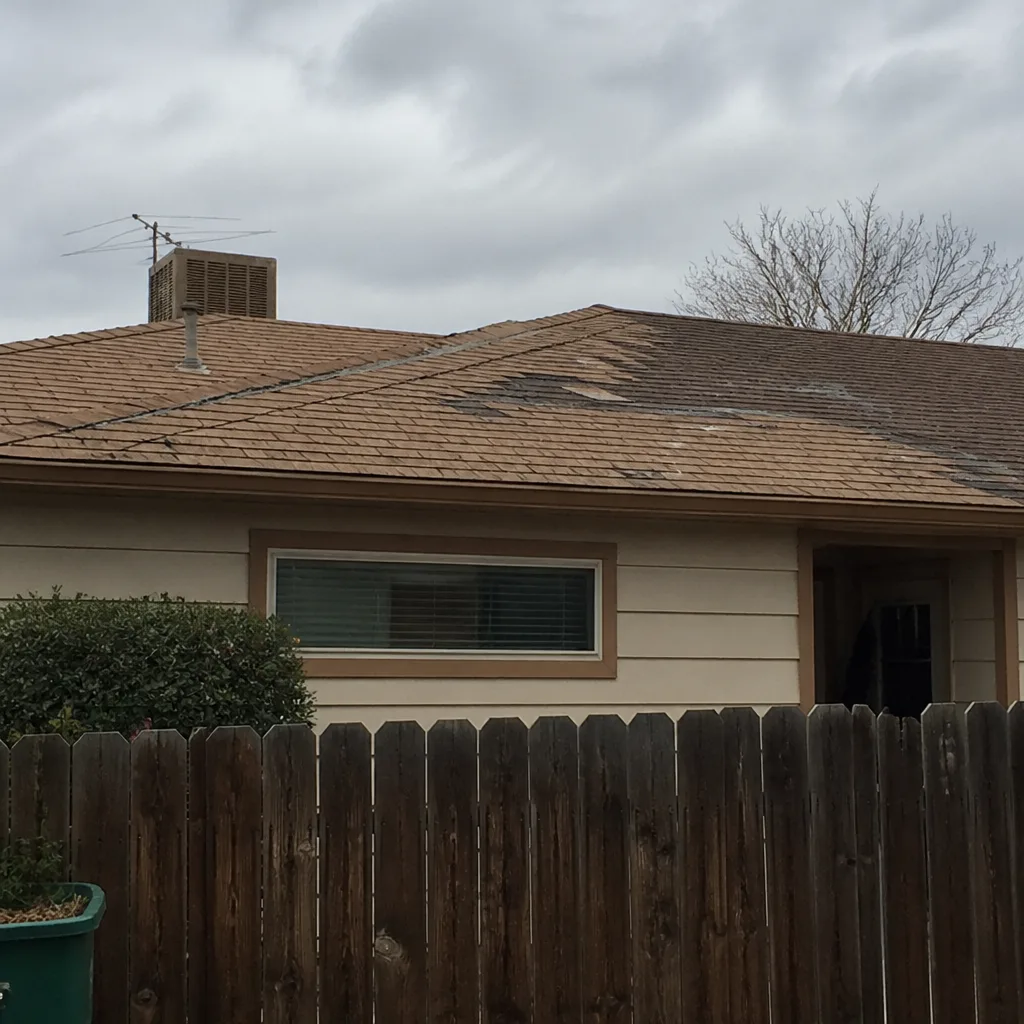
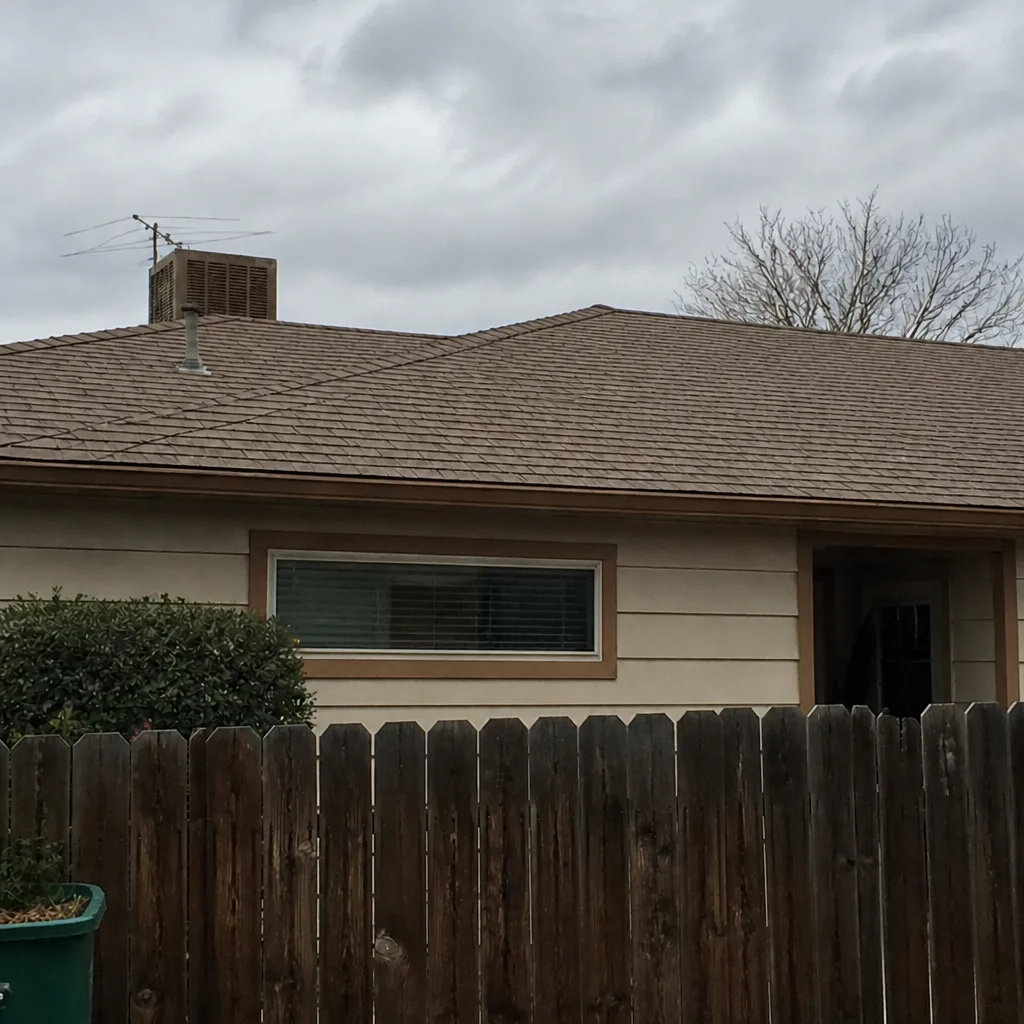
See the difference
 Before
 After
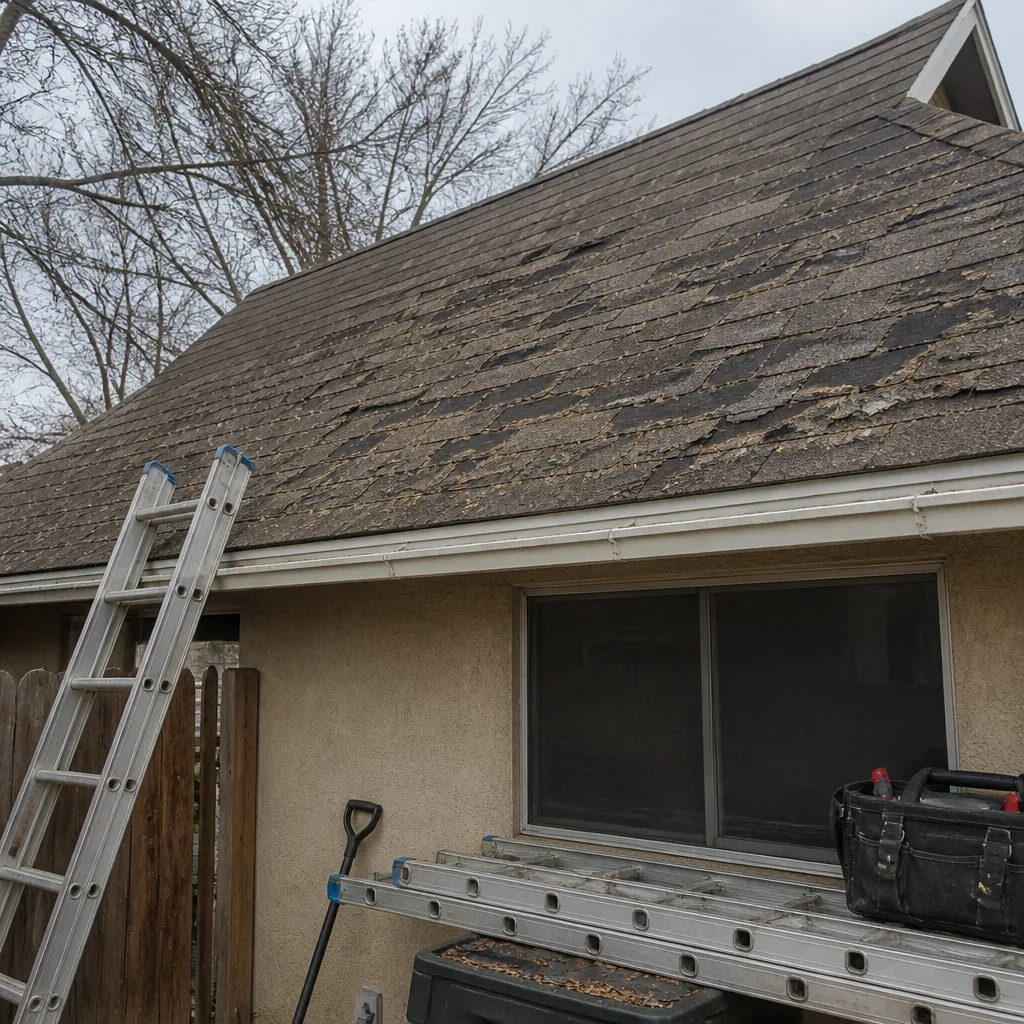 Before
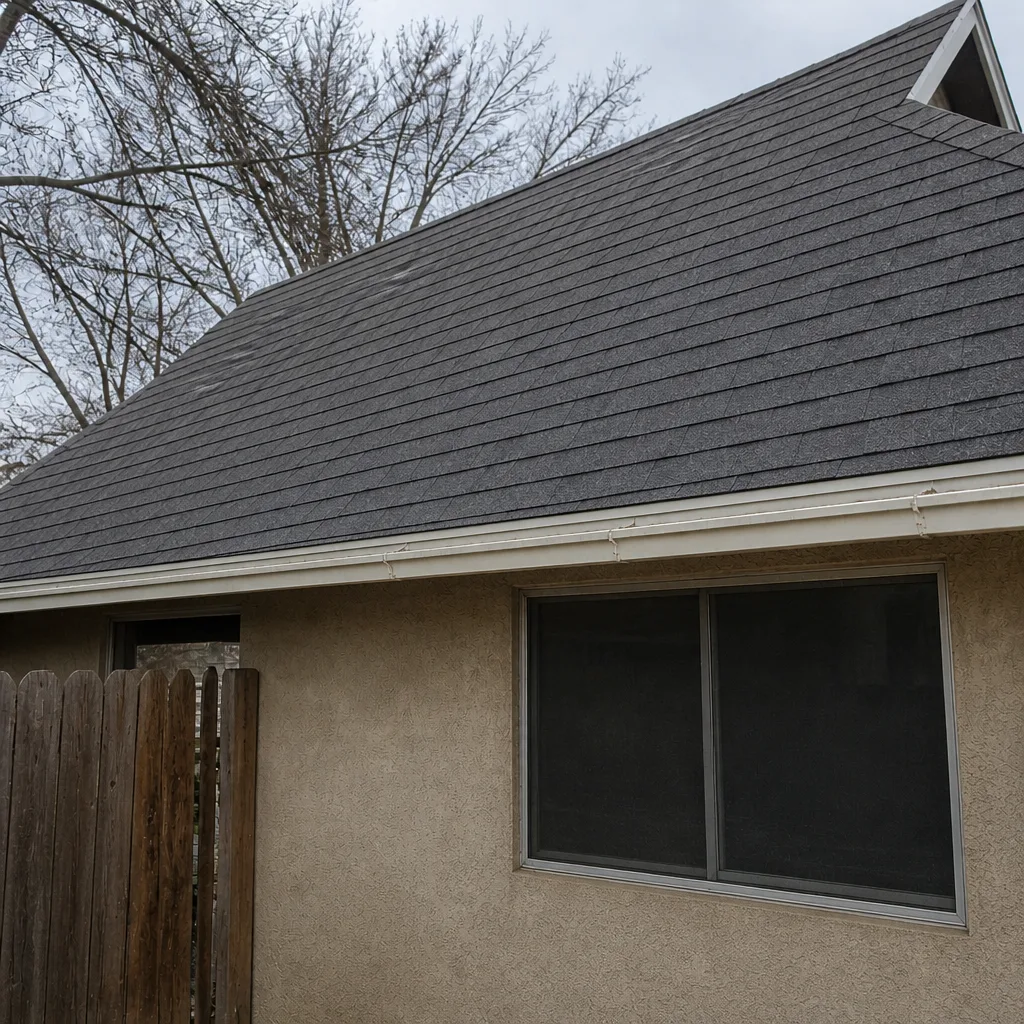 After
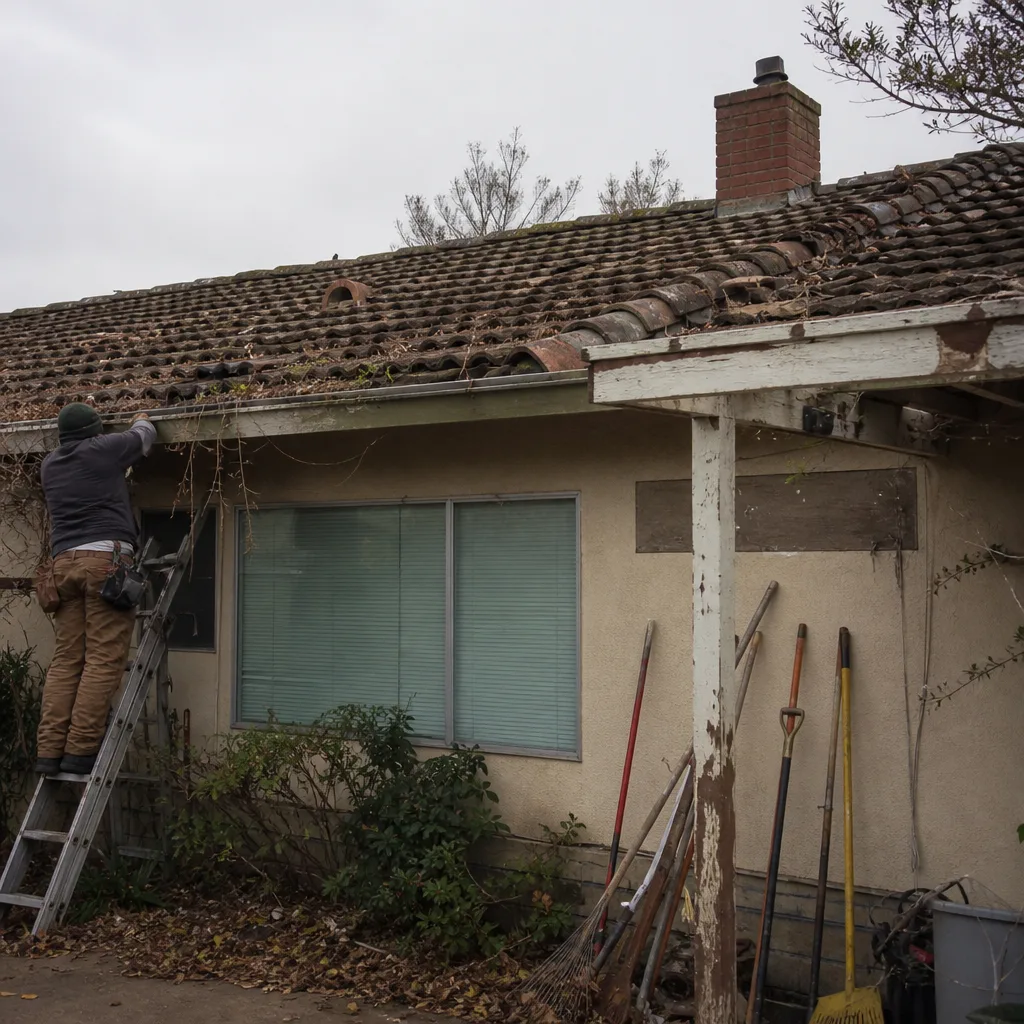 Before
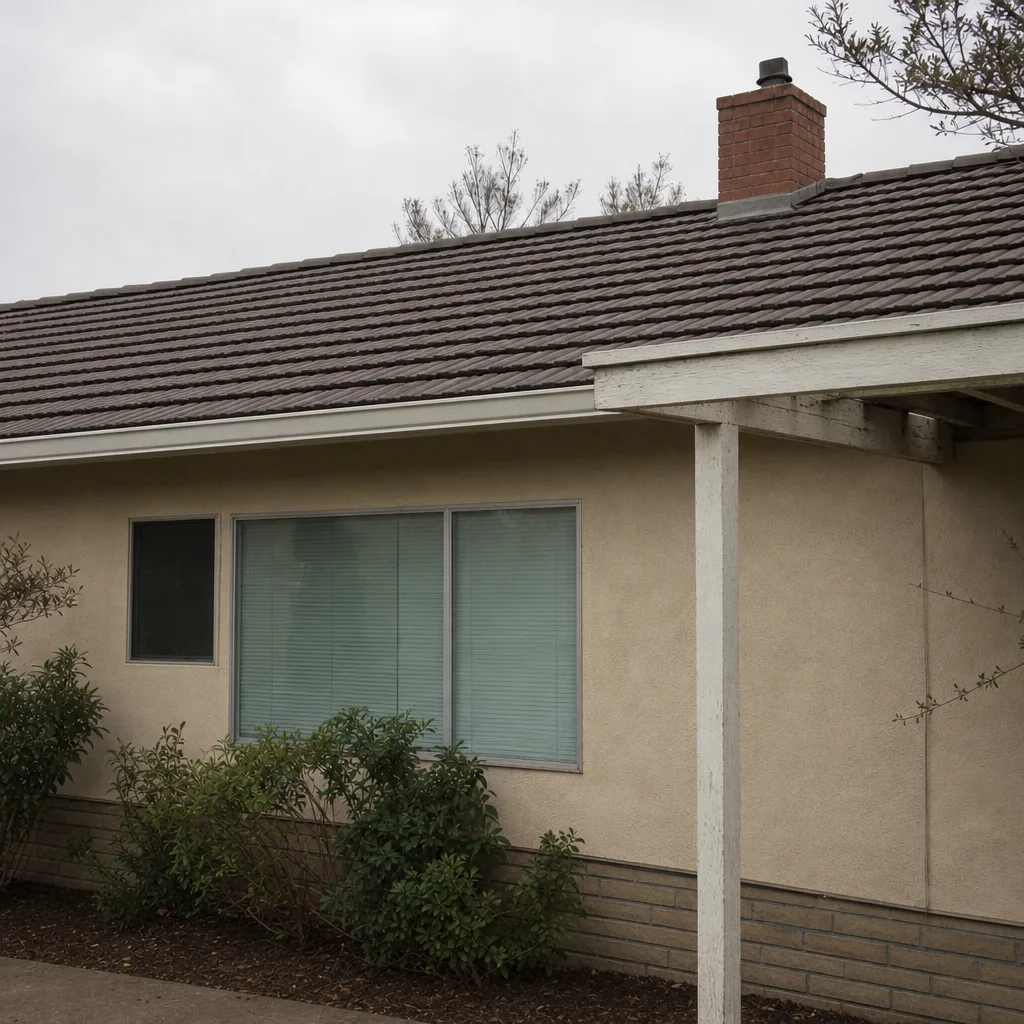 After
When to Call a Professional
Call a roofer when water is coming in and you can’t pinpoint the entry after a reasonable look. Call immediately if a section of shingles is torn loose or missing after wind, if water is running down an interior wall, or if the ceiling is sagging or soft – that last one means the decking or framing underneath has taken on real water. Don’t wait through another storm cycle hoping it dries out; a wet structure gets worse and the repair gets bigger. For routine issues like a single failed transition or a worn chimney flashing, a free estimate costs you nothing and usually settles the question in an hour. Shepherd & Sons Roofing Paradise offers free estimates in Paradise – call (833) 676-0557. We’ll trace it with you.
For a fuller look at what we handle, see Roof Repair in Paradise, and if the diagnostics point toward a bigger job, Roof Replacement & Installation in Paradise walks through the process.
Frequently Asked Questions
Wind-driven rain is being forced sideways into a seam or penetration that a normal rain never reaches – most often flashing at a chimney, valley, or transition. The entry is almost always on the windward side, uphill from the stain. A roofer can trace it with the wind direction in mind rather than tearing into the roof above the stain.
No. A single failed transition, a cracked valley, or worn flashing around one vent can usually be repaired without replacing the roof, if the surrounding shingles are in decent shape. Whether a repair makes sense depends on the age and condition of the rest of the field. A good roofer will show you both options and give you a straight answer on each.
If the moisture shows up during cool or humid weather with no rain, spreads across a wide area rather than one spot, or you see condensation on the underside of the decking, it’s likely trapped attic moisture. Dry weather leaks are almost always roof surface or flashing. Call (833) 676-0557 and we can check the ventilation path before anyone starts tearing off shingles.
It depends on the cause. Storm damage from hail or wind is often covered, while wear and tear, age, and poor maintenance usually aren’t. Keep dated photos of the damage and a written estimate from your roofer when you file. We can document what we find on the roof so your claim is clear to the adjuster.
Most single-area repairs – a flashing replacement, a patch of shingles, a transition fix – finish in a couple of hours. Bigger jobs that involve opening a wall or rebuilding a transition take a full day. When we quote the repair, we also tell you which day it’ll be done.
Ask the bidder to back them up before you sign. Get a second opinion from a local roofer you trust – we offer a free second opinion on any written estimate, and that’s a good way to catch a diagnosis that doesn’t hold up. Call (833) 676-0557 to schedule one.
The Bottom Line
Most roof leaks are misdiagnosed because water doesn’t fall straight down; it travels along decking and rafters before it drips, so the entry point is usually several feet from the stain. Trace it backward. Separate a flashing failure from a shingle failure from a ventilation problem, because each fix is different. On Paradise homes, give special attention to flat-to-pitch transitions – they’re the most common failure point here. And ask any roofer to show you what they found and explain why it failed before you pay. When you’re ready for a straight answer on your roof, call us.
If you’re weighing a bigger job down the road, our Metal Roofing in Paradise page covers what that option means for the long haul. You can also start from the Shepherd & Sons Roofing Paradise home page for everything else we handle.
Contact
Call (833) 676-0557 to schedule your free estimate. We’ll trace the leak with you, show you the deck photos before we talk money, and put the 90-Day Done Right Promise in writing on every roofing job. A live person answers whether it’s a calm Tuesday afternoon or two hours after a storm – no call center, no voicemail, no form. Same address since 1996, and the name on the truck is the name on the license.
Written by the team at Shepherd & Sons Roofing Paradise.