
Last updated November 17, 2026
 Architectural shingles
 Metal roofing
 Tile roofing
 GAF
 Owens Corning
 Flat & low-slope
Free roof inspection with deck photos before we talk money - GAF and Owens Corning certified installation
Roof Replacement & Installation Maintenance Schedule: What to Do and When
The number of warranty claims I’ve seen that could have been caught in a ten-minute year-one walkaround – and weren’t, because the homeowner figured a new roof meant they were done – is more than I can count. A new roof is not a maintenance-free roof. It’s a roof with a different maintenance schedule for the first five years. The first year is about confirming the installation held. Years two through five are about catching the slow, quiet problems before they cost you a ceiling. After that, you’re on a mature-roof routine. This guide lays out the whole timeline, from the 90-day check to the year-ten inspection, in plain terms, written from what we see on roofs all over Paradise.
Quick Answer
A new roof needs a walkaround at 90 days (before your workmanship warranty closes), a full inspection at the one-year mark after a complete heat cycle, a quick visual check every spring and fall through year five, and a professional inspection every two to three years after that. The tasks change as the roof ages: early years are about verifying the installation, later years are about sealing, flashing, and drainage. Keep a written log from day one and you’ll have documentation for insurance and warranty claims decades down the road.
Styles & brands we work with
- Architectural shingles
- Metal roofing
- Tile roofing
- GAF
- Owens Corning
- Flat & low-slope
Table of Contents
- Why a New Roof Still Needs a Schedule
- The 90-Day Post-Installation Check
- Year One: The Heat Cycle Test
- Years Two Through Five: The Shift
- Year Six and Beyond: The Mature Roof
- Maintaining Without Voiding the Warranty
- Building Your Maintenance Log
- Common Mistakes to Avoid
Why a New Roof Still Needs a Schedule
A roof is a system, not a single product. Shingles, underlayment, flashing, sealant, and fasteners all move at different rates as temperatures swing. In Paradise, we go from 100-plus-degree summer afternoons to cool desert nights with a 30-degree spread, and that daily expansion and contraction works on every seam on the roof. The first year is when the materials are settling into each other. That’s when installation issues show up if they’re going to.
Most homeowners assume the workmanship warranty will cover anything that goes wrong, and it often will. But a warranty only helps if you file the claim inside the window and can show the problem wasn’t caused by neglect. A ten-minute walkaround at 90 days catches the small stuff while the contractor is still on the hook. That’s the whole point of the early schedule.
There’s a second reason, and it’s specific to where we live. Paradise sits in a high-desert wind corridor. We get gusts that peel back an unsealed rake edge or lift a shingle tab that wasn’t properly fastened. It’s not a workmanship failure – it’s just the wind finding the weak point. The nailing pattern earns the wind rating, not the shingle wrapper, and a roof that’s been through one full summer and one windy season tells you which pattern you got.
The 90-Day Post-Installation Check
This is the walkaround almost nobody does. Ninety days after the crew pulls off, you should be up on the roof – or have someone up there – looking for three specific things before your contractor’s workmanship warranty window closes. If you’re not comfortable on a ladder, don’t push it. Steep pitches and height work are the leading cause of homeowner injuries, and it’s not worth it. Call the roofer back out.
What to look for:
- Lifted or curled shingle tabs. Walk the whole roof, ridge to eave. Any tab that’s standing up or won’t lay flat is a potential water entry point. Note where it is.
- Sealant pulling away from flashing. Check every penetration – chimney, vent stacks, skylights, and the step flashing along sidewalls. Sealant should be bonded tight to both surfaces, no gaps, no cracking.
- Granule loss in gutters. Some granule shedding is normal in the first months. A lot of it – an inch of grit in the gutter bottoms – is worth a conversation with the installer.
- Nail pops. Look for fasteners pushing up through the shingle surface. That’s a nailing depth problem and it’s the contractor’s to fix.
- Ridge cap and rake edge integrity. These take the most wind. Check that every cap is seated and every rake shingle is tight to the fascia.
Do this at 80 to 85 days, not 95. You want time to get the crew back before the window shuts. On a roof we installed in Paradise, we walk it ourselves before we hand over the paperwork, but not every contractor does. Get it in writing that the check happened.
Year One: The Heat Cycle Test
The one-year mark is the milestone that matters most, because it’s the first inspection after the roof has been through a full summer and a full winter. Sealants that were applied in cooler weather have now cured through a heat cycle. Shingles that were flexible in spring have baked hard and shrunk a hair. Flashing that looked tight in April has had a chance to work against the nail heads.
Here’s what the year-one check covers:
- Confirm every flashing sealant has cured and bonded. Run your thumb along the sealant bead at each penetration. If it peels or feels gummy, it didn’t bond. That’s a re-seal job.
- Check the drip edge and fascia line. Water should be shedding off the roof, not wicking back under the shingles. Look for staining or soft spots on the fascia board.
- Inspect the valleys. Valleys move the most water. Any debris accumulation or worn valley material needs attention now.
- Walk the attic. Look for daylight through the deck, water staining on rafters, or moisture on the underside of the sheathing. The attic tells you things the roof surface won’t.
- Check the gutters and downspouts. A new roof means new granule flow. Make sure everything is draining away from the foundation.
If the year-one inspection is clean, you move into a lighter routine. If it turns up anything, you’ve still got coverage and the fix is small. In Paradise, the year-one check in late spring catches the heat-cycle issues before the summer monsoons roll in.
Years Two Through Five: The Shift
Years two through five are where the schedule changes, and this is the part most people get wrong. The roof is no longer a new installation; it’s a young roof settling into its working life. The 90-day and one-year checkpoints are behind you. What’s left is a twice-a-year visual walk that takes fifteen minutes and catches the slow stuff.
Spring and fall are the two checkpoints. Spring catches winter damage – wind-blown debris, lifted shingles, tree limbs. Fall clears the gutters and the valleys of the leaf load so the roof can handle the wet season.
What’s different from a mature roof:
- Sealant is still under warranty. In years two through five, most manufacturer warranties cover sealant failure. After that, the clock changes. So report cracking sealant now, not in year eight.
- You’re still building the baseline. Every inspection between years two and five adds to your log. That record becomes your proof if you ever file an insurance claim on the roof.
- Fasteners are still settling. Nail pops are most common in years one through five. After that, they slow down.
- Granule loss is tapering off. If you’re still seeing heavy granule flow in the gutters in year four, something’s wrong with the shingle. CertainTeed, Owens Corning, and IKO all have granule-loss specs. Ask the installer to check against them.
No power washing. No scrubbing. No walking the roof in soft-soled shoes more than necessary. Just look, log, and report.
Year Six and Beyond: The Mature Roof
Once the roof passes five years, the schedule shifts again. Now it’s a professional inspection every two to three years plus the same spring and fall walk. The young roof checkpoints are gone; the mature roof care is about sealing, flashing, and drainage – the parts that wear with age rather than settle with installation.
A mature roof in Paradise deals with the same desert wind and heat, but now the shingles have lost some flexibility. Asphalt shingles harden over time, and hairline cracks appear around the fasteners. Those aren’t emergencies. They’re the reason the inspection frequency stays steady.
This is also when you start paying attention to the parts that aren’t shingles: the chimney flashing, the vent boots, the pipe collars. Rubber vent boots that were new at installation start to dry out and crack between years eight and twelve. It’s a twenty-dollar part and a two-hour job. Miss it and you’ve got a stained ceiling in the master bedroom.
If your roof is a metal system, the mature-roof schedule is longer. Metal panels don’t lose flexibility the way asphalt does, so the inspection cadence can stretch to every three to four years after the first decade. If you’re considering a switch, our Metal Roofing in Paradise page covers what’s involved in the changeover.
Maintaining Without Voiding the Warranty
Here’s the line most homeowners don’t know they’re crossing. Manufacturer warranties usually have a clause that voids coverage if the roof was “abused” or “improperly maintained.” What counts as improper maintenance is the question.
What you can safely do yourself:
- Clear leaves and debris from gutters, valleys, and behind the chimney.
- Trim tree limbs back so they don’t rub the roof surface.
- Rinse the roof surface with a garden hose on low pressure.
- Visually inspect and photograph the roof from the ground with a phone camera.
- Keep and update your maintenance log.
What requires a licensed roofer:
- Anything that involves the shingles themselves – replacing, lifting, or re-sealing.
- Flashing repairs of any kind. This is the wrong place to experiment.
- Sealant application on penetrations, even small ones.
- Roof-to-wall transitions and valley repairs.
Power washing voids most manufacturer warranties outright. So does walking the roof in work boots, applying silicone caulk over asphalt sealant, or letting a non-licensed handyman touch flashing. The rule: if it changes how the roof sheds water, get a licensed roofer to sign off. Our Roof Repair in Paradise page covers what our crew handles and how the estimate works.
Building Your Maintenance Log
Your maintenance log is the document you’ll be grateful for in ten years. Insurance adjusters ask for it. Warranty claims require it. A future buyer will ask for it if you ever sell the house. And most homeowners don’t have one.
Start it the day the crew pulls off. The first entry is the documented baseline – what was installed, the manufacturer, the shingle model, the number of squares, the underlayment, and the name on the contract. Photograph every elevation, every penetration, and every valley. Date the photos.
From there, log every inspection. Month and year, who did it, what was found, what was fixed. If you clean the gutters, log it. If a shingle lifted and got re-sealed, log it. If the contractor came out for the 90-day walkaround, log it.
The log doesn’t have to be fancy. A three-ring binder, a spreadsheet, or even a folder of dated photos in your phone. The key is the timeline. When an insurance adjuster sees a new roof with a documented year-one inspection, a twice-a-year walk log, and a professional inspection every two years, the claim conversation goes very differently.
Common Mistakes to Avoid
- Assuming a new roof means five years of zero attention. The first five years are when installation issues show up. Skip the checks and you lose the warranty protection that would’ve fixed them for free.
- Missing the 90-day window. Most workmanship warranties run 90 days to one year. Miss the check and the small fix becomes your problem and your money.
- Power washing the roof. It voids the manufacturer warranty, strips granules, and drives water under the shingles. In Paradise, the wind-blown dust is real, but a garden hose is the answer.
- Caulking flashing yourself. Silicone or big-box caulk won’t bond to asphalt sealant and it will fail inside a season. That’s a licensed roofer job every time.
- Not logging the baseline. No log, no proof. The first entry in the maintenance log should be written the day the crew finishes.
- Skipping the attic inspection. The attic shows you things the roof surface won’t – deck staining, rafter moisture, daylight through the sheathing. Fifteen minutes in the attic saves thousands.
- Waiting for a leak to prove something’s wrong. A leak is the last symptom, not the first. By the time water hits the ceiling, it’s been traveling inside the assembly for a while.
We see these on Paradise roofs all the time, especially after a storm chaser install. Check out our Roof Replacement & Installation in Paradise page for how a properly documented install works. And if you’re comparing bids, a Shepherd & Sons Roofing Paradise home call is a free second opinion on any written estimate.
See the difference
 Before
 After
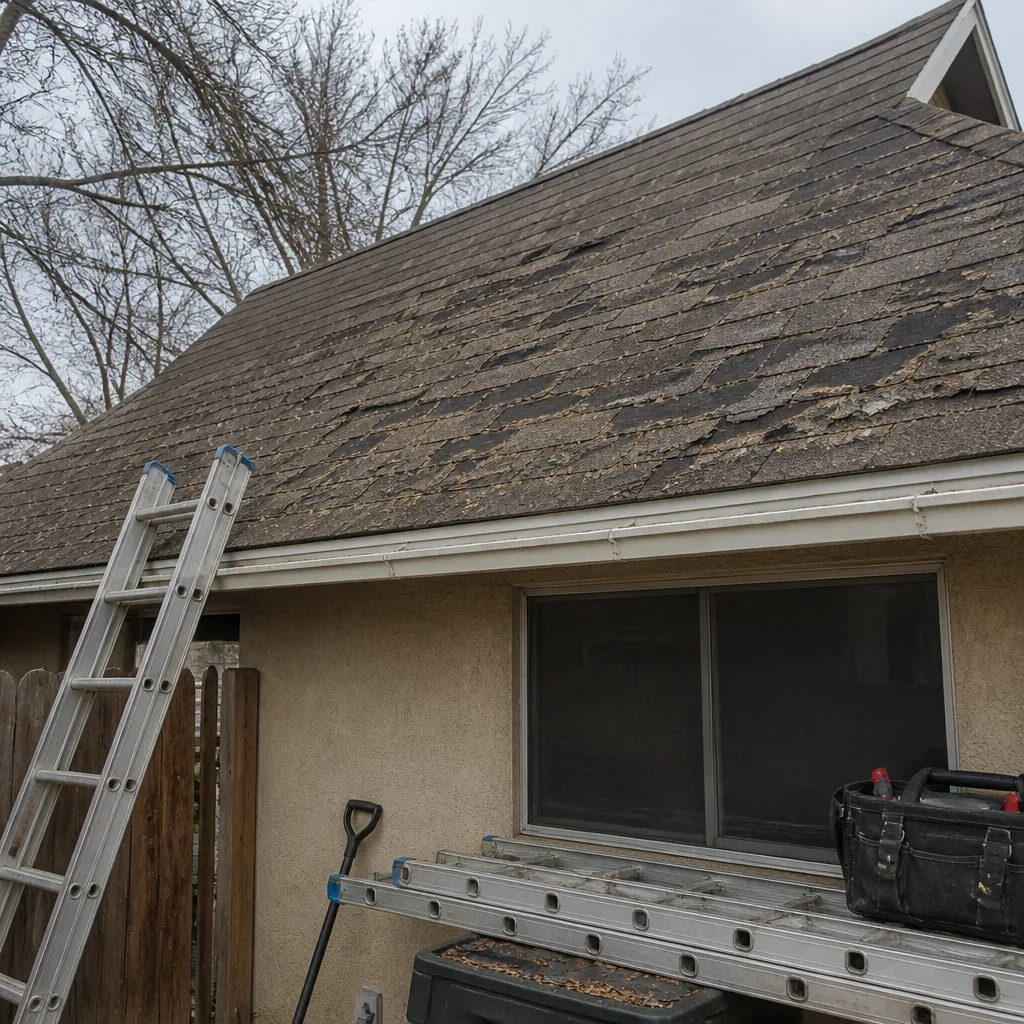 Before
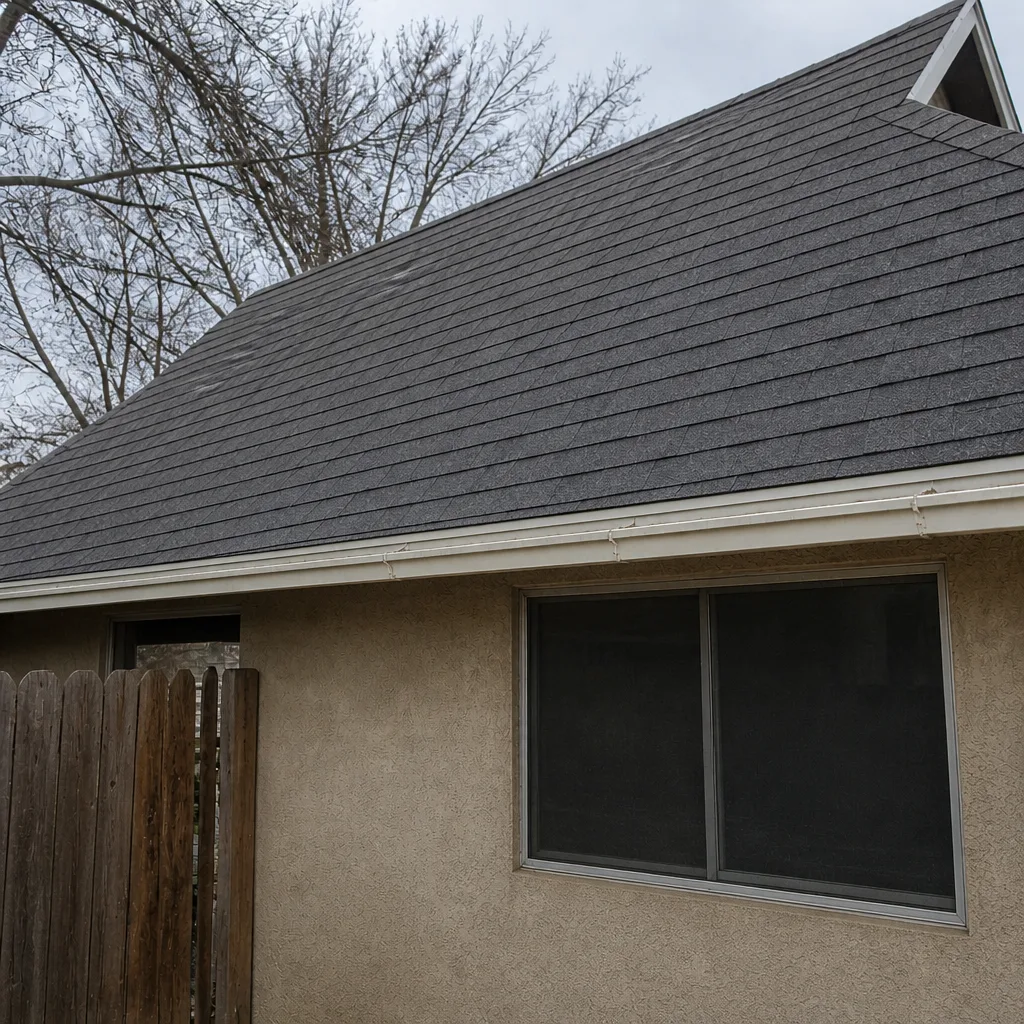 After
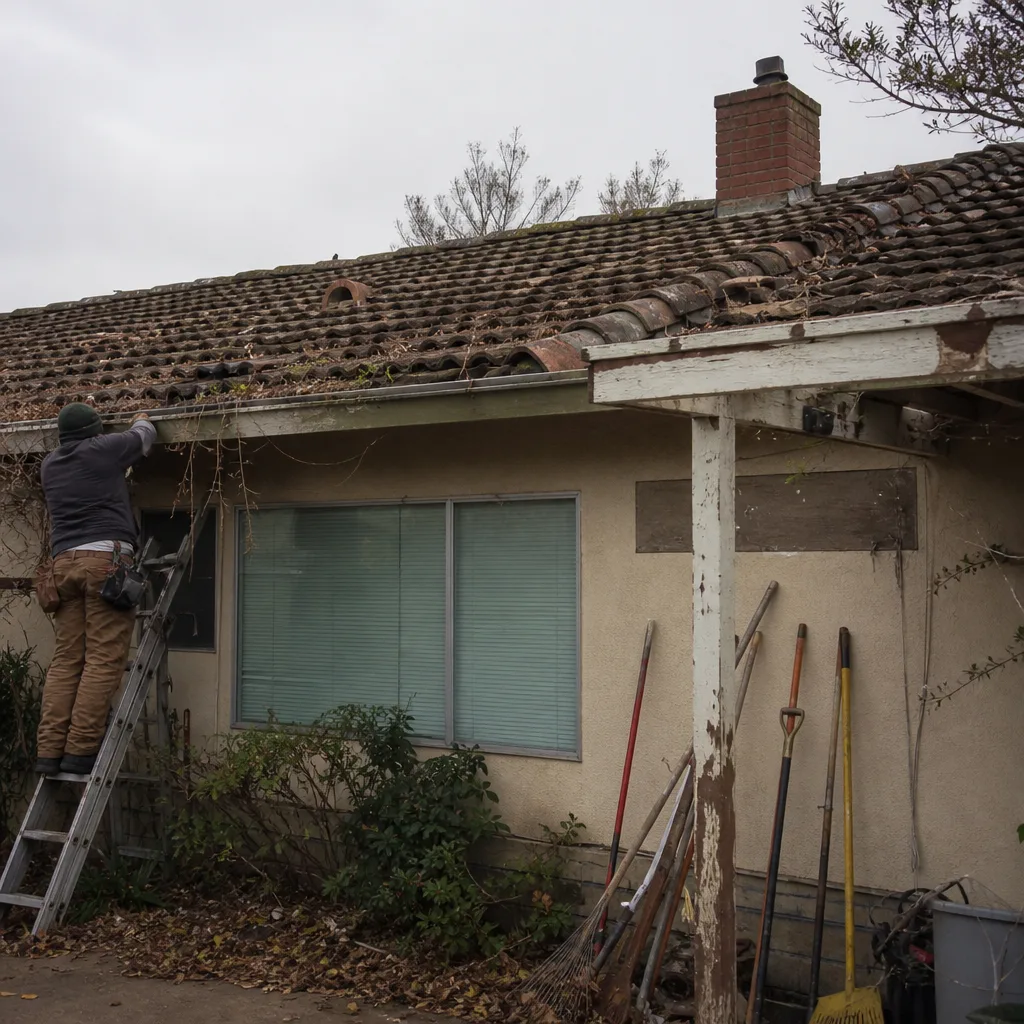 Before
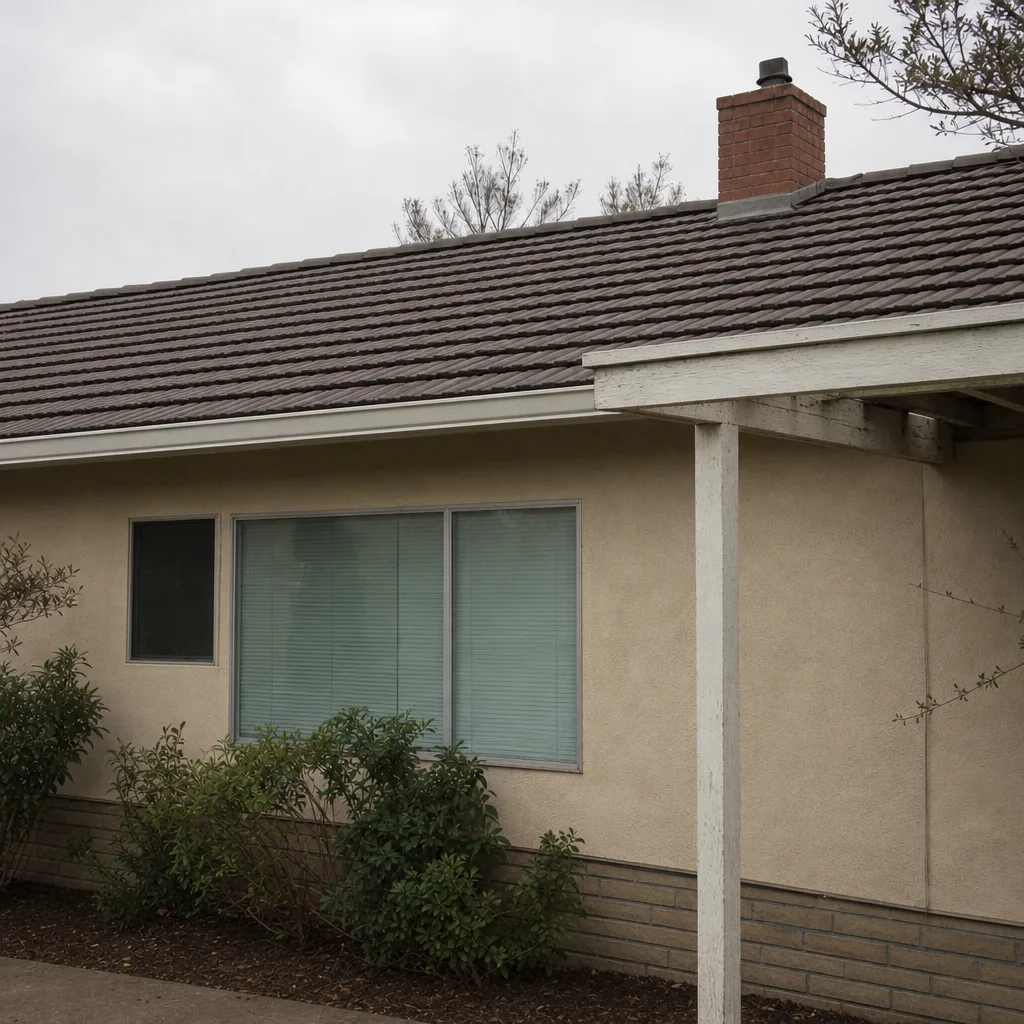 After
When to Call a Professional
Call us when you spot any of these on your roof: a shingle tab that’s been lifted for more than a week, sealant that has cracked or pulled away from flashing, daylight visible through the attic deck, water staining on a rafter or ceiling, or a valley that won’t drain. If you’ve just had a roof installed and you’re inside the 90-day window, call us for the walkaround even if the installer doesn’t offer one – we do a free second opinion on any written estimate. If a storm has hit and you’re seeing debris on the roof, call before you walk it yourself. Climbing a wet roof after a storm is the leading cause of homeowner roof injuries. Shepherd & Sons Roofing Paradise offers free estimates in Paradise – call (833) 676-0557.
Frequently Asked Questions
A new roof should be inspected at 90 days, at the one-year mark, and then twice a year (spring and fall) for the first five years. After year five, move to a full professional inspection every two to three years. The early frequency is about verifying the installation worked. The later frequency is about sealing, flashing, and drainage wear.
Check for lifted or curled shingle tabs, sealant pulling away from flashing, granule loss in the gutters, nail pops pushing through the shingle surface, and any ridge cap or rake edge that’s working loose. Do this at 80 to 85 days, not 95, so you have time to get the installer back before the workmanship warranty closes. If you’re not comfortable on a ladder, have the roofer walk it.
No. Basic maintenance like clearing gutters, trimming tree limbs, and rinsing with a garden hose is safe and doesn’t void the manufacturer warranty. What voids it is anything that changes how the roof sheds water – replacing shingles, lifting them, applying sealant to flashing, or power washing. Those require a licensed roofer.
A properly installed and maintained asphalt shingle roof in Paradise typically lasts 20 to 25 years. The desert heat and daily temperature swings speed up the aging process compared to cooler climates. Metal roofing runs longer. The maintenance schedule is what determines whether you hit the high end of that range or the low end.
Yes – and you should start it the day the crew finishes. The log should include the installation baseline (manufacturer, shingle model, number of squares, underlayment, contractor name) plus every inspection, repair, and cleaning. Insurance adjusters and warranty departments will ask for it. Without it, a claim conversation gets much harder.
It shouldn’t. Any reputable roofer gives you a written, line-item estimate before work begins and holds the price. If a crew quotes one price on the phone and another at the door, walk away. We put our estimates in writing and don’t change the number after the job starts. Call (833) 676-0557 for a free estimate on any maintenance or repair work on your Paradise roof.
The Bottom Line
A new roof is not a maintenance-free roof – it’s a roof with a different maintenance schedule for the first five years. The 90-day walkaround catches installation issues while the workmanship warranty is still open. The year-one inspection confirms the heat cycle didn’t break any sealants or flashing. Years two through five run on a twice-a-year visual walk that builds your maintenance log. After year five, move to a professional inspection every two to three years. Keep the log, don’t power wash, don’t touch the flashing yourself, and call the roofer when you’re inside a warranty window. That schedule is what makes the difference between a 20-year roof and a 12-year roof.
If you’re in Paradise and want a free second opinion on your installation or a written maintenance estimate, call (833) 676-0557. Our guys have up to 30 years of experience, a live person answers the phone any hour, and every roofing job is backed by our written 90-Day Done Right Promise.
Written by the team at Shepherd & Sons Roofing Paradise.