
Last updated November 17, 2026
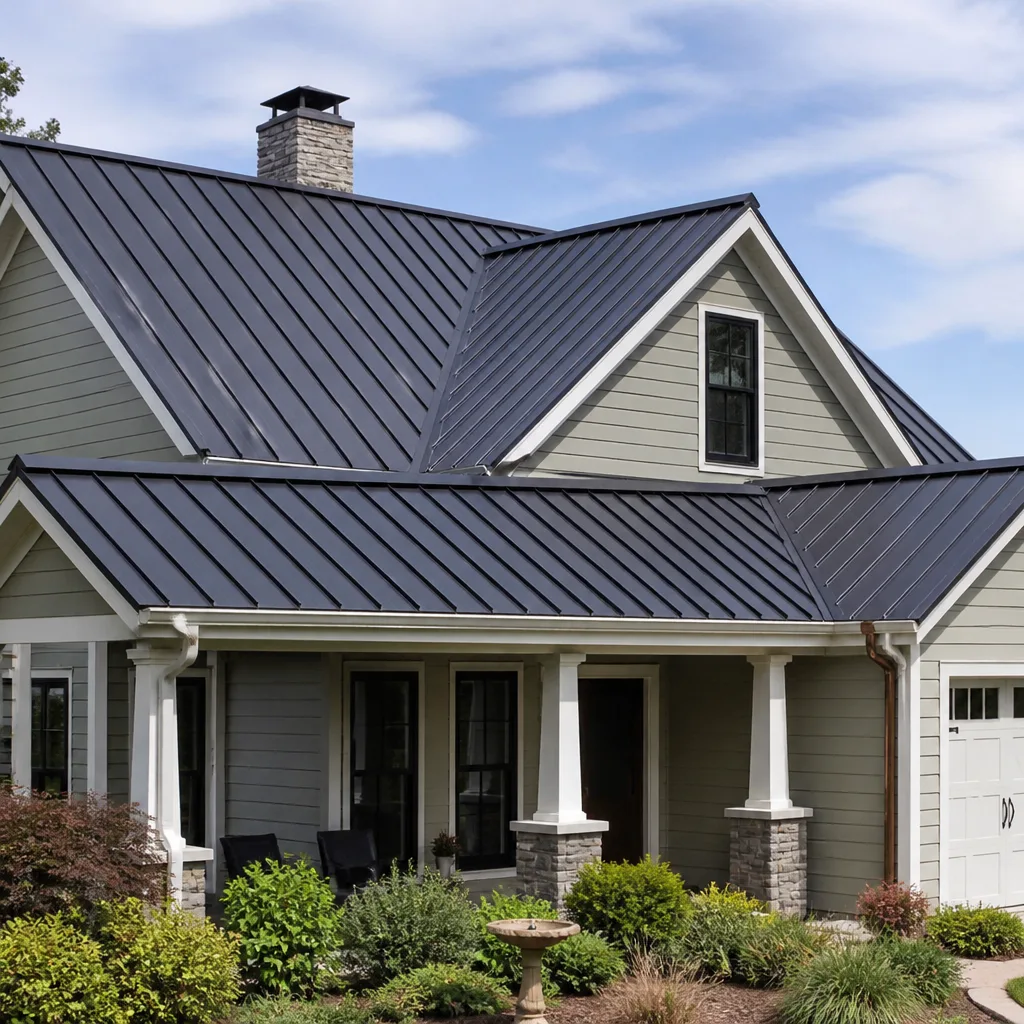 Metal roofing
 Architectural shingles
 Tile roofing
 GAF
 Owens Corning
 Flat & low-slope
Free roof inspection with deck photos before we talk money - GAF and Owens Corning certified installation
Metal Roofing Warning Signs Every Homeowner Should Know
The metal panels on a 20-year-old Paradise roof can look showroom-new the same week water is wicking through a failed pipe boot and tracking six feet along a rafter before it shows up as a stain on your ceiling. The roof looks fine. It isn’t. That’s the particular trap with metal: asphalt shingles age out loud – granules in the gutter, curling tabs, obvious wear – while metal fails quietly underneath, at the fasteners, the flashings and the penetrations. This guide walks you through the signs that actually matter, from attic condensation you can smell to the rust halo around a single screw.
Quick Answer
The most reliable metal roofing warning signs are interior ones: brown ring-shaped ceiling stains, condensation or frost on the underside of panels, and a musty attic smell that never quite clears. On the exterior, look for rust halos around fasteners, lifted panel edges, and gaps where panels meet rake and eave trim. Any of these means water is getting in or about to – and in Paradise’s high-desert climate, that gap widens fast.
Styles & brands we work with
- Architectural shingles
- Metal roofing
- Tile roofing
- GAF
- Owens Corning
- Flat & low-slope
Table of Contents
- Interior Warning Signs You Can Spot Before Exterior Damage
- The Backed-Out Fastener: What to Look For From the Ground
- Panel-to-Trim Separation at Rakes and Eaves
- Coating Fade and Chalk: Reading Your Roof’s Timeline
- Penetrations and Pipe Boots: The Quiet Failure Points
- Why Paradise Roofs Fail Differently
- When to Call Immediately vs. Add It to the Maintenance List
- When to Call a Professional
Interior Warning Signs You Can Spot Before Exterior Damage
Water almost always tells you it’s inside before it tells you it’s outside. The panels shed rain perfectly right up until they don’t, and by the time a stain shows on the ceiling, the water has usually been traveling for a while. Here’s what to look for, in order of how quickly you should act.
Ceiling stains with a ring. A brown or copper-colored ring on drywall or plaster means water has wicked through and dried at the edges. Concentric rings mean repeat wetting – not a one-time event. A single ring under a ridge or near a wall is a clue that the leak is tracking along a rafter, sometimes six to ten feet from where it enters.
Attic condensation and frost. In Paradise’s cold winter nights, warm moist air from the house hits a cold metal panel underside and condenses. Look for beads of water on the panel ribs or white frost on the underside on a cold morning. Over time, that moisture rusts the panel from the inside out – invisible from the ground.
Musty attic smell. A musty smell isn’t “old house.” It’s active mold or mildew feeding on damp framing. If you can smell it when you open the attic hatch, the moisture problem has been going on long enough to grow something.
Daylight through the roof deck. Stand in the attic on a sunny day. Any pinhole of light is a hole. A pinhole you can see is a pinhole water can find. These are the leaks we find most often on metal roofs in Paradise that have gone more than a decade without a fastener check.
- Ring stains on drywall or ceiling paint
- Condensation or frost on the panel underside in the attic
- Musty, earthy smell in the attic
- Daylight visible through the roof deck
- Rust streaks on rafters or nail plates (viewed from the attic)
The Backed-Out Fastener: What to Look For From the Ground
Metal roofs don’t usually fail at the panel. They fail at the screw. Every fastener is a small hole through the panel, and every screw holds by a rubber washer under a metal head. When that washer dries out or the screw backs out a quarter-inch, the hole becomes a leak. Here’s how to spot it without getting on the roof:
- Use binoculars from the ground in daylight. Stand at the far end of the yard with the sun at your back and run a slow pass over each roof plane. Look for dark streaks trailing down from a fastener.
- Look for “rust halos” – a ring of orange-brown staining around the head of a screw. A single halo is worth investigating. Ten in a row means the panel is losing its grip.
- Check the panel edges for lift. A panel that’s pulled its fasteners will lift at the edge first. You’ll see a small shadow line under the hem or a wavy edge that used to be straight.
- Note any screws that sit proud of the panel. A screw head sitting high is one that’s backed out. A screw head sitting low, dimpled into the panel, is one that was overdriven and has crushed the washer.
- Count the halos you see and note which roof plane they’re on. That’s the information a roofer needs to give you a straight answer.
Backed-out fasteners are common on older Paradise roofs because of the daily thermal swing – the panel expands in the afternoon sun and contracts hard on a 30-degree night. Over 15 to 20 years, that cycle walks screws out. If you’re seeing more than a handful of halos, it’s time for a real inspection. Our Metal Roofing in Paradise page breaks down how we handle a fastener check and what re-securing looks like.
Panel-to-Trim Separation at Rakes and Eaves
Where the metal panel meets the rake trim (the vertical edge at the gable end) and the eave trim (the bottom edge over the gutter), there’s a joint. That joint is held tight by fasteners, sealant or a hem, and it’s supposed to stay closed. In Paradise, it doesn’t always.
The wind out here doesn’t come in a steady push – it gusts. A 40-mph gust on a panel edge pulls the panel outward a fraction of an inch at the rake. Repeated thousands of times across a spring, that fraction of an inch becomes a real gap. Once a gap opens, two things happen fast:
- Wind-driven rain gets in. Paradise’s monsoon-season storms drive rain sideways. Water that runs down the panel face and reaches a gap at the rake gets pushed behind the trim and into the wall cavity or the eave. That’s a leak that shows up weeks later as a stain on an interior wall.
- Pests get in. A quarter-inch gap at a rake is an open door for wasps, birds and roof rats. Once they’re in, they nest in the wall cavity and the insulation, and the problem multiplies.
Check your rake and eave trim visually from the ground and from a ladder at the eave. Run a gloved hand along the trim-to-panel joint on a ladder you’ve set safely. If you can slip a finger or a pencil under the trim, the joint is open. Separation at rakes and eaves is the number-one entry point we see on Paradise metal roofs, and it escalates fast because every storm widens the gap. If you spot this on your roof, get it looked at before the next wind event – our Roof Repair in Paradise page covers how we close these joints and re-secure the trim.
Coating Fade and Chalk: Reading Your Roof’s Timeline
Painted metal panels have a factory coating – a paint system over a primer over a metallic or Galvalume substrate. That coating is what keeps the steel from rusting. When the coating degrades, the clock starts on the panel itself. The good news is the coating tells you where you are on that clock if you know how to read it.
Here’s the simple chalk test, and it’s the one I’d want you to try on your own roof before calling anyone:
- Pick three spots on different roof planes. One on the sun-facing side, one on the shade side, one near the eave.
- Rub a clean white rag or a paper towel firmly along the panel face. Rub about a foot of length.
- Look at the rag. No transfer: coating is intact. A faint, powdery film the same color as the roof: normal weathering – the coating is still doing its job. A heavy, chalky smear that coats the whole rag: the coating is breaking down and the substrate is exposed.
A little chalk is normal on any painted steel roof after a decade. It’s the difference between a weathered roof and a degrading one. Faded color on the north slope is expected. What isn’t expected is chalk so heavy it comes off in sheets, or bare spots where the paint has worn through to bare metal. Once you’re at bare metal, you’re one wet season from visible rust. If your panels are darker on the sunny side and chalky everywhere else, you’re on the tail end of that coating’s useful life.
Penetrations and Pipe Boots: The Quiet Failure Points
Every penetration – a plumbing vent stack, a furnace flue, a swamp cooler brace, a satellite mount – is a hole cut through the roof. Each one is sealed with a boot, a collar or a flashing. Rubber pipe boots have a design life well short of metal panels. The panel might last 40 or 50 years. The boot on top of it is a 12-to-15-year component in the desert sun. That’s the mismatch that bites Paradise homeowners.
Walk the exterior of your house on a sunny day and look at the vent pipes coming through the roof. What you’re looking for:
- Cracked or split rubber collars on any pipe boot
- Missing or pulled sealant at the base of a flue or vent
- Rust stains running down the panel in a line from any penetration
- Swamp cooler legs or satellite mounts that were screwed through the panel with no sealant left
A failed pipe boot is often the six-foot-tracking leak from the opening paragraph – water wicks along the panel lap, hits a rafter, and follows the wood. A little rust streak below a pipe is worth climbing up for a look. If you can’t get there safely, don’t. This is exactly the kind of thing a roofer will check for free on a second-opinion visit. Roof replacement and installation is a bigger conversation, and our Roof Replacement & Installation in Paradise page lays out when re-covering beats re-flashing a metal roof with sound panels.
Why Paradise Roofs Fail Differently
Most metal roofing guides are written for a mild, wet climate. Paradise isn’t that. Some specifics that change how a metal roof ages out here:
- High-desert swing. Afternoon highs in the 90s and overnight lows in the 30s and 40s mean the panel is expanding and contracting through a huge range every 24 hours. Fasteners walk, trim lifts, sealant dries. This is why a Paradise roof may need a fastener check at 15 years that would be a 25-year concern somewhere with a smaller swing.
- Intense UV. Yuma, Mohave and the surrounding desert counties get relentless sun. Any rubber component – pipe boots, closures, sealant – is on a shorter clock than the panels under them.
- Monsoon wind driven rain. A Paradise storm can push rain sideways. Gaps that would stay dry in a straight-down rain in another climate will leak here.
- Local building code and inspection reality. Roof replacement and repairs in Paradise are permitted, and a proper job gets inspected. That’s one of the things we look at when we’re called in for a second opinion – was the permit pulled, and does the work match the fastening and flashing requirements that got signed off?
- Neighborhood-level soil and foundation considerations. Paradise has areas where expansive soils can shift, and that movement shows up in roof trim gaps first. If rakes are opening and closing seasonally, that’s a clue.
The right takeaway isn’t that a Paradise metal roof is a bad roof. It’s that the maintainable parts need maintenance, and that component-level attention is what keeps a 40-year panel from becoming a 25-year panel. If you want the full picture of what a proper Paradise metal roof install includes from the start, start with our Shepherd & Sons Roofing Paradise home page for the overview of how we work.
When to Call Immediately vs. Add It to the Maintenance List
A lot of roofers will tell you to call the moment a rag comes back chalky. We don’t work that way. Here’s the plain decision framework I’d want my own mother using:
Call immediately
- Active leak inside. Any stain that’s growing, any water on the ceiling or wall, any drip. Call today.
- Daylight through the attic deck. That’s an open hole. It gets sealed before the next rain.
- Wide or open gaps at rakes or eaves, with visible pest entry. Once a bird or a rat has moved in, the fix gets bigger and the clock is real.
- A single panel or edge visibly lifting off the roof. That’s a wind event away from a peel. Get it tied down.
- Water pooling where it shouldn’t – damming behind a flashing, running down an interior wall, dripping in a valley.
Add it to the annual maintenance list
- A few rust halos on fasteners. Not an emergency. Worth a fastener check this year.
- Faint chalk on the rag, no bare metal. Normal weathering. Watch it annually.
- Aged but intact pipe boot on a hard-to-reach vent. Get it on the list to re-seal before it splits.
- Faded north slope. Cosmetic. Metal roofs fade. It doesn’t mean it’s failing.
- A tiny gap at a rake with no pest activity and no interior stain. Schedule a fix, don’t panic.
The line is water inside the house. A stain, a drip or an active leak is a call. Anything on the outside that’s not yet letting water in is a maintenance item. That’s the whole decision.
See the difference
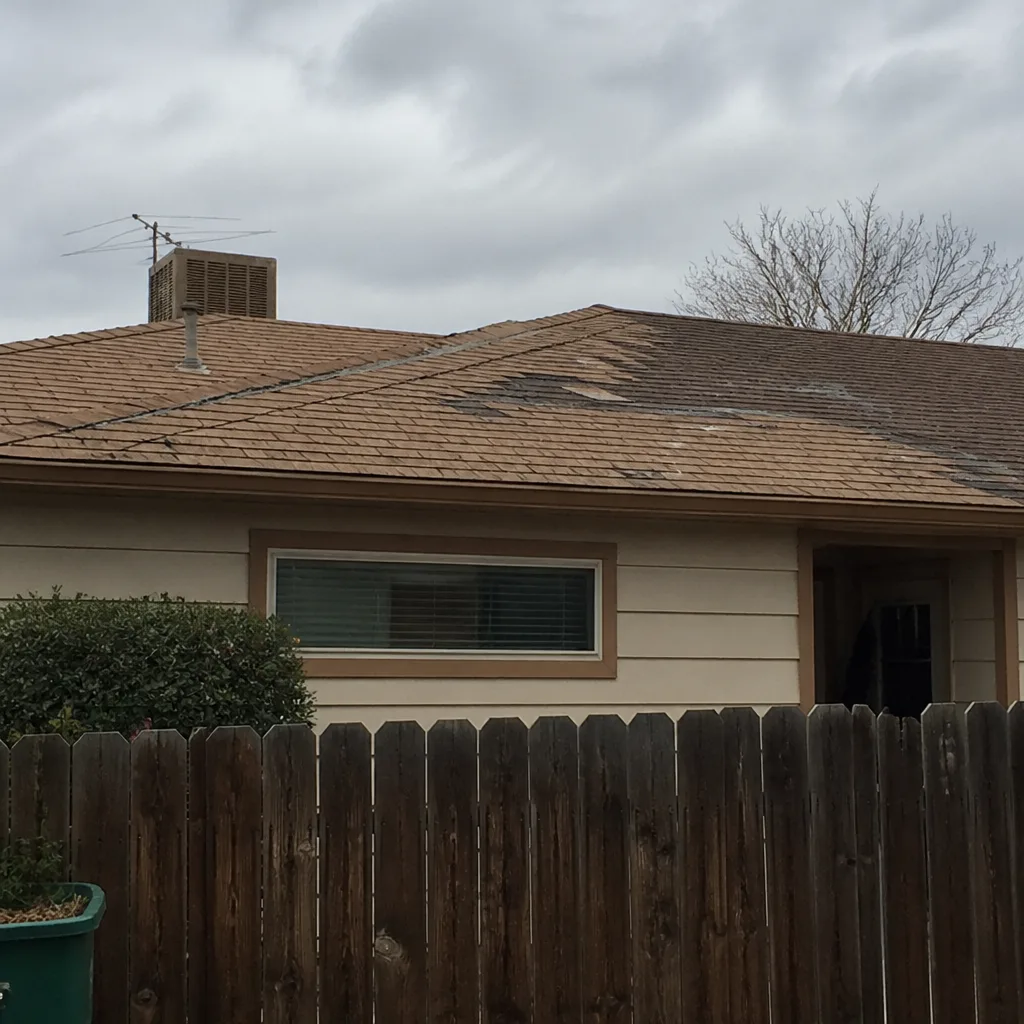 Before
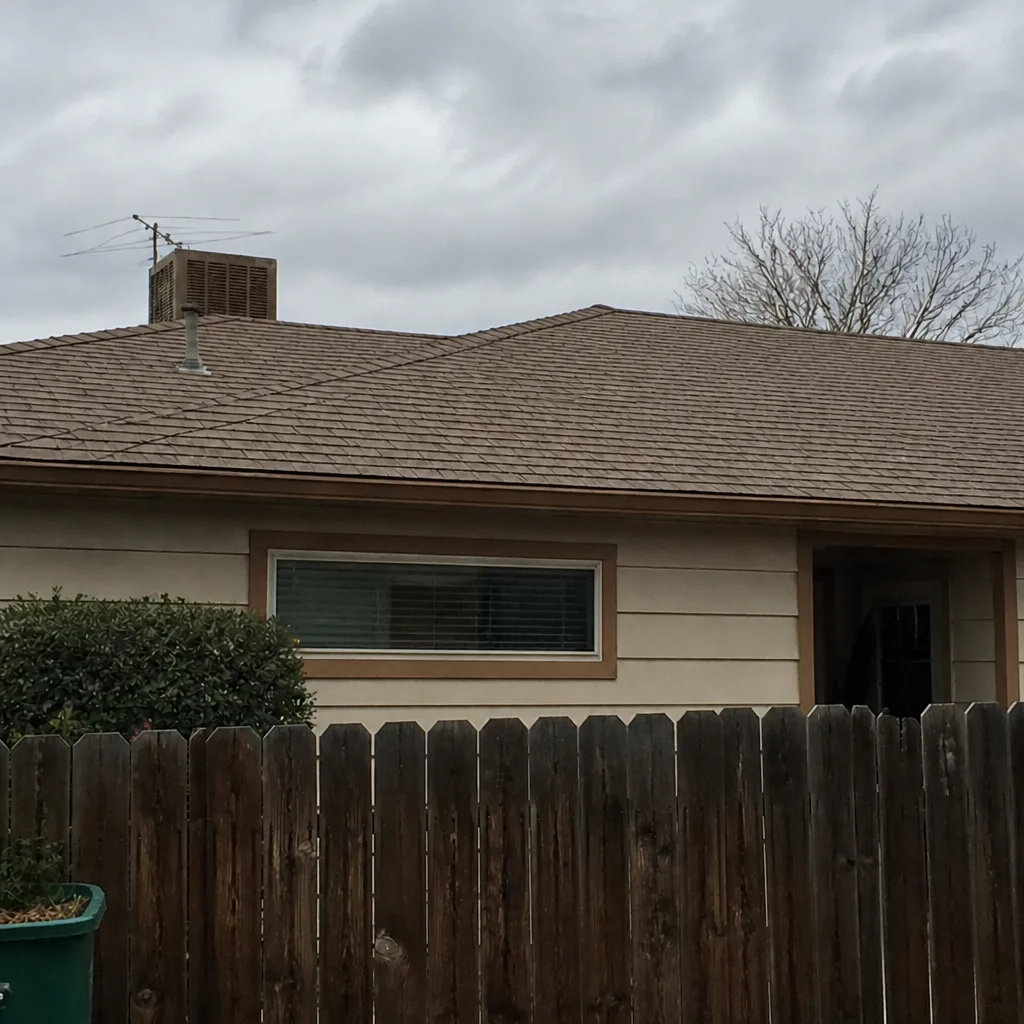 After
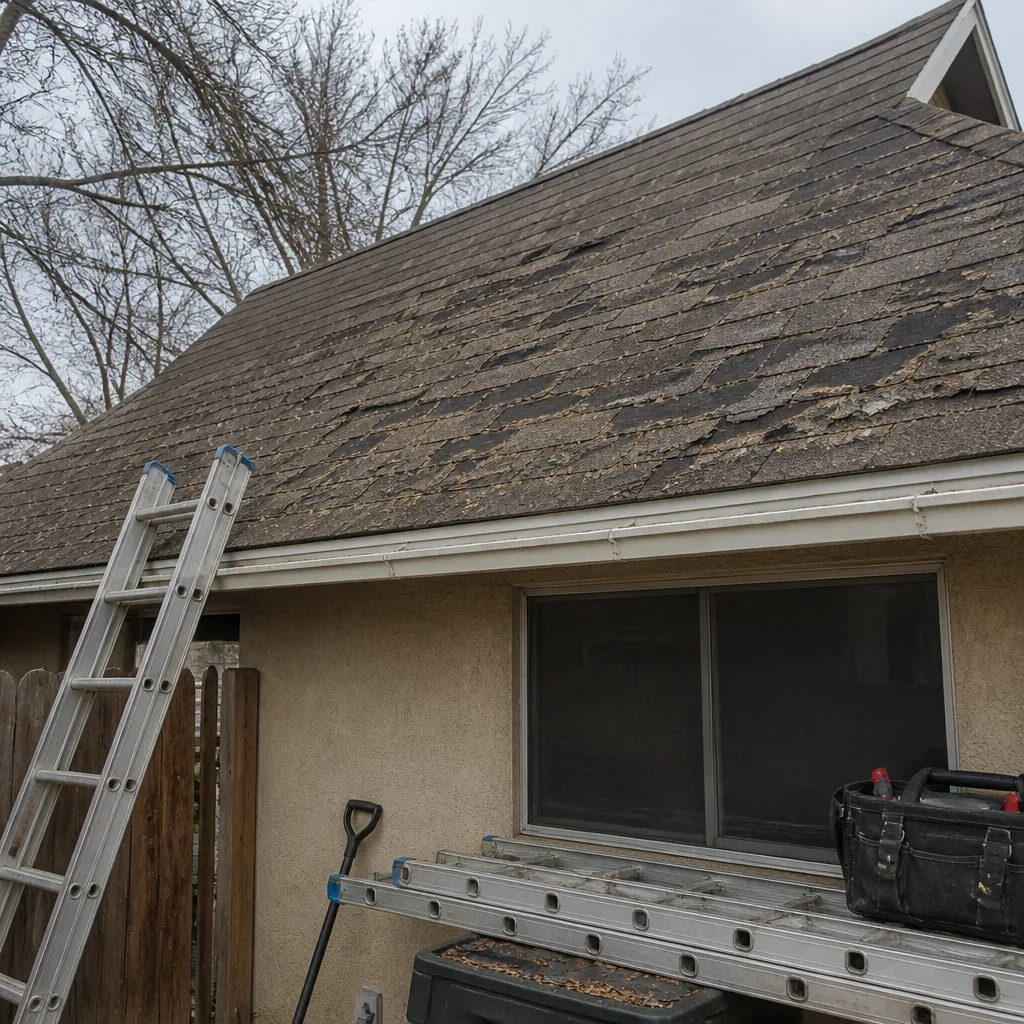 Before
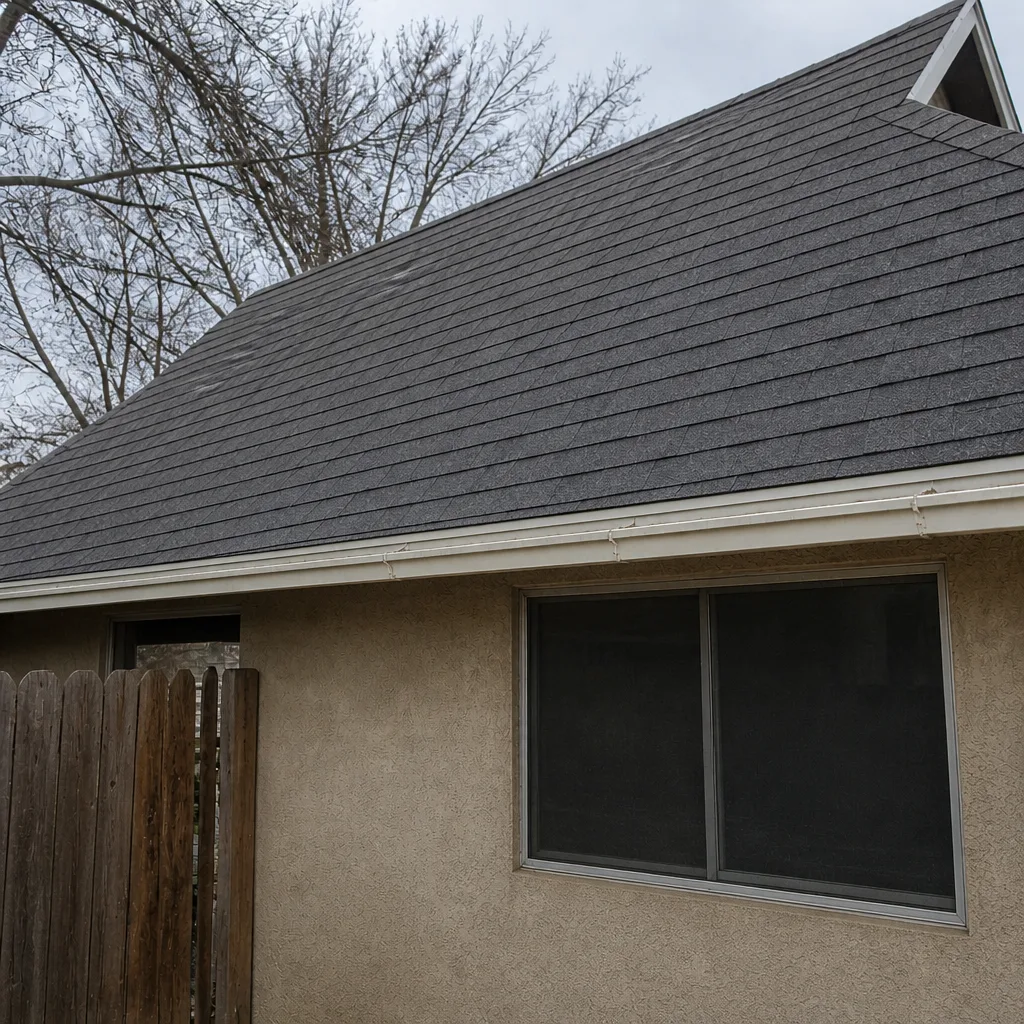 After
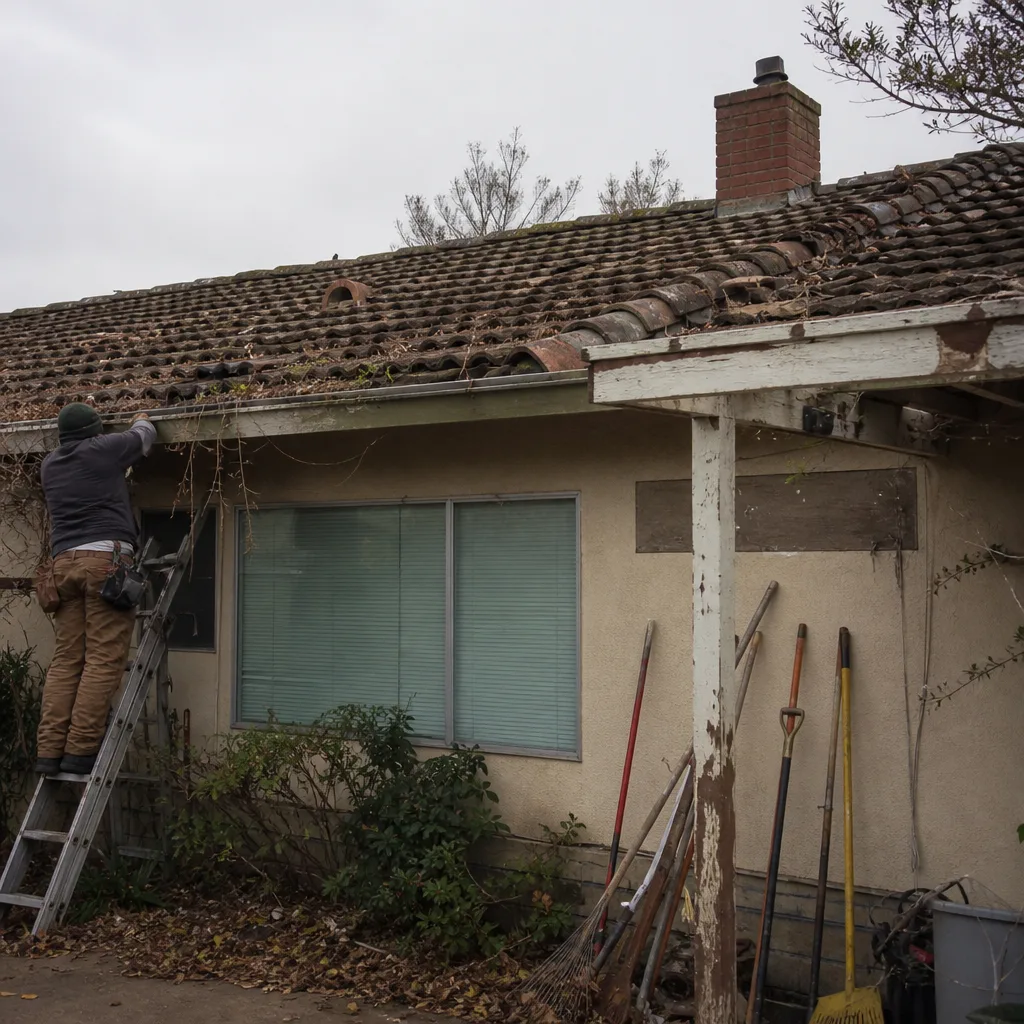 Before
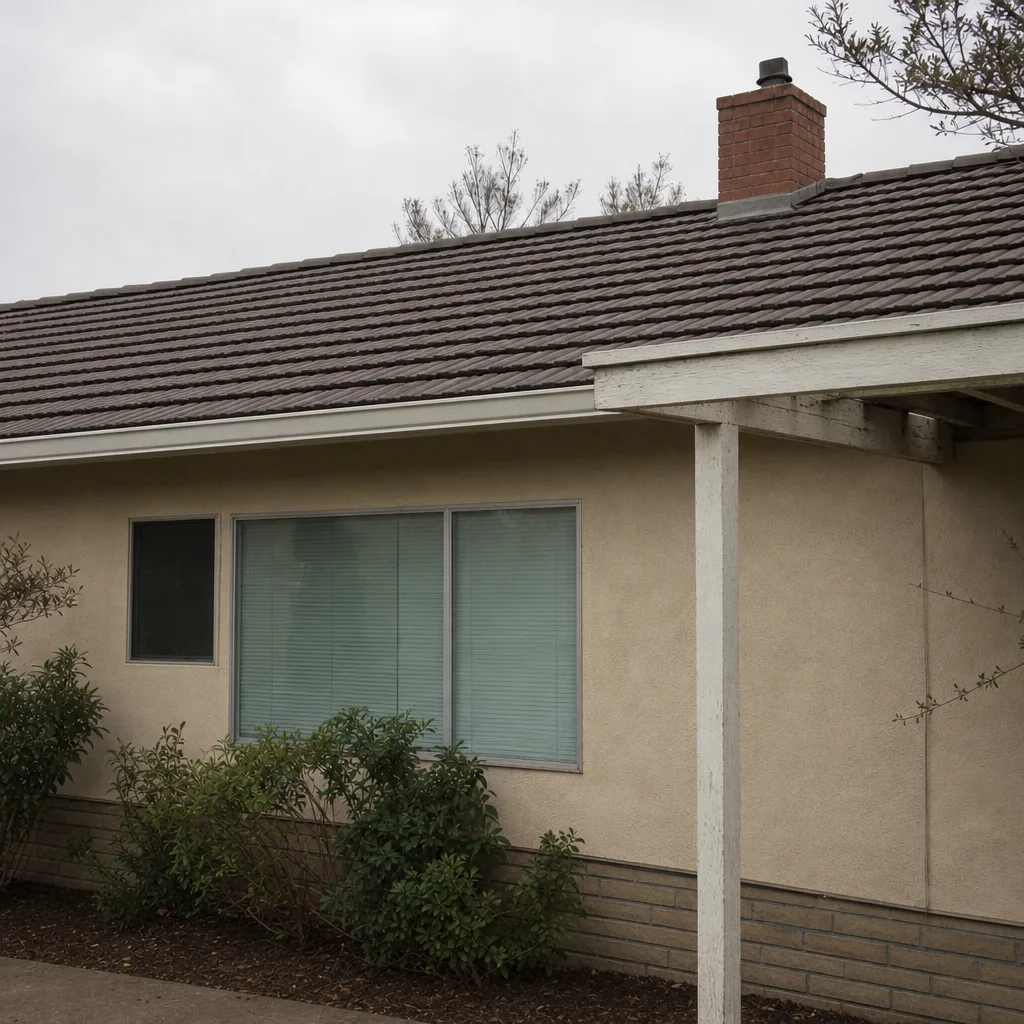 After
Common Mistakes to Avoid
- Judging the roof by the panel color. A metal roof can look showroom-new from the street while the fasteners and flashings underneath have quietly failed. The panels are the last thing to fail and the first thing people look at.
- Walking your own metal roof. Metal panels are slick, and many are not meant to be walked. In Paradise, an afternoon sun-heated panel can be 140 degrees on the surface. Get a professional to get up there safely, and get a free second opinion if someone’s already told you the roof is fine.
- Painting over a failing coating. Painting a chalky panel before it’s prepped and primed is money thrown away – the new coat lifts within a couple of seasons. Coating failure has to be addressed at the source.
- Skipping the fastener check on an “old but good” roof. A 20-year-old Paradise metal roof with original fasteners is due for a check even if it’s never leaked. Fasteners walk on schedule whether or not you notice.
- Accepting a phone quote on a metal roof. Metal roofing prices depend on panel type, thickness, seaming method and flashing detail. A number given over the phone without a look at the deck and flashings is a guess. Ask any bidder how many squares they counted.
- Hiring a storm chaser after a monsoon. Out-of-state crews sweep through Paradise after hail events. Ask for the license number and the local address. If the answer is a P.O. box, walk.
- Ignoring a musty attic smell because “it wasn’t there last year.” That smell is the first sign of moisture that’s been growing for a while. It doesn’t fix itself.
When to Call a Professional
Call us the moment you have any of these: water staining a ceiling or wall, daylight through the roof deck, a panel you can see lifting from the ground, or wind-driven rain coming in at a rake or eave. Also call if you’ve done the chalk test and come back with heavy chalk, bare metal or rust. And call if you’ve had a written estimate from another roofer and something about it doesn’t sit right – a free second opinion on any written estimate is one of the standing offers we keep, and it’s the fastest way to know whether the number in front of you is honest.
Shepherd & Sons Roofing Paradise offers free estimates in Paradise – call (833) 676-0557. A live person answers, 24/7, including after a storm. Every roofing job is backed by our written 90-Day Done Right Promise. If it’s not done right, one call brings us back. We install products from GAF, CertainTeed, Owens Corning and Boral, and we carry the same name and same address we’ve had since 1996.
Frequently Asked Questions
A well-installed metal roof in Paradise typically lasts 40 to 50 years on the panels, but the components on top of it don’t – pipe boots are good for 12 to 15 years, and sealants need attention well before that. Treat a metal roof as a 45-year panel with a 15-year maintenance cycle and you’ll get the full life out of it. Call (833) 676-0557 for a free inspection and a straight answer on your roof’s remaining timeline.
Backed-out fasteners and open rake trim, in that order. Both are hidden from the street. The reason they’re common in Paradise is the big daily temperature swing, which works screws out and pulls trim joints open a fraction of an inch at a time. Call (833) 676-0557 to get both checked; estimates are free.
Yes – that’s the whole point of this guide. The leak usually starts at a fastener, boot or flashing, and the water travels along a rafter or panel lap before it shows up inside. By the time you see a ring on the ceiling, the water has been moving for a while. If you see a stain, call (833) 676-0557.
Not always. A faint powdery transfer on a rag is normal weathering. Heavy chalk with bare metal showing is a coating that’s failing and needs attention before rust starts. That’s the whole point of the chalk test. If yours is in the heavy category, call (833) 676-0557 and we’ll take a look for free.
Not with us if we’ve seen the roof and given you a written line-item quote. A phone estimate on a metal roof is a guess; a written quote after a walk of the roof is a price. We put it in writing. Call (833) 676-0557 for a free estimate.
For work that requires a permit, yes – and the inspection is part of the job. That’s one of the things we check on a second-opinion visit: was the permit pulled on the last job, and does the work match what got signed off? Call (833) 676-0557 for a free estimate and we’ll cover the permit question on your roof.
The Bottom Line
Metal roofing doesn’t fail at the panel first. It fails at the fasteners, the flashings, the penetrations and the trim, and in Paradise’s high-desert climate that schedule is compressed by the daily temperature swing and the UV. Your job as a homeowner is to look in three places: at the ceiling for stains, in the attic for condensation and smell, and along the rake, eave and pipe boots from the ground. One rust halo is a maintenance item. A stain, a drip or daylight through the roof deck is a call today. We’ve been at the same address since 1996, and we’ll show you the deck photos before we talk money.
When you’re ready, call (833) 676-0557 for a free estimate. A live person answers, day or night. A free second opinion on any written estimate is always available, and there’s no trip charge inside our own county.
Written by the team at Shepherd & Sons Roofing Paradise.