
Last updated November 17, 2026
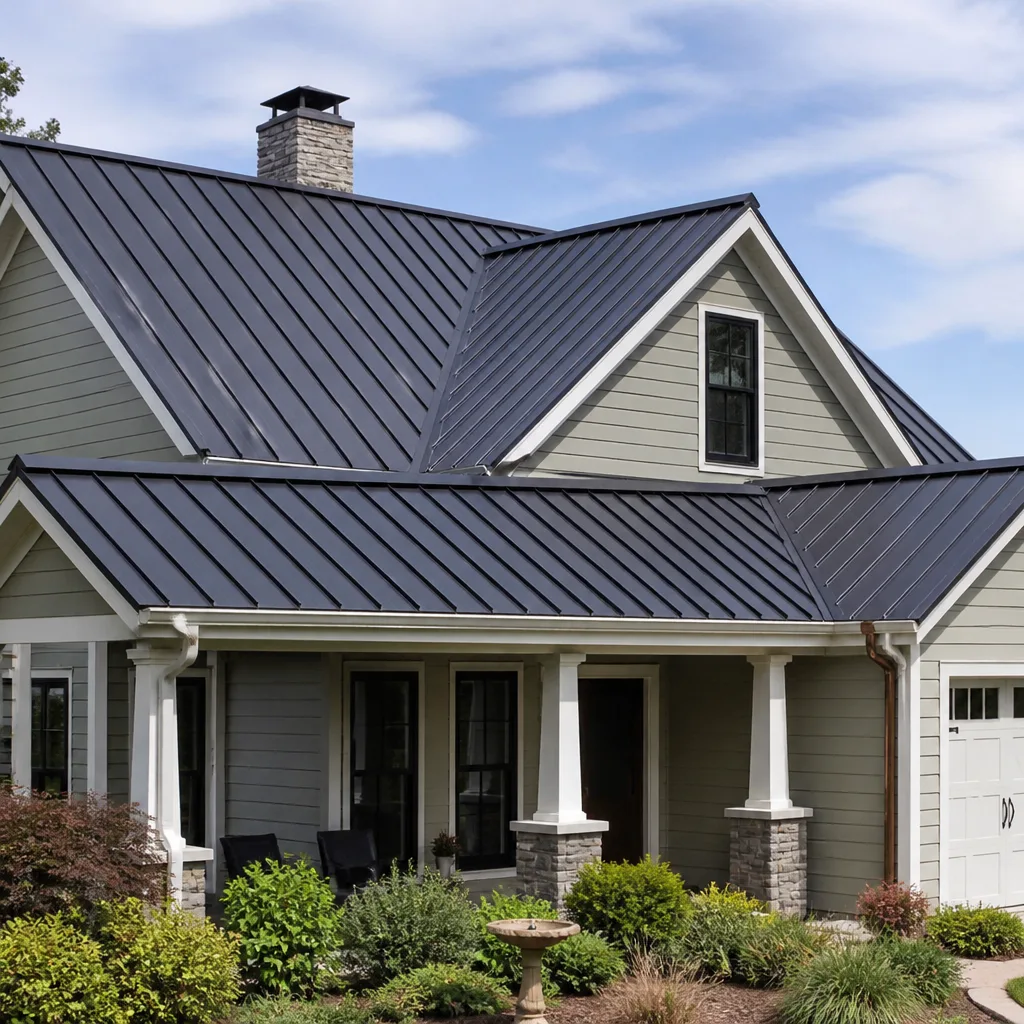 Metal roofing
 Architectural shingles
 Tile roofing
 GAF
 Owens Corning
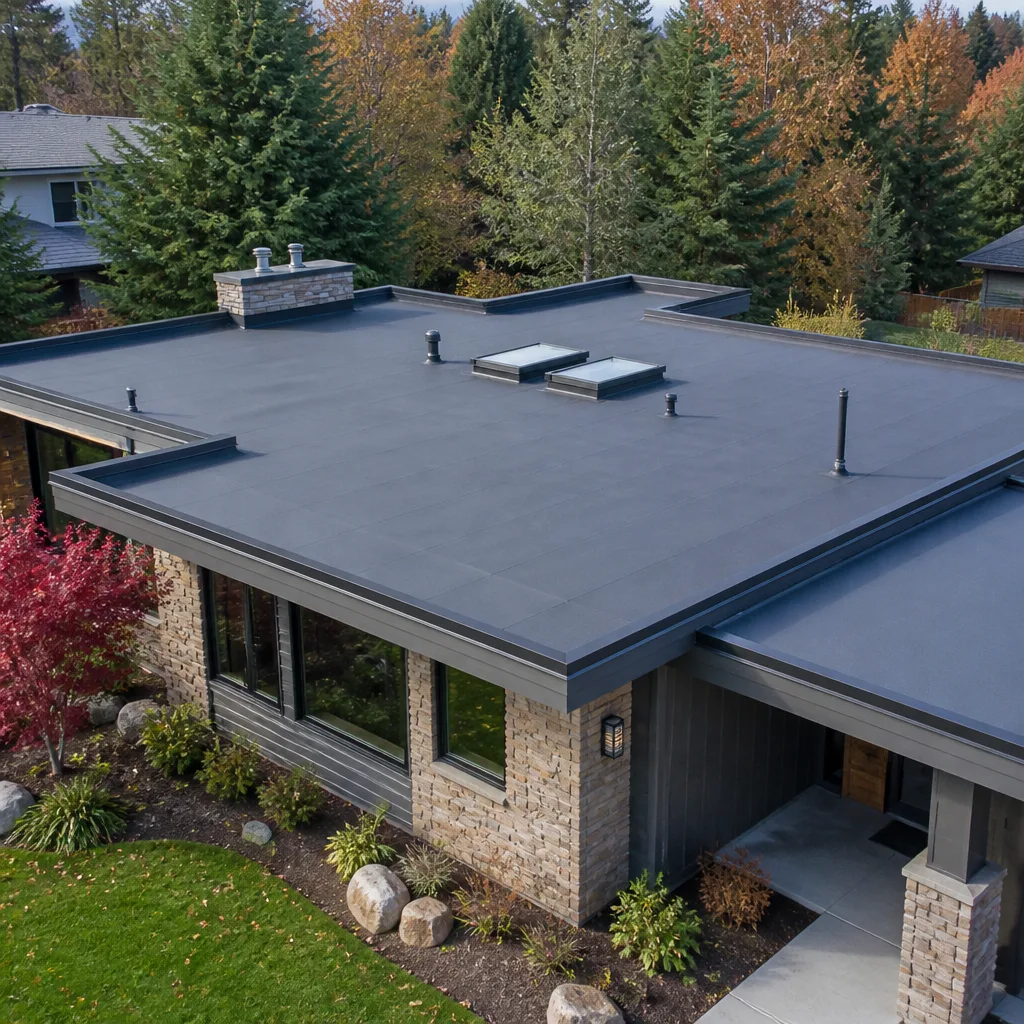 Flat & low-slope
Free roof inspection with deck photos before we talk money - GAF and Owens Corning certified installation
Roofing Emergency Preparedness Guide for Paradise Homes
When a monsoon storm rips a section of flashing off your roof at 9 PM on a Tuesday, you have about 36 hours before the next wave moves in. That window is everything. The homeowners who come out of a storm with a $600 tarp bill and a dry house are almost never the ones who reacted fastest in the moment. They’re the ones who had a kit ready in the garage and knew three moves to make before they touched a phone. In our experience across Paradise, the difference between a manageable repair and a $6,000 water-damage claim usually isn’t luck. It’s preparation you do on a clear, boring afternoon weeks before the first storm rolls through the valley. This guide walks you through the kit, the photos, the attic check, and the call that actually gets someone to your roof.
Quick Answer
To prepare for a roofing emergency in Paradise, stage a kit in your garage before storm season (pre-cut tarp, roofing cement, correct fasteners, gloves, a flashlight), document damage with photos in a specific order before anyone touches the roof, and call a licensed local roofer directly rather than a truck that appears after the storm. The first hour after damage is discovered matters more than the rest of the week combined.
Styles & brands we work with
- Architectural shingles
- Metal roofing
- Tile roofing
- GAF
- Owens Corning
- Flat & low-slope
Table of Contents
- What to Stage in Your Garage Before Storm Season
- The First Hour: Three Steps That Protect Your Claim
- The Documentation Sequence for Insurance
- How to Assess Damage Safely From the Attic
- What Emergency Tarping Really Costs in Paradise
- How Shepherd & Sons Handles After-Hours Emergency Calls
- Common Mistakes to Avoid
- When to Call a Professional
What to Stage in Your Garage Before Storm Season
The single biggest mistake we see in Paradise is waiting until the storm is overhead to assemble supplies. By then the hardware store on the highway is picked clean and you’re taping a garbage bag to your roof in 40 mph gusts. Build the kit in May, before the monsoon pattern sets up, and leave it in the same spot every year.
Here’s what belongs in it:
- A pre-cut tarp, sized and folded. Cut a 12×16 heavy-duty tarp down to roughly the size of your largest realistic breach, plus two feet of overlap on every side. Pre-cut it so you’re not fighting a 30-foot tarp on a ladder in the dark.
- Plastic cap nails or roofing nails with washers. These hold a tarp flat without tearing it. Avoid deck screws and drywall screws. They crack shingles, punch through the underlayment, and create secondary leak points that cost more than the original damage.
- A bucket of roofing cement. This is the item most people skip, and it matters most in a monsoon. Spray-on sealant foams up when it hits standing water and peels within a season. Roofing cement stays pliable, bonds to wet surfaces, and holds through a downpour. A quart-sized tub with a putty knife beats three cans of spray every time.
- Heavy leather gloves, safety glasses, and a headlamp. Not a phone flashlight. You need both hands free.
- A roll of peel-and-stick underlayment. For gaps too big for cement and too small for the tarp.
- A copy of your insurance policy number and your roofer’s number, taped inside the lid of the kit. You do not want to be searching for it at 9 PM.
Store the whole thing in one bin. Label it. Total cost runs about $80 to $120 if you buy it all at once, which is less than a single emergency house call from an out-of-town truck.
The First Hour: Three Steps That Protect Your Claim
When you discover a breach in the middle of a Paradise storm, adrenaline makes people do the wrong thing. They climb the roof. They call five roofers in a panic. They start moving furniture and skip the photos. Do these three steps in this order.
- Stop the water going down, not the water coming in. Get inside first. Move furniture, electronics, and anything on the floor out from underneath the leak. Put buckets down. If water is pooling in the attic, do not step into it on a wet joist in the dark. Get the water off the floor and off your belongings first.
- Document before you touch anything. Photos and video, in a specific sequence. More on that below. Ten minutes of photos is the difference between a claim that moves forward and one that stalls out in review.
- Call one roofer, not five. The instinct is to call every number you can find. That’s wasted time. The first responder who gets there and tarped is the one whose name goes on the claim, and multiple simultaneous calls create confusing paper trails. Pick the roofer you already trust and call them directly.
Notice the order. It’s not roof, then interior, then photos. It’s interior, then photos, then the call. Get that sequence right and the rest of the week is manageable.
The Documentation Sequence for Insurance
Photos are not just proof that damage happened. They’re the map adjusters use to approve the claim. Take them in this order, and take a lot. In our experience, claims with a complete photo set close faster and with fewer back-and-forth questions than claims with three blurry shots taken after the tarp went on.
- Wide shots first. Stand back and photograph the outside of the house, the roof line, the yard, and any debris. This establishes context and the time-stamp.
- Close shots of the damage from the ground. From a safe viewpoint, zoom in on the visible damage. Right where it happened. Not from the roof.
- Interior damage, spreading out. Photograph the water stain on the ceiling wide, then closer, then a close-up of the edge so the adjuster can see how far it has spread. Repeat for every stain in every room.
- Belongings that got wet. Furniture, rugs, electronics. Photograph them where they sit before you move them, and photograph them again in a pile after.
- Date-stamp and note the time. If your phone doesn’t date-stamp, text yourself the photos. That creates a timestamp on the message.
- Only after all of that, let anyone touch the roof. The tarp goes on after the photos come in. Once the roof is tarped, you can’t go back and take those first photos.
Email yourself the whole set before you file the claim. Cloud storage is fine, but an email timestamp is simple and hard to argue with.
If you need to reset and rebuild rather than just repair, our Roof Replacement & Installation in Paradise page goes through the process and what it costs.
How to Assess Damage Safely From the Attic
You cannot inspect your roof from the roof during a storm. Wet shingles, dark, wind, and a sloped surface are how people fall off houses. The attic is where you assess from, and even that comes with rules.
Before you go up:
- Wait for daylight or have a bright, reliable headlamp. Never climb an attic ladder by phone light.
- Have someone hold the bottom of the ladder. A second set of eyes catches what yours won’t.
- Do not walk on wet joists or insulation. Step only on the tops of the joists, and only when they’re dry. A wet joist is slicker than it looks.
- Turn the attic light on and carry a flashlight anyway. Light fixtures fail in storms.
What to look for once you’re safely up there:
- Active drips and where they’re coming from along the underside of the roof deck.
- Daylight shining through between deck boards. Any daylight equals a breach.
- Dark water stains on the underside of the sheathing, especially around chimneys, plumbing boots, and valleys.
- Wet or compressed insulation. Water travels sideways along insulation fibers, so the ceiling stain is not always under the actual leak.
- Rusty nail tips poking through the deck. That tells you the leak is direct and long-standing.
None of this is a substitute for a professional inspection. It’s what lets you give a roofer a clear picture on the phone and know whether your damage is cosmetic or active. If you spot active dampness in the attic or on a ceiling below, that’s the moment to call. Our Roof Repair in Paradise team can walk you through what we’d look at before anyone climbs up there.
What Emergency Tarping Really Costs in Paradise
Here’s where the numbers matter most, and where storm-chasers take advantage. Emergency tarping in Paradise from a licensed local contractor typically runs in the $150 to $350 range for a standard breach, plus materials if you don’t have them. The exact number depends on pitch, height, and how accessible the damage is.
What’s less obvious is what the truck that appears two blocks down the road charges. It’s usually $600 or more, paid in cash or by card before the tarp goes on, and it’s never the roofer who comes back if the temporary fix fails. Many of these outfits are out of state and gone by the following week. Here’s how to spot the difference:
| Type of provider | Typical price | What you get |
|---|---|---|
| Licensed local roofer | $150 – $350 | Licensed, insured, named, comes back, warranty on the work |
| Storm-chaser truck | $600+ | Cash first, out of state next week, no warranty, no accountability |
Ask any tarp provider two questions before they touch your roof. First, “What’s your license number?” Second, “What’s your shop address?” A local roofer answers both without hesitation. A storm-chaser stumbles on one or both. Our team is licensed and insured, and our address is public. That’s the standard every Paradise homeowner should hold a roofer to, whether it’s us or someone else.
You can also skip the tarp call and get a free second opinion on any written estimate if you already have one. Read our guide to second opinions before you sign anything.
How Shepherd & Sons Handles After-Hours Emergency Calls
Here’s what happens when you call us at 9 PM on a Tuesday after a storm. A live person picks up. Not a call center, not a voicemail, not a form. Someone with a name answers and takes down your address, the nature of the damage, and what you’ve already done to protect the interior. Bill or a crew member gets on the phone with you if needed, and you’ll know within that conversation when someone will be out and what to expect.
We’ve been at the same address since 1996, and our number has always been answered by a real person after hours. Our technicians have up to 30 years of experience, and every roofing job we do carries our 90-Day Done Right Promise in writing. When we tarp your roof, the tarp is part of the job. If the repair or replase work we do after the tarp is wrong, one call brings us back to make it right.
What we won’t do is promise a response time we can’t keep. During a major storm, roofs across Paradise are calling in at once, and we’re honest about that. What we can promise is that you’ll talk to a person, get a real answer, and know exactly where you stand before you hang up. If your roof is damaged and the next wave is coming, talk to the Shepherd & Sons Roofing Paradise team or call us directly at (833) 676-0557. Estimates are free, and we don’t charge a trip fee inside our own county.
If metal roofing is on your radar, our Metal Roofing in Paradise page covers what holds up best through storm season.
Common Mistakes to Avoid
- Climbing the roof to “take a quick look.” Wet shingles are the number one source of storm-season injuries in Paradise. Assess from the ground and the attic only.
- Skipping photos because you’re panicking. The ten minutes you spend photographing the damage in sequence are the ten minutes that protect your claim. Once a tarp goes on, those photos are gone forever.
- Using spray sealant instead of roofing cement. Spray foam breaks down in standing water and peels off within a season. Roofing cement bonds to wet surfaces and holds through a monsoon. It’s the difference between a temporary fix and a second leak.
- Signing anything a storm-chaser hands you the night they arrive. If they quote on the phone and it changes at the door, walk away. If they can’t name a license number and a shop address, they’re gone by next week and you’re left holding the repair bill.
- Calling five roofers at once and getting five tarps quoted. It sounds efficient. It creates confusion on your insurance claim and wastes hours you don’t have. Call one roofer you trust and work with them.
- Ignoring small ceiling stains in the days after a storm. Water travels sideways along insulation. The stain in the corner of the closet is often the first sign of damage three feet away. If you see any stain, get it looked at.
- Assuming the kit will last forever. Roofing cement dries out, tarps crack in the sun, and gloves rot in a garage bin. Check the kit once in May and replace anything expired. That five-minute check is worth more than a bucket of new supplies in October.
When to Call a Professional
Not every storm finding needs a call. A single missing shingle on a low-pitch section can usually wait a few days. But here’s when you call us the same day:
- Active water coming through the ceiling or dripping into the attic.
- Any breach that’s more than a couple of shingles wide and sitting over a living space.
- Daylight showing through the roof deck from inside the attic.
- Damage near a chimney, skylight, or plumbing boot, where leaks are hardest to spot.
- Granules washing off shingles in volume. That means the shingle is at the end of its life, and it won’t hold for the rest of the season.
- Any roof over a bedroom, nursery, or finished interior space.
If you’re not sure, call. A free inspection costs you nothing and saves you a claim. Shepherd & Sons Roofing Paradise offers free estimates in Paradise. Call (833) 676-0557.
See the difference
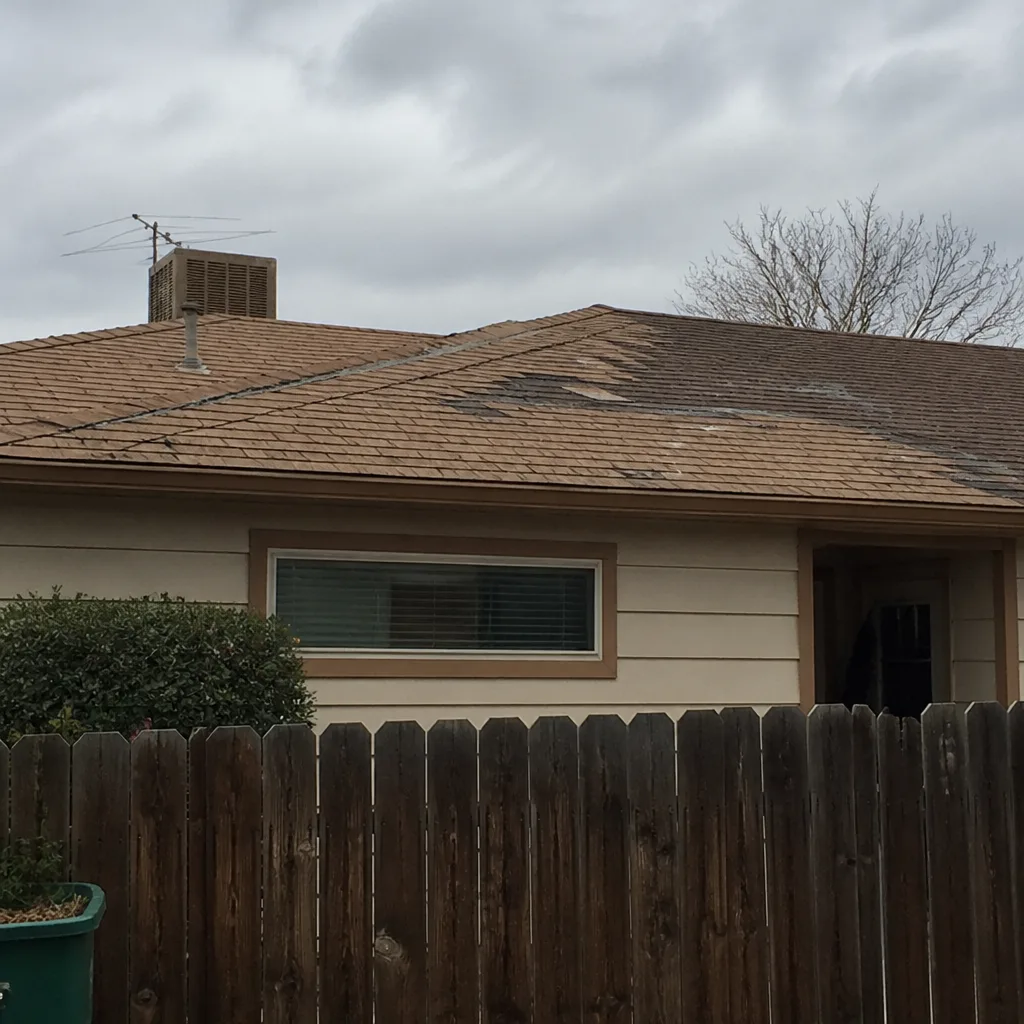 Before
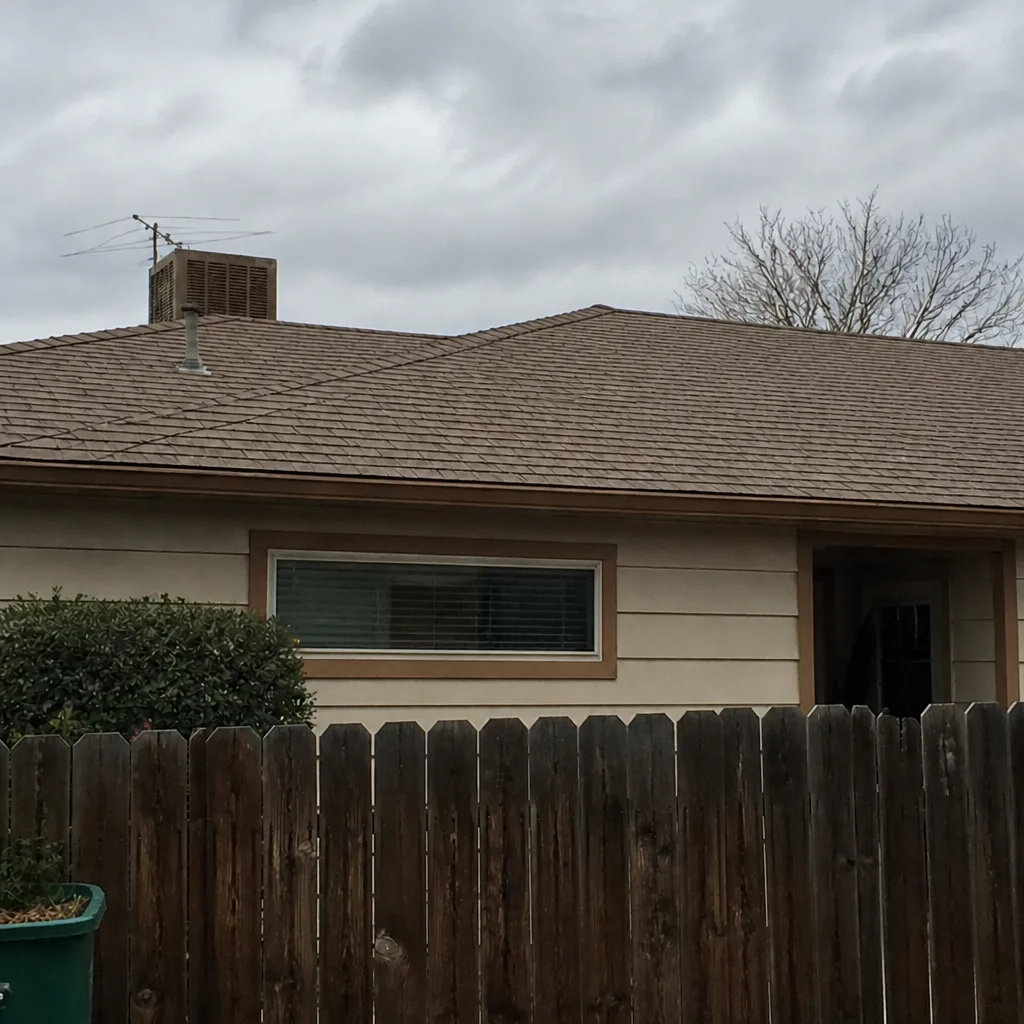 After
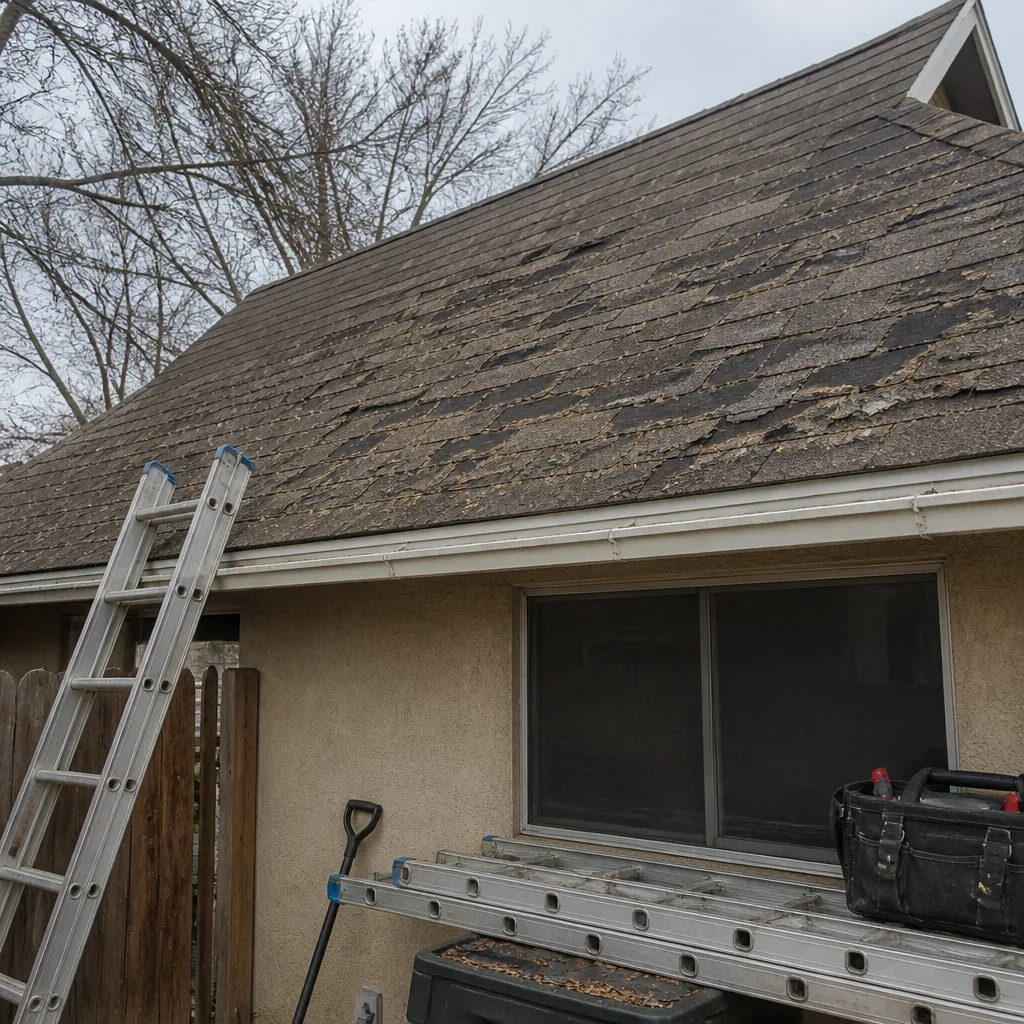 Before
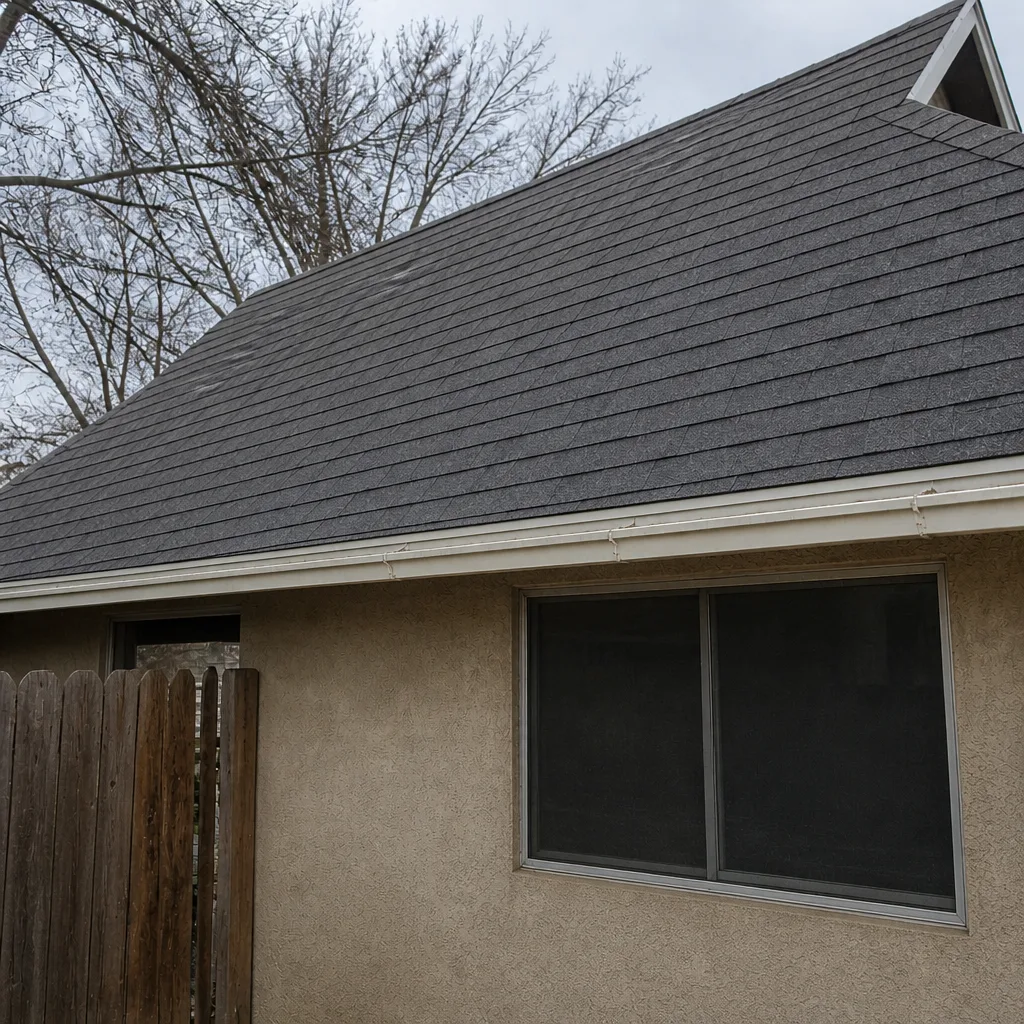 After
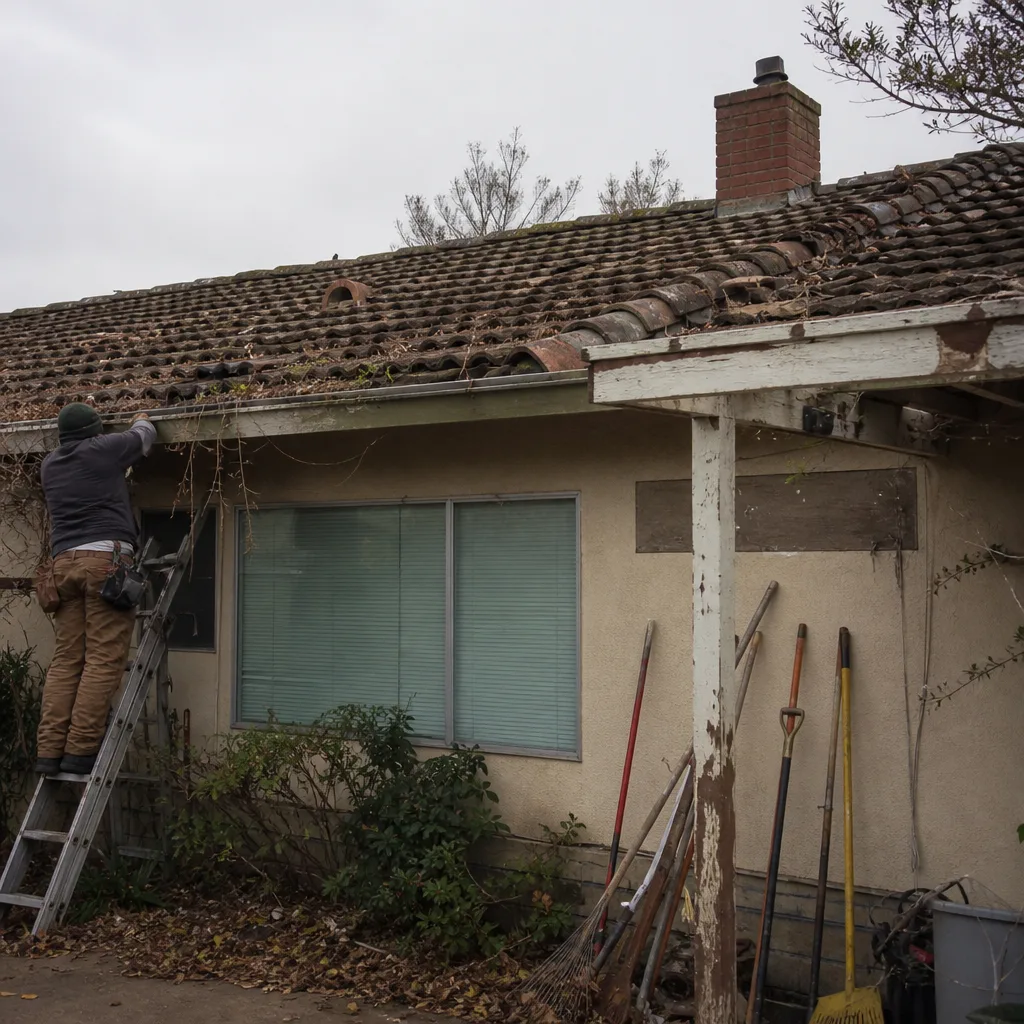 Before
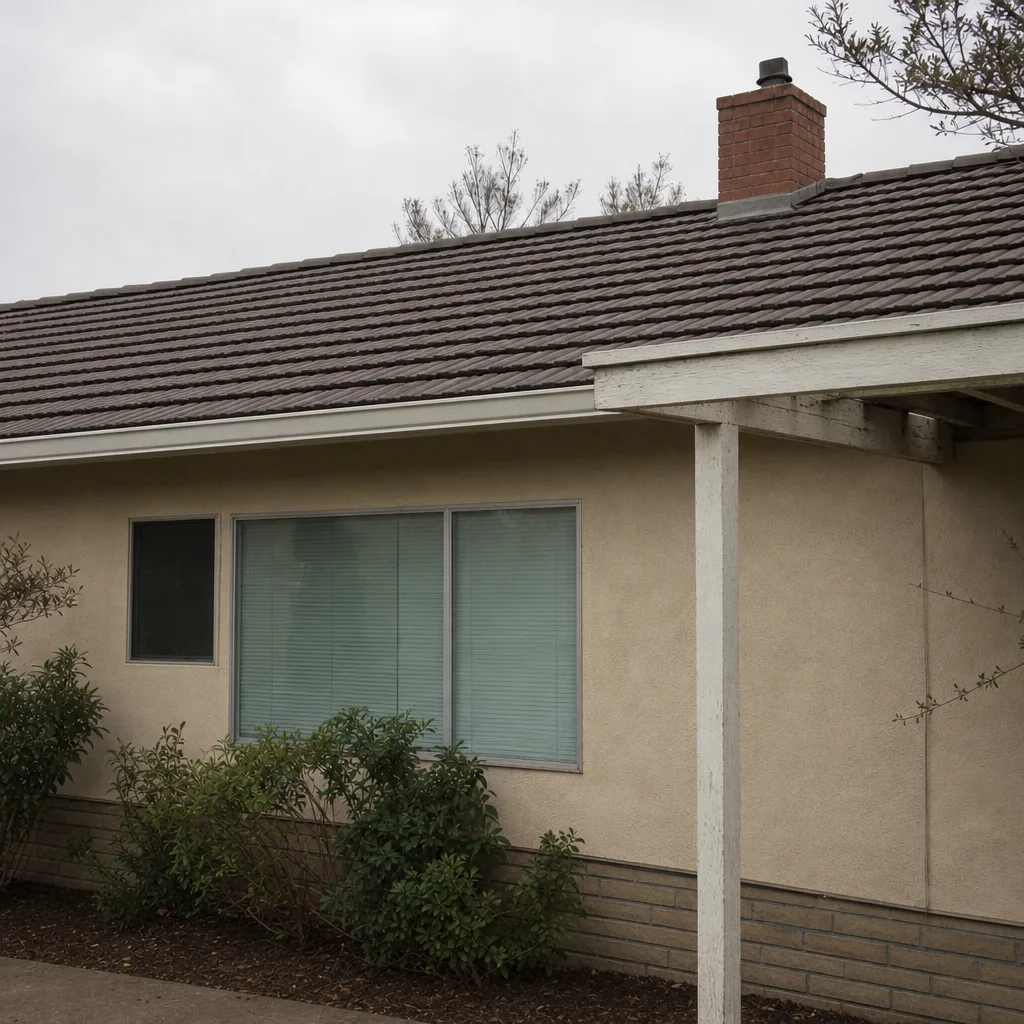 After
Frequently Asked Questions
Emergency tarping in Paradise from a licensed local contractor typically runs $150 to $350 for a standard breach, plus materials. Storm-chaser trucks that appear after a storm often charge $600 or more, cash up front, with no warranty and no one who comes back. Call (833) 676-0557 for an exact quote. Estimates are free.
Get inside, move belongings out from under the leak, and put buckets down before you touch the roof. Take photos in sequence next. Then call one roofer you trust. Don’t climb the roof in wet weather, and don’t call five roofers at once. Interior first, photos second, the call third.
Most homeowner policies cover reasonable emergency tarping to prevent further damage, as long as you document the damage first and the work is done by a licensed contractor. Save every receipt and photograph the damage before the tarp goes on. Your adjuster will tell you what your specific policy covers.
Only from the ground, with extension tools, and only on a flat or low-slope section you can reach. Do not climb a wet roof in the dark. High-wind damage, pitched roofs, and any work near the ridge or a valley are jobs for a trained professional. Falls from roofs are the main storm-related injury each season, and no temporary fix is worth one.
You generally have about 24 to 36 hours before the next monsoon wave, and that window is what matters. Damage compounds. Once water is in the decking, insulation, or attic, repair costs climb. Get the tarp on or the inspection done within that first window.
Ask for products from Owens Corning, IKO, Atlas, or Tamko. All four are proven in desert heat and wind-driven rain. The nailing pattern earns the wind rating, not the shingle wrapper, so ask your roofer how they nail, not just which shingle they use. Call (833) 676-0557 for a free estimate on a replacement.
The Bottom Line
Preparedness is the whole game. Build the kit before storm season. Learn the photo sequence so you can do it under stress. Assess from the attic, not the roof. Call one roofer you trust, not five in a panic. And hold any roofer to the same standard: a license number, a shop address, and a name that comes back if the work is wrong. That standard is what separates a $600 emergency repair from a $6,000 insurance claim in Paradise. Shepherd & Sons Roofing is locally owned and owner-operated, at the same address since 1996, and Bill or a crew member is on the roof on every job. A live person answers the phone. When the storm hits, call (833) 676-0557 and let’s get your roof protected.
Written by the team at Shepherd & Sons Roofing Paradise.