
Last updated November 17, 2026
 Metal roofing
 Architectural shingles
 Tile roofing
 GAF
 Owens Corning
 Flat & low-slope
Free roof inspection with deck photos before we talk money - GAF and Owens Corning certified installation
Roofing Warning Signs: A Paradise Homeowner’s Reference Guide
By the time you see a brown stain on your ceiling, the deck board under your roof has probably been wet for two to three months. That’s the part most roofing articles get wrong. They point at the signs you can already see from the curb, the curled shingles and the missing tabs, and call it a warning. Those aren’t warnings. Those are results. The warning signs worth knowing show up 12 to 18 months earlier, in places you can actually reach: an attic, a ladder, a gutter line. This guide walks through the early-stage indicators we’ve learned to read on Paradise roofs, and how to tell cosmetic aging that can wait from active moisture that can’t.
Quick Answer
The earliest roofing warning signs in Paradise are not on the shingles. They’re in the attic (daylight gaps, stain rings around nail heads, compressed insulation) and in the gutter (granule piles that tell you how many heat seasons your shingles have left). Homes with rooftop HVAC units add a third failure point at the penetration boot, which is where a surprising share of Paradise leaks actually start. Catching any of these early turns a $400 repair into a $400 repair instead of a $4,000 deck replacement.
Styles & brands we work with
- Architectural shingles
- Metal roofing
- Tile roofing
- GAF
- Owens Corning
- Flat & low-slope
Table of Contents
- Start in the Attic: Three Things Nobody Tells You to Look For
- Reading Granule Loss in the Gutter: How Many Heat Seasons Are Left
- Flashing Tells You Can Read From the Ground
- The HVAC Roof Penetration Check Most Homeowners Never Make
- Cosmetic Aging vs. Active Moisture: The Difference That Saves Thousands
- Why Paradise Roofs Age Faster Than the Shingle Wrapper Says
- A Simple Two-Season Inspection Schedule
Start in the Attic: Three Things Nobody Tells You to Look For
If you only do one thing after reading this, make it a walk through your attic with a flashlight. It’s the cheapest inspection you’ll ever do, and it catches problems months before they reach drywall. Here’s what to look for, in order of how urgently it should make you pick up the phone.
- Daylight gaps along the decking. A pinhole of light in a shaded attic means water has a straight path in. Look along the ridge line and around any penetration. On a sunny Paradise afternoon these show up fast, and they almost always mean a nail has backed out or a ridge cap has lifted.
- Stain patterns, not just stains. A single dark spot means a slow leak. A ring with a lighter center means it’s been wet, dried out, and gotten wet again, which is a much older problem. Look specifically under nail heads and around chimney or vent penetrations, not just at the ceiling joists.
- Compression in the insulation. Insulation that looks squashed or matted, especially in a strip near an exterior wall, has been soaked and re-dried. It’s lost its R-value and it’s holding moisture against the deck. This is one of the clearest early signals of a roof that’s been leaking quietly.
None of these require climbing on the roof. All three are visible from a step stool. In our experience, homeowners who check their attic every fall and spring catch the majority of problems while the repair is still in the low hundreds of dollars.
Reading Granule Loss in the Gutter: How Many Heat Seasons Are Left
Granules are the sandpaper-like coating on an asphalt shingle, and they protect the asphalt from UV. Every shingle sheds some granules over its life, so the question isn’t whether yours are shedding. It’s how fast, and how much is left.
Here’s the test. On a dry day, scoop a handful of granules from the bottom of a downspout or the lowest point of a gutter. Rub them between your fingers. If they feel like coarse sand and there’s a visible pile after a windy week, your shingles are in normal middle age. If the pile is thick enough to gray out the gutter run after a single summer, the protective layer is mostly gone and the asphalt underneath is drying out. That’s when you start planning, not panicking.
- Thin grit, faint pile: shingles have years of life left. Keep an eye on it each fall.
- Half-cup or more after a windy stretch: you’re in the last quarter of the shingles’ service life. Start getting bids now, before a leak forces your hand.
- Bare, dark shingles with visible fiberglass mat: the protective layer is gone. This is when UV damage moves fast.
One detail specific to Paradise: our summer heat cycles shingles hard, and asphalt that’s been baked and cooled through 30-plus summers breaks down on a predictable curve. A roof that looks fine in May can shed noticeably by October. Gutter checks in the fall tell you more about the coming year than anything you’ll see from the street.
Flashing Tells You Can Read From the Ground
Flashing is the metal that seals the seams where your roof meets something else: chimneys, walls, valleys, skylights. It’s the most common leak source on any roof, and it’s also one of the few things you can read from a ladder or even a good set of binoculars.
Walk your property on a dry day and look for these three patterns.
- Cracked sealant at the flashing edge. Sealant is a wear item. It dries, cracks, and lifts within a handful of years. Cracked caulk at a chimney base is a leak waiting for the next rain, and the water barrier underneath is almost certainly compromised once the sealant lifts.
- Lifted or curled flashing edges. Metal that no longer lies flat against the shingles lets wind-driven rain slide underneath. On Paradise roofs, this often shows up on the west-facing slope first, where afternoon weather hits hardest.
- Rust streaks running down the flashing. Rust means water has been sitting against bare metal. It’s a strong sign the flashing wasn’t properly sealed from the start, and the barrier below it has been taking on water.
Flashing problems are cheap to fix while the wood underneath is still sound. Once that decking softens, you’re into a bigger repair. When we look at a Paradise home, flashing condition is one of the first things we check on any roof repair in Paradise call.
The HVAC Roof Penetration Check Most Homeowners Never Make
Many Paradise homes with rooftop HVAC units have a failure point that standard warning-sign guides skip entirely: the penetration boot where the refrigerant and condensate lines pass through the roof deck. That boot is a rubber or metal collar that seals the hole. It sits in the sun all day, and the rubber dries and cracks faster than almost any other component on the roof.
Here’s the check. From the ground or a ladder, look at the base of the HVAC unit and any pipe stacks near it. You’re looking for a cracked or missing boot, a dark ring of moisture staining around the penetration, or a gap where the collar used to meet the shingles. All three mean water is getting under the roof at the exact spot where the unit’s condensate line is already adding moisture.
Why does this matter more than most guides let on? Because the leak often starts directly above a living space, and it tends to show up as a ceiling stain the homeowner blames on the HVAC unit itself rather than the roof. In our experience, a cracked boot and a stained ceiling in the same room are usually two sides of one story. That repair is a small job if you catch the boot early. Left alone, it soaks the deck and the ceiling drywall underneath, and now you’re replacing both.
Cosmetic Aging vs. Active Moisture: The Difference That Saves Thousands
Not every flaw needs attention this week. Knowing the difference is the whole point of learning the early signs.
Cosmetic aging is shingle discoloration, a few lifted tabs, dulled color, or minor granule loss with no interior moisture. It can usually wait a season while you plan and budget. A dark streak down a roof slope is often just algae or weathering, not a leak. If your attic is dry and your gutters are clear, cosmetic aging is a planning item, not an emergency.
Active moisture is the other category. It needs attention this week. The signals:
- Daylight visible in the attic along the decking.
- Stain rings around nail heads or penetrations, especially ones that grow.
- Compressed or damp insulation near a wall or penetration.
- Any drip, even intermittent, during or after rain.
- Ceiling or wall stains that appear or darken after a storm.
When you find active moisture, the cost question flips. A repair done now on a boot or a flashing edge runs in the hundreds. The same leak left to run for a few months can reach the deck, joists, and drywall, and that climbs into the thousands. The line between the two categories is not how bad the roof looks. It’s whether water is getting in right now. When you can’t tell, that’s exactly what a Shepherd & Sons Roofing Paradise home second opinion is for, and it’s free on any written estimate.
Why Paradise Roofs Age Faster Than the Shingle Wrapper Says
A 30-year shingle rarely makes it 30 years in Paradise. The number on the wrapper assumes moderate UV exposure and typical temperature swings. Our summers push asphalt through more heat cycles than the national average, and the sun angle here works the west and south slopes hardest. The combination means the protective granule layer breaks down on a faster schedule than the manufacturer’s warranty assumes.
That’s why the early signs matter more here than in a milder climate. A Paradise roof can move from “looks fine” to “shedding granules and starting to leak” in a couple of seasons once the protective layer is gone. The good news is that the same heat makes early problems visible if you know where to look. The attic dries out fast, so stain patterns are often crisp and easy to read. The gutter tells you the granule story plainly. And the flashing and boots dry out and crack on a predictable curve, which means you can plan around them.
When it’s time to plan a replacement rather than a repair, the material matters. We install GAF and CertainTeed shingles on most Paradise homes, and on the sun-baked slopes we sometimes go with a heavier shingle or a metal system to buy back some of that heat-cycled life. If you’re weighing that decision, our guide to roof replacement & installation in Paradise walks through it. For roofs that take the most direct sun, a metal roofing in Paradise system is worth considering.
A Simple Two-Season Inspection Schedule
You don’t need to hire anyone to run the early-stage checks. You need a flashlight, a ladder, and a calendar. Here’s the schedule we recommend for Paradise homes.
- Fall (October): Walk the attic. Look for daylight, stain rings, and compressed insulation. Scoop granules from the gutters and check flashing from the ground.
- Fall (October): Check the HVAC boot and every pipe stack for cracks, gaps, and rust streaks.
- Spring (April): Repeat the attic walk. Note any stain that’s bigger or a ring that’s wider than in the fall.
- After any major storm: Walk the perimeter and check for lifted or missing shingles, then recheck the attic if you see anything.
- Every two to three years: Have a professional do a full roof and flashing inspection. It’s cheap, and it catches the things a homeowner can’t safely see from a ladder.
Two of those items a year is enough. The goal is not a pristine roof. It’s a running record of your roof’s condition, so you know when the trend line starts turning down.
Common Mistakes to Avoid
- Judging the roof only from the curb. The most serious early leaks show up in the attic, not on the slope. By the time you can see a problem from the street, you’re usually past the cheap-repair window.
- Sealing over flashing and calling it fixed. A fresh bead of caulk over old, compromised flashing hides the problem for a season or two and lets the wood rot underneath. The fix is the flashing and the barrier under it, not the caulk.
- Ignoring the HVAC boot because it’s “the HVAC guy’s job.” The boot is a roof penetration, and a cracked one leaks straight into the ceiling. Have it checked with the roof, not just the unit.
- Assuming a dark streak means a leak. Algae streaks and weathering are cosmetic. Chasing them with a replacement quote is how homeowners overpay for a roof that had years left.
- Skipping the fall gutter check. The granule pile in your gutter is the single best free indicator of how many heat seasons your shingles have left. Skip it and you’re guessing.
- Waiting for the ceiling stain to decide. A ceiling stain means water has already reached drywall. The wet deck board above it has been wet for weeks or months. Act on the attic, not the ceiling.
- Trusting a phone quote from an out-of-state outfit. On a Paradise roof, the number quoted on the phone and the number quoted at the door are often different. Get it in writing, with a license number you can look up.
See the difference
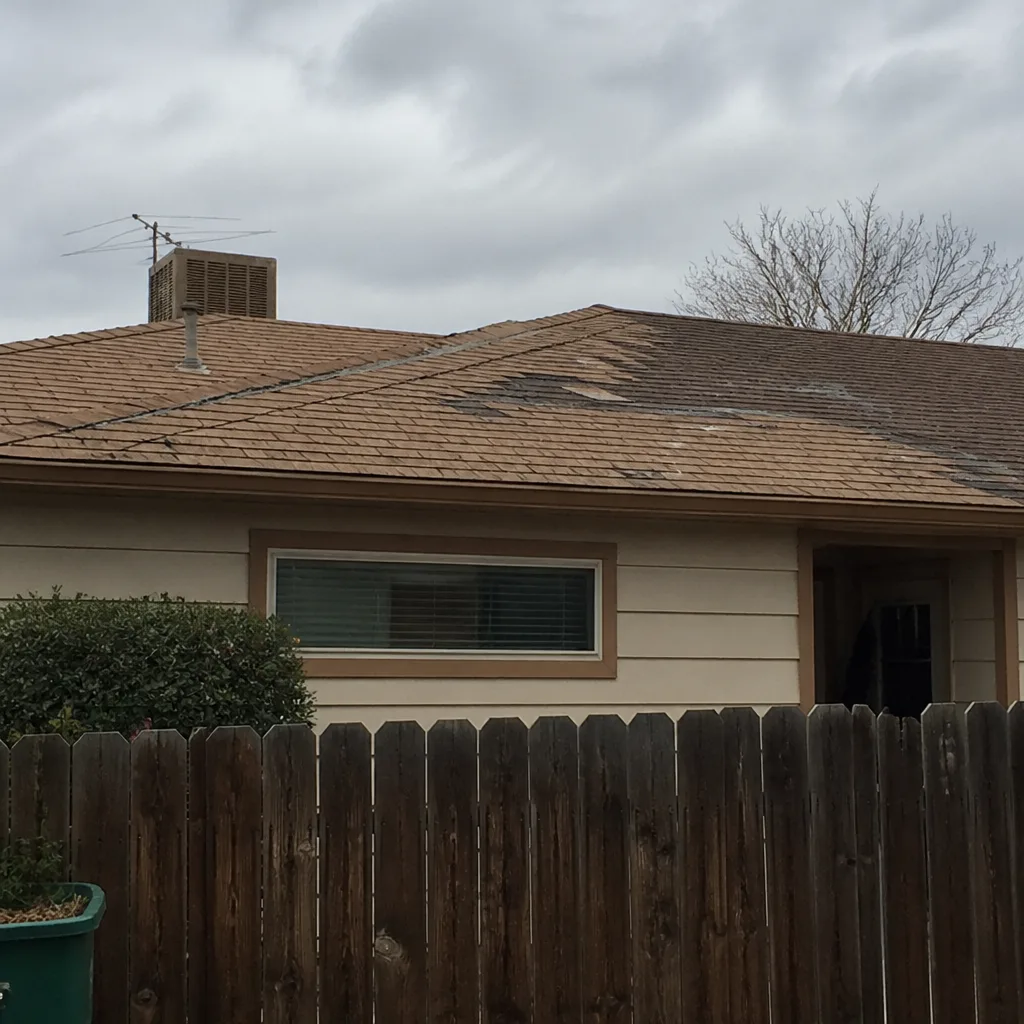 Before
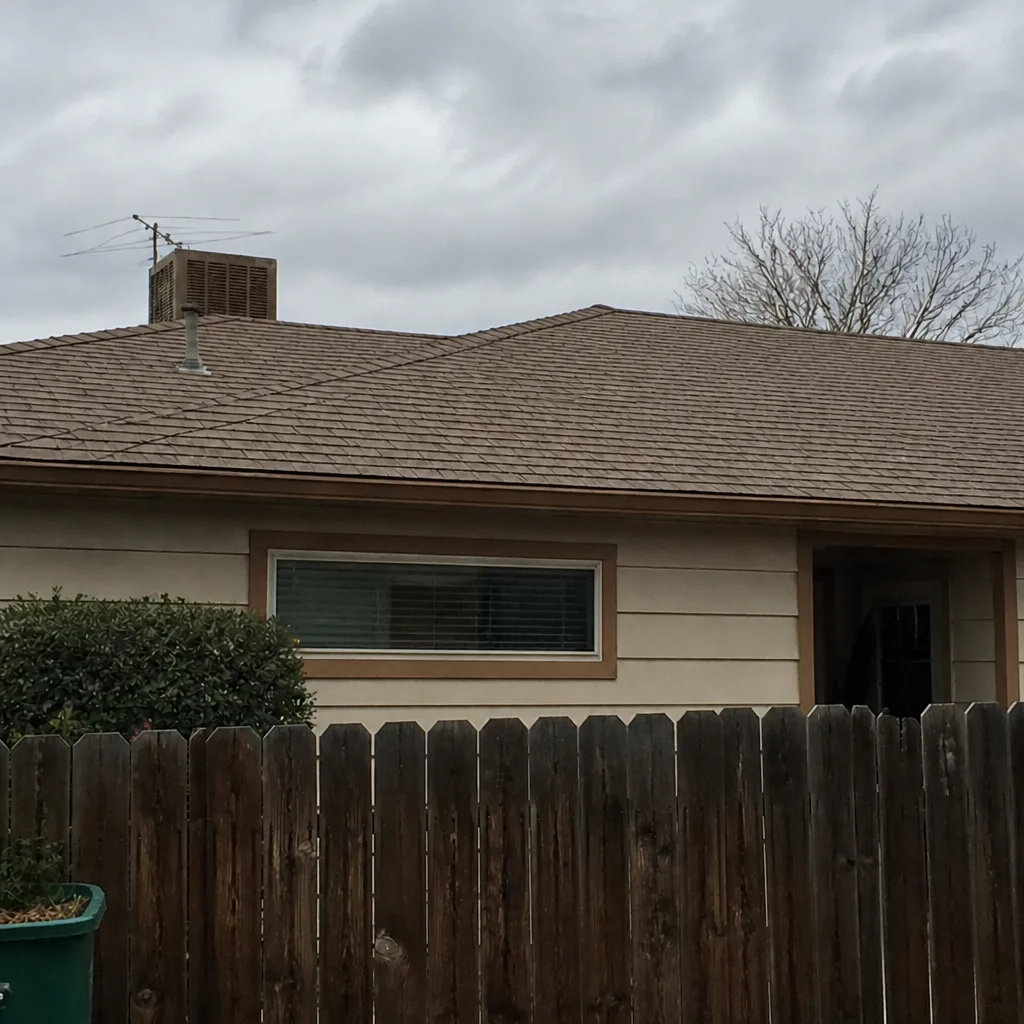 After
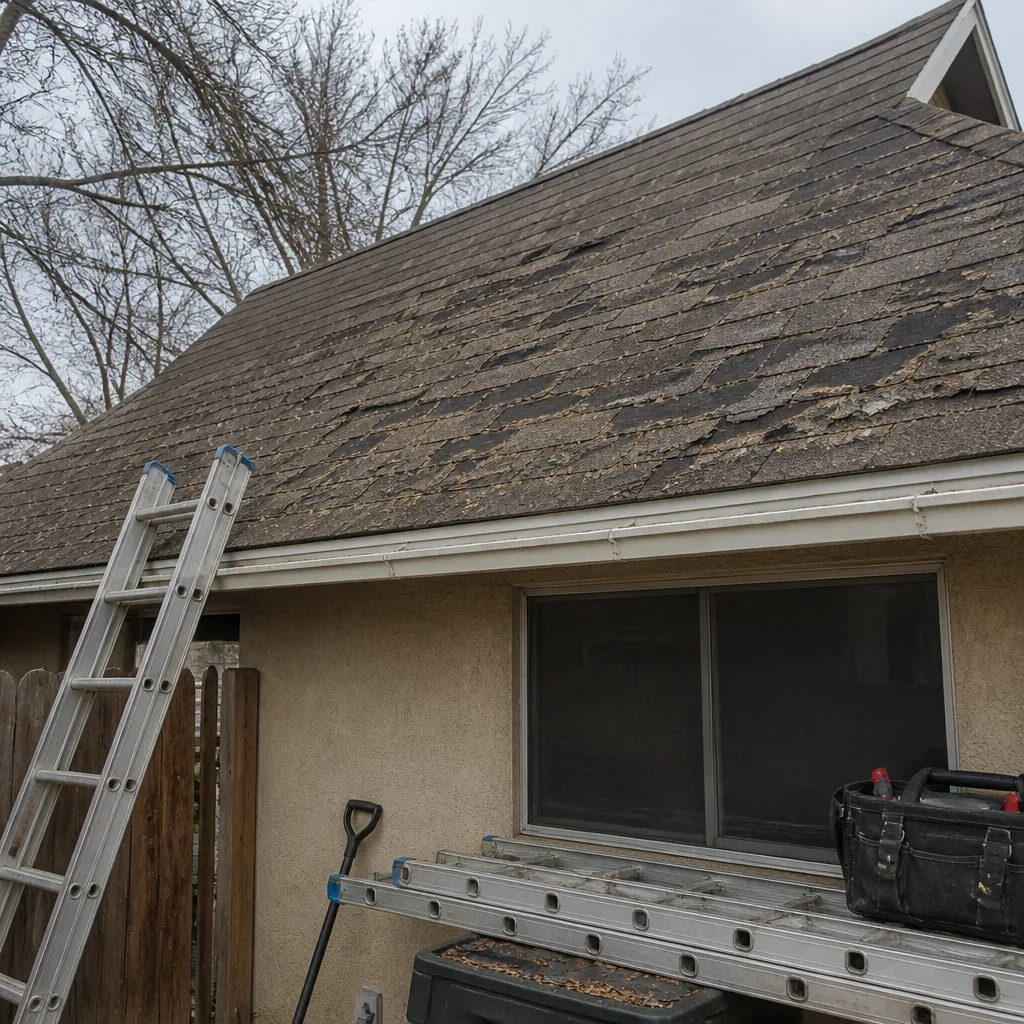 Before
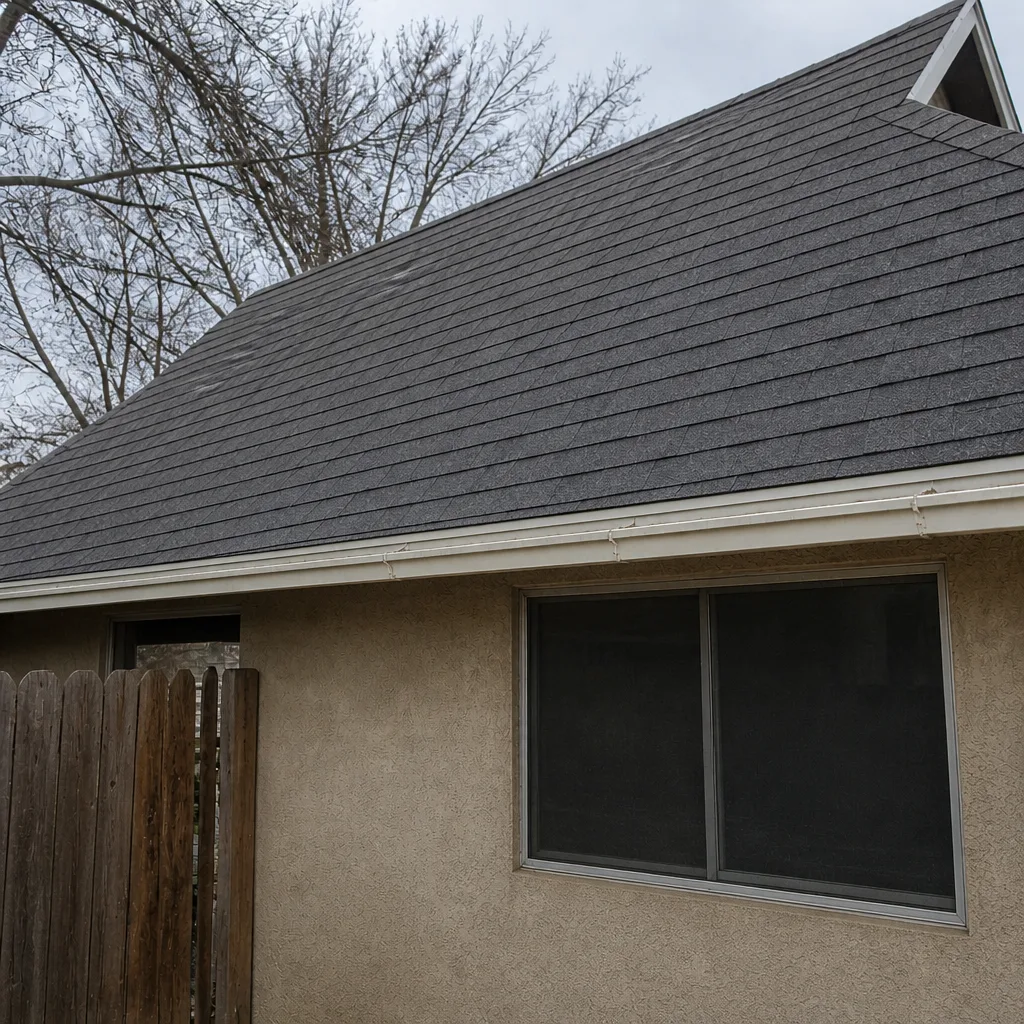 After
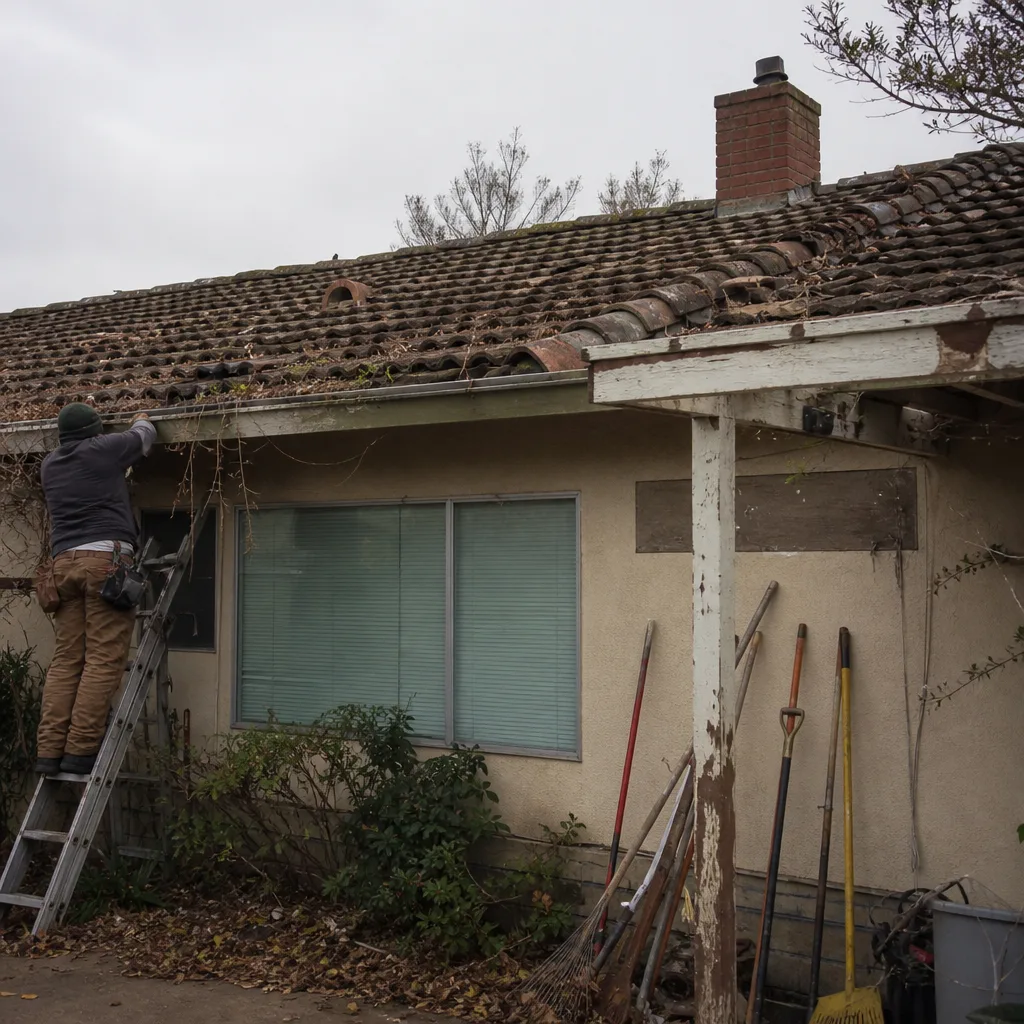 Before
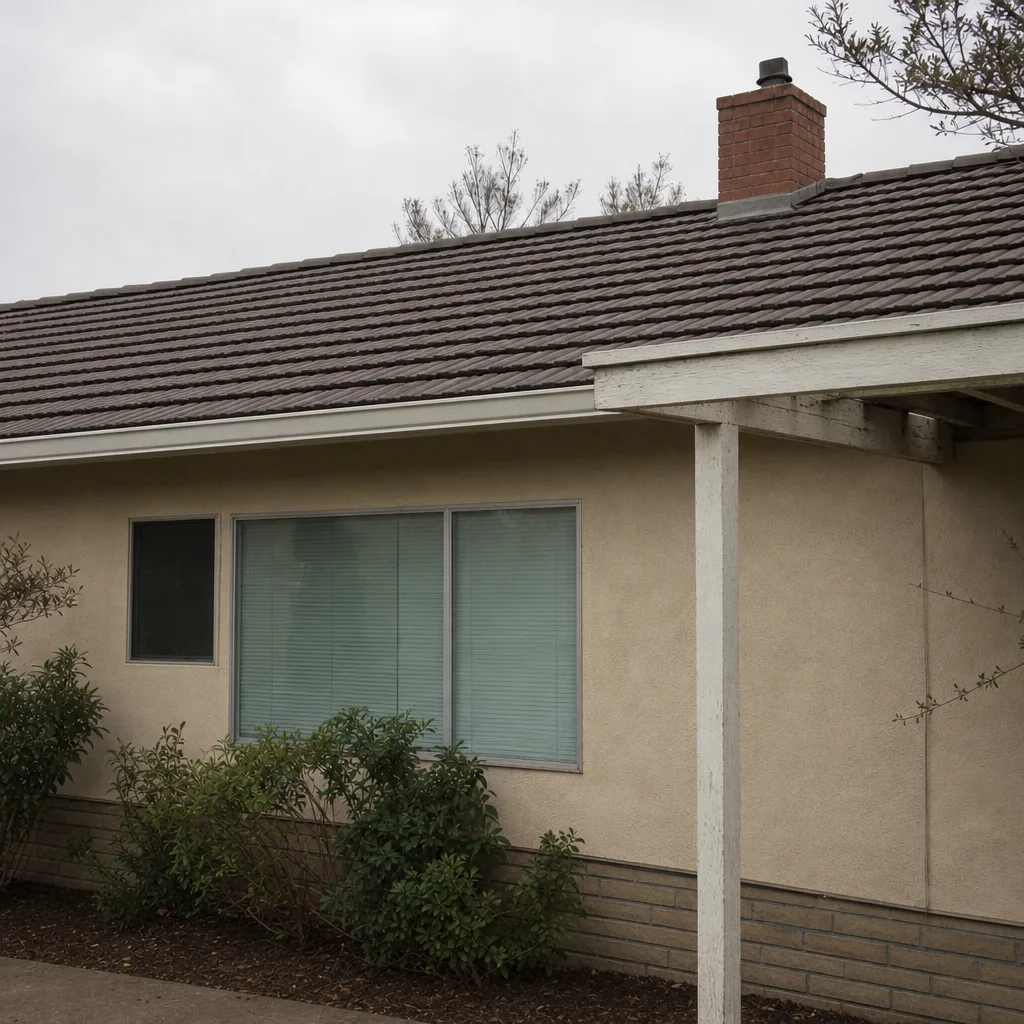 After
When to Call a Professional
Call us when you find active moisture in the attic, a stain that’s growing, daylight along the deck, or a cracked HVAC boot with staining around it. Call when you can read flashing damage but aren’t sure how deep it goes. Call after a storm that lifted shingles, even if you don’t see a leak yet. And call when your fall gutter check shows a heavy granule pile, because that’s the moment to plan a replacement on your terms rather than react to a leak on the roof’s terms. Shepherd & Sons Roofing Paradise offers free estimates in Paradise. A live person answers the phone, Bill’s name and license number are on the work, and every job carries the written 90-Day Done Right Promise. Call (833) 676-0557.
Frequently Asked Questions
The earliest signs are daylight gaps, stain rings around nail heads, and compressed insulation visible in the attic, plus a heavy granule pile in the gutters. These usually show up 12 to 18 months before a ceiling stain. Call (833) 676-0557 for a free second opinion if you find any of them.
A small repair like a cracked boot or a flashing edge typically runs in the hundreds of dollars, while waiting until the deck and drywall are wet can push it into the thousands. Prices vary with the size and location of the repair. Call (833) 676-0557 for a written line-item estimate, and remember there’s no trip charge inside our own county.
You can safely check the attic, the gutters, and the ground-level flashing yourself. Leave the roof surface and anything above a step stool to a professional, because a fall is the real risk on a ladder. Call (833) 676-0557 to schedule a full inspection.
Our summer heat cycles and direct sun break down the protective granule layer faster than the manufacturer’s national average assumes. A 30-year shingle can reach the end of its service life earlier in Paradise than in a milder climate. Call (833) 676-0557 if you’re unsure how much life is left.
Cosmetic aging is discoloration, algae streaks, or minor granule loss with a dry attic. Active moisture is daylight along the deck, growing stain rings, damp insulation, or any drip during rain. If you find the second category, call (833) 676-0557.
We handle the permits and inspections that apply to the job, and every roofing job is backed by our written 90-Day Done Right Promise. One call brings Bill back if something isn’t right. Call (833) 676-0557 for a free estimate and a no-hassle upfront price.
The Bottom Line
The warning signs that save Paradise homeowners the most money are the quiet ones: a daylight gap in the attic, a stain ring around a nail head, a heavy granule pile in the gutter, a cracked boot on the HVAC penetration. They show up well before the ceiling stain, and they’re all things you can check twice a year. Catch them early and you’re planning a $400 repair. Miss them and you’re reacting to a $4,000 one. Shepherd & Sons Roofing Paradise is here to help you tell the difference, with a free estimate and a real person on the phone. Call (833) 676-0557.
Written by the team at Shepherd & Sons Roofing Paradise.