
Last updated November 17, 2026
 Metal roofing
 Architectural shingles
 Tile roofing
 GAF
 Owens Corning
 Flat & low-slope
Free roof inspection with deck photos before we talk money - GAF and Owens Corning certified installation
Roofing Permits, Codes & Inspections in NV: What You Need to Know
The most expensive roofing permit mistake I’ve seen wasn’t a contractor getting caught. It was a homeowner who tried to sell her house three years after an unpermitted re-roof and had to escrow $14,000 to get it resolved before closing. Nobody warned her. The roof looked fine. The buyer’s lender just wanted to see the permit record, and there wasn’t one. Permits aren’t paperwork for paperwork’s sake, especially in Clark County, where the rules have specific triggers most folks never hear about. Below we walk through what actually requires a permit in Nevada, what an inspection covers, how to check work done before you bought, and how to protect yourself from a problem that can sit quietly for years. If you’re in Paradise or anywhere nearby, this matters more than most homeowners realize.
Quick Answer
In Clark County, a roofing building permit is required for most re-roofs, structural repairs, and any job where the scope crosses specific thresholds, including replacing more than 25% of your roof deck. Routine maintenance and small repairs under the county’s scope limits typically don’t require a permit, but the line between “repair” and “re-roof” is where most trouble starts. A passing inspection protects you in ways a contractor’s warranty cannot.
Styles & brands we work with
- Architectural shingles
- Metal roofing
- Tile roofing
- GAF
- Owens Corning
- Flat & low-slope
Table of Contents
- What Triggers a Roofing Permit in Clark County?
- Repair Permit vs. Re-Roof Permit: What’s the Difference?
- What a Clark County Roof Inspection Actually Covers
- How to Look Up Permit History on Your Home
- How Unpermitted Work Affects Your Insurance Claim
- Nevada Climate, Codes, and Why the Rules Exist
- How to Hire a Roofer Who Pulls the Permit
- The Permit Process, Step by Step
What Triggers a Roofing Permit in Clark County?
Clark County’s building department doesn’t require a permit for every single roofing task, and that’s where confusion creeps in. A permit is generally required when the work involves structural changes, full roof coverings replacement, or repairs that exceed a defined scope threshold. The clearest trigger most homeowners have never heard of: replacing more than 25% of your roof deck usually requires a full building permit, even if your contractor is calling the job a “repair.” That percentage matters because deck replacement means the sheathing is coming off, and once sheathing comes off, an inspector needs to see what’s underneath before new roofing goes on.
Here’s what typically requires a permit in the county:
- A full re-roof where the existing covering is removed
- Any deck replacement, especially above the 25% threshold
- Structural repairs to rafters, trusses, or framing
- Installation of a new roof on an addition
- Fascia and soffit replacement when structural members are involved
What usually doesn’t need one:
- Patching a small leak around a vent or flashing
- Replacing individual damaged shingles
- Cleaning, sealing, or minor maintenance
The 25% threshold is where trouble lives. We’ve seen homeowners get a bid for “a few repairs, no permit needed” and then watch a crew tear off a third of the roof. If a bidder is vague about deck condition before money changes hands, ask for photos of the deck. In our experience, in Paradise the slab-on-grade homes and older single-story builds tend to have original sheathing that’s nearing the end of its life, which pushes more jobs over that 25% line than the homeowner expected. That isn’t the contractor’s fault, but it is their job to plan for it. A roof repair that stays on the right side of the threshold is genuinely different from a re-roof, and both need to be quoted honestly.
Repair Permit vs. Re-Roof Permit: What’s the Difference?
A repair permit covers a defined, limited scope on an existing roof, and a re-roof permit covers removal and replacement of the covering, usually with deck inspection required. They aren’t interchangeable, and which one applies to your job depends on how much roof you’re actually touching. This matters most when there’s an insurance claim involved, because carriers want documentation that matches the work performed. A re-roof permit tells the insurance company the entire covering was replaced. A repair permit tells them less. If your claim paid for a re-roof and the file shows a repair permit, that’s a question nobody wants to answer during a claim review.
In practical terms, here’s how to tell which you need:
- Small leak, isolated area, existing materials matching: usually repair scope.
- Leak plus damaged sheathing, deck rot, or multiple failure points: likely re-roof territory, permit required.
- Full tear-off, new underlayment, new flashing: re-roof, permit required.
- Insurance claim covering the full slope or full roof: re-roof, and documentation should match.
Also worth knowing: these rules apply to every type of covering. That includes asphalt shingles from Atlas, Tamko, GAF or similar, and it includes tile and metal systems, which sometimes require additional submittals beyond the base permit. That said, most tiles in Paradise and the surrounding neighborhoods are concrete or clay, and those systems add weight, which means the permit review sometimes asks for structural verification. If a roofer tells you no permit is needed on a tile re-roof, that’s your cue to slow down and ask more questions.
What a Clark County Roof Inspection Actually Covers
A Clark County roof inspection is conducted by a county inspector at defined stages, not a single drive-by. Inspectors look at the work specifically, and they verify the things a contractor’s warranty can’t verify: that the sheathing is sound, that flashing is installed correctly, that underlayment and fastening patterns meet code. Passing inspection is documented in county records. That documentation is what protects you if you ever sell, refinance, or file a claim.
Here’s what a typical inspection covers:
- Deck and sheathing condition and attachment
- Underlayment installation
- Flashing at walls, valleys, vents, and penetrations
- Fastener spacing and type
- Final covering installation and edge details
Why does a passing inspection protect you in ways a warranty doesn’t? A warranty is a promise from one company to you, and it only works as long as that company is still around and still honoring it. An inspection is a record made by the county that the work met code at the time it was done. That record follows the house, not the contractor. If you sell in 2031, the buyer’s inspector runs the address through county records, sees the final inspection passed, and moves on. No permit, no record, and the conversation changes entirely. In our experience, the homes that sail through resale are the ones where the paperwork trail is clean. You can also read more on our roof replacement and installation services page about how we approach deck inspection and the permit stage on replacements.
How to Look Up Permit History on Your Home
You can look up whether a permit was pulled on any roof work done at your address. In Clark County, permit records are available through the county’s online permit search portal, and you can also request them in person at the county building department. Before you buy a home, this is one of the cheapest checks available, and it’s far less expensive than discovering a problem at closing. Get in the habit of running the address through the county portal whenever you have a home inspection scheduled on a property with a roof age the seller can’t pinpoint.
Here’s how to do it:
- Find the address and parcel number for the property (from the listing or county assessor site).
- Go to the Clark County permit search and search by address or parcel number.
- Look for permits labeled as “roof,” “re-roof,” or “residential addition/alteration” with roof scope.
- For each permit you find, confirm there’s a final inspection on file, not just an application. An issued permit with no inspection is a red flag.
- If you find nothing but the roof looks newer than the house’s age should allow, ask the seller for documentation or request a permit search directly.
Pay attention to inspection dates. A permit applied for in 2020 with a final inspection in 2020 is complete. A permit applied for and never inspected is a different situation and needs to be resolved. Sometimes that resolution is straightforward and cheap. Sometimes it means the current owner needs to pull a new permit and re-do part of the work, and you should know that before you’re the owner. If you’re not sure what you’re looking at, our Paradise roofing team can look up a permit history as part of a free estimate.
How Unpermitted Work Affects Your Insurance Claim
Unpermitted work can damage or kill a claim. This is the part most homeowners don’t see coming, because it happens years later during a storm claim or a slow-leak investigation, and by then the original contractor is long gone. Insurance carriers use permit records during claims investigations to establish whether the roof was installed to code. If the carrier can’t verify installation, the claim can be adjusted down, held, or denied in whole or part. This isn’t a scare tactic. It’s a real process we’ve seen play out, and it’s one of the reasons our crews pull permits on jobs that need them.
The reasons carriers care:
- Code verification: a passed final inspection is documentation the work met code when installed.
- Claim scope matching: a claim paid for a re-roof should show a re-roof permit, not a repair permit.
- Fraud screening: carriers use permit records to check that work described in a claim was actually performed.
- Pre-existing damage: if unpermitted work caused hidden damage, the carrier may treat it as the homeowner’s responsibility.
Here’s the quieter version of the same problem. Suppose the previous owner had a re-roof done in 2019 without a permit, and you bought the house in 2021. A 2024 wind event damages the slope. The carrier’s investigator pulls county records, sees no permit on file, and asks the question: when was the work done, by whom, and to what standard? You have a warranty that names a company that no longer exists in Nevada. Now the claim is being reviewed, not paid. This is preventable. It’s also a reason to ask the permit question before you file, not after. Roofers who regularly install systems from GAF, CertainTeed, or Owens Corning know the deck prep and documentation their manufacturers require, and permits fit into that workflow naturally.
Nevada Climate, Codes, and Why the Rules Exist
The Nevada codes aren’t arbitrary. Paradise, Henderson, and every neighborhood in Clark County sits in a climate with extremes that shorten roof life and expose installation shortcuts faster than milder parts of the country. Summer surface temperatures on a dark shingle roof routinely push well past the ambient air temperature, and the daily swing from afternoon high to overnight low puts stress on flashing, sealant, and fastener points. Those conditions are why underlayment standards, flashing details, and fastener patterns in the county code are more specific than what a homeowner from a coastal climate might remember.
Two facts that surprise people:
- UV exposure ages materials faster than rain does. A shingle expected to last 25 years in a wet climate may hit end of life sooner in southern Nevada if the underlayment and ventilation weren’t done right. Permits and inspections are one way to make sure “done right” actually happened.
- Wind ratings live in the nailing pattern, not the shingle wrapper. A high-wind-rated shingle installed with the wrong fastener spacing and pattern will not perform to its rated wind speed. The county inspection verifies fastener spacing; a warranty alone does not.
If you’re looking at a metal roof, the submittal process may include additional documentation depending on the system. Our metal roofing services page covers how metal systems are specified and permitted in this climate. In Paradise, we’ve seen plenty of tile roofs from the 1980s and 1990s that look fine until the deck is exposed, which is exactly why the 25% deck replacement threshold exists. The code is trying to catch problems that are hidden under the tile.
How to Hire a Roofer Who Pulls the Permit
A roofer who pulls the permit is telling you something about how they run their business. In our experience, the crews that pull every permit are the ones with real local ties, because they’ll be around to answer for the job. Storm chasers and out-of-state crews typically don’t pull permits. It’s not that they can’t. It’s that pulling a permit requires a local license tied to a local address, and a crew heading to the next storm by Friday has no interest in a paperwork trail that follows the address they worked at.
Here’s how to check the roofer, not just the bid:
- Ask for the license number in writing. A roofer with nothing to hide gives it without being asked.
- Ask who pulls the permit. The answer should be “we do,” and it should be in the written estimate.
- Ask for a copy of a recent permit and final inspection. A real local roofer has them on file.
- Ask what happens if the deck is worse than expected. Fixed pricing with a clear scope is what you want in writing, not a handshake.
- Ask for the address of the company. A published address is a small thing, but a storm chaser doesn’t have one worth publishing.
One question we always suggest: “If my roof deck needs more than 25% replacement, will the permit reflect that, and who’s paying for the change?” You want a roofer who answers that directly. You also want a written estimate that lists square counts, materials, and what’s included. A roof is measured in squares. Ask any bidder how many they counted, and if the number doesn’t match what’s on paper, walk away. If you want a second opinion on a written estimate before you sign, Shepherd & Sons offers one free.
The Permit Process, Step by Step
The permit process is predictable, and knowing the steps makes it less mysterious. Depending on scope, a residential re-roof in Clark County generally moves through application, plan review (if required), permit issuance, inspections at defined stages, and a final inspection. Small repairs may skip plan review entirely. The county has a defined set of inspection stages that the contractor schedules, and final inspection is the one that produces the record that matters most down the road.
Typical path for a re-roof:
- Contractor submits the application with scope, materials, and license information.
- Plan review if the scope or system requires it (tile and metal systems often do).
- Permit issued. The homeowner can look it up by address.
- Deck inspection after tear-off and before underlayment goes on.
- Underlayment and flashing inspection where the county requires it.
- Final inspection after covering is installed.
- Final inspection passed and recorded. This is the record that protects your home through resale and claims.
If a contractor tells you the inspection is “just a formality,” that’s a signal. An inspection is when a county official confirms the deck is sound, the flashing is right, and the fastening pattern matches the wind rating. That’s the point where you find out the deck had rot nobody mentioned, or the flashing was installed wrong, before it’s got a new roof on top of it. If you want to talk through what your job will look like from an inspection standpoint, our team at Shepherd & Sons Roofing Paradise can walk you through it.
Common Mistakes to Avoid
- Skipping the permit because the roofer said it’s a “repair.” If the deck replacement crosses the 25% threshold, it’s not a routine repair in the county’s eyes. Ask for the square count and read the scope.
- Not checking the permit history before you buy a home. A clean roof can hide an unpermitted re-roof. A five-minute permit search saves a five-figure escrow hold at closing.
- Relying on a warranty as documentation. A warranty is a promise from a company. An inspection record is a fact from the county. Only one of them survives when the contractor is out of business.
- Assuming the insurance carrier won’t check. Carriers pull permit records during claims investigations, and a mismatch between work performed and permit scope creates problems at the worst possible time.
- Taking a phone quote on a roof with a deck problem. If nobody has seen the deck, nobody can honestly quote the job. Ask for photos of the deck before you talk money.
- Hiring a storm chaser because the bid looks lowest. Out-of-state crews often don’t pull local permits, and they leave before the inspection stage. Ask for the license number and a local address in writing.
- Assuming a tile or metal re-roof uses the same process as asphalt. Adding weight to a roof or changing the covering system can trigger additional review. Ask what submittals the county will require.
See the difference
 Before
 After
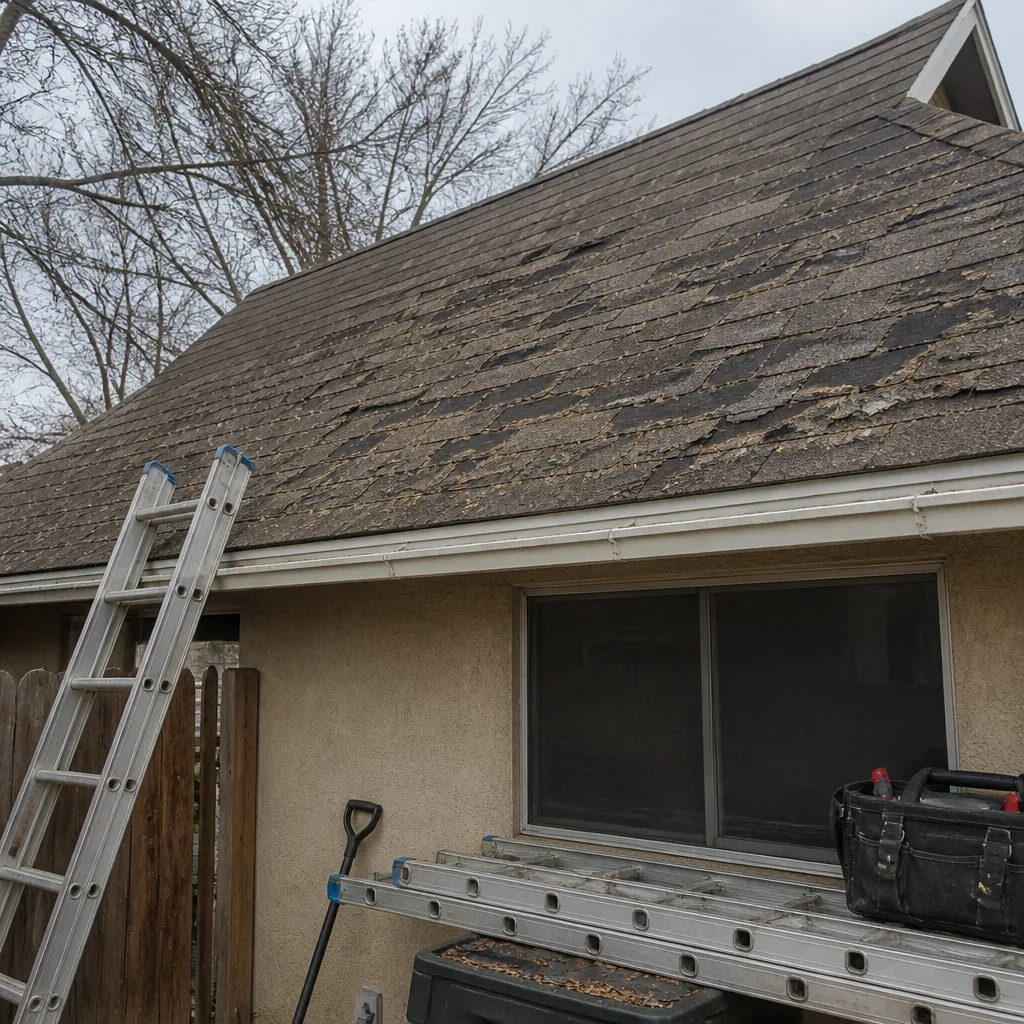 Before
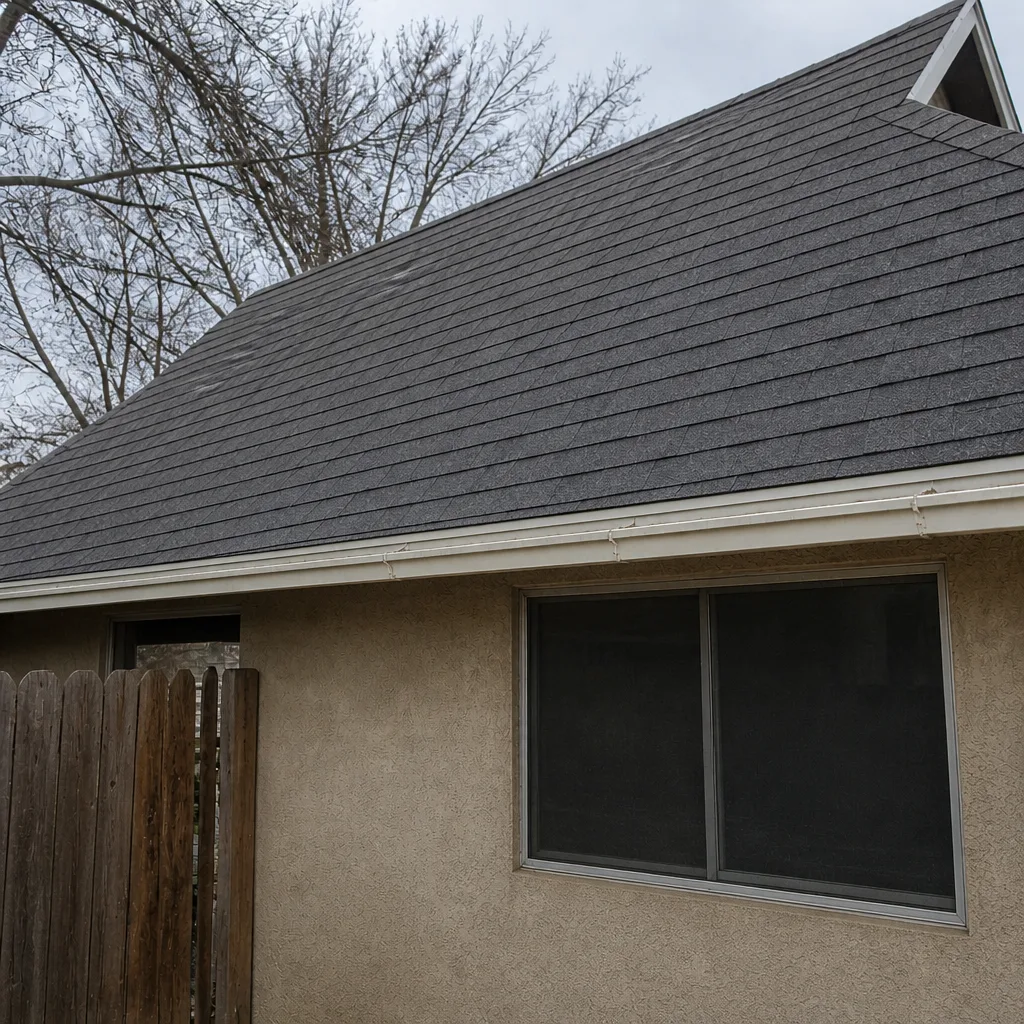 After
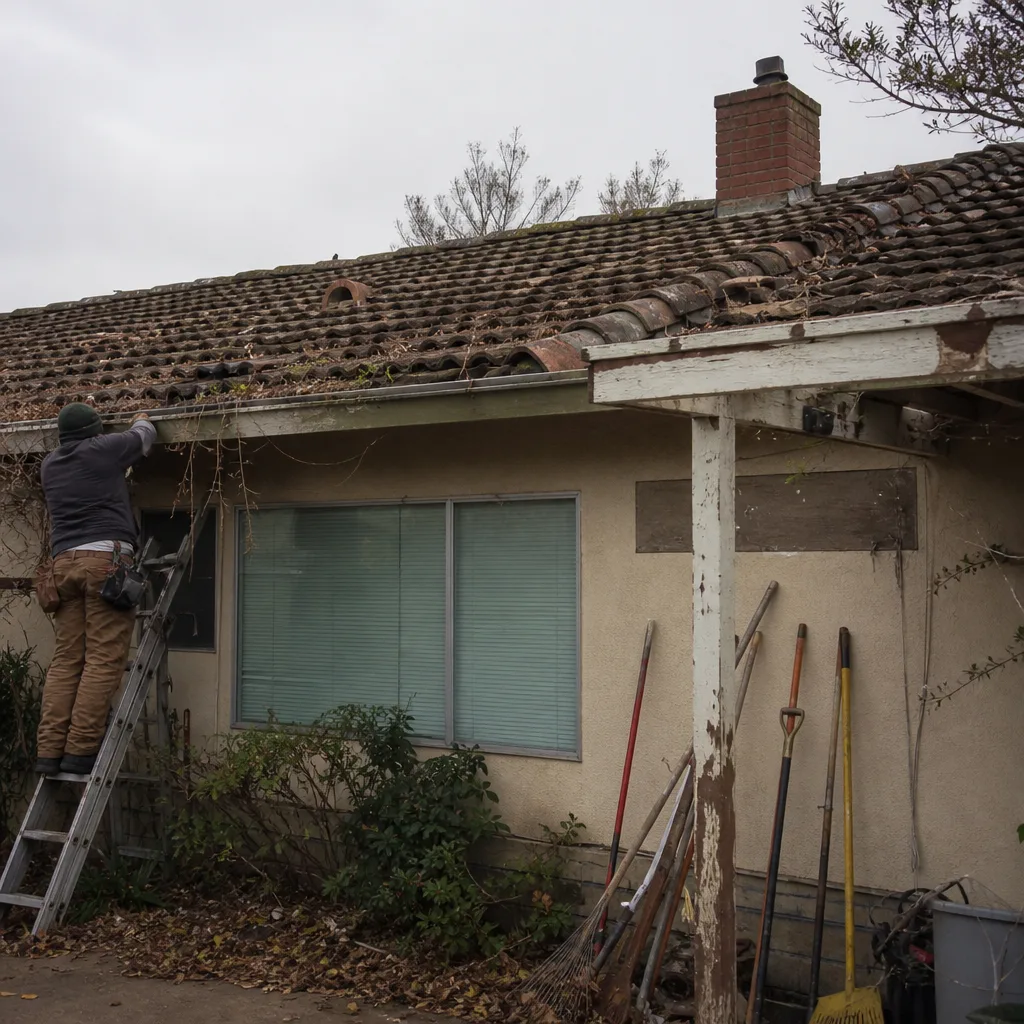 Before
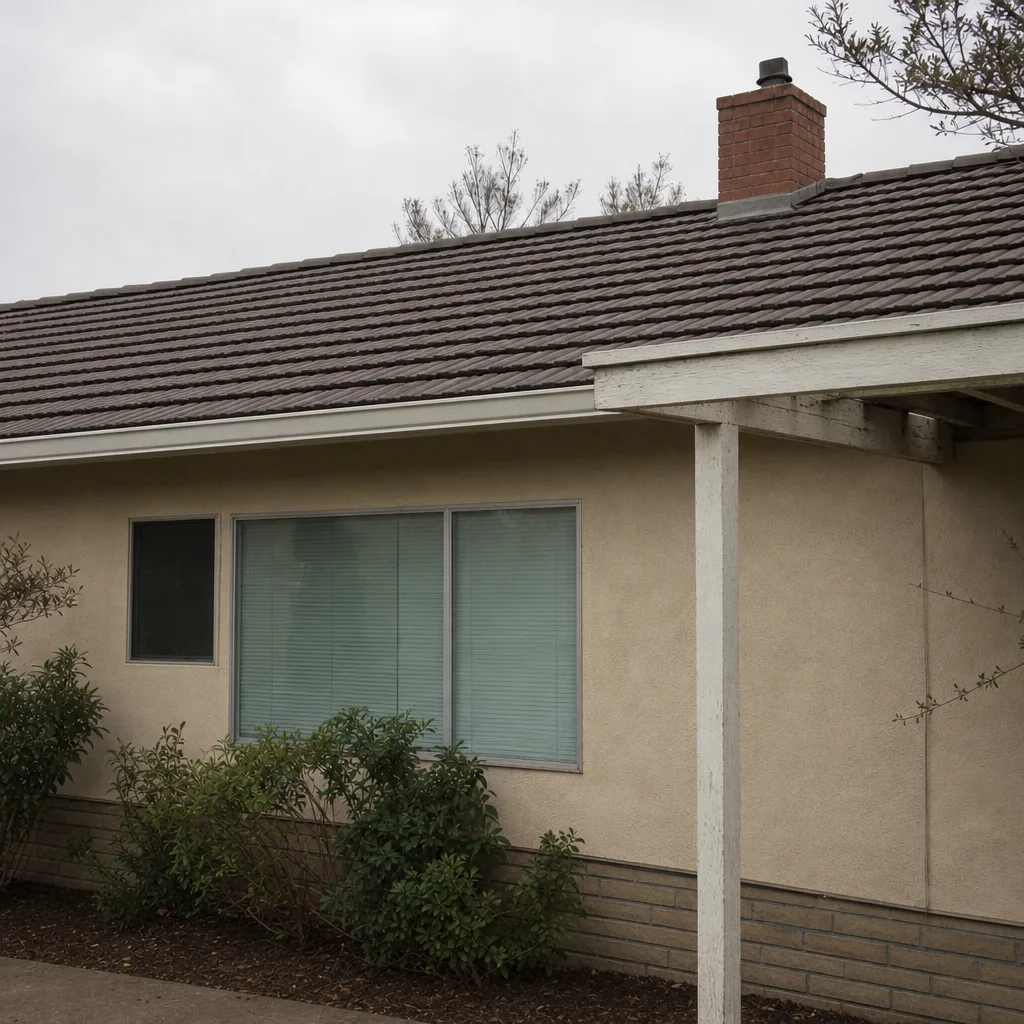 After
When to Call a Professional
Some roofing problems are safe to look at yourself from the ground. Some are not. Climbing onto a roof to inspect flashing or a suspected leak is genuinely dangerous, especially on single-story homes with steeper pitches or on tile, where one bad step cracks a panel and another one puts you on the ground. If your roof is more than 15 years old, has had multiple repair calls, has visible sagging at the ridgeline, or has a leak that keeps coming back in the same spot, that’s the point to call us. So is that moment when a roofer hands you a written bid and you’re not sure whether the number is honest or whether a permit is included. Shepherd & Sons Roofing Paradise offers free estimates in Paradise. Call (833) 676-0557, and we’ll come look and give you a straight answer.
Frequently Asked Questions
In most cases, yes. A full re-roof where the covering is removed requires a building permit in Clark County, and any deck replacement over the 25% threshold typically requires one even if the job is being described as a repair. Small repairs confined to a limited area often do not require a permit. Call (833) 676-0557 and we’ll tell you which category your job falls into.
Permit fees in Clark County are based on the valuation and scope of the job, not a flat fee, so the range varies. A typical residential re-roof permit is generally a modest line item relative to the total project cost, and it’s usually included in a written estimate. Ask your roofer to show the permit on the bid. Call (833) 676-0557 for a free estimate that itemizes it.
The buyer’s lender or inspector may flag the missing permit, and the resolution can involve a retroactive permit process or an escrow hold to cover the cost of remediation. In one case we’ve seen, a homeowner had to escrow $14,000 three years after an unpermitted re-roof. This is avoidable, and it’s why we check permit history as part of our free estimate. Call (833) 676-0557 to schedule yours.
Coverage can be affected, adjusted, or denied in part because carriers use permit records during claims investigations to verify the work was installed to code. The policy language and the specifics of the claim both matter, so it’s worth a call to your carrier. If you want documentation on the roof’s current condition before you file, our team can help. Call (833) 676-0557.
You can search the Clark County online permit portal using your address or parcel number, and you can also request records in person at the county building department. Look for permits labeled roof or re-roof, and confirm there’s a final inspection on file, not just an application. We run these searches for homeowners in Paradise as part of our free estimate. Call (833) 676-0557.
Yes. A passed final inspection is a county record that the work met code when it was installed, which gives a claims investigator documentation the carrier can verify. A contractor’s warranty alone doesn’t provide that, because a warranty depends on the contractor still being in business and honoring it. Call (833) 676-0557 for a free estimate and we’ll walk through what your job will require.
The Bottom Line
Clark County roofing rules exist to make sure the work under your shingles was done to a standard somebody verified. The 25% deck replacement threshold catches jobs being called repairs that aren’t. A passing inspection creates a record that follows the house, not the contractor, and that record protects you at resale and during claims. Checking permit history on a home you’re buying takes minutes and saves headaches. Hiring a local roofer who pulls the permit, publishes an address, and answers the phone is the simplest way to get this right the first time. Shepherd & Sons Roofing Paradise has a written 90-Day Done Right Promise on every job, a free second opinion on any written estimate, and a live person answering the phone at (833) 676-0557. Call today for your free estimate.
Written by the team at Shepherd & Sons Roofing Paradise.