
Last updated November 17, 2026
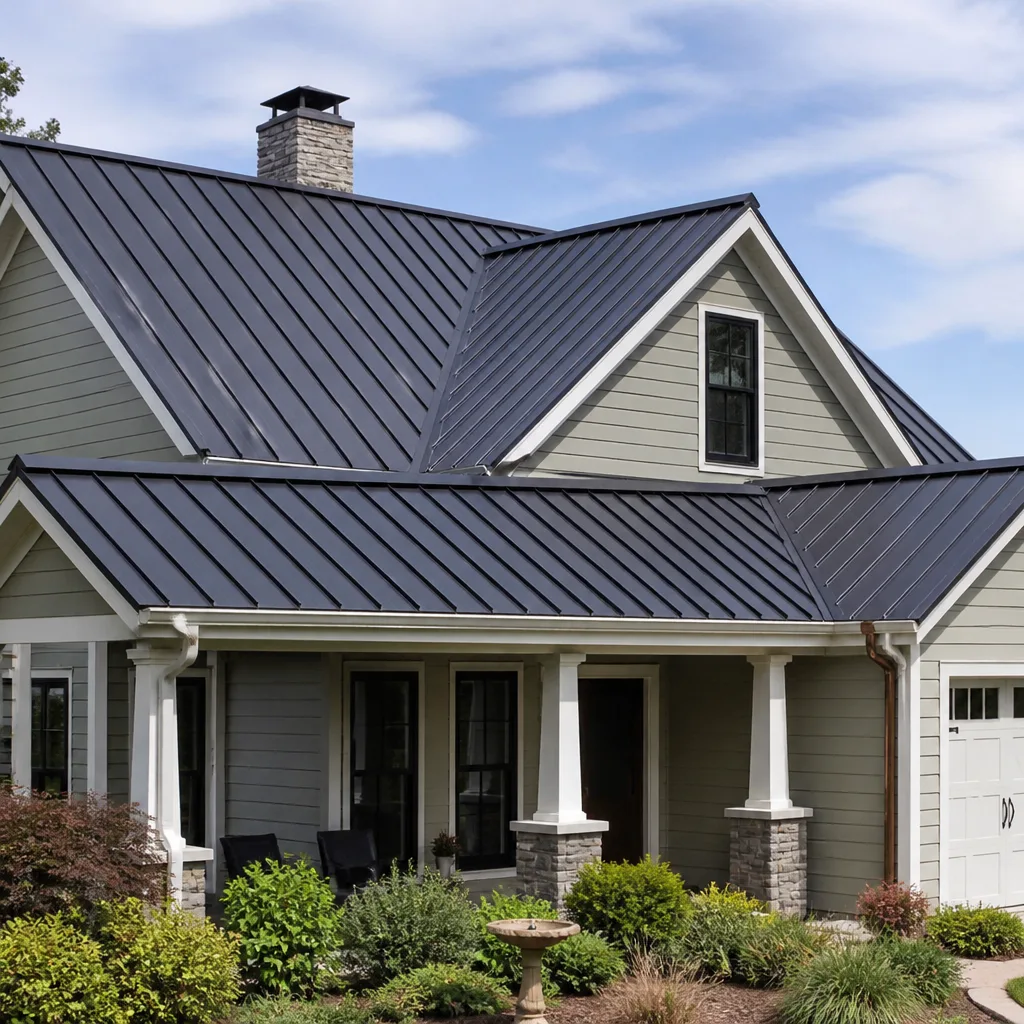 Metal roofing
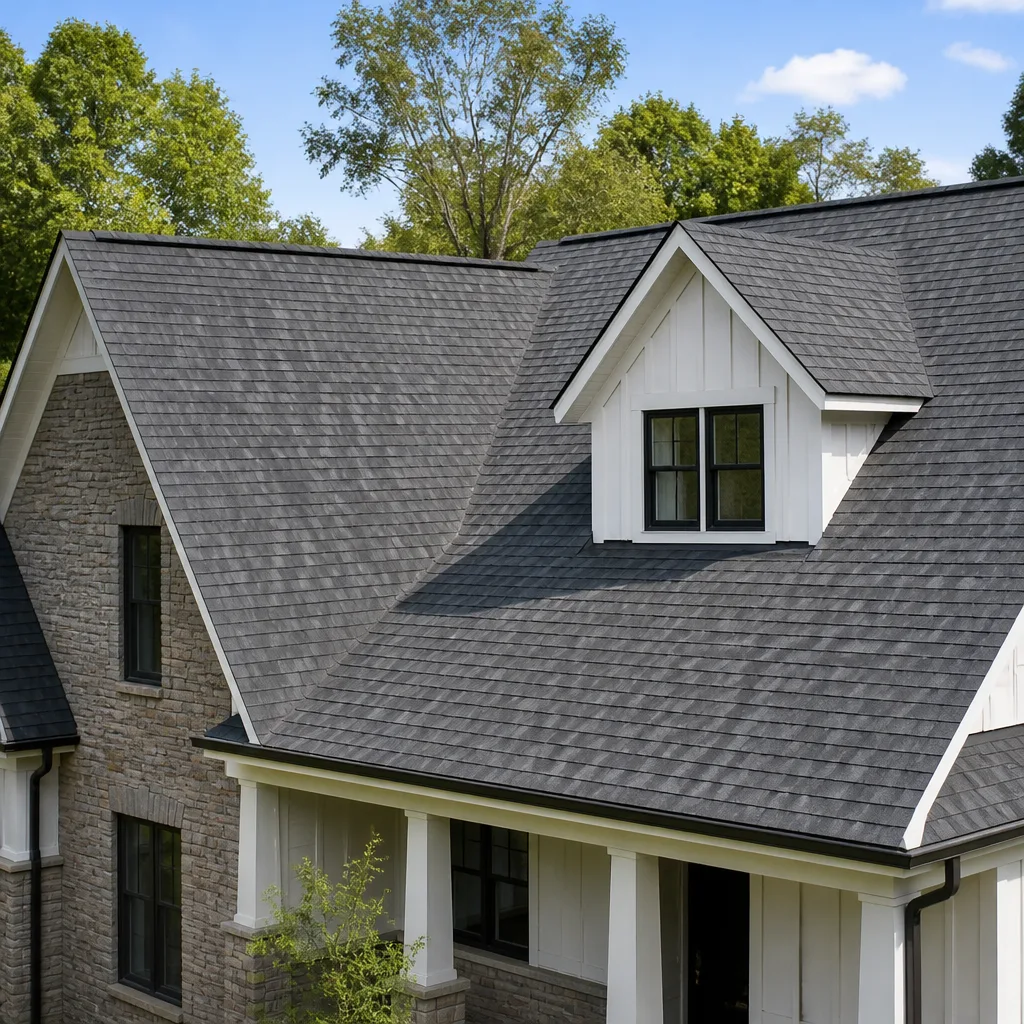 Architectural shingles
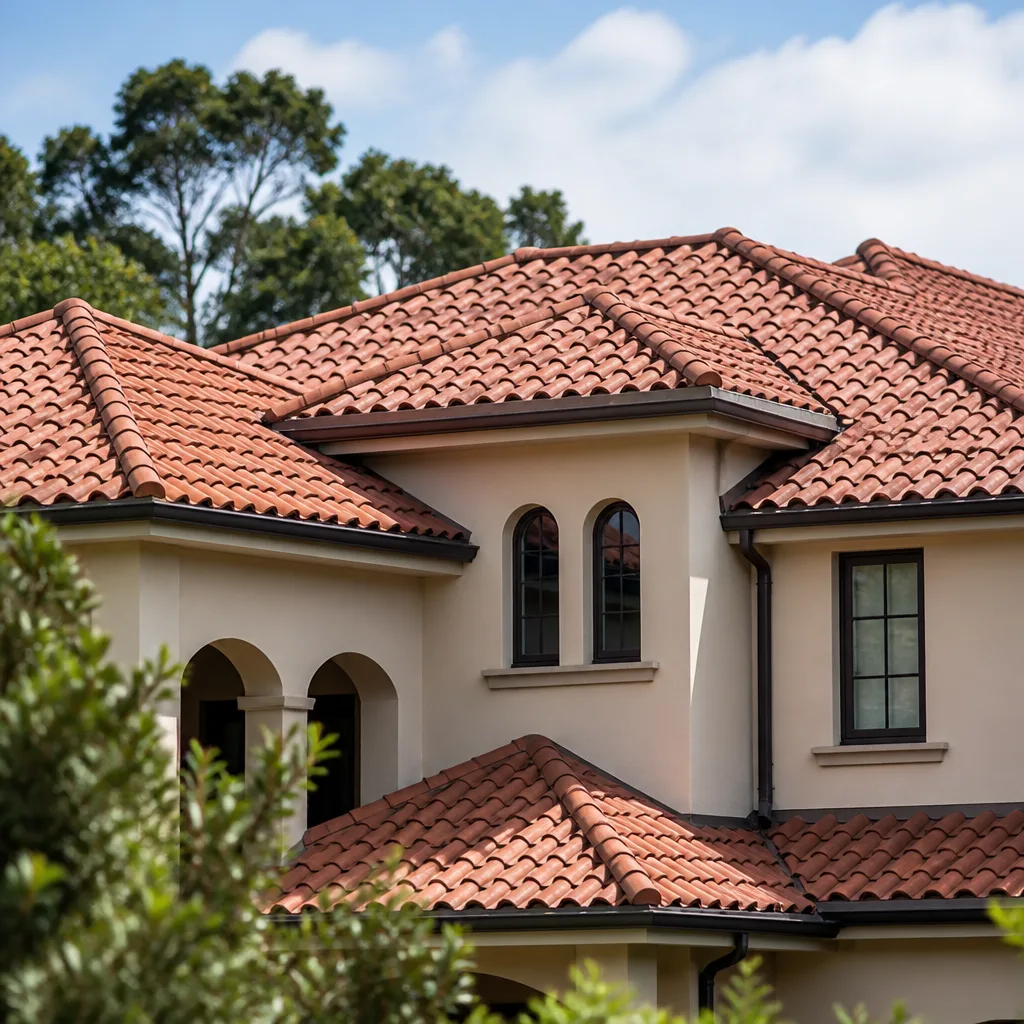 Tile roofing
 GAF
 Owens Corning
 Flat & low-slope
Free roof inspection with deck photos before we talk money - GAF and Owens Corning certified installation
DIY vs Professional Roofing: The Paradise Homeowner’s Decision Guide
I’ve watched a homeowner save $400 replacing a single ridge cap on a Saturday morning, and I’ve watched another spend $3,200 fixing a DIY re-roof that voided the shingle manufacturer’s warranty. The difference between those two outcomes wasn’t skill level. It was knowing exactly which jobs have hard technical limits and which don’t. Paradise sits in one of the hottest corners of Clark County, and that changes the calculus in ways most YouTube tutorials never mention. This guide walks through what you can safely handle yourself, where the line sits, and the honest math on a 1,500 sq ft re-roof done both ways.
Quick Answer
For most Paradise homeowners, DIY roofing makes sense only for low-risk maintenance: gutter cleaning, ground-level sealant touch-ups, and attic inspections. Anything involving shingle removal, underlayment, flashing, or walking the main field of the roof is a professional job, because Clark County permits, manufacturer warranty terms, and 160°F summer deck temperatures all stack against a homeowner doing it safely and correctly. The dollar savings on a full re-roof are smaller than they look once you add tools, disposal, permit fees, and your own time.
Styles & brands we work with
- Architectural shingles
- Metal roofing
- Tile roofing
- GAF
- Owens Corning
- Flat & low-slope
Table of Contents
- What DIY Roofing Work Is Actually Reasonable in Paradise?
- Why Manufacturer Requirements Void Warranties When They Aren’t Followed
- Heat Safety: What 160°F Roof Surface Temperatures Really Mean
- How to Pull Your Own Clark County Permit for Owner-Builder Work
- The Honest Math: DIY vs. Professional on a 1,500 sq ft Re-Roof
- What a Clark County Inspection Actually Requires You to Demonstrate
- Common Mistakes to Avoid
- When to Call a Professional
What DIY Roofing Work Is Actually Reasonable in Paradise?
Three categories of work are genuinely reasonable for a Paradise homeowner to handle. Everything else deserves a second look, and most of it deserves a phone call.
Gutter cleaning. Climbing a ladder to clear debris from single-story gutters is low-risk if you use a stable ladder, work from the ground where possible with a blower or extension tool, and never lean out past the rails. Paradise sits close to the McCullough Range foothills, and the dry washes that carry monsoon runoff also funnel grit and seed pods into gutters. Twice-a-year cleaning after the spring winds and after the August monsoon season is plenty.
Ground-level sealant touch-ups. If you can reach a flashing transition from a stepladder without stepping onto the roof slope, a fresh bead of roofing-grade polyurethane sealant around a vent boot or a pipe collar is a reasonable DIY fix. Use the right product (not silicone caulk from the hardware store), clean the surface first, and check the repair after the next rain.
Attic inspections. Walking the attic with a flashlight after a windy night or a heavy rain is one of the most useful things a homeowner can do. Look for water stains on the underside of the deck, daylight between boards, sagging insulation, and any wet spots around chimneys or vent penetrations. Photograph what you find. That photo is the most valuable thing you can hand a roofer.
What’s not on this list: removing shingles, installing underlayment, setting flashing, installing starter course, running ridge vent, or anything that requires walking the main field of the roof. Those tasks carry technical requirements that a first-timer will almost certainly miss, and the cost of missing them is warranty denial, not a small aesthetic flaw. For repair work that crosses that line, our Roof Repair in Paradise team handles the deck-to-ridge scope including flashing and underlayment.
Why Manufacturer Requirements Void Warranties When They Aren’t Followed
Shingle warranties from CertainTeed, Owens Corning, IKO, and Atlas are conditional documents. They don’t just cover the shingle against manufacturing defects – they also require the shingle to be installed to the manufacturer’s published specification. Miss the spec, and the warranty is void, even if the failure has nothing to do with installation.
The three specs most often missed on a DIY job:
- Nail pattern. Most architectural shingles require six nails per shingle in high-wind zones, placed in a specific pattern above the sealant strip. Four nails, nails placed too low, or nails driven at an angle all fail inspection and void the wind rating.
- Overlap and exposure. The exposed height of each course must match the manufacturer’s spec exactly. A quarter-inch drift across the roof creates a visible wave and a warranty problem.
- Starter course. A proper starter course – not just a flipped-over shingle – is required at eave and rake edges. It’s the single most-skipped step in homeowner installs, and it’s the one that lets wind get under the first course.
In our experience across Paradise, the tell is in the deck photos. When we pull a shingle that was installed without a starter course, the eave edge is the first place you see failure: cracked tabs, exposed nails, curling shingles within two or three seasons. That’s a warranty claim denial right there, and it doesn’t matter what the shingle wrapper said about a 30-year limited warranty. The nailing pattern earns the wind rating, not the shingle wrapper. If your roof was re-roofed by the previous owner without permits, that’s also a common reason a warranty claim gets denied today – a topic covered in more detail in our Roof Replacement & Installation in Paradise guide.
Heat Safety: What 160°F Roof Surface Temperatures Really Mean
Paradise regularly pushes past 105°F in July and August. The dark asphalt surface of a shingled roof in direct sun will read 160°F to 170°F on an infrared thermometer on those afternoons. That’s not a motivational obstacle. It’s a physical one.
What that temperature actually does:
- Shingles soften and tear underfoot. Granules scuff off where your weight rolls, and a misstep can punch through a field shingle. A professional crew works in early morning on hot weeks, but even then, walking an August roof in Paradise is a different job than walking one in April.
- Contact burns happen fast. Bare skin on a 160°F surface burns within seconds. Knee pads, long pants, and gloves are not optional from May through September.
- Heat illness hits before you feel it. Working on a roof in full sun in Paradise, the radiant heat load is roughly equivalent to standing on a hot parking lot in a black jacket. Two crews work faster than one person working alone, because one can drink water in the shade while the other works. A homeowner alone on a Paradise roof has no relief rotation.
- Adhesives and sealants behave differently. Sealant skins over in seconds, not minutes, so a touch-up done at noon in July is often a repair that fails.
When a professional crew works a Paradise roof in the summer, they start early, keep a shade station on the driveway, run through water aggressively, and rotate off the roof. That’s not pampering. It’s the reason the job gets done without a heat injury. If you’re considering a summer DIY project, ask yourself honestly whether you have a second person on the ground and a real plan for heat relief. If the answer is no, wait until October.
How to Pull Your Own Clark County Permit for Owner-Builder Work
Clark County does allow a homeowner to pull a permit as an owner-builder for work on their own primary residence, which is what makes DIY re-roofing legal in Paradise at all. But “legal” and “smart” are different questions, and the permit process is where a lot of DIY plans quietly die.
The steps, in order:
- Confirm owner-builder eligibility. The property must be your primary residence, and owner-builder permits are not available on rental or investment property. Bring proof of ownership.
- Submit the permit application with a scope of work. Clark County requires a description of the work: tear-off depth, underlayment type, shingle product and manufacturer, and the number of squares. If you don’t know how many squares your roof is, walk the roof dimensions and divide by 100. A roof is measured in squares – ask any bidder how many they counted.
- Pull the permit before any material is delivered. This is the step most DIY homeowners skip, and it’s the one that catches up with you at resale. An unpermitted re-roof in Paradise shows up on the county record and stalls a title search.
- Schedule the inspection phases. Clark County typically inspects the dry-in (underlayment with flashing installed) and the final. The final has to be requested within the required window before the permit expires.
- Close the permit. A closed permit is documentation for the next buyer and for your insurer. Keep the paperwork.
None of that is impossible. It’s just a couple of days of paperwork and phone calls, plus a firm understanding that the inspector is going to look at your work and either pass it or make you redo it. For a homeowner considering the full picture, our Shepherd & Sons Roofing Paradise home page has current contact info if you want to talk it through.
The Honest Math: DIY vs. Professional on a 1,500 sq ft Re-Roof
A 1,500 sq ft home footprint is typically 15 to 18 squares of roof once you account for pitch and overhangs. Here’s what that job actually costs when you add up every line, done as an owner-builder versus done by a professional crew.
| Line item | DIY (owner-builder) | Professional |
|---|---|---|
| Architectural shingles (CertainTeed or comparable, ~17 squares) | $1,900 – $2,700 | Included in job price |
| Underlayment, starter course, ridge vent, hip & ridge cap | $500 – $800 | Included |
| Flashing and vent boots | $150 – $300 | Included |
| Dumpster rental (2 loads typical) | $600 – $1,000 | Included |
| Tool rental (nail gun, compressor, harness, ladder stabilizer) | $300 – $500 | Included |
| Permit fee (Clark County, owner-builder) | $150 – $400 | Usually included in bid |
| Safety equipment (harness, anchor, knee pads) | $150 – $300 | Included |
| Labor | Your time | Included |
| Realistic all-in total | $3,750 – $6,000 + your labor | $9,000 – $16,000 depending on pitch and tear-off depth |
Time estimate for a first-time owner-builder: 40 to 60 working hours for a two-person team, spread across a week or more. Tear-off alone on a 17-square roof will fill most of a day for two people who’ve never done it. If you’re losing paid work, add that to the DIY column. And add a contingency line for the deck repairs you’ll find once the shingles come off – rotted fascia and sheathing around chimneys are common in Paradise homes built in the 1980s and 1990s.
The savings exist. They’re just smaller than the shingle price on the receipt suggests. If you’re pricing out replacement for the first time and want a no-pressure benchmark, ask for a free second opinion on any written estimate – we’ll walk the roof and tell you where the bid is light or heavy.
What a Clark County Inspection Actually Requires You to Demonstrate
The Clark County inspector is not there to grade your craftsmanship. They’re there to confirm the installation meets code and matches the permitted scope. Knowing what they check tells you whether the DIY path is realistic for you.
- Underlayment is installed correctly at the dry-in. That means the proper overlap, the right product for the roof pitch, and metal flashing installed at all valleys, sidewalls, and penetrations before any shingle goes down.
- Nailing pattern matches the code. The inspector will spot-check nail placement and count through exposed shingles. This is the most common fail on owner-builder jobs.
- Starter course at eave and rake. No flipped shingles, no bare deck at the eave.
- Ventilation balances intake and exhaust. Ridge vent combined with soffit vent is the typical spec. Blocked soffit vents are a frequent correction.
- Final inspection shows the completed roof matches the permit scope. If you changed shingle product or skipped the ridge vent, the permit won’t close without an amendment.
If your job is a metal roof instead of shingle, the inspection scope changes – panel attachment, seam fastening, and trim flashing each get reviewed. Our Metal Roofing in Paradise page covers the metal specifics. For shingle work, pull your permit with the full scope the first time and you’ll avoid a re-inspection fee.
See the difference
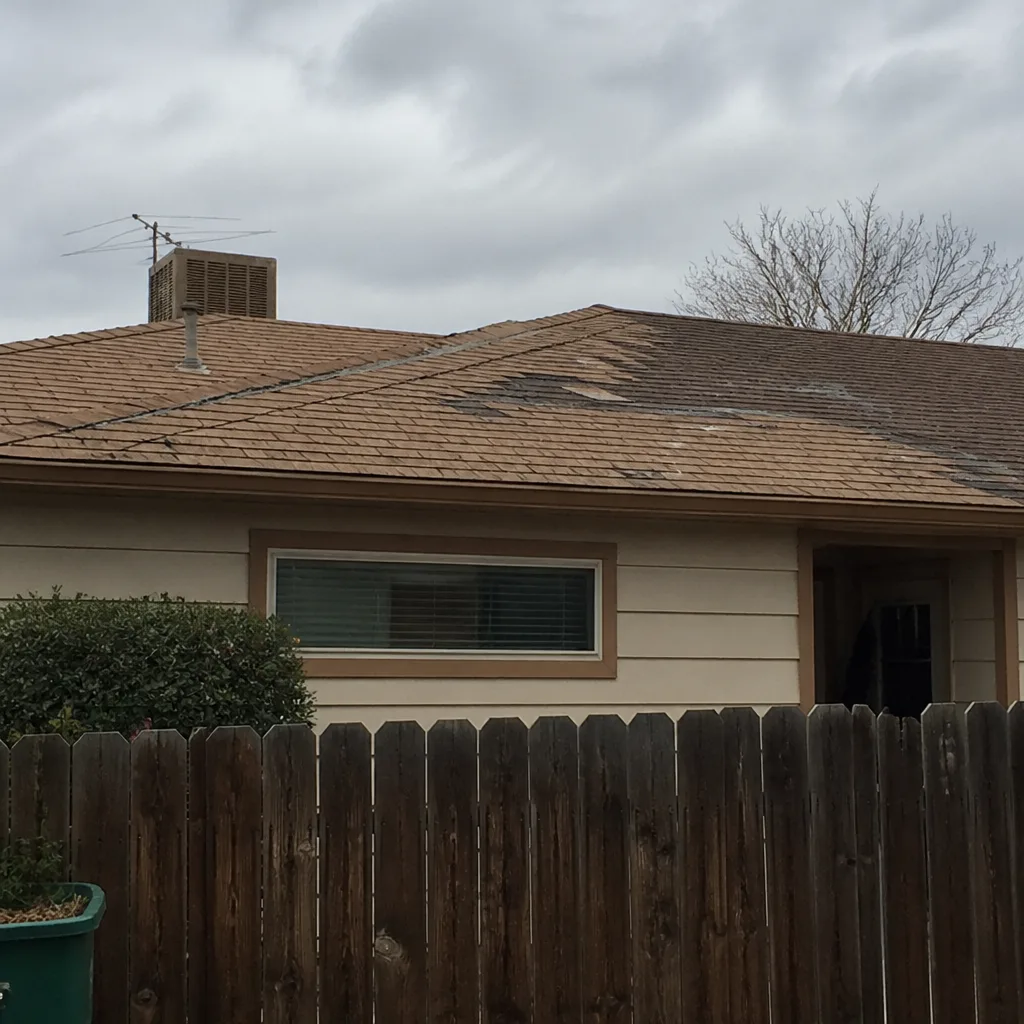 Before
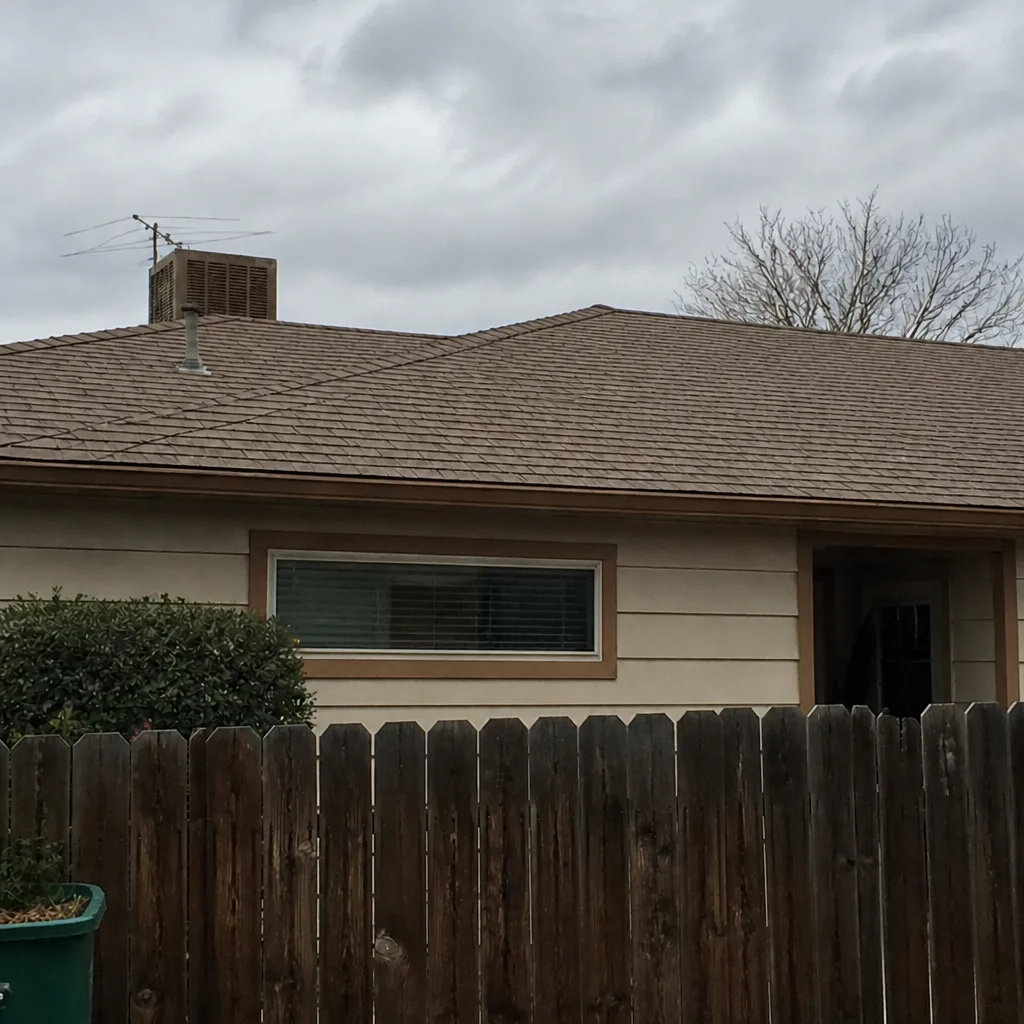 After
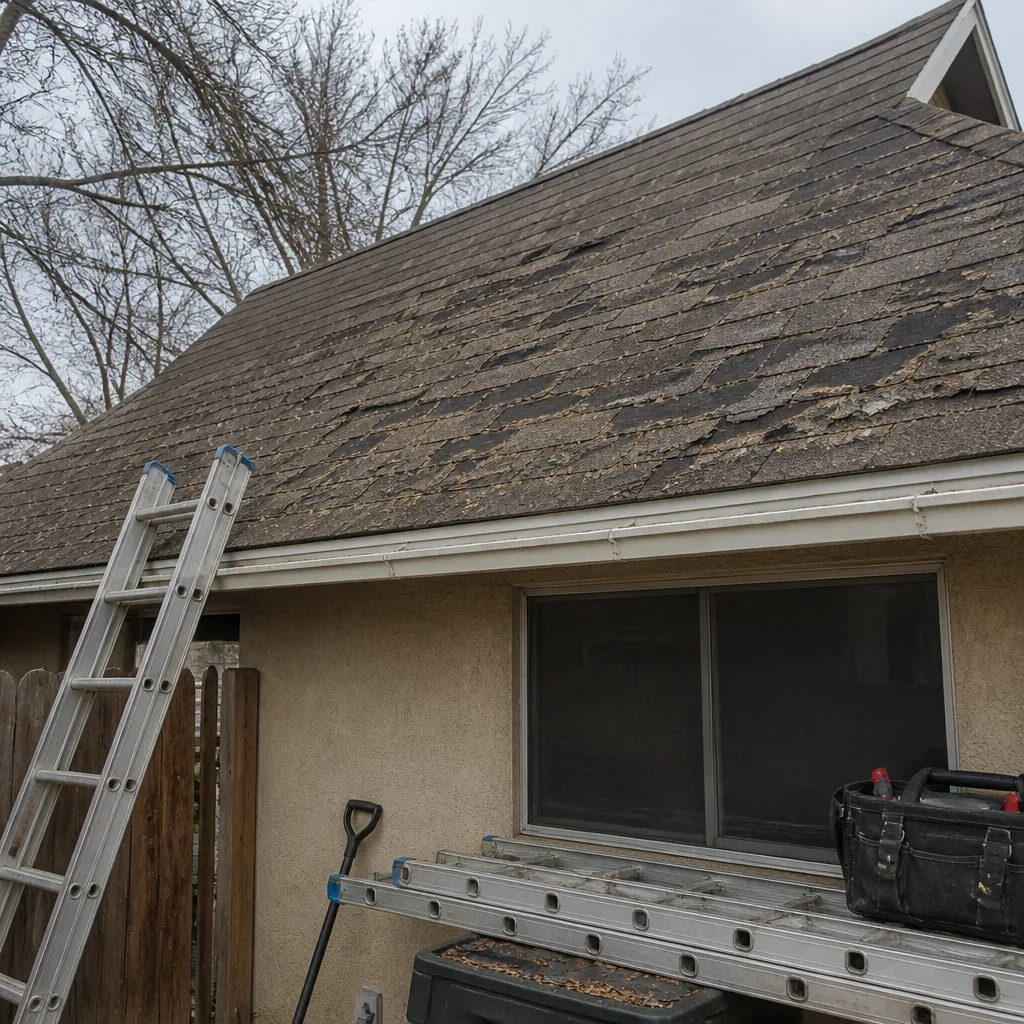 Before
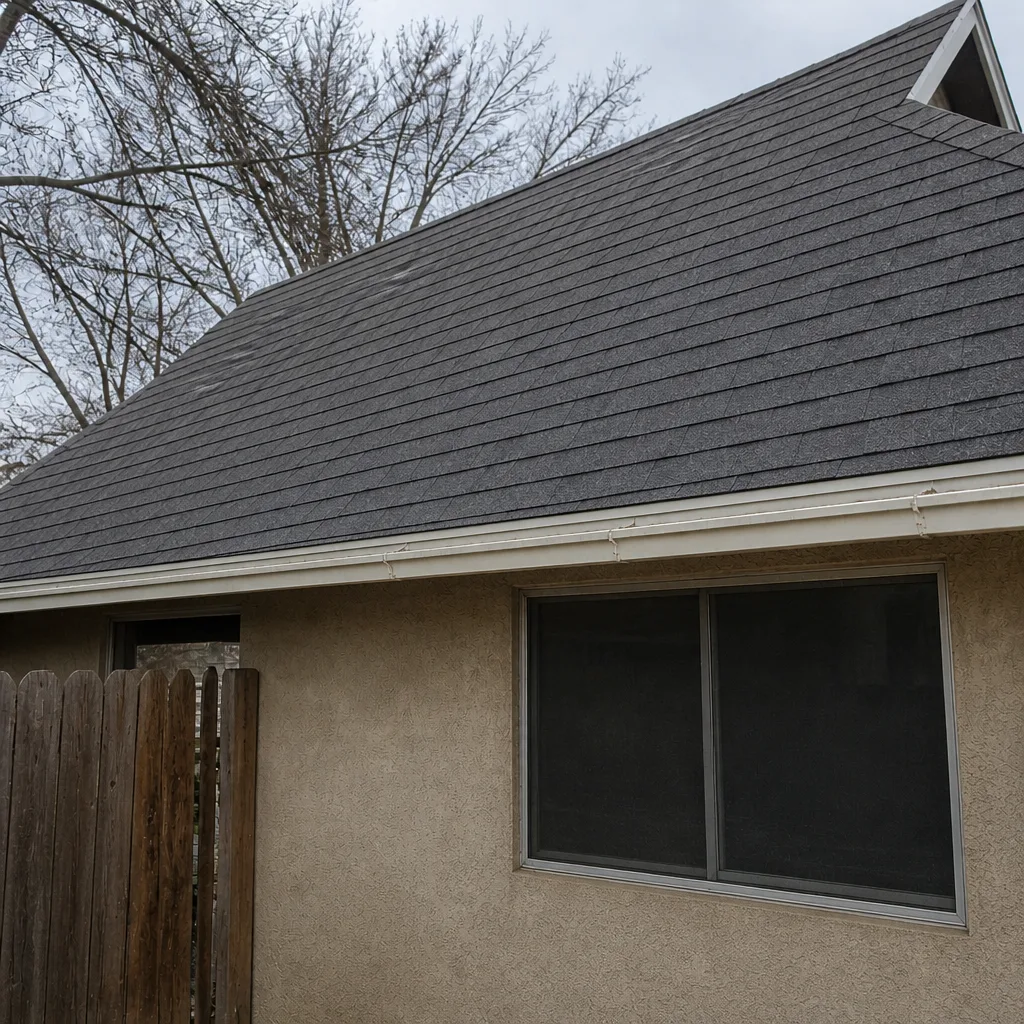 After
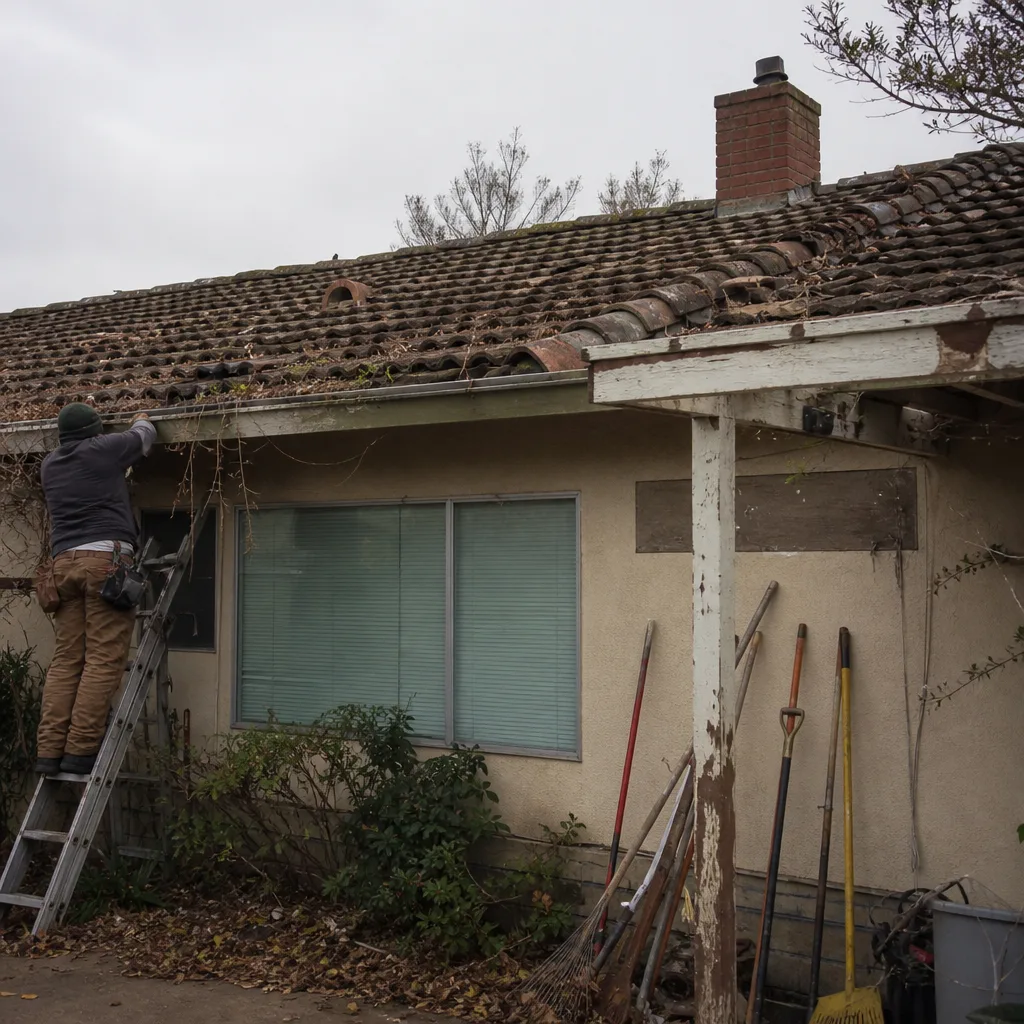 Before
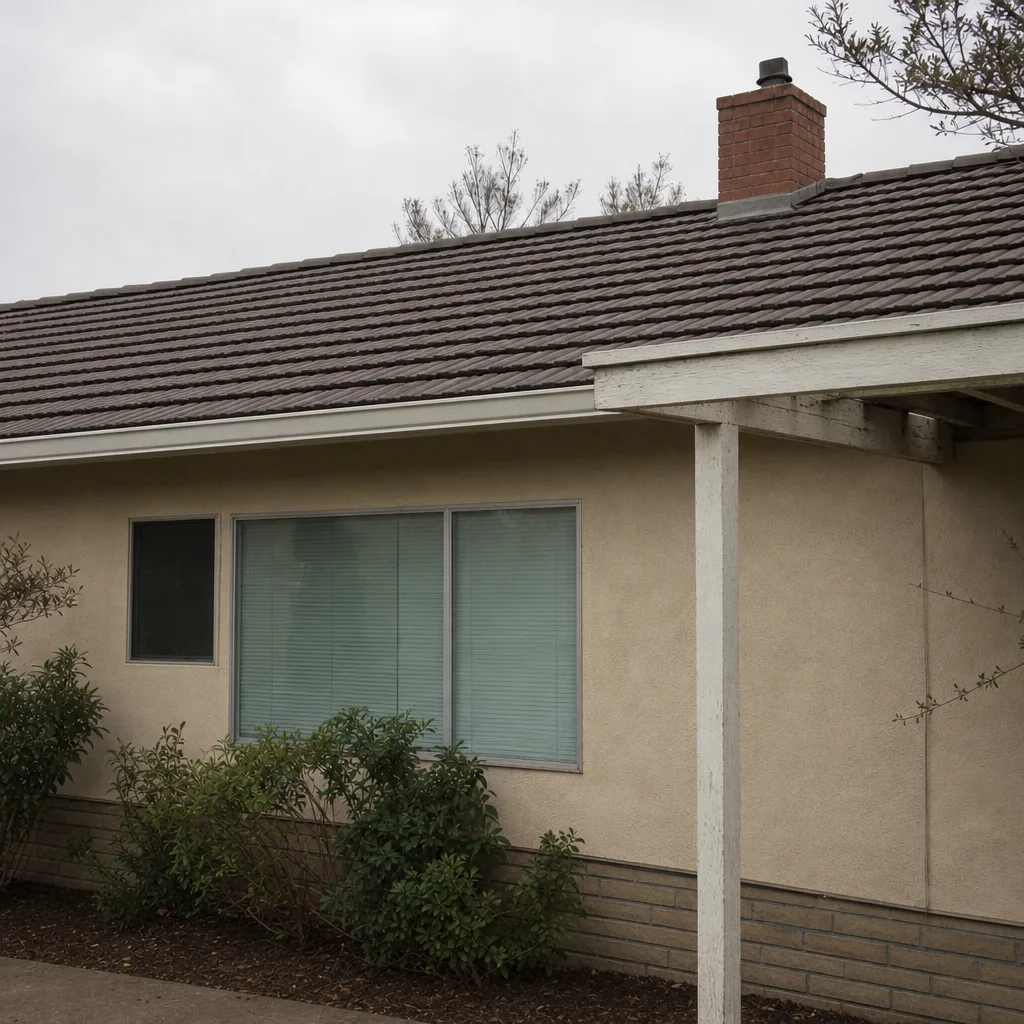 After
Common Mistakes to Avoid
- Working in July or August. If you start a DIY roof in Paradise in mid-summer, you’re working against 160°F surface temperatures and the highest heat-illness risk of the year. Wait for October.
- Skipping the starter course. It’s the cheapest material on the job and the most-skipped step. Failure there voids the wind warranty on the whole roof.
- Nailing too low or too few. Four nails per shingle is not enough in Clark County wind zones, and nails placed below the sealant strip leave the tab unsealed. Both fail inspection and both void the manufacturer warranty.
- Pulling the permit after the tear-off. An unpermitted re-roof is a title-search problem later. Pull the permit before the dumpster arrives.
- Reusing old flashing. Flashing is cheap and it’s the #1 source of leaks on Paradise homes after monsoon season. Replace it during the re-roof, not after the first rain.
- Ignoring the deck. Every roofer in Paradise has pulled shingles off a 1990-era home and found soft sheathing around the chimney. Budget for it or you’ll be back on the roof in a year.
- Relying on YouTube for the wind rating. The nailing pattern earns the wind rating, not the shingle wrapper. No video teaches the pattern to a Clark County inspector’s standard.
When to Call a Professional
Call a professional when the job involves any of the following: tearing off existing shingles, installing underlayment or flashing, walking the main field of the roof at any height, correcting a prior DIY install, or addressing active water intrusion after a monsoon storm. Those jobs carry warranty, permit, and safety exposure that a homeowner can’t reasonably absorb, and the cost of getting them wrong is often three times the cost of the original job.
Shepherd & Sons Roofing Paradise offers free estimates in Paradise – call (833) 676-0557. We’ll walk your roof, show you the deck photos before we talk money, and hand you a written line-item bid you can compare against any other. Every job is covered by the 90-Day Done Right Promise, and a live person answers the phone around the clock.
Frequently Asked Questions
Yes, if it’s your primary residence and you pull an owner-builder permit through Clark County. The work must meet code, pass the dry-in and final inspections, and match the permitted scope. Rental and investment properties do not qualify for owner-builder permits.
A typical 1,500 sq ft home in Paradise runs $9,000 to $16,000 for a full architectural shingle replacement, depending on pitch, tear-off depth, and deck condition. That price includes materials, labor, disposal, permits, and cleanup. Call (833) 676-0557 for a free written estimate on your specific roof.
Only if the installation doesn’t match the manufacturer’s written specification. Nail pattern, overlap, starter course, and ventilation all have to be exactly right. In practice, most homeowner installs miss at least one of those, and the manufacturer can deny the claim on that basis. This is why certain shingle brands like CertainTeed and Owens Corning require installation by a qualified roofer to keep the extended warranty intact.
Sometimes. If a single ridge cap is lifted or a tab is torn, and you can reach it safely from a ladder without stepping onto the field of the roof, a spot repair is reasonable. Anything that requires walking the slope, pulling nails, or resetting underlayment is a job for someone with the right safety gear and a helper on the ground.
July and August. Roof surface temperatures of 160°F or higher are routine, and the heat-illness risk for a solo homeowner is real. If you’re planning DIY work, aim for late October through March, when the deck is cool enough to kneel on and the sealants behave the way they’re supposed to.
Usually not, if the failure traces back to installation defects. Most policies exclude workmanship and installation quality, which means a DIY install that leaks or lifts is your cost to fix, not theirs. Storm damage is a different story, and that’s where a local roofer’s documentation matters most. Call (833) 676-0557 if you need a second opinion on a claim.
The Bottom Line
DIY roofing in Paradise works for a narrow set of jobs: gutter cleaning, ground-level sealant, and attic inspections. It does not work for shingle installation, flashing, underlayment, or anything that has to pass a Clark County inspection. The dollar gap between a DIY re-roof and a professional one looks bigger on paper than it does after you add tools, disposal, permits, your own time, and the risk of voiding the manufacturer warranty. If you’re on the fence, get the second opinion before you buy shingles. It’s free, and it’s the cheapest information you’ll get on this project.
Call Shepherd & Sons Roofing Paradise at (833) 676-0557 for a free estimate. Licensed, insured, and locally owned – we’ll walk the roof, show you the photos, and give you a written price before anyone touches a shingle.
Written by the team at Shepherd & Sons Roofing Paradise.