
Last updated November 17, 2026
 Tile roofing
 Architectural shingles
 Metal roofing
 GAF
 Owens Corning
 Flat & low-slope
Free roof inspection with deck photos before we talk money - GAF and Owens Corning certified installation
DIY vs Professional Tile Roofing: What’s Safe to Do Yourself
Tile roofing is the one roofing material where being careful and confident can cost you more than being cautious and hiring out. A $12 tile cracks under 250 pounds of weight on the wrong point, and the repair bill is never just one tile – it’s the cracked tile, the felt underneath it, and the three adjacent tiles that now sit out of alignment with a warranty nobody will honor. The honest question on a tile roof isn’t whether you’re handy. It’s whether you understand load paths. This guide draws a hard, practical line for Paradise homeowners: what you can safely do yourself, what will void your coverage, and where the risk stops being worth it.
Quick Answer
On a tile roof, you can safely clear gutters, do inspections from the ground with binoculars, and re-seat a single obviously slipped tile at eave level on a low-slope section. Everything else – walking the field, replacing broken tiles, checking underlayment, chasing a leak – belongs to a licensed roofer. Manufacturer warranties on tile systems almost universally require licensed installation and repair, and one misplaced step can crack tiles and void coverage on the whole surrounding field.
Styles & brands we work with
- Architectural shingles
- Metal roofing
- Tile roofing
- GAF
- Owens Corning
- Flat & low-slope
Table of Contents
- Why Weight Distribution Matters on a Tile Roof
- What’s Actually Safe to Do Yourself
- How DIY Repairs Void Manufacturer Warranties
- The Tools Required to Walk a Tile Roof Safely
- Insurance Claims: What Your Carrier Expects to See
- Bill Shepherd’s Honest Rule: What He’ll Let You Handle
- Tile in the Paradise Climate: Desert Heat, Monsoon, and Wind
- A Step-by-Step Guide to a Safe Ground Inspection
Why Weight Distribution Matters on a Tile Roof
Tile isn’t shingle. A concrete or clay tile is a brittle, fired or cast product that cracks before it bends. When you step on the field of a tile roof, your weight of 180 to 250 pounds doesn’t spread across the roof the way it does on a shingled deck. It concentrates at whatever point touches down. Put that point on the unsupported center of an S-tile and it cracks. Put it on the headlap of a tile near the ridge and you’ll hear the pop before you feel it.
The right way to walk a tile roof is to keep your weight over the purlins – the horizontal battens or framing members the tile is fastened to – and never over the span between them. Pros do this because they’ve internalized where the support is, not because they’re braver. On a Paradise roof, which might be a 25-year-old concrete flat tile system over a 30-pound felt underlayment that’s already sun-baked, the tolerance is even tighter. A roof that survived a decade of summer heat at 115°F gets brittle. It handles the load it was designed for and not much more.
Here’s the practical point: a tile roof you can walk on without damage is a roof that a trained person can walk on without damage. That’s a real skill, not a personality trait. If you don’t already know where the purlins sit on your particular roof, you don’t have the load path in your head, and one wrong step with a 200-pound body over 140°F surface temperature is how a small problem becomes a $1,800 problem.
What’s Actually Safe to Do Yourself
There are three tile roof tasks we tell Paradise homeowners to handle themselves, and they’re genuinely useful. Do them on a cool morning, use a stable ladder with a spotter, and never step above the eave line.
- Clear the gutters. Paradise gets debris: palm fronds, seed pods, dust from the open desert, the ash of summer. Clogged gutters back water up under the eave, and that water finds the fascia and the sheathing fast. Scoop them out by hand and flush with a hose. This is the single highest-value thing you can do for a tile roof, and it costs nothing.
- Ground-level binocular inspection twice a year. Stand at the property line and glass the roof. Look for slipped tiles, cracked field tiles, and dark streaks that suggest a broken tile or failed flashing. Take phone photos and date them. This is documentation, and it’s gold if you ever file a claim.
- Re-seat a single slipped tile at eave level. If one tile has slid down and is sitting out of alignment at the eave – the lowest course, reachable from a ladder – you can gently lift and reseat it, if the tile isn’t broken and you can do it without putting weight on the field. That’s the entire safe list. If the tile is cracked, or the slip is higher up, stop.
That’s it. Every other tile roof task – replacing a broken tile, checking underlayment, chasing a leak, walking the field to assess a storm hit – needs a licensed roofer. If you want a reason to trust the boundary, watch what happens when somebody walks a field tile on a hot Paradise afternoon: hairline cracks that don’t show up for two years, then a leak that starts in a bedroom ceiling nowhere near the original step.
How DIY Repairs Void Manufacturer Warranties
Every major tile system we install – and the underlayments and flashings that go with them – carries a manufacturer warranty that is explicitly conditioned on licensed installation and repair. GAF, Owens Corning, Tamko, and the rest write it into the terms. The warranty covers defects in materials, not the consequences of an unlicensed repair done three tiles over. That’s the part homeowners miss.
Here’s what actually happens on a claim. The manufacturer asks who installed the roof and who last touched it. If a licensed installer did the original job and a homeowner with a tube of sealant did a repair, the manufacturer can attribute the failure to the repair, deny the claim on the adjacent tiles, and you’re left holding the difference. The manufacturer doesn’t have to prove the repair caused the leak. The repair is enough to give them a leg to stand on.
- Most tile and underlayment manufacturers require licensed installation for material coverage to apply at all.
- An unpermitted repair can void the coverage on the entire surrounding field, not just the tile you touched.
- A homeowner repair that’s visible under close inspection is a red flag when a claim inspector looks at the roof.
- Local code in Paradise and Clark County expects permitted work for any structural repair or tile replacement beyond minor reseating.
A reseated slipped tile at the eave does not void a warranty. A glued or screwed repair in the middle of the field does. The line is whether you had to alter the system. If you didn’t, you’re fine. If you did, you’ve made a warranty question the next roofer has to answer, and any honest roofer will tell you that’s an expensive trade for a $12 tile.
The Tools Required to Walk a Tile Roof Safely
You can’t safely walk a tile roof with a pair of sneakers and optimism. The proper gear isn’t exotic – it’s a short list, and every item on it addresses the weight problem directly. If a roofing crew shows up without any of this, that’s your sign to ask harder questions.
- Tile brackets or roof jacks. Temporary metal platforms that hook over the ridge or attach to the framing and let you stand without touching the field. Used to stage a work area without stepping on tile.
- Foam knee pads on the purlins. The pads go over the batten so the weight transfers to the framing member instead of the tile field. A pro shuffles from purlin to purlin, knee pads down, weight centered.
- Soft-soled roofing shoes. Hard rubber soles point-load the tile. Soft soles spread contact, and a good roofer never lifts his heel off the roof to take a step.
- A fall-protection harness on anything above a 4/12 pitch. This is not optional in our book. There’s no version of walking a steep tile roof where a harness is a nice-to-have.
- A proper ladder with a stabilizer and a spotter. Every year we see a homeowner injury from a ladder kick-out, and it happens more than a tile crack ever will.
Improvised gear – a car mat as a knee pad, sneakers on tile, a ladder leaned on the gutter – causes more damage than the original problem. We’ve pulled tile after tile off a Paradise roof where a homeowner stood on the field trying to fix a leak and cracked six pieces of a concrete tile no longer manufactured in that profile. The replacement was a partial tear-off, not a repair. In our experience, the DIY repair on a tile roof is the leading cause of the repairable-became-a-replacement story.
Insurance Claims: What Your Carrier Expects to See
If you have a leak, a storm claim, or a hail event, the paper trail matters as much as the repair. Carriers expect licensed contractor documentation: a written scope, photos of the damage before and after, a permit if one is required, and a final invoice that describes the work. A homeowner-glued tile in the field looks like exactly what it is on a claim, and that can reduce or kill the payout on the surrounding damage.
Documentation is your protection, not the insurance company’s. Take the binocular photos. Keep the dated receipts. Save the original builder or installer paperwork if you have it – the Paradise heat does a number on underlayment, and a 25-year-old felt layer that’s failed at year 18 is a material-failure conversation your carrier will want to see documented under the manufacturer warranty, not a homeowner patch. If you’re filing a claim, the roof has to be inspected by a licensed roofer who will put the scope in writing. A free second opinion on a written estimate is a normal ask; use it. Any honest contractor will put the damage on paper so your carrier has what it needs.
One local note: Clark County properties with tile roofs often carry higher insured values because replacement costs per square run higher than shingle. That means the carrier’s inspector is going to look carefully at the roof. A DIY repair that sits in the middle of an otherwise clean claim is the kind of detail that turns a routine payout into a back-and-forth. Keep the roof in a condition that matches your paperwork.
Bill Shepherd’s Honest Rule: What He’ll Let You Handle
The way we run Shepherd & Sons is pretty simple: if it’s safe to do yourself, we tell you to do it, and if it’s not, we tell you why. That’s been the shop’s approach since day one. My name is on the truck and on the license, and I don’t want a Paradise neighbor carrying a job we should be doing because they thought it was on them.
The gutter clearing, the binocular inspection, the reseat at the eave – do those. Call us when it’s anything else. The jobs I won’t let my own crew rush are the ones a homeowner should never touch: walking the field on a hot day to locate a leak, replacing broken tile near a valley or a ridge, checking the underlayment, and touching anything a wind event moved. Those are weight-and-weather jobs. A trained guy with a harness and purlin footwork can do them. An untrained guy on tile can do damage that costs ten times what the repair would have.
That’s not gatekeeping. It’s the honest boundary. Our team at Shepherd & Sons Roofing has been doing this long enough to know the damage curve, and the damage curve on tile is steep. If you want to talk through what you’re seeing on the roof, call us. If you want the repair done, we’ll quote it. Free second opinion on any written estimate, and no trip charge inside our county.
Tile in the Paradise Climate: Desert Heat, Monsoon, and Wind
Paradise is a desert town, and a desert is hard on tile. Summer surface temperatures on a dark concrete tile roof run hot enough to degrade underlayment faster than the manufacturer’s schedule assumes. The sun cooks the felt, the felt checks and cracks, and the first monsoon rain of August finds the path. That cycle repeats every summer, and it’s why we see more underlayment failures than tile failures on Paradise roofs.
Wind is the other factor. A monsoon downburst or a haboob can lift tile at the ridge, at hips, and at the rake edge where the wind catches. Once a tile lifts, the ones beside it are sitting loose, and a homeowner who re-seats one by hand without checking the fasteners has not fixed the problem. The nailing pattern is what earns the wind rating, not the tile wrapper, and if the pattern is compromised by a loose lift, the fix is a proper re-seat with the right fasteners, not a hand-press.
We’ve also seen what the dry heat does to the mastic and flashings. A DIY repair with the wrong sealant – the tube from the hardware store that isn’t rated for the surface temperature – dries and pulls within a season and creates a leak path where there wasn’t one. If you’re seeing a drip at a valley or a chiminey flashing, that’s a call to a licensed roofer who can get the right material up there and a warrantable repair behind it. When the repair does turn into a bigger job, that’s a Paradise roof repair conversation, and if the tile field is failing at the deck level, it becomes a Paradise replacement or installation conversation. We’ll point you at the right one.
A Step-by-Step Guide to a Safe Ground Inspection
This is the DIY part that pays for itself: a repeatable ground inspection you can do twice a year without touching the roof. Do it in the morning, take notes, and photograph what you find.
- Walk the property line with binoculars. Start at the street corner and move slowly. You’re looking for slipped tiles, cracked tile, missing pieces, and discoloration that suggests a leak path.
- Check the ridges, hips, and valleys first. These are the highest-wind and highest-water areas. A lifted ridge tile is the most common storm tell we see in Paradise. Note the location and skip the ladder.
- Photograph anything that looks off. Date the photos. Save them in a folder. This file is your evidence if you file a claim or call a contractor.
- Look down at the ground. Tile fragments in the yard after a wind event mean pieces are up. That alone warrants a professional inspection – don’t try to match fragments to spots on the roof.
- Check the gutters and downspouts. Water stains on the fascia, pooling at the downspout, or debris in the gutter means the drainage is asking for help. Clear what you can reach safely.
- Look at the ceiling inside. Fresh stains, bubbling paint, or a musty smell in the attic point to a leak. Note the room and the location and get it inspected.
- Write down the date, the weather, and what you found. If you make the call, that record gets you a straight answer faster.
If you’re weighing a tile system against metal for a future replacement, our metal roofing page spells out how the two compare in the desert climate. Both choices come down to how the load and the water detail get handled, and both are worth understanding before you ever climb a ladder.
Common Mistakes to Avoid
- Stepping on the field instead of the purlins. It’s the most common mistake and the most expensive one. Your weight concentrates on the unsupported center of a tile, and the tile cracks. On a hot Paradise afternoon the damage is invisible until the next rain.
- Using the wrong sealant. The tube of generic roof cement from the hardware store is not rated for desert surface temperatures. It shrinks, cracks, and creates a leak path within a season.
- Replacing a tile without checking the underlayment. A cracked tile is usually the symptom, not the cause. The felt below it is often already failing, and putting a new tile over failed felt hides the problem and voids coverage.
- Walking a roof solo. A fall from a one-story roof is survivable. A fall onto a patio, a block wall, or a driveway isn’t. The spotter rule is non-negotiable.
- Making a repair that voids the surrounding field warranty. A glued fix in the middle of the field is the single most expensive DIY repair on a tile roof. It costs the price of the tile plus the coverage on the whole area around it.
- Trying to match a tile fragment to a missing tile. You’ll guess wrong. A broken piece on the ground has already been affected by sun and heat; the piece on the roof may be a different profile or lot. Get a professional to ID it before you buy anything.
- Filing an insurance claim before documenting the damage. Carriers expect dated photos and a licensed scope. A claim without documentation is a claim that gets negotiated down.
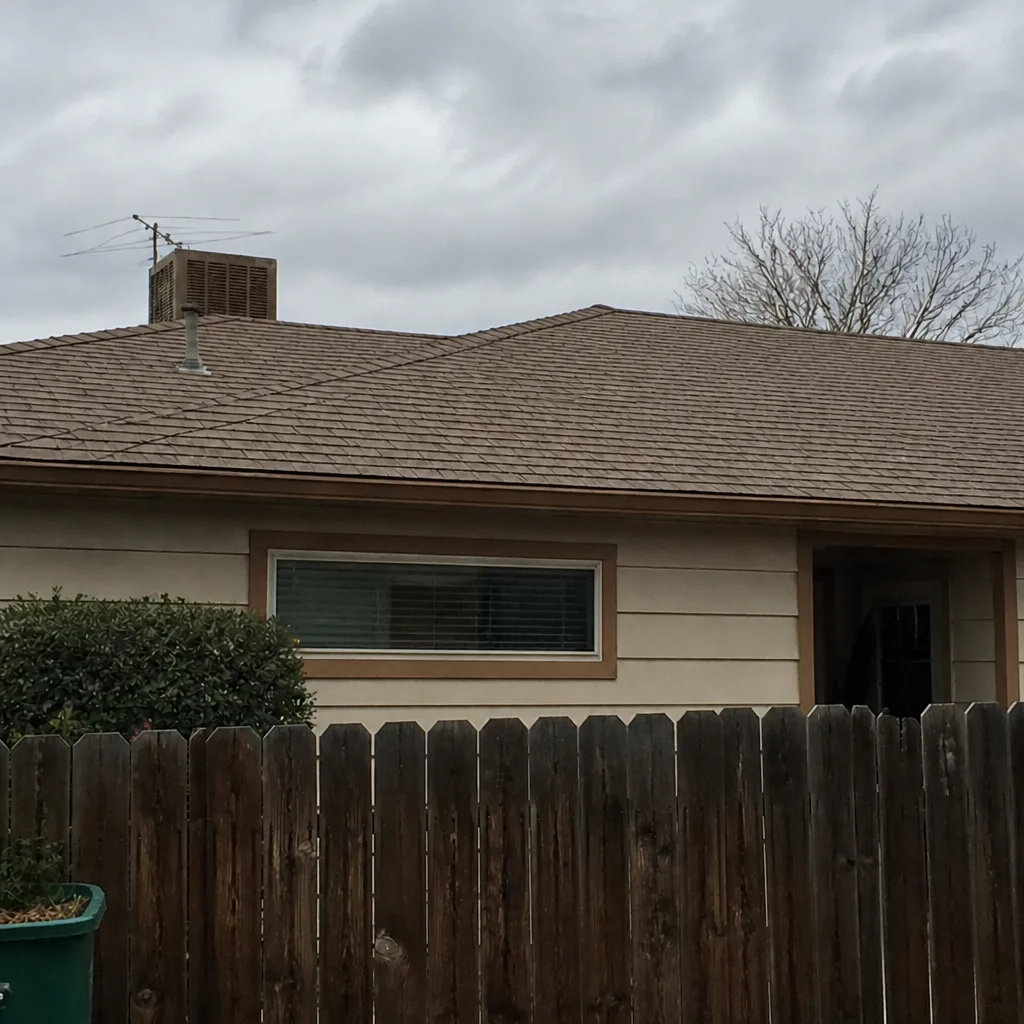
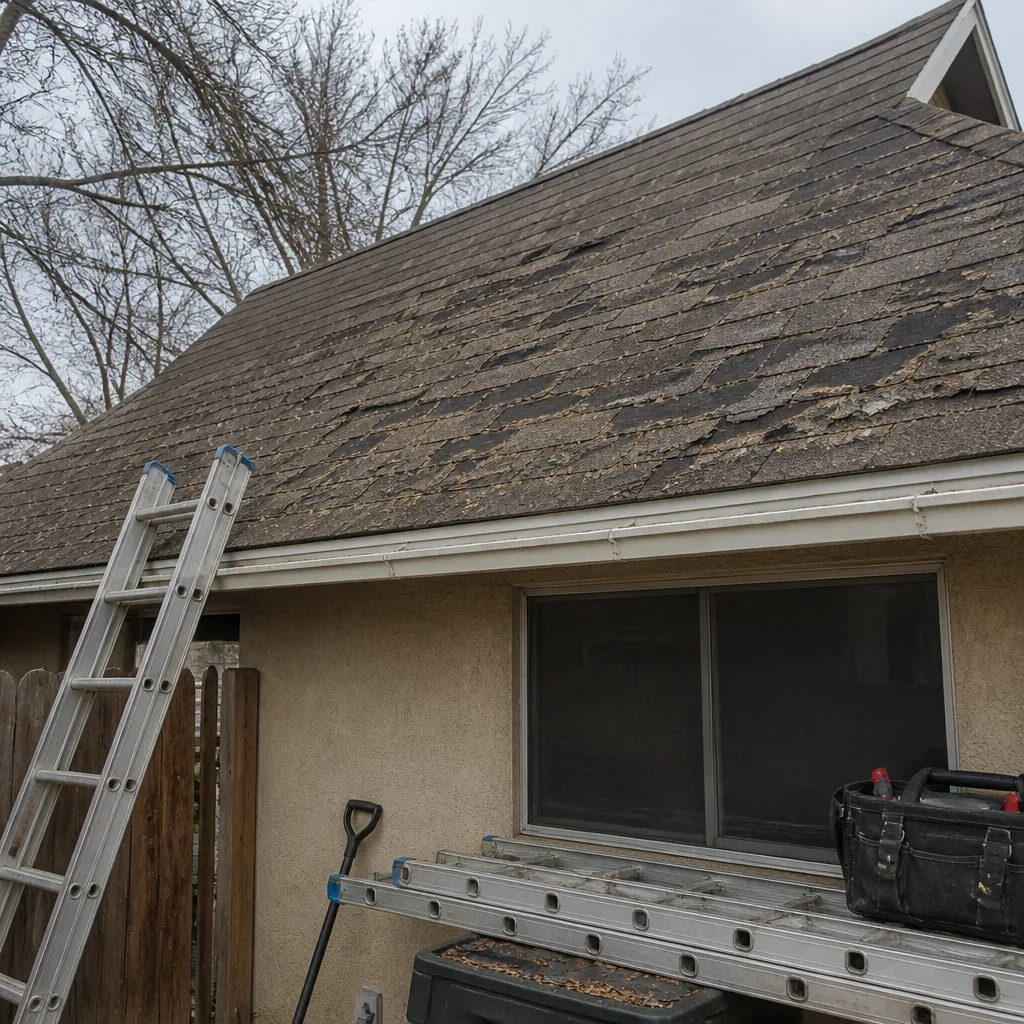
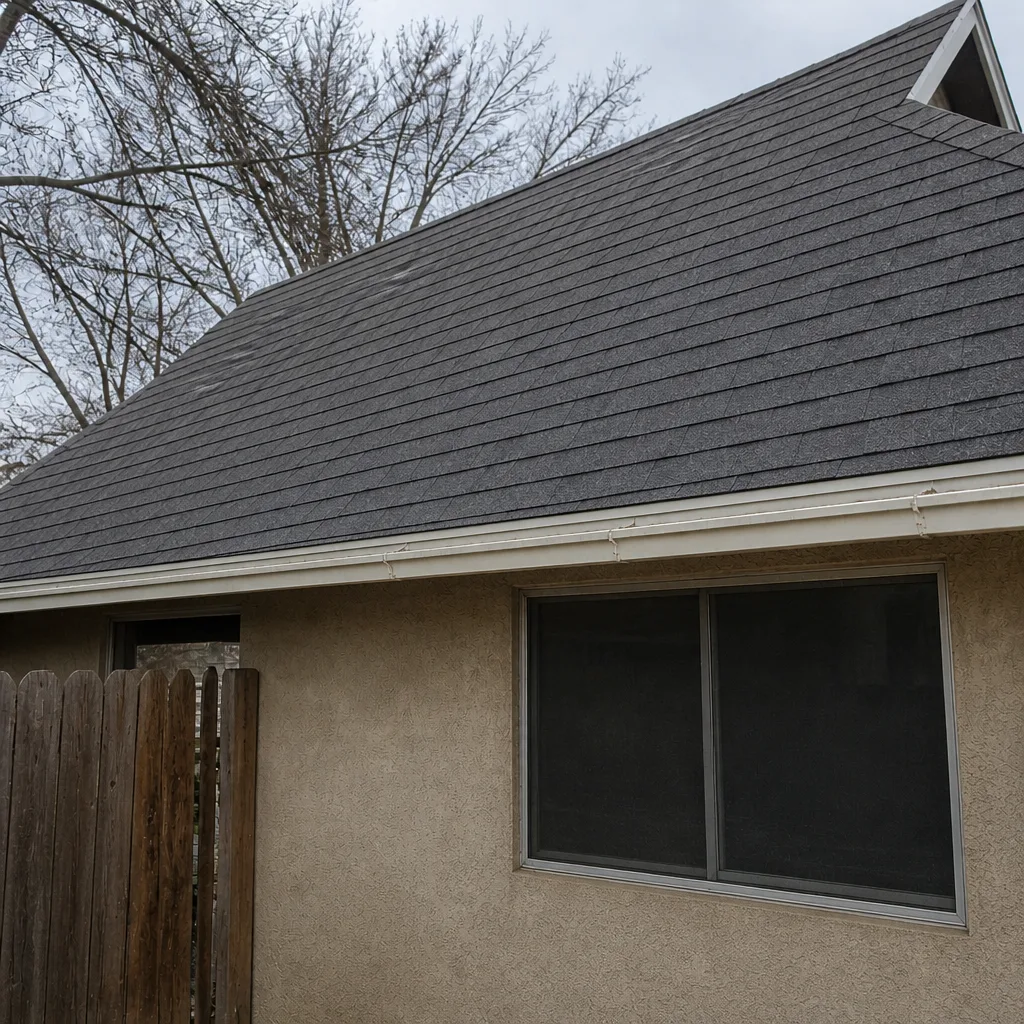
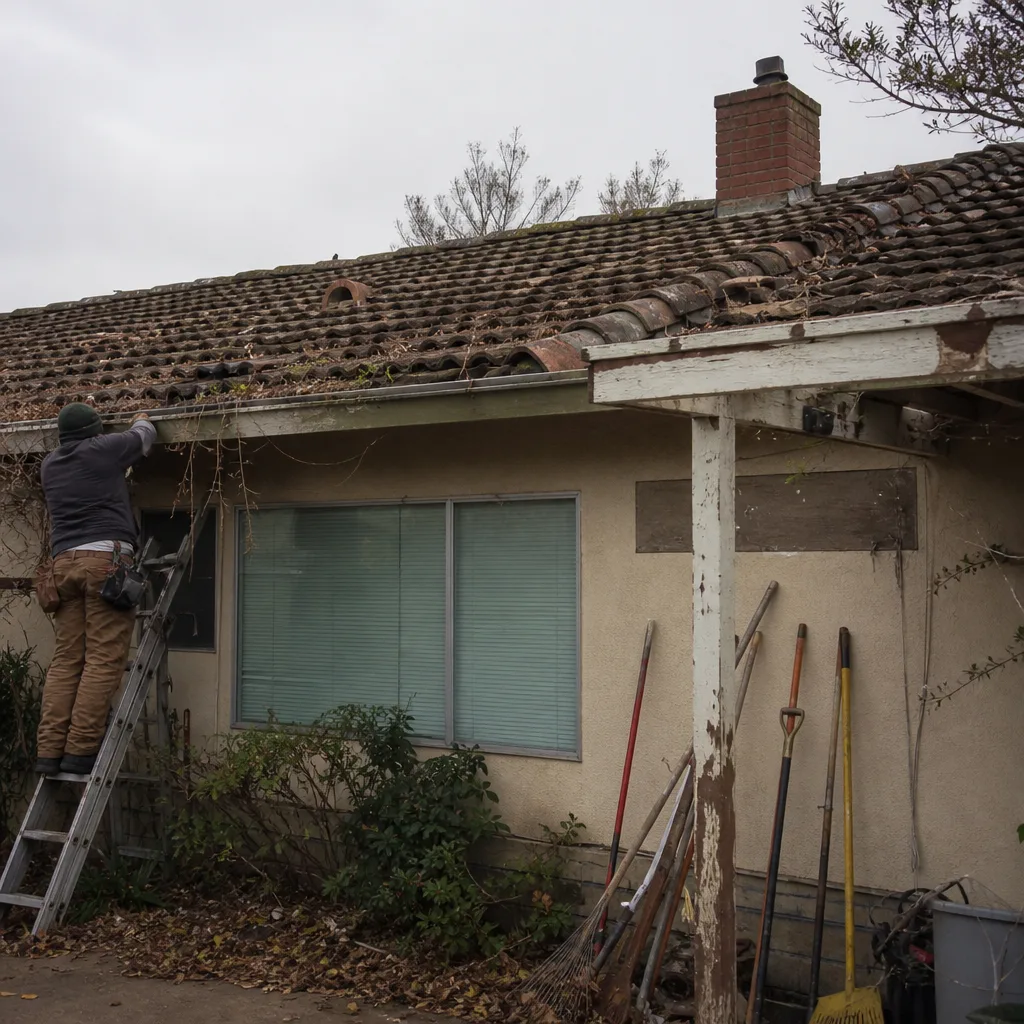
See the difference
 Before
 After
 Before
 After
 Before
 After
When to Call a Professional
Call a licensed roofer when the problem is anywhere other than the eave and the gutter. That means: any leak you can trace, any roof with missing or slipped ridge tiles, any wind event that sent tile to the ground, any repair near a valley or a flashing, and any job where you’d have to step on the field to do it. Call when the underlayment is suspect, when the tile profile is older than the current market, and when the job would require a permit. If you’ve read this far and you’re still not sure, the call is the cheap answer.
Shepherd & Sons Roofing Paradise offers free estimates in Paradise – call (833) 676-0557. Free second opinion on any written estimate, no trip charge inside our own county, and a live person answers the phone. If it’s a repair, we’ll tell you. If it’s a replacement, we’ll show you why before we talk money.
Frequently Asked Questions
No, not safely, unless you already know where the purlins are and have the right gear. Walking a tile roof means stepping from purlin to purlin with weight centered, and one misplaced step can crack tile and open a warranty problem. Do your inspection from the ground with binoculars instead, and call a licensed roofer for anything that requires stepping onto the roof.
Yes, in most cases. Manufacturers of tile, underlayment, and flashings condition their coverage on licensed installation and repair. An unlicensed repair in the field can void coverage on the surrounding area, not just the tile you touched. A reseated slipped tile at the eave without altering the system is generally fine. A glued or screwed repair in the field is not.
An honest range for a standard field tile repair in Paradise runs a few hundred dollars for a single broken tile and flashing check, and higher for multiple tiles or a valley repair. We don’t quote numbers over the phone – a real roofer measures the squares and looks at the deck before talking price. Call (833) 676-0557 for a free estimate.
A single cosmetic tile re-seat generally does not require a permit. Structural repairs, multiple tile replacement, underlayment work, and any repair that touches the deck do require one. The permitting line is what makes the work warrantable and safe on a claim. A licensed roofer will pull the permit as part of the job.
Don’t climb up to check. Photograph the pieces, note the date, and call a licensed roofer for a full inspection. Lifted tiles mean the ones beside them are loose, and the wind rating depends on the fastener pattern, not just the tile. A proper inspection after a wind event is a normal, quick call.
Usually, if the repair was made by a licensed roofer following the manufacturer’s specifications, the warranty on the untouched area stays intact. If a homeowner made the repair, the warranty on the adjacent sections is generally void. Have your roofer document the repair so the coverage is preserved on paper. Call (833) 676-0557 if you need to check.
The Bottom Line
The DIY line on a tile roof is about load paths, not skill level. You can clear gutters, inspect from the ground with binoculars twice a year, and reseat a single slipped tile at the eave without touching the field. Everything else is a licensed roofer’s job, because a misplaced step, the wrong sealant, or an unpermitted repair in the field can crack tile, void the surrounding warranty, and turn a small fix into a tear-off. We draw that line because we’ve seen the damage curve, and it’s steep. If you’re unsure where your roof falls, call us before you climb. A free second opinion is a phone call, not a fall.
Call (833) 676-0557 for a free estimate or a free second opinion on any written estimate. No trip charge inside our county. Live person answers the phone. Same name on the truck and the license.
Written by the team at Shepherd & Sons Roofing Paradise.