
Last updated November 17, 2026
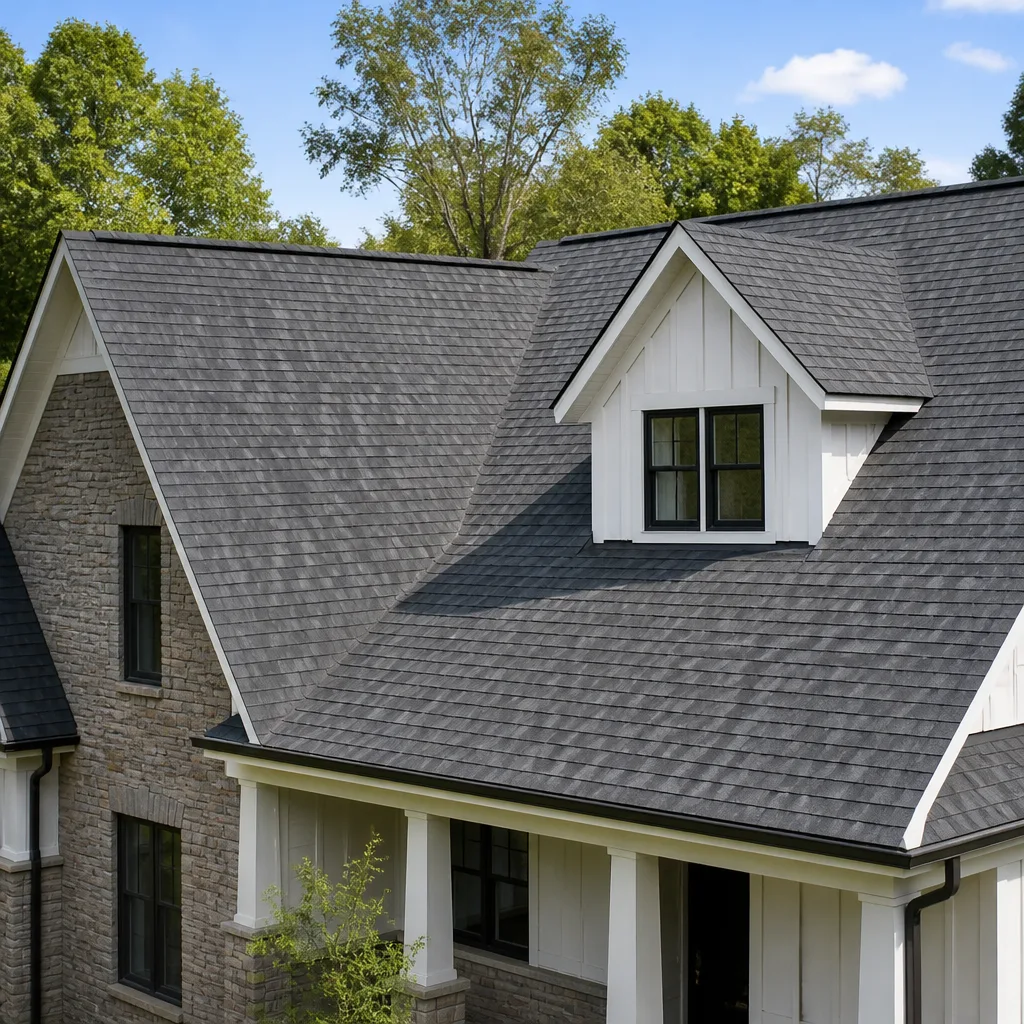 Architectural shingles
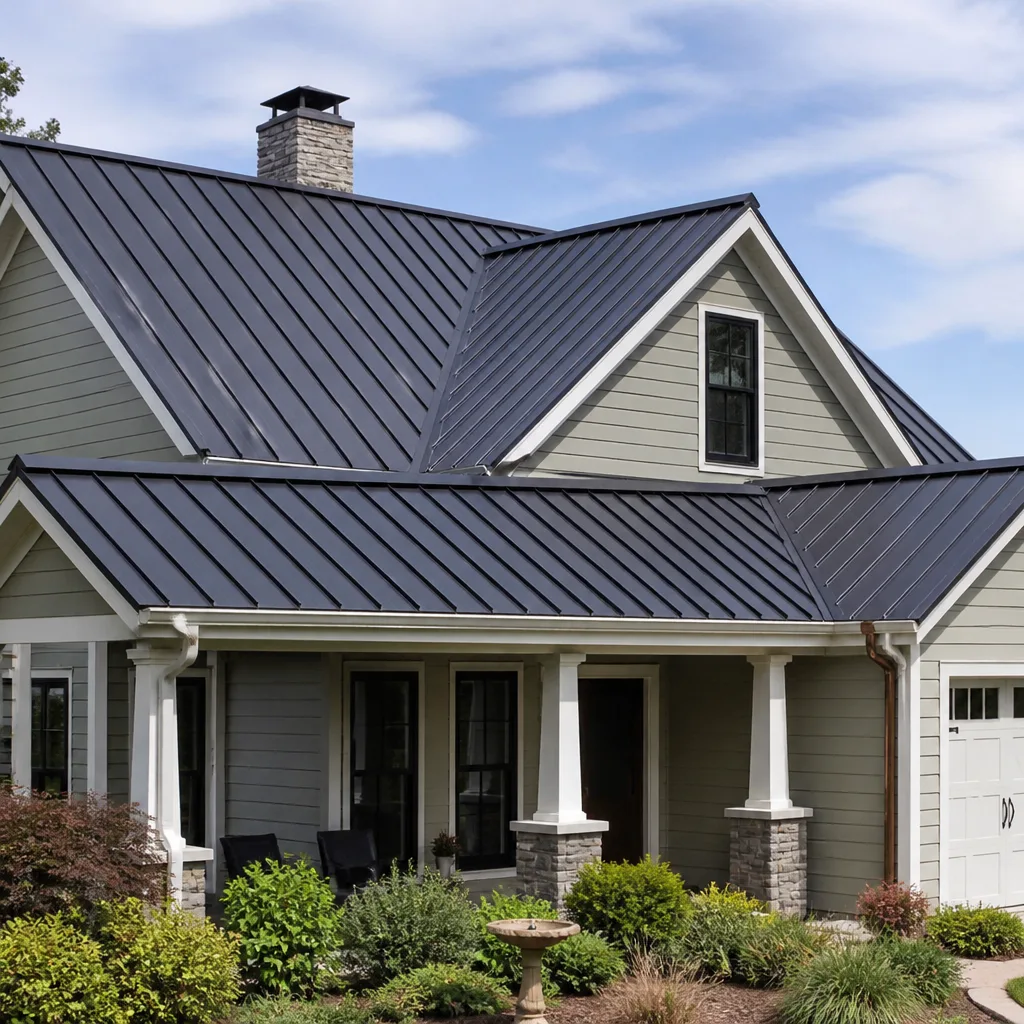 Metal roofing
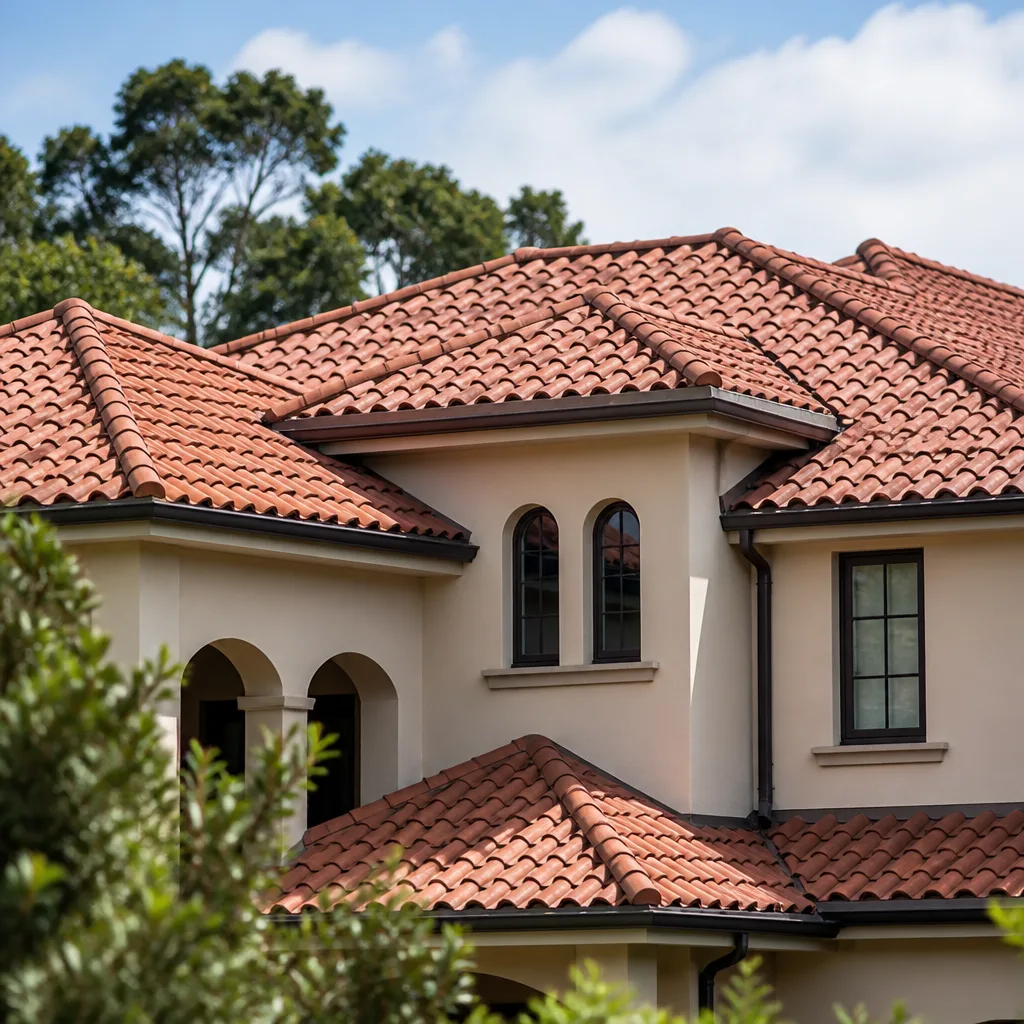 Tile roofing
 GAF
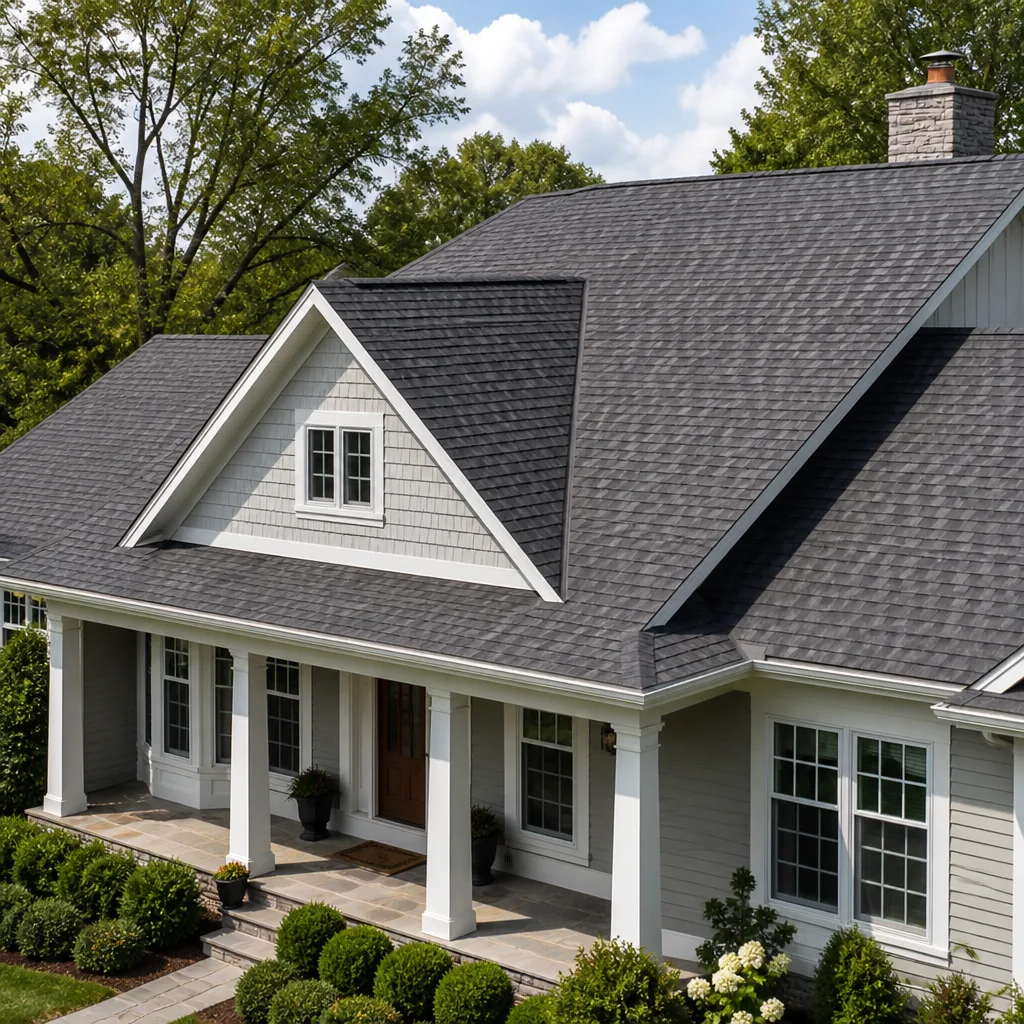 Owens Corning
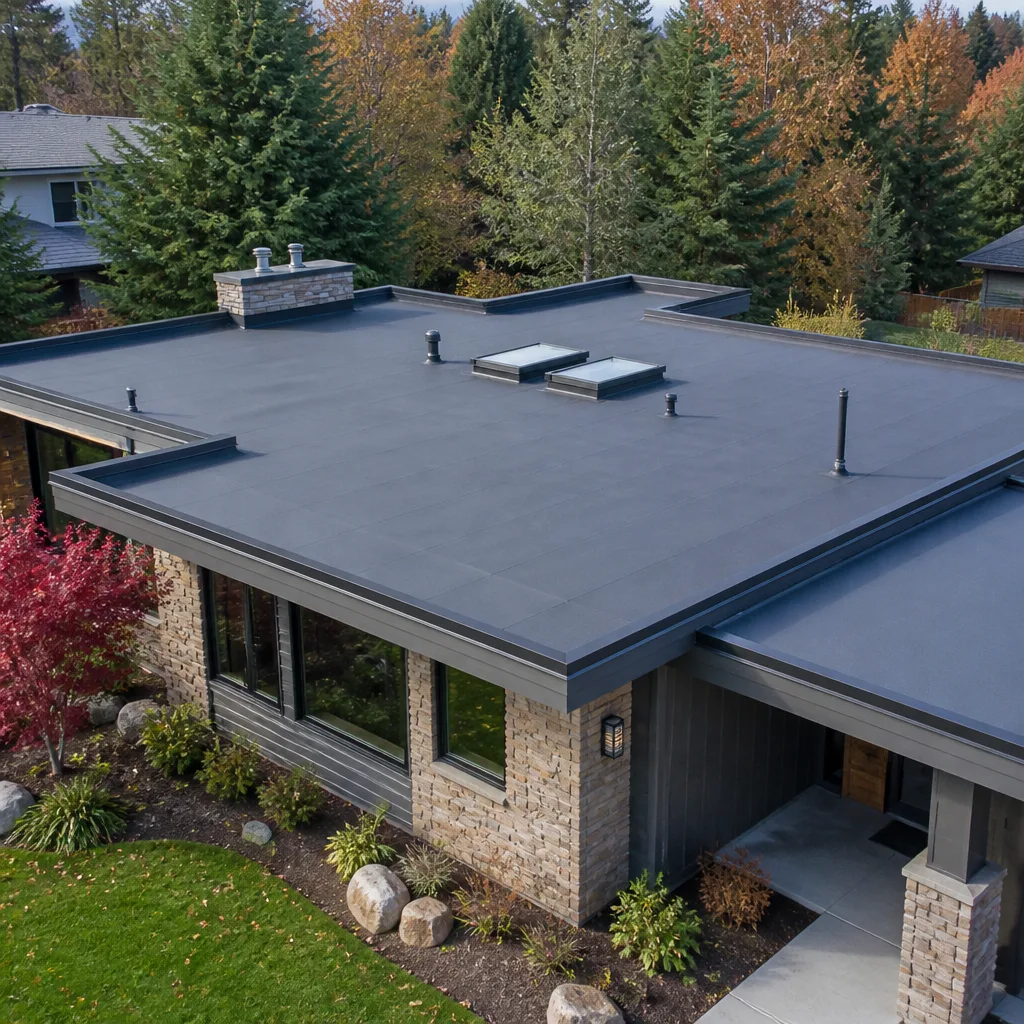 Flat & low-slope
Free roof inspection with deck photos before we talk money - GAF and Owens Corning certified installation
DIY vs Professional Roof Repair: What’s Safe to Do Yourself
I’ll tell you straight: there are things you can fix yourself and I’d be wasting your time if I pretended otherwise. But I’ve also re-done work where a homeowner saved $200 on a repair and it cost them $3,000 more because of what they did wrong underneath. The line between “go ahead” and “put the ladder away” isn’t about how handy you are. It’s about what a bad repair does six months later. In this guide you’ll learn exactly which roof repairs a careful homeowner can handle, which ones look simple but aren’t, and how a small mistake up there can void a warranty or turn a $150 fix into a hospital bill. We’ve watched this play out across Paradise for years.
Quick Answer
You can safely replace a single missing shingle, re-seal a pipe boot, and clear debris from valleys and gutters yourself. You should not touch flashing replacement, re-nailing lifted sections, ridge caps, or anything that requires walking a steep pitch. Those jobs look easy but create leaks, void manufacturer warranties, and risk a fall that costs far more than any repair. When in doubt, get a free second opinion before you climb up.
Styles & brands we work with
- Architectural shingles
- Metal roofing
- Tile roofing
- GAF
- Owens Corning
- Flat & low-slope
Table of Contents
- Where DIY Genuinely Works
- The Jobs That Look Easy But Aren’t
- How a DIY Repair Can Void Your Warranty
- The Fall and Liability Math
- What Your Local Climate Does to DIY Work
- How to Document a DIY Repair
- When DIY Saves Money and When It Costs More
- Common Mistakes to Avoid
Where DIY Genuinely Works
Some repairs are low-risk, don’t require walking a steep pitch, and a steady-handed homeowner can finish in under an hour. These are the ones I tell people to go ahead and do.
Replacing a single missing shingle. If one tab blew off in a windstorm and the shingles around it are intact, you can set a replacement shingle. You’ll need a flat bar, roofing nails, and a tube of roofing cement. Slide the new shingle into place under the course above, nail it in the right spots, and dab cement over the nail heads. On a low-slope or single-story roof, this is genuinely a 20-minute job.
Re-sealing a pipe boot. The rubber collar around a plumbing vent cracks over time. When the rubber is still flexible but the seal at the base has failed, a bead of roofing cement around the base buys you a few more years. Check it each spring.
Clearing debris from valleys and gutters. Pine needles, leaves, and blown-in grit collect in valleys and behind chimney crickets. Left too long, they hold moisture and start rot. A soft broom and a garden hose on low pressure gets this done safely from the roof edge or from a ladder. Do it after every big wind event.
These three are the sweet spot. They’re reversible, they don’t disturb the waterproofing layers underneath, and if you get it slightly wrong, a pro can correct it cheaply later. That matters in Paradise, where summer heat bakes sealants fast and a small gap becomes a leak by the first fall rain. If you’re not sure whether the job is small enough, take a photo from the ground and call us for a free second opinion; we’ll tell you honestly whether it’s worth your Saturday.
The Jobs That Look Easy But Aren’t
Here’s the part that gets homeowners in trouble. Some repairs look almost identical to the easy ones on paper, but the margin for error is tiny and the failure mode is a slow leak you won’t notice for months. These are the jobs to leave alone.
Flashing replacement. Flashing is the metal that seals the joints where the roof meets a wall, chimney, or skylight. Getting it right means understanding how water actually moves and layering the materials in the correct order. A flashing job that looks sealed can channel water behind the siding and rot the wall sheathing from the inside out. By the time you see a ceiling stain in Paradise, you’re usually looking at a $1,500 repair, not a $200 one.
Re-nailing lifted sections. When shingles lift, the temptation is to hammer them back down with a few nails. The problem: you can nail through the layer below, puncture the underlayment, or miss the nailing zone entirely. Shingle manufacturers specify exact nail placement and depth, and a misplaced nail is a leak path and a warranty problem at the same time.
Anything touching the ridge cap. The ridge cap is the finished shingle layer at the peak. It hides the most critical vents and the last course of nails. Pulling it up to “check something” almost always means re-doing the whole ridge, and if you don’t get the overlap right, wind-driven rain will find it.
The pattern here: any job that involves dismantling the waterproofing layer, or that gets into the nailing pattern, is a professional job. The guys on the roof learn that early, and so do we.
How a DIY Repair Can Void Your Warranty
This is the part almost nobody tells you. A shingle manufacturer’s warranty doesn’t cover the whole roof no matter what happens to it. It covers defects in the material, and only if the roof was installed and maintained to spec. When a homeowner (or an unlicensed handyman) does a repair that changes the nailing pattern, disturbs the flashings, or uses a non-matching product, the manufacturer can point to that work and decline a claim later. The repair itself might hold fine for years, and the warranty is still gone.
The shingles we set – GAF, CertainTeed, Tamko, Boral – all carry specific installation requirements. Tamko, for example, specifies a narrow window for nail placement relative to the exposure line, and a professional crew checks that on every course. A homeowner working blind on a hot afternoon won’t.
The other trap: mixing materials. If you patch with a shingle you found at the hardware store and it’s a different weight or brand than the rest of the roof, the repair site weathers differently. On a Paradise roof that runs 140 degrees in July, a mismatched shingle can curl or crack inside two seasons and pull water under the neighbors.
Before you do anything more permanent than a single-shingle swap or a bead of cement, check the paperwork on your current roof. If you don’t have it, call us and we’ll tell you what’s likely under there. And if a storm chaser offered you a warranty in writing after the last big blow, read the fine print on who’s allowed to do the repair – many of them void the coverage if anyone else touches it.
The Fall and Liability Math
Let’s do the honest math. A pipe boot re-seal costs about $150 to $250 done by a pro. A fall from a single-story roof that results in a broken wrist is $3,000 to $8,000 out of pocket after insurance. A fall from a second story that results in a spinal injury or traumatic brain injury runs into the tens of thousands, and the long-term costs can exceed $50,000 easily.
Those are the numbers, not scare talk. And the risk goes up on roofs you shouldn’t be on in the first place:
- Pitch steeper than about 6/12. Anything over that, walking the plane is genuinely dangerous without roof jacks and harnesses.
- Two-story or taller. The ladder is the number one fall hazard, and a roof that’s 20 feet up needs a 32-foot ladder at the correct angle. Most homeowners don’t own one.
- Wet, mossy, or sun-softened shingles. Paradise summer heat makes asphalt shingles slick as a wet deck. A shingle that’s been in the sun all day can be dangerously soft.
- Any roof with a skylight or a low parapet. You will step through a skylight before you see it.
On top of the fall math, there’s the liability side. If a neighbor or a grandkid gets hurt on your property while you’re working, your homeowner’s policy may not cover it, and a pro’s insurance would have. That’s a quiet reason to call a licensed roofer before you start a repair that involves a ladder. It’s also a reason to confirm insurance and bonding on anyone you hire.
What Your Local Climate Does to DIY Work
Paradise is a tough place to be a roof. Summer sun pushes surface temperatures past 140 degrees, and the material softens. Winter cold snaps crack old sealant. Spring wind events peel back anything that’s already lifting. And the occasional hail year, like the ones we’ve seen recently, exposes every weak spot at once.
What that means for DIY: a repair that would hold for five years in a mild climate can fail in two in Paradise. Roofing cement that you apply in the afternoon heat skins over before it cures into the crack. A shingle you set on a 105-degree day will be brittle where you bend it. We’ve watched homeowners do a careful-looking pipe boot re-seal in July and find it leaking by the first October rain.
The other thing that catches people: shingle color and solar exposure. The south-facing slopes in Paradise take more UV than the north. Those are the shingles that lift first, and the ones where a DIY re-nail goes wrong. If the lift is on the south slope, that’s usually a sign the whole plane is aging out, and it’s worth a look before you spend a Saturday on it. Call us for a free second opinion and we’ll show you the deck photos before we talk money.
How to Document a DIY Repair
If you do a repair yourself, document it properly. A roofer can’t assess what they can’t see, and a good paper trail protects you when you sell the house or file a warranty claim. Here’s how to do it the right way, in order:
- Photograph before you start. Shoot the damaged area from the ground, then close up, with a tape measure in frame if you can. Date-stamp if your phone will do it.
- Note the shingle brand and color. Look at the underside of a corner of the roof if you can safely reach it. Write down what you find. GAF, CertainTeed, Tamko – the manufacturer name is usually stamped on the back.
- Photograph the finished repair. Medium distance and close up. Include the date in the photo if possible.
- Write down what you used. Brand of roofing cement, type of nails, any product names. Keep the receipt.
- Keep a simple log. A spiral notebook in the garage works. Every repair, every date, every product. If you ever sell, that notebook is worth real money to a buyer.
This is the step that turns a slightly-risky DIY into a manageable one. When we look at a roof in Paradise that a homeowner has worked on, the first question we ask is “what did you do and when?” If there’s a log and photos, we can confirm the repair held and move on to the actual problem. Without it, we’re guessing, and guessing is expensive.
When DIY Saves Money and When It Costs More
DIY saves money when the job is reversible and the failure mode is small. DIY costs more when the failure mode is slow, invisible, and gets into your walls.
Rough math for a single-shingle replacement: a bundle of shingles runs $40 to $90 depending on the brand and color, roofing cement is $10, and nails are $8. A pro typically charges a minimum service call of $150 to $250, so a homeowner with a steady hand genuinely saves $100 to $200 doing the swap. Multiply that by nothing, though, because you’re not going to do this more than once.
Rough math for a flashing replacement done wrong: you do it for $80 in materials and a weekend. The leak surfaces six months later, rots the sheathing under the skylight, and the repair runs $1,200 to $3,500. That’s the one that hurts, and it happens more often than you’d think in Paradise, especially after a wind-and-hail year.
The pattern is consistent: single-shingle work, pipe boots, debris removal, and gutter cleaning are genuine DIY territory. Flashing, ridge caps, re-nailing, and anything that touches the underlayment are not. If you’re not sure which bucket your job falls into, that’s the moment to call. We’ll give you an honest answer for free, and we won’t talk you into a repair you don’t need.
Common Mistakes to Avoid
- Working alone on the roof. Even a low-slope roof. Have someone on the ground with a phone who can call for help. Most roof-fall injuries happen when nobody knew the person was up there.
- Using the wrong shingle. A mismatched brand or weight looks fine for a month, then it curls. In Paradise, sun exposure makes the mismatch visible and structurally real within two seasons.
- Caulking over a leak instead of finding it. Roofing cement is a patch, not a repair. If you don’t know where the water is coming in, sealant on the visible spot won’t fix it.
- Nailing into a low-slope or membrane roof. If your roof is flat or low-slope, the waterproofing is a membrane below the surface, and one errant nail punches a hole you can’t see. That’s not a DIY roof at all.
- Starting a repair right before rain. Paradise storms roll in fast. A repair mid-job when the sky opens up can turn a small hole into water inside your ceiling.
- Tossing the paperwork. No log, no photos, no product notes. When something fails later, you can’t tell a pro what was done.
- Ignoring “one more shingle” thinking. If you’re replacing the third shingle in a month, the roof is telling you something. That’s not a repair problem, that’s a replacement conversation.
See the difference
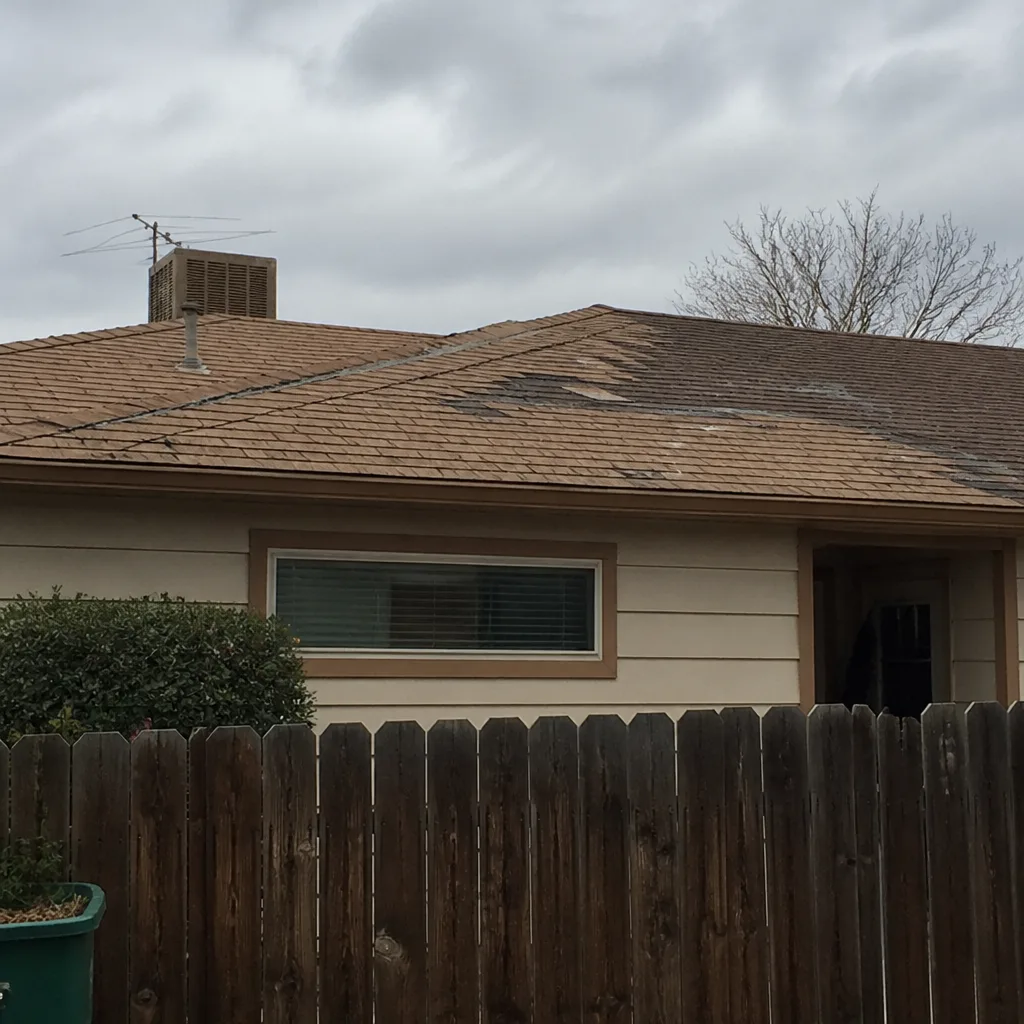 Before
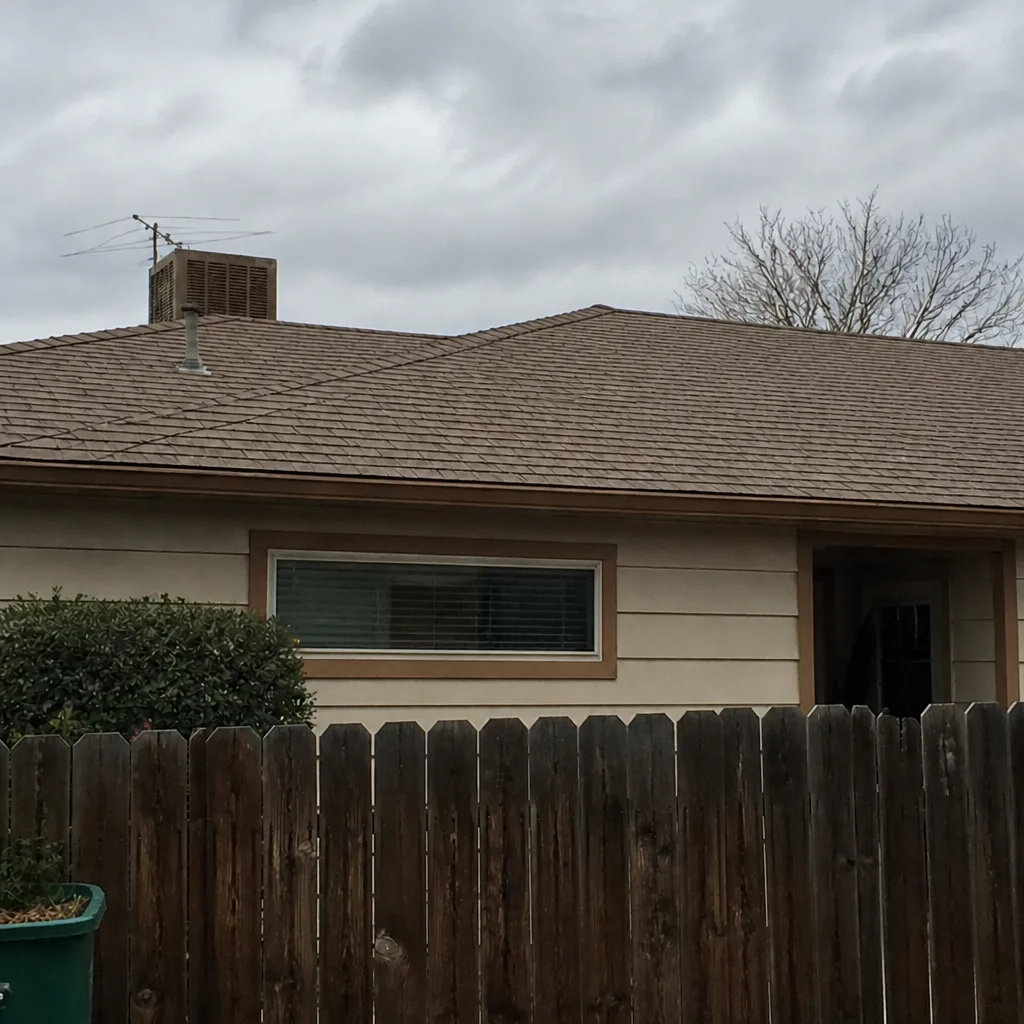 After
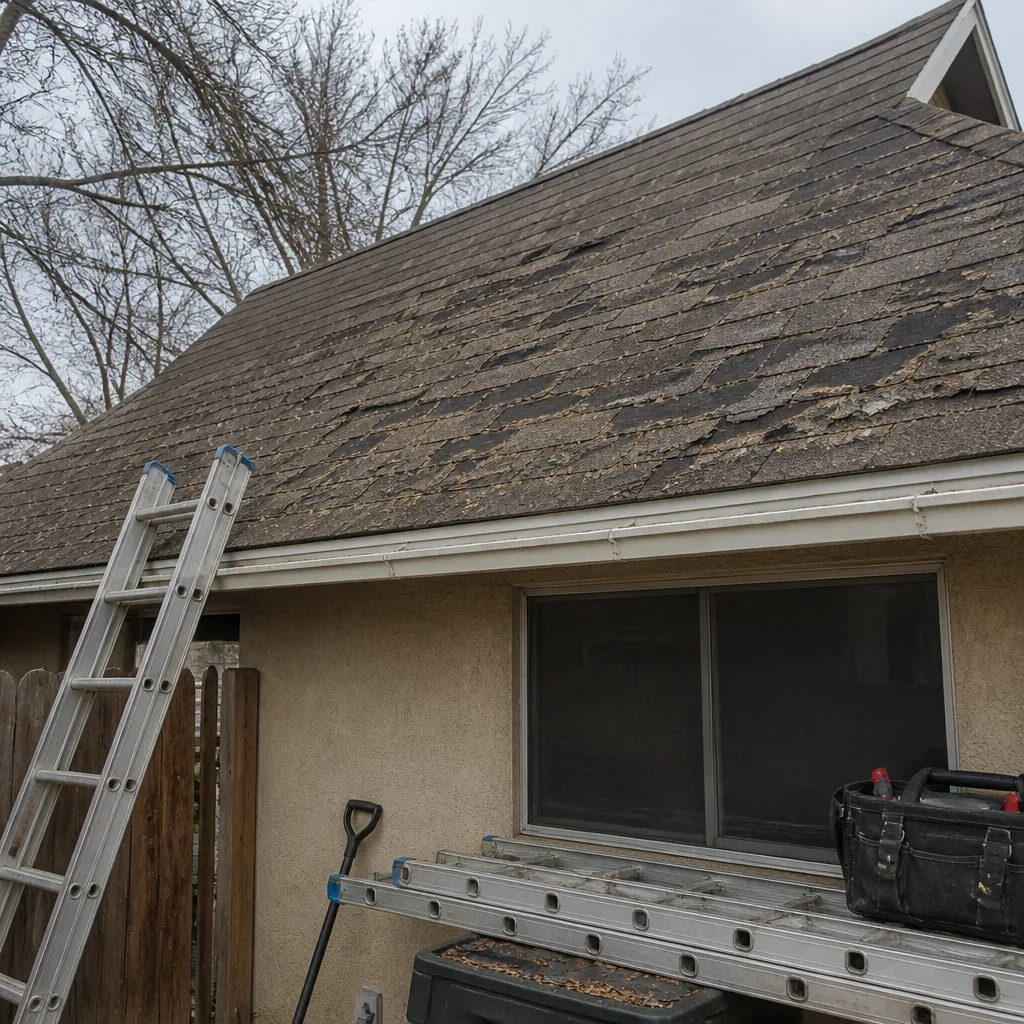 Before
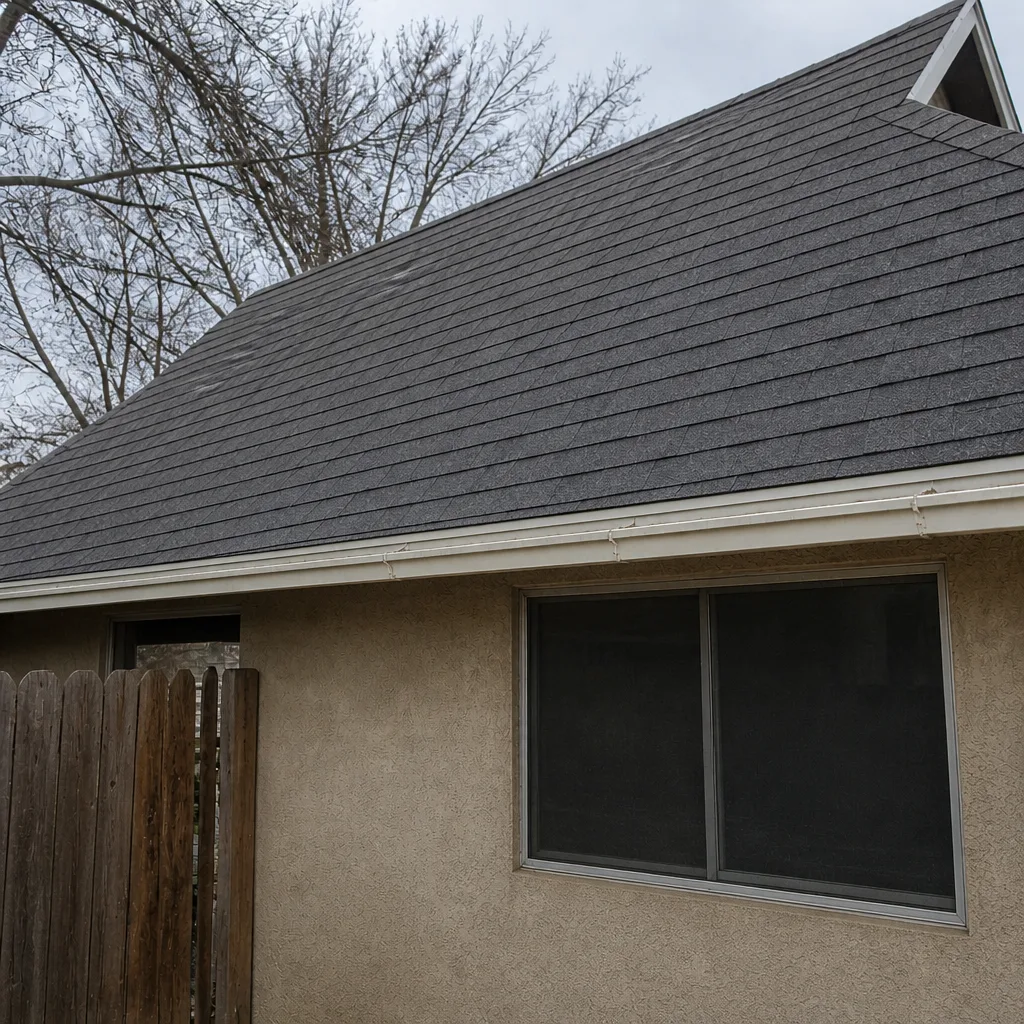 After
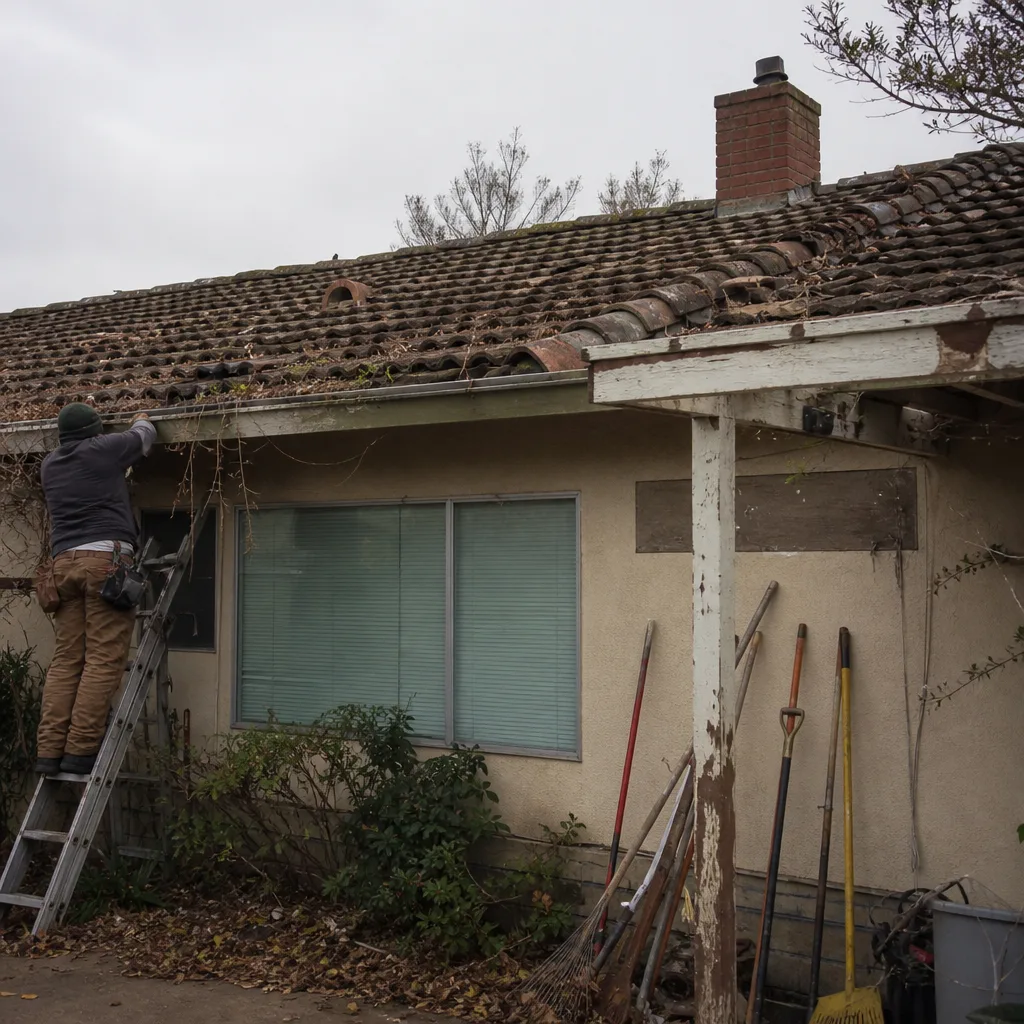 Before
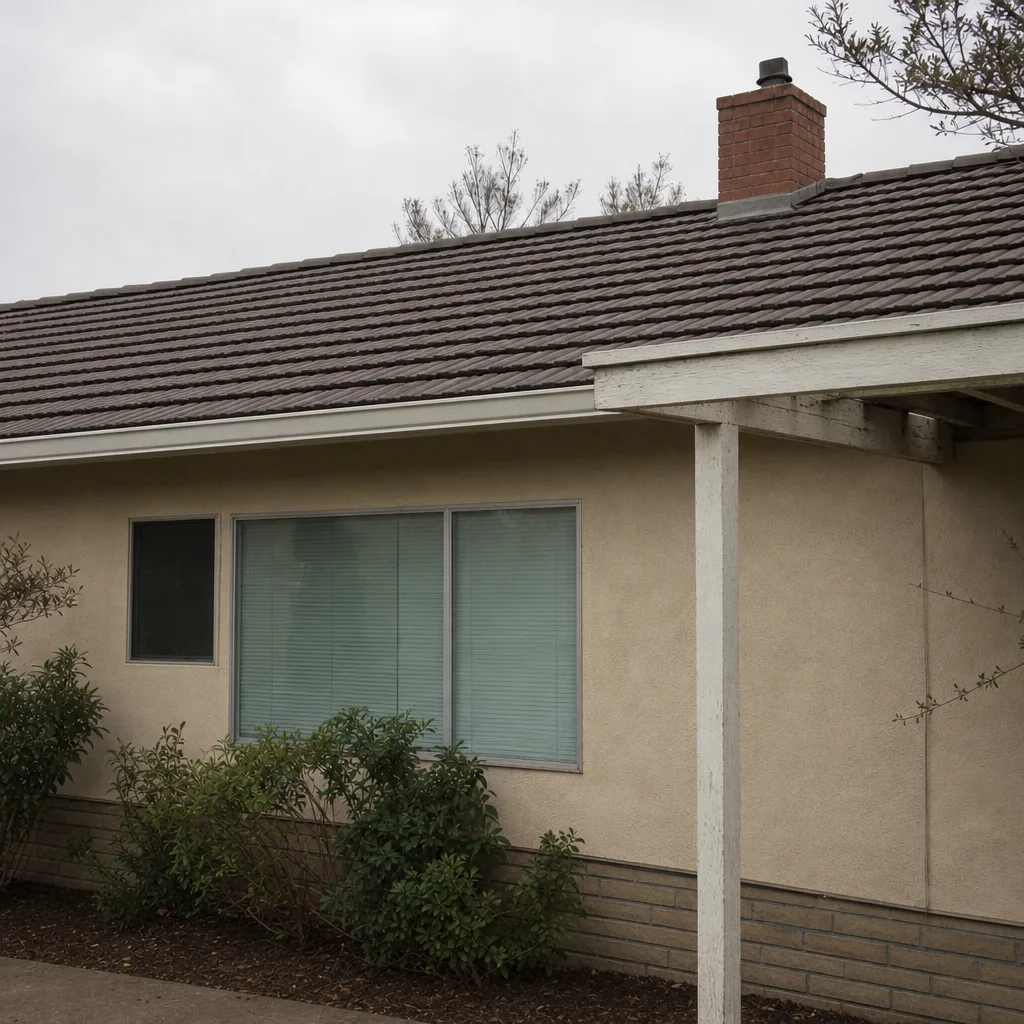 After
When to Call a Professional
Call a professional any time the repair touches flashing, ridge caps, or the nailing pattern. Call when the leak is inside the house and you can’t find the outside source. Call when the roof is steep, tall, wet, or you don’t have the right ladder. Call after a hail or wind event if more than a handful of shingles are damaged, because that’s often an insurance claim, not a repair. Call if the roof is low-slope or membrane. And call if you’re not sure – a free second opinion costs nothing and can save you a lot.
Shepherd & Sons Roofing Paradise offers free estimates in Paradise – call (833) 676-0557. We’ll look at the deck photos, tell you straight what you can do yourself and what needs a licensed crew, and give you the number before anyone touches the roof. Every job comes with our 90-Day Done Right Promise, in writing. Our technicians have up to 30 years of experience, and the shingles we set – GAF, CertainTeed, Owens Corning, Tamko – are the ones we’ll tell you about by name.
Frequently Asked Questions
Yes, in most cases. A single-shingle swap on a low-slope or single-story roof is a genuine DIY job if the shingles around it are intact and you have a flat bar, roofing nails, and roofing cement. Do it on a mild day, not when the material is soft from heat, and photograph the before and after. If the missing shingle is near a valley, ridge, or flashing, get a pro to look before you start.
Often yes, even if the repair holds for years. Manufacturer warranties – GAF, CertainTeed, Tamko, and others – require installation and maintenance to spec. A repair that changes the nailing pattern, uses a non-matching shingle, or disturbs flashing can give the manufacturer grounds to deny a later claim. Keep receipts, photos, and a log so you can prove what was done and when.
Most minor roof repairs in Paradise run $250 to $600, depending on the job. Pipe boot re-seals are usually $150 to $250. Single-shingle replacements on a minimum service call run $150 to $250. Flashing work is $400 to $1,200 depending on the access. Call (833) 676-0557 for an exact quote – estimates are free and we’ll show you the deck photos before we talk money.
Caulking over a leak in the wrong spot. Homeowners usually see the water inside and seal the visible roof area above it, but the actual entry point is often feet away under a flashing or a lifted shingle. The sealant holds for a season, the leak spreads, and by the time it’s found it’s into the sheathing. If you’re not sure where the water is coming in, don’t guess – call for a free look.
Only on a low-slope roof, only when it’s dry, and only with someone on the ground. On a roof steeper than about 6/12, or two stories or taller, the risk isn’t worth it. Paradise summer heat softens shingles and makes them slick, and a skylight or a soft spot you don’t see can put you through. Use a leaf blower from a ladder or pay a pro – the $200 you spend is cheaper than an emergency room visit.
Check it after the first heavy rain. Look at the ceiling below the repair and inside the attic if you can safely get in. Look for new water stains, dampness, or daylight. If the repair is holding, you’ll see nothing. If you see anything new, call right away – a small leak caught quickly is $200 to $500, and a small leak caught late is a few thousand dollars in decking and drywall.
The Bottom Line
DIY roof repair is fine for a single shingle, a pipe boot, debris removal, and gutter clearing. It’s a bad idea for flashing, ridge caps, re-nailing, or anything involving a steep or tall roof. Manufacturer warranties can be voided by a DIY repair, and the fall math turns a $150 job into a $50,000 bill fast. Document every repair with photos and a log, and don’t guess at a leak. If you’re not sure which side of the line a job is on, get a free second opinion. Shepherd & Sons Roofing Paradise is here to help with a straight answer. To learn more about our full service offering, visit Shepherd & Sons Roofing Paradise home, and when you’re ready for a repair or a full assessment, look at our Roof Repair in Paradise page. If the roof is telling you it’s time for something bigger, our Roof Replacement & Installation in Paradise team can walk you through it. And if you’re considering a long-term material, our Metal Roofing in Paradise page explains what changes about maintenance and what doesn’t.
If you’d like to schedule a free estimate in Paradise, call (833) 676-0557. A live person answers, day or night. We’ll come out, look at the roof, and tell you the truth about what you can do yourself and what we’d handle for you. Proudly serving local communities for over 29 years from the same address, and we’ll be here for the next repair too.
Written by the team at Shepherd & Sons Roofing Paradise.