
Last updated November 17, 2026
 Tile roofing
 Architectural shingles
 Metal roofing
 GAF
 Owens Corning
 Flat & low-slope
Free roof inspection with deck photos before we talk money - GAF and Owens Corning certified installation
Tile Roofing Troubleshooting: Common Problems and How to Fix Them
A lot of the calls I get start the same way. “Bill, I’ve got a cracked tile over the garage, and water’s coming through the kitchen ceiling.” Then I get up there and the cracked tile is two slopes away from where the water is actually getting in. Tile roofs don’t leak where the damage is visible. They leak where the water runs to, and on a hip roof in Paradise, that can be fifteen feet from the obvious problem. This guide is about fixing that: how to read the pattern of a leak instead of staring at the cracked tile, which problems on a tile roof are real emergencies, and which ones you can put on next week’s list. You’ll also see how we work when we’re up on a Paradise roof for real, and what not to do yourself while you wait.
Quick Answer
A tile roof most often leaks because of the stuff underneath the tile – the mortar under the ridge caps, the valley flashing, or the rubber boots around the pipes – not the tile itself. The tile is the pretty umbrella; it sheds most of the water, but the underlayment and flashing do the real waterproofing. When you’ve got a leak in a Paradise home, the tile in question is usually not on the same slope as the stain. Map the water, check the mortar at the ridge and the flashing in the valleys first, and treat broken tile as a repair to schedule unless water is actively pouring in.
Table of Contents
- Mapping a Ceiling Stain Back to the Roof
- Why Mortar-Set Ridges Are the #1 Leak Source
- The Valley Flashing Problem Nobody Checks
- Broken vs. Slipped vs. Missing Tile
- What Not To Do On a Tile Roof
- How to Inspect a Tile Roof From the Ground
- How the Repair Usually Goes
Mapping a Ceiling Stain Back to the Roof
Water on a tile roof travels along the underlayment, follows the gentle slope of the battens, and picks up a route down the nearest rafter. Gravity does the rest. That’s why the stain in your ceiling is almost never directly under the entry point. If you point straight up from the stain, you’re usually pointing at the wrong slope.
On a hip roof, which is what a lot of Paradise houses have, there are three water-travel patterns I see again and again:
- Down and along the underlayment. Water enters high on the roof, runs down the underlayment, hits the eave, and works its way back and sideways. The stain shows up at the ceiling near an exterior wall, not the middle of a room.
- Back into the house at the valley or hip. When the metal flashing in a valley is compromised, water follows the flashing channel and can show up well away from the valley line, often over an interior room a wall or two in.
- Straight down a rafter to a ceiling joint. A slow leak finds a crack, follows a rafter to a ceiling joist, and drips at a joint. The stain appears near the middle of a room, and the entry is at the ridge or a hip up top.
So before you panic about the cracked tile over the patio, look at where the water actually shows up in the house. The stain is a clue, not a map. If it’s a slow drip and shows up during wind-driven rain, the entry is often a piece of missing or failed flashing; the wind drives the water sideways against a hip or a valley and it finds a gap. If it only shows up after a long soak, it’s usually an underlayment failure or a mortar cap that has opened up. Our crew will walk you through this on site – we don’t guess by phone, and we don’t quote based on a stain.
Why Mortar-Set Ridges Are the #1 Leak Source
If you have a tile roof that’s more than about fifteen years old in Paradise, the mortar under the ridge caps is the first place I check. Hip and ridge caps on traditional tile roofs are set in mortar and mechanically fastened only sometimes. The mortar holds the tile down and closes the gap. Over time, the mortar shrinks, cracks, and pulls away from the tile. The ridge cap doesn’t fall off right away, so it’s easy to miss.
Then a wind-driven rain comes along and finds the open gap. Water runs under the cap, gets into the underlayment at the ridge, and starts a leak that can show up anywhere along the ridge line above a ceiling. That’s why the stain is often not at the ridge – the water already traveled down the rafter.
What a failed mortar cap looks like from the ground:
- A dark line or shadow where the mortar has backed off the tile.
- Mortar crumbs on the roof surface or in the gutters below the ridge – that’s the mortar letting go.
- Individual ridge caps sitting crooked or out of line with the rest.
- On a roof with a lot of wind exposure, caps that look like they’ve shifted sideways.
Fixing it is a mortar work job, not a shingle job, and it’s one of those things that gets a lot easier if you get to it before the underlayment below is soaked. If water’s already gotten under the cap for a couple of wet seasons, the fix grows beyond the mortar joint. Bill and the crew handle the whole repair – not just a mortar patch – because re-mortaring a ridge that’s already leaking into the underlayment only buys you time. If you want to read more about full roof service, see Roof Repair in Paradise.
The Valley Flashing Problem Nobody Checks
Where two roof planes meet, you have a valley, and every valley on a tile roof has a metal flashing pan underneath the tile. The tile is cut to overhang into that metal channel so the water runs off the tile into the metal and down to the eave. That overlap between the metal and the tile cut edge is a time-sensitive failure point, and it’s the one most homeowners never look at.
Here’s what goes wrong:
- The metal flashing pulls away from the underlayment. The whole thing relies on the metal pan being tucked under the underlayment and the tile sitting over the top. If the metal lifts or the sealant at the edge deteriorates, water can get under the metal instead of off it.
- Tile cuts expose the wrong side of a tile. When a piece of tile is cut for the valley, the cut edge is raw. If the cut reveals the softer underside of the tile, it weathers a lot faster than the glazed face.
- Debris traps. Pine needles and leaf litter collect in the valley channel, hold moisture, and give the metal a slow rust bath. Paradise gets enough tree cover that this happens faster than folks expect.
The valley is also where the bad news hides on a re-roof. When you get to replacement, a valley is the place where tile and underlayment have to work together, and the crew that skips the metal pan and just layers tar paper is doing you no favors. If you’re weighing repair against replacement, look at Roof Replacement & Installation in Paradise and our Metal Roofing in Paradise page if the valley keeps showing you the same leak.
Broken vs. Slipped vs. Missing Tile
Not every tile problem is urgent, and sorting out which is which saves you money and stress. Here’s how I grade it:
- Broken tile (cracked, cracked and displaced). The tile is fractured but still sitting roughly in place. It still sheds most of the water but exposes the underlayment to sun and weather at the crack. Urgency: schedule it. It’s not a tonight problem; it’s a this-month problem. Before you accept a repair quote, know that a broken tile usually means the tile was walked on or a limb dropped on it, not that the roof is failing.
- Slipped tile (moved out of position). The tile has slid or shifted, often because the fastening has let go. It exposes a gap. Urgency: schedule within a couple of weeks. Slipped tiles on a hip are often a wind signature and worth checking for the mortar and fastening behind them.
- Missing tile (gone completely). The tile is gone and the underlayment is exposed. If it’s one or two pieces on a sunny slope, get it covered and repaired within days. If it’s a whole run of them – like after a wind event – that’s when you call us and we come out rather than waiting. Missing tile exposes the underlayment to the sun, and on a Paradise roof that underlayment has a finite life even when it’s not raining.
None of these three is usually an active-leak emergency. The real emergency is when water is coming into the house and spreading, or when the missing tile is over a valley, a chimney, a skylight, or a plumbing stack – a hole in the protection at those details is where water gets in fast. If you’re not sure which category you’re in, that’s a good reason to call and get a look rather than throw a tarp over it.
What Not To Do On a Tile Roof
I get it: the leak is coming in, you want to stop it, and there’s a big box store down the road. Some of the things that feel like a fix on a tile roof make the repair bigger. Here’s what to avoid.
- Don’t walk on the tile the way you’d walk on shingles. Tile cracks under foot. Weight in the wrong place on a valley or a hip concentrates the load and can break a run of tile. If you must go up, walk the flat spots and lean into the slope with a soft-soled boot – and honestly, don’t. Let the folks with the right equipment do it.
- Don’t tarp a tile roof with that blue tarp and call it done. A tarp over tile that traps water and holds it against the roof does more damage than the original leak, because it keeps the underlayment soaked. If you need to keep water out for a few days, do a temporary fix that sheds, not one that holds.
- Don’t slap roofing cement over a mortar gap. It looks like a repair from the ground and does nothing for the underlayment below. Mortar-set ridges need real mortar work, not a caulk smear.
- Don’t run a power washer on the tile to “clean it up.” It strips the finish and drives water where it shouldn’t be.
- Don’t replace one broken tile and ignore the flashing behind it. The broken tile is often a symptom. Replace the tile, yes – but if the underlayment under it is gone, the new tile will show you the same stain next wet season.
Our place is in Paradise, and we’ve been to enough of these to know the difference. You can get a free second opinion on any written estimate if you’ve already got a quote to fix the roof. The 90-Day Done Right Promise is in writing on every roofing job, and one call brings us back. If you want to know who’s doing the work, look us up at Shepherd & Sons Roofing Paradise home. We’re also pros at the specialty stuff – see specialty roofing in Paradise if you’re thinking about stepping up to a non-shingle material.
How to Inspect a Tile Roof From the Ground
You don’t need to go up on the roof to catch a lot of it. With a pair of binoculars and a phone camera from the ground, here’s a checklist:
- Look at the ridge and hips first. Are the caps straight? Do you see mortar crumbs on the roof or in the gutter below? Is there a dark gap where the mortar should seal? A gap along the ridge line is the number-one thing to note.
- Look at the valleys. From the ground, you can often see the metal flashing line where the two roof planes meet. Look for a lifted edge, exposed metal, or debris piling in the channel. Pine needles packed in a valley from the trees in your yard are worth clearing.
- Look at the pipe boots and vent stacks. On many Paradise roofs, the small rubber boots around the plumbing stacks go soft before anything else does. From the ground, look for the rubber collar sitting loose, dark, or cracked around the pipe. A dry-rotted boot is one of the leaks that shows up most often, and it’s usually not on the slope your ceiling stain points to.
- Walk the perimeter and look at the eave line. Any tile sitting out of line, any gap at the eave, any tile that’s slipped forward.
- Look at the chimney and skylight flashing. Those are the details where tile meets a vertical surface, and the flashings there are where water enters a lot of the time. If you see the metal flashing sitting proud of the tile or the seal failed, note it.
That gets you a solid list to talk about when you call. A crew that comes out for a free estimate will get up there and confirm what you’re seeing. Our technicians have up to 30 years of experience with tile, and we don’t need to pull a tile to know whether the problem is the tile, the flashing or the mortar – we can usually tell from the ground and a closer look.
How the Repair Usually Goes
Once we’ve found the actual entry point rather than the broken tile you found first, a tile repair on a Paradise roof falls into a few buckets:
- Mortar and ridge cap repair. Knock out the loose mortar, repack the joint, reset and re-secure any cap that failed. This is usually a modest repair – roughly the cost of a couple of hours of skilled work plus materials – and it’s the most common one on an older tile roof.
- Flashing repair or replacement at a valley, chimney or skylight. This is where the labor goes, and where the scope can grow if the underlayment has already failed. Our pricing is set after we’ve seen the roof, never quoted over the phone from a stain. You get the number before anyone touches the roof, and no trip charge inside our own county.
- Tile replacement. Bring a broken or missing piece back to the pattern, match the profile. If you’ve got a manufacturer’s tile – CertainTeed, Owens Corning, IKO, Atlas – we can usually find what’s needed to make a repair that looks right. Same address since 1996; ask the storm chasers where theirs is.
- Full replacement. If the underlayment has failed across a slope, or the tile is getting brittle across the whole plane, patching is a runaround. We’ll walk you through the difference and show you the deck photos before we talk money, so the choice is yours on real information.
On any of it, our guys are background-checked and the same crew that quotes shows up. The name on the truck matches the name on the license. Same crew means the person who tells you it’s a $1,200 flashing job is the person who shows up to do it. And if we miss, the 90-Day Done Right Promise means one call brings us back.
Styles & brands we work with
- Architectural shingles
- Metal roofing
- Tile roofing
- GAF
- Owens Corning
- Flat & low-slope
Common Mistakes to Avoid
- Fixing the wrong tile. The broken tile is the visible one. Water may be entering two slopes over. If the leak comes back after the tile replacement, you paid twice for the same repair.
- Assuming a real leak is a tile problem. The most common leak source on a Paradise tile roof over 15 years old is failed mortar at the ridge, followed by the valley flashing and the pipe boots. Fix the actual cause, not the shingle you can see.
- Letting a missing tile sit through a season. The tile protects the underlayment. A missing tile means the sun is cooking that membrane. Fix it in the next few weeks, not at the next rain.
- Using temporary sealing on tile joints instead of fixing the mortar. It masks the problem from the ground and doesn’t stop the water at the underlayment.
- Approving a phone quote from a company that won’t show you the address. The number on a tile repair estimate should come with a license you can look up and a name on the work. It’s the one thing storm chasers can’t give you.
- Assuming a stain means full replacement. A lot of what I see on a 15-year-old Paradise roof is one flashing detail and a ridge mortar job. Replacement is a choice, not an emergency.
See the difference
 Before
 After
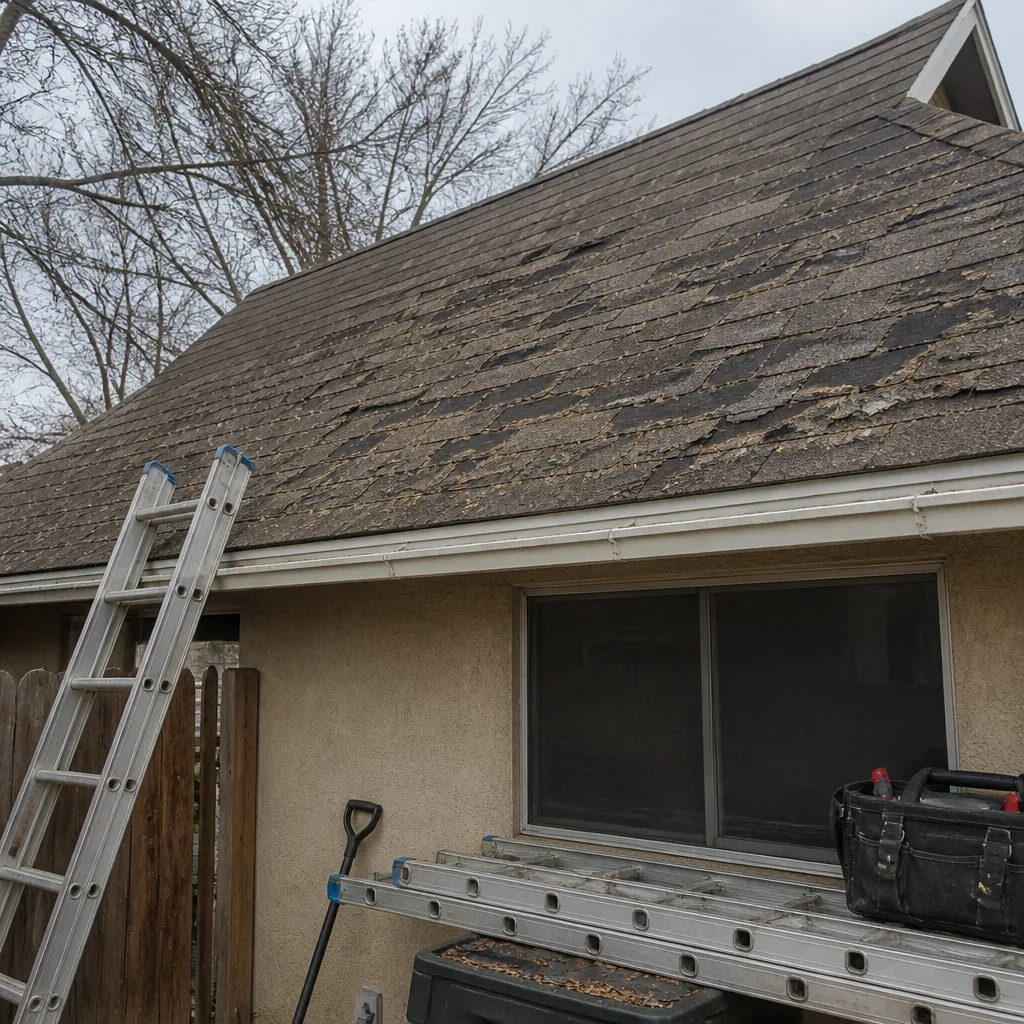 Before
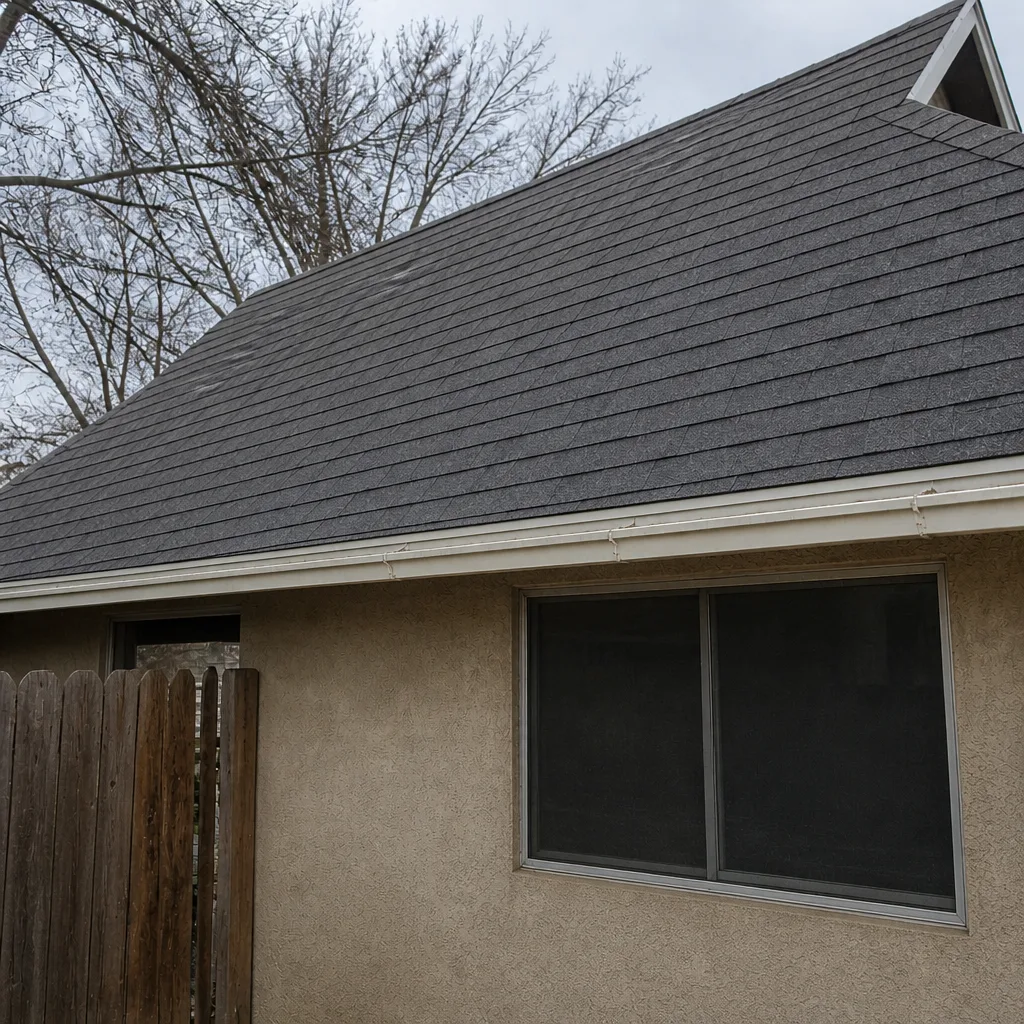 After
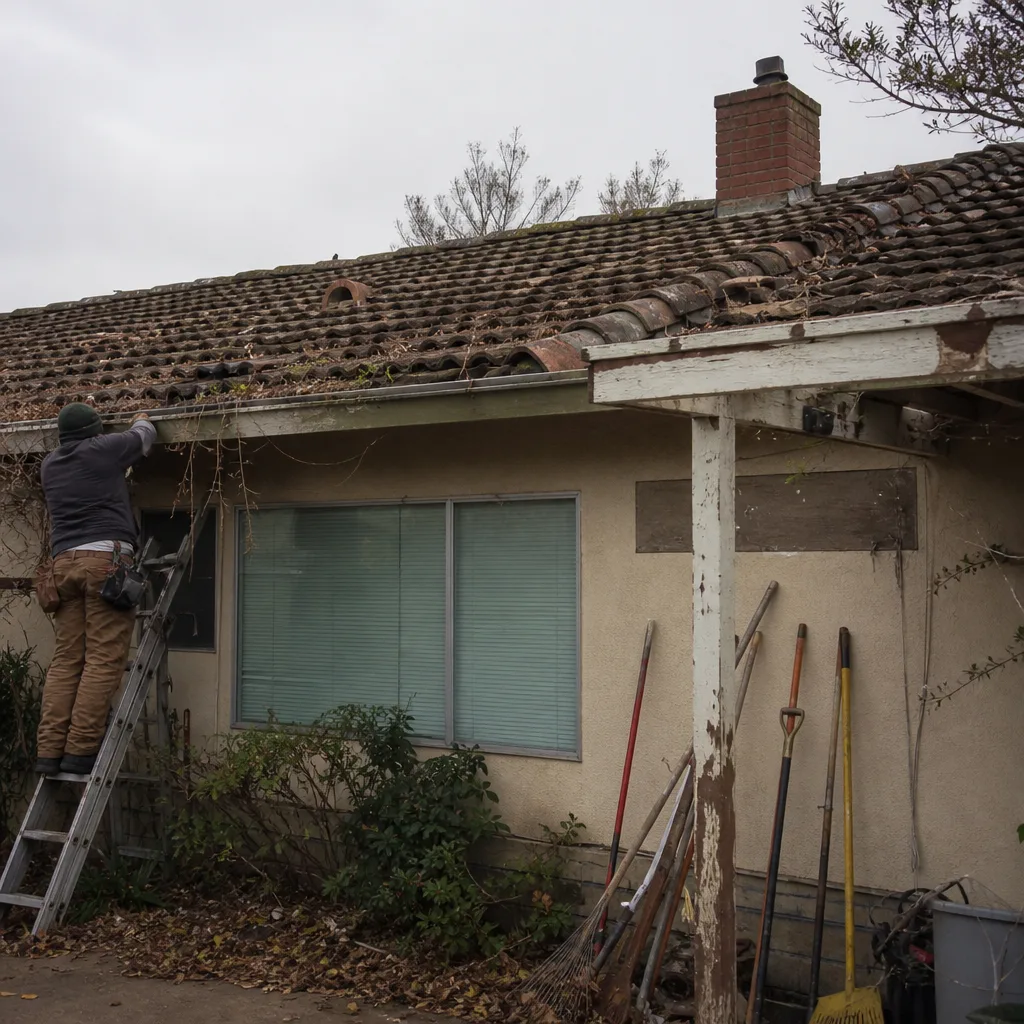 Before
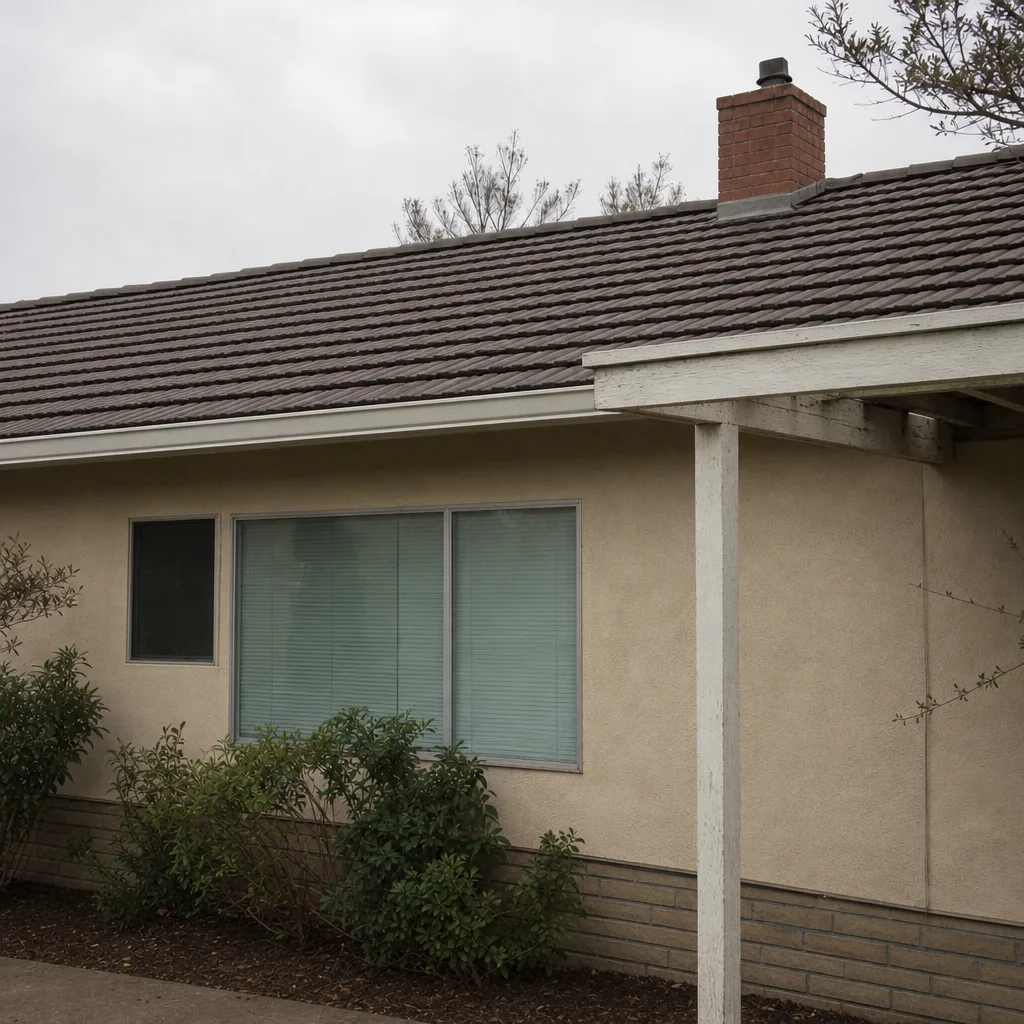 After
When to Call a Professional
You should call us when water is actively coming into the house, when you’ve got missing tile over a valley, chimney, skylight or plumbing stack, or when a stain keeps coming back after a tile repair. Those are the ones where the fix is usually a flashing or underlayment detail and the sooner we get on it the smaller the bill. Also call before a reroof, because we’ll tell you honestly whether the tile needs replacing or the underlayment just needs attention.
Shepherd & Sons Roofing Paradise offers free estimates in Paradise – no trip charge inside our own county, no-hassle upfront pricing, and a free second opinion on any written estimate you already have. We’re locally owned and owner-operated, we’ve been at the same address since 1996, and there’s a live person on the phone 24/7 – not a call center, not a form. Call (833) 676-0557 to schedule your free estimate.
Frequently Asked Questions
A tile roof leak repair in Paradise usually runs from a couple hundred dollars for a mortar and ridge cap fix up to a few thousand when a valley or chimney flashing needs to be rebuilt. The honest number depends on where the water is actually entering, not where the stain is, so we quote after the roof has been looked at. Call (833) 676-0557 for an exact quote – estimates are free.
No, the number we give you after we’ve inspected the roof is the number. No change orders, no “we found more once we got up there” surprise – and if we do find something bigger, we show you the deck photos before we do the work and you decide. Call (833) 676-0557 to get that inspection scheduled.
Yes – we install and repair tile and shingles from the major manufacturers, and we can usually match the profile for a repair. Bring a chip or a photo of the tile, or we’ll identify it on the roof. Call (833) 676-0557 and we’ll come look.
No. A cracked or slipped tile is usually a small repair, and the roof is often fine. The reason to call before you start replacing tile is the flashing and underlayment underneath – those are what actually keep the water out. Call (833) 676-0557 for a free look before you spend money on tile.
Wind-driven rain finds gaps that ordinary rain can’t: an open mortar joint at the ridge, the edge of the valley flashing, or a pipe boot that’s pulled away. If the leak shows up only during a wind event, it’s a detail problem, not a whole-roof problem. Call (833) 676-0557 and we’ll track it down rather than guess.
The tile is the umbrella, the underlayment is the waterproof layer, and most leaks I find on Paradise tile roofs are underlayment or flashing, not the tile face. If water shows up after a long soak or travels along a rafter to a ceiling stain, that points to the layer underneath. Call (833) 676-0557 for an inspection – we’ll show you the deck photos before we talk money.
The Bottom Line
The lesson on a tile roof is this: the tile you can see is rarely the thing that’s leaking. Map the water backwards from the stain, check the mortar at the ridge, the metal in the valleys, and the rubber at the pipe stacks before you spend a dime on the broken tile. A cracked tile is a schedule-it repair; water in the house is a call-now problem. If you’re in Paradise and want a straight answer, a free look, and a number before anyone touches the roof, call (833) 676-0557. Live person on the phone, 90-Day Done Right Promise in writing, same address since 1996. A roof is measured in squares – ask any bidder how many they counted.
Written by the team at Shepherd & Sons Roofing Paradise.