
Last updated November 17, 2026
 Tile roofing
 Architectural shingles
 Metal roofing
 GAF
 Owens Corning
 Flat & low-slope
Free roof inspection with deck photos before we talk money - GAF and Owens Corning certified installation
Tile Roofing Warning Signs Every Homeowner Should Know
By the time a brown ring shows up on your ceiling under a tile roof, the underlayment underneath has usually been failing for a year to eighteen months. The tiles themselves are tough – they can look perfect while the waterproof layer below them quietly turns to dust. That’s the part nobody warns you about. The warning signs that actually matter are subtle, they show up years before a leak, and most of them you can read from the ground with a pair of eyes and a little patience. This guide walks through what to look for on a Paradise tile roof, why each sign matters, and when it’s time to have someone take a closer look.
Quick Answer
The most reliable early warning signs on a tile roof are displaced or lifted flashing at walls and valleys, white mineral deposits (efflorescence) on tile faces, sandy grit collecting in gutters, sagging roof lines, and dampness or musty smells in the attic – not cracked tiles or ceiling stains, which usually appear late. In Paradise, where summer heat and monsoon wind take a steady toll on older tile roofs, spotting these early signs can mean the difference between a targeted repair and a full replacement.
Styles & brands we work with
- Architectural shingles
- Metal roofing
- Tile roofing
- GAF
- Owens Corning
- Flat & low-slope
Table of Contents
- Why Cracks and Missing Tiles Are Late-Stage Symptoms
- The Five Ground-Level Checks That Reveal Underlayment Trouble
- What White Deposits on Your Tiles Are Really Telling You
- That Grit in Your Gutters Isn’t Dirt – Here’s What It Is
- Flashing Displacement vs. Tile Displacement: Which Problem Do You Have?
- The Attic Check That Catches Failure 6-12 Months Earlier
- Common Mistakes to Avoid
- When to Call a Professional
Why Cracks and Missing Tiles Are Late-Stage Symptoms
Tile is a shedding surface. It pushes water off the roof, but it doesn’t keep water out. The waterproofing job belongs to the underlayment – the felt or synthetic sheet under the tile. When that layer fails, water gets in even if every tile on the roof is intact. Which means the cracked tile you spotted last week isn’t usually the beginning of the problem. It’s the visible tail end of a process that started underneath.
In our experience across Paradise, this plays out over and over. A homeowner calls about three cracked tiles after a monsoon gust. We get up there and find the tile damage is minor – but the underlayment around a valley is brittle and torn. The tiles did their job for fifteen years. The underlayer didn’t.
Here’s the reason it matters: a cracked tile can let water reach the underlayment faster, but a healthy underlayment shrugs that off. A failed underlayment lets water through regardless of what the tile above it looks like. So the useful question isn’t “are my tiles cracked?” It’s “is the layer under my tiles still doing its job?”
That’s what the rest of this guide is about. Reading the roof before it reads you – catching the subtle signs of underlayment and flashing failure in Paradise while they’re still small, cheap, and fixable.
The Five Ground-Level Checks That Reveal Underlayment Trouble
You don’t need to get on the roof to catch most of what follows. These five checks take about fifteen minutes with a walk around the house and a good pair of binoculars. Do them every spring and again after monsoon season.
- Look for a sagging roofline. Stand at the end of the driveway and sight along the ridge. A dip or wave that wasn’t there a few years ago points to a moisture-weakened deck under the tile. In Paradise’s dry heat, a soft deck is almost always a sign water has been getting in for a while.
- Check the tile courses for “lifted” or sliding tiles. A single slipped tile is normal. A whole course that looks shifted or tented usually means the fasteners or battens underneath have let go – often from moisture cycling.
- Scan the fascia and soffit for staining. Dark streaks on the wood just below the roof edge, or peeling paint there, tell you water is tracking down behind the tile and dripping out at the eave.
- Look at the valleys and penetrations from the ground. Binoculars help here. Rust, dark staining, or a gap at the metal flashing around a vent pipe or chimney is a flashing problem, and flashing is where most tile roof leaks start.
- Check for “moss shadows” or dark patches on the tile faces. On a tile roof in Paradise, dark biological growth collects where moisture lingers – often a clue to a broken tile or a failing underlayment that’s staying wet.
If two or more of these show up, that’s your cue to get someone on the roof for a look. One alone is worth watching. When you’re ready for that closer look, our Roof Repair in Paradise service handles exactly this kind of early diagnosis.
What White Deposits on Your Tiles Are Really Telling You
Efflorescence is the chalky white mineral bloom you sometimes see on clay, concrete, and Boral tile faces. It looks like someone spilled powdered sugar and left it there. A little of it is normal – salts in the tile migrate to the surface as the tile dries. But efflorescence in the wrong places tells a specific story about moisture movement underneath.
The key is location and pattern:
- Even, thin films across a whole slope usually mean nothing serious – just tile drying out.
- Concentrated white deposits along the bottom edge of a tile course, or on the underside where tile meets tile, mean moisture is being pushed through that joint repeatedly. That’s a water source above the underlayment.
- Efflorescence that appears and then disappears repeatedly over a season points to intermittent wetting – typically a flashing gap that catches wind-driven rain, then dries out. In Paradise, monsoon wind is a strong suspect.
- White bloom along the valley or at wall intersections almost always means water is moving where it shouldn’t. That’s a flashing or underlayment call.
Here’s what most people miss: efflorescence requires water. If your tile faces are dry in the middle of a dry spell and you’re seeing new mineral bloom, moisture is moving under those tiles. The white deposits are the tile showing you where. That’s a reason to get a professional eye up there before a water stain ever appears inside the house.
That Grit in Your Gutters Isn’t Dirt – Here’s What It Is
If you clean out your gutters and find sandy, gritty debris under a tile roof, don’t shrug it off as desert dust. On a tile roof, that material is usually the underlayment itself, breaking down and washing out.
Underlayment is manufactured material – a felt or synthetic sheet. As it ages, especially under the intense heat cycling of a Paradise summer, it turns brittle and starts to degrade. When it breaks down, its material can crumble and find its way to the gutters. Granule-like grit in a gutter under a tile roof is often a direct sign that the waterproof layer is at the end of its useful life. This is one of the quietest warning signs on the list because the debris looks harmless.
Compare what you find to what you’d expect:
- Twigs, leaves, and fine dust – normal, clean it out and move on.
- Dark, sandy grit with a manufactured texture – suspect the underlayment. Note how much and where it collects.
- Crumbling pieces of felt or sheet material – that’s a piece of your roof’s waterproofing in the gutter. Get a professional out to inspect the underlayment before the next monsoon.
The grit is your early notice that the roof’s actual waterproofing is aging. If you’re keeping up on gutters and see this, it’s worth having someone look at the tile roof before the underlayment fails outright. Our Roof Replacement & Installation in Paradise team can tell you whether it’s a repair or a replacement – and we’ll show you the deck photos before we talk money.
Flashing Displacement vs. Tile Displacement: Which Problem Do You Have?
This one’s worth learning because it decides whether you have a small fix or a bigger problem. From a ladder at the edge (or with binoculars from the ground), you can often tell the difference between two very different failures.
Tile displacement means the tile itself has shifted – slid down a course, popped up at a corner, or pulled away at a hip. The tile is the problem. It’s typically caused by broken fasteners, wind, or a damaged batten. Repair is usually limited to re-seating or replacing tile.
Flashing displacement means the metal flashing – the material that seals around chimneys, vent pipes, walls, and valleys – has pulled away, lifted, or rusted through. Flashing is what actually keeps water out at the places where roof meets roof or roof meets wall. When flashing fails, water gets in even if every tile is perfect. That’s the one that leads to ceiling stains.
How to tell which one you’re looking at:
- Is the gap at a straight metal edge around a penetration or wall? That’s flashing displacement.
- Is the gap between two tile courses with no metal involved? That’s tile displacement.
- Do you see rust, dark staining, or moss concentrated at a flashing joint? Flashing problem.
- Is the roof edge or valley the only place tiles look “off”? Ask a professional to check the underlayment there – valleys are where flashing and underlayment failures most often start on a Paradise tile roof.
Flashing repairs are usually the more urgent of the two. A displaced tile is a slow problem. A displaced flashing joint acts like an open window in a rainstorm.
The Attic Check That Catches Failure 6-12 Months Earlier
This is the one sign most homeowners never check. The ceiling stain everyone watches for is a late marker – by the time it shows, water has been coming through for a year or more. But the attic will tell you almost a year earlier, if you know what to look for.
Once a season – spring and fall are good timing in Paradise – take a flashlight into the attic and do this:
- Look for dark rings or water stains on the underside of the roof deck. Wood stains show up long before the ceiling below shows any sign. Look especially along valleys and near penetrations.
- Check for a musty, earthy smell. A strong smell in the attic usually means moisture is trapped there, even if you can’t see it.
- Look at the rafters and deck near walls and chimneys. Streaking or discoloration at those spots points to a flashing problem above.
- Feel for dampness on the sheathing under the tiles in the spot most likely to catch wind-driven rain – often the slope facing the direction storms come from.
- Note any daylight showing through the deck. A tiny gap is normal. A visible hole is not.
The attic check is the single highest-value thing you can do to catch a tile roof failure early. It’s also the one check most people skip because it’s dark, cramped, and unpleasant. Do it anyway once a season. If you find anything, a quick professional inspection will tell you how much underlayment life you have left. If you’re considering a switch from tile to something else, our Metal Roofing in Paradise page covers that path when the time comes.
Common Mistakes to Avoid
- Waiting for a ceiling stain before acting. By the time water shows inside, the underlayment has usually been failing 12-18 months. The signs you can see and smell in the attic come far earlier. Watch the attic, not just the ceiling.
- Treating cracked tiles as the whole problem. A cracked tile is a small repair. The question worth asking is what the underlayment underneath is doing, because that’s what actually keeps water out.
- Assuming new-looking tile means a young roof. Tile can outlast underlayment by decades. A Paradise roof with 25-year-old tile might have 12-year-old underlayment underneath it, or vice versa. Age the materials separately.
- Climbing on the tile yourself for a closer look. Tile is brittle and slippery, and a fall from a tile roof is a serious injury. Ground-level checks and an attic inspection catch most of what matters. Leave the roof walk to someone with the right footing and the right insurance.
- Hiring a storm chaser who won’t leave a real address. After a hail or monsoon event in Paradise, out-of-state crews roll through. Ask for a license number and a physical address you can look up. If it’s a hotel room, keep looking.
- Not checking the attic until a leak is visible. The seasonal attic check is the cheapest early-warning system you have. Ten minutes with a flashlight twice a year saves thousands in interior damage.
- Ignoring grit in the gutters. That sandy debris is often degraded underlayment washing out. If you’re cleaning gutters and finding manufactured-looking grit under your tile roof, have someone look at the underlayment.
When to Call a Professional
Not every sign calls for a roofer. A single slipped tile and a little tile drying flour is normal. But some signs should trigger a call sooner rather than later. Call us if you find water staining or dampness in the attic, if flashing is visibly pulled away at a chimney or wall, if grit from the underlayment is washing into your gutters, if a sagging roofline has appeared, or if two or more of the five ground-level checks come back positive. That combination means the underlayment or flashing is telling you something, and you’ll want a trained eye on it before the next monsoon.
We’re happy to be that set of eyes. Shepherd & Sons Roofing Paradise offers free estimates in Paradise – call (833) 676-0557. A live person answers, and we’ll show you the deck photos before we talk money.
See the difference
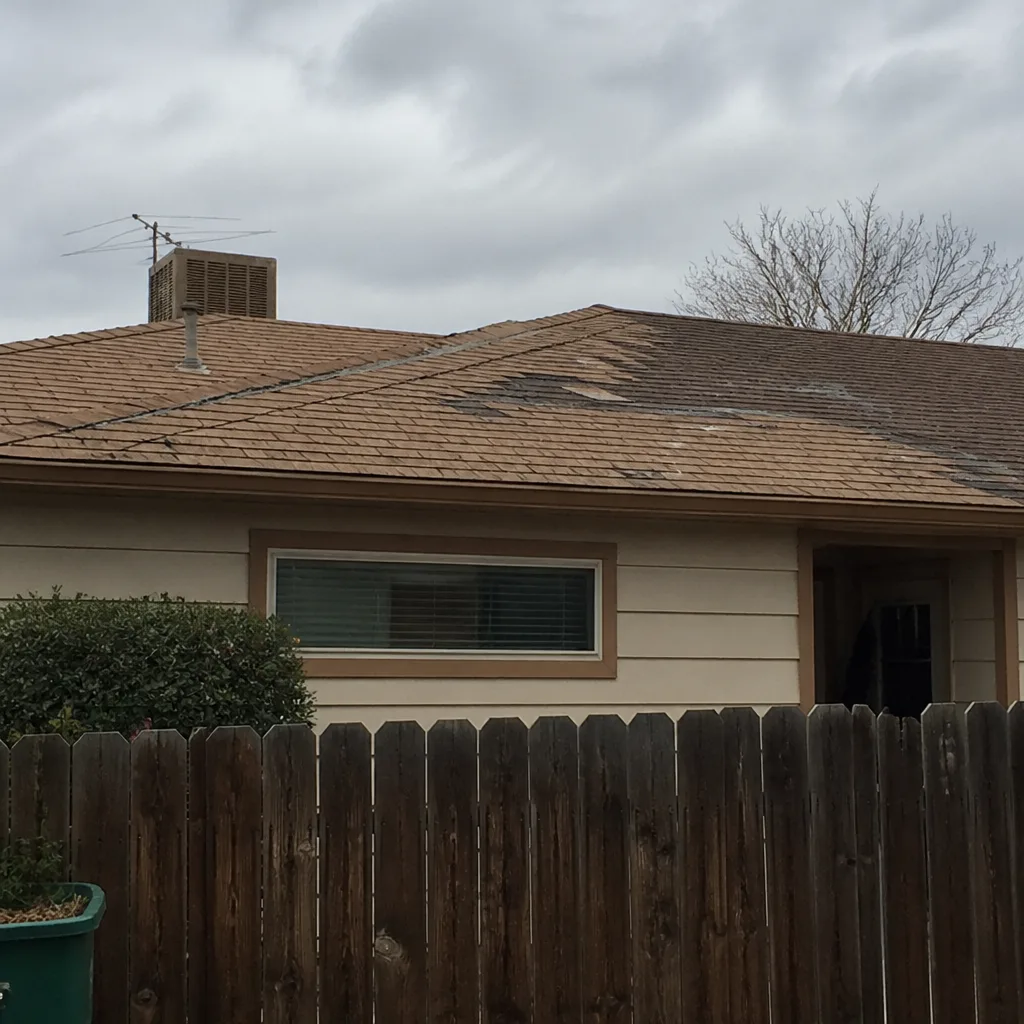 Before
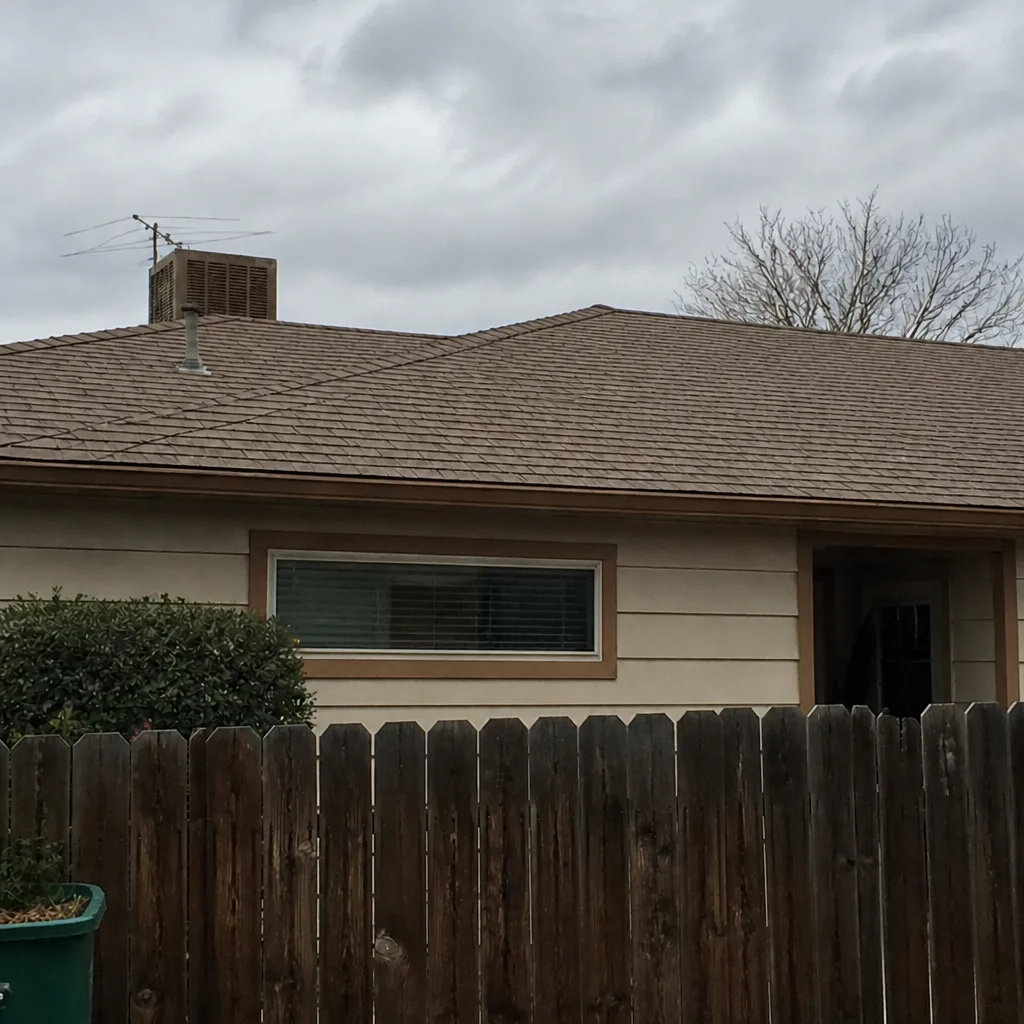 After
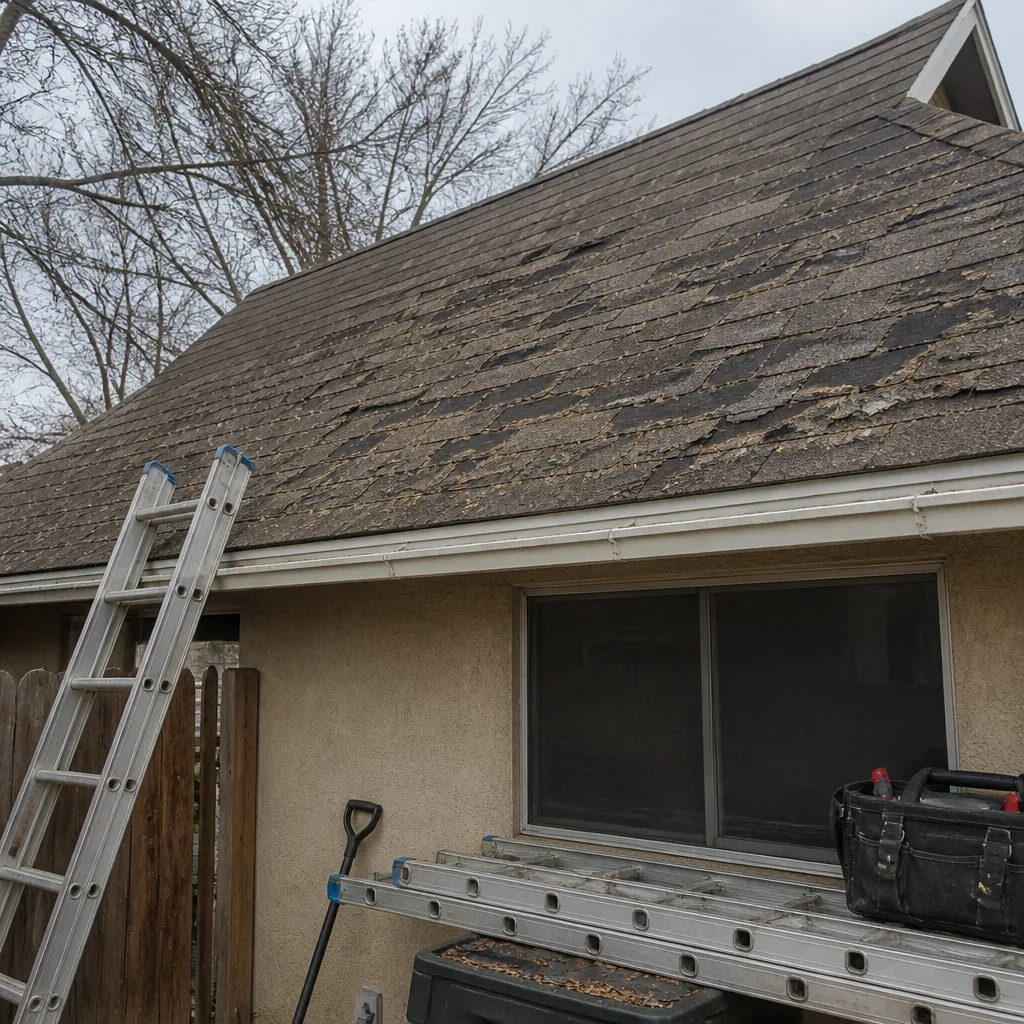 Before
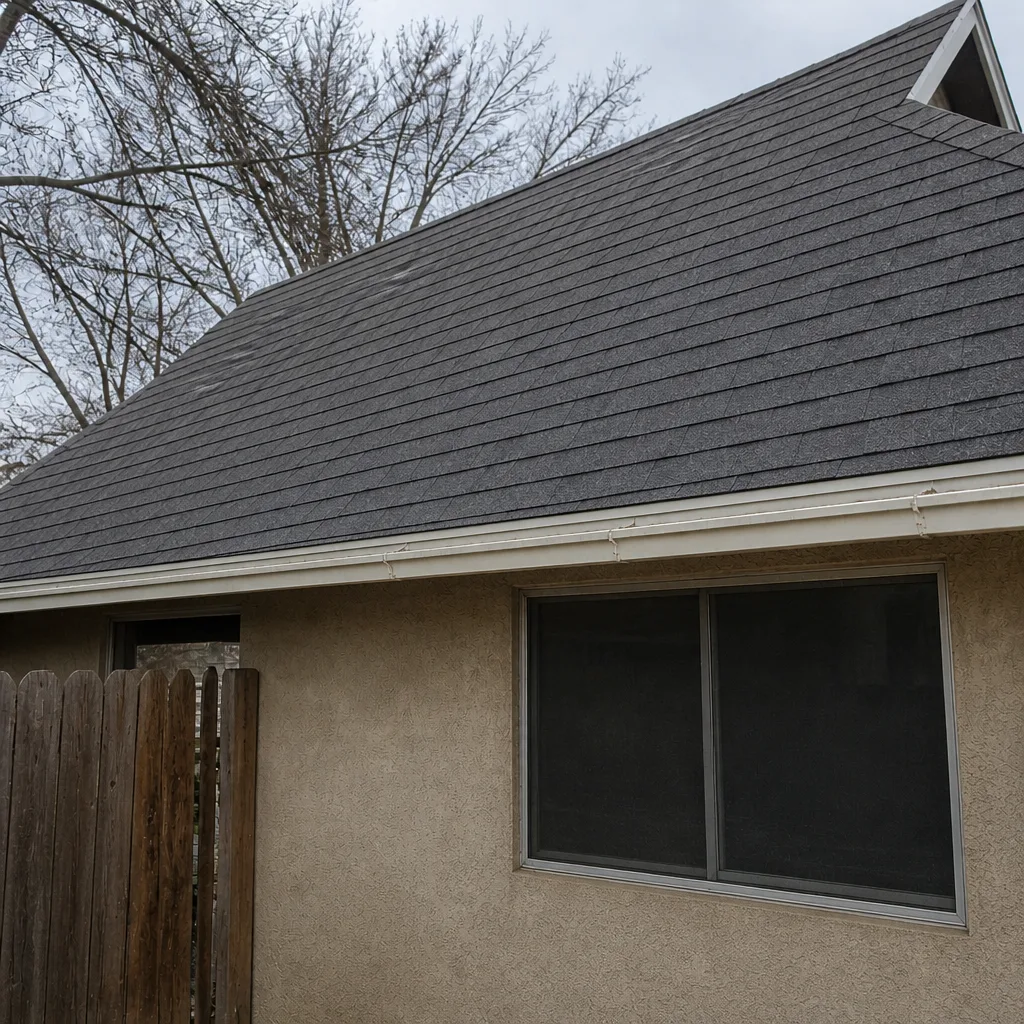 After
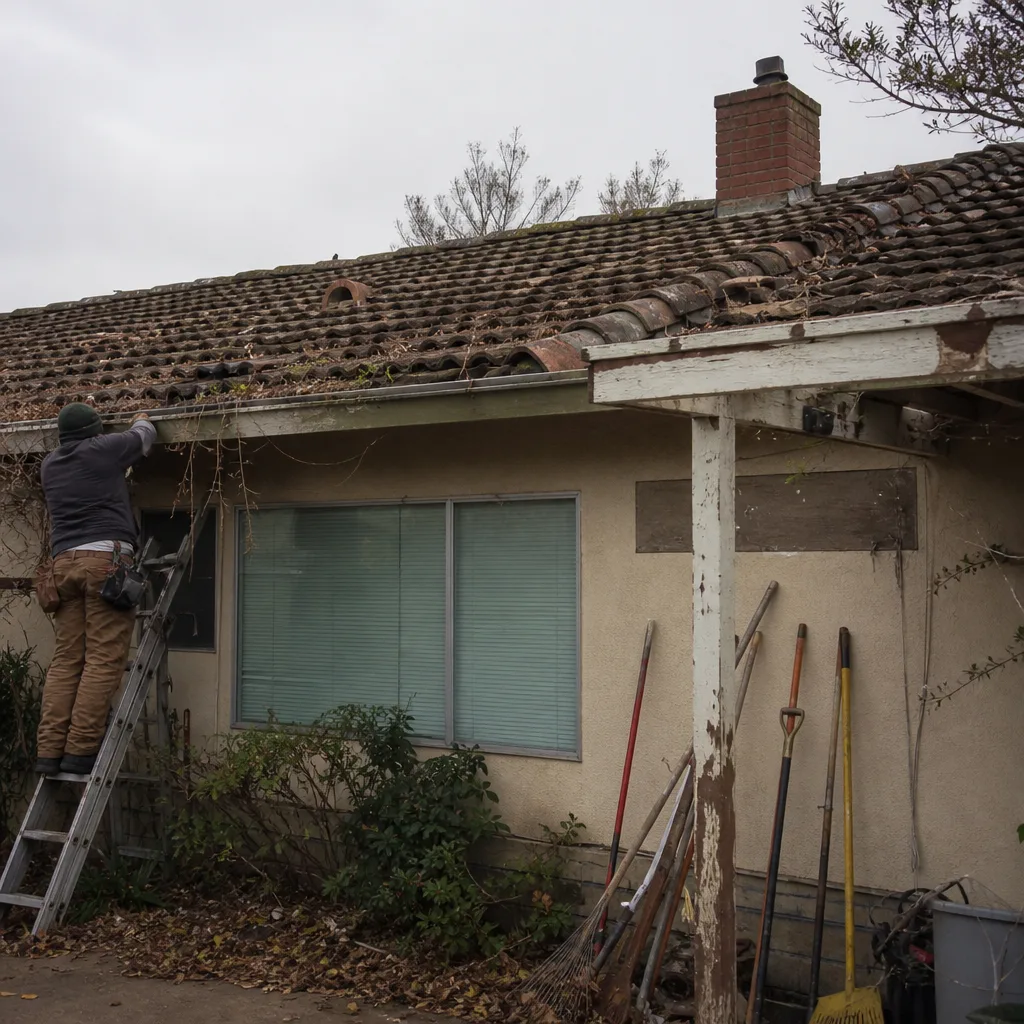 Before
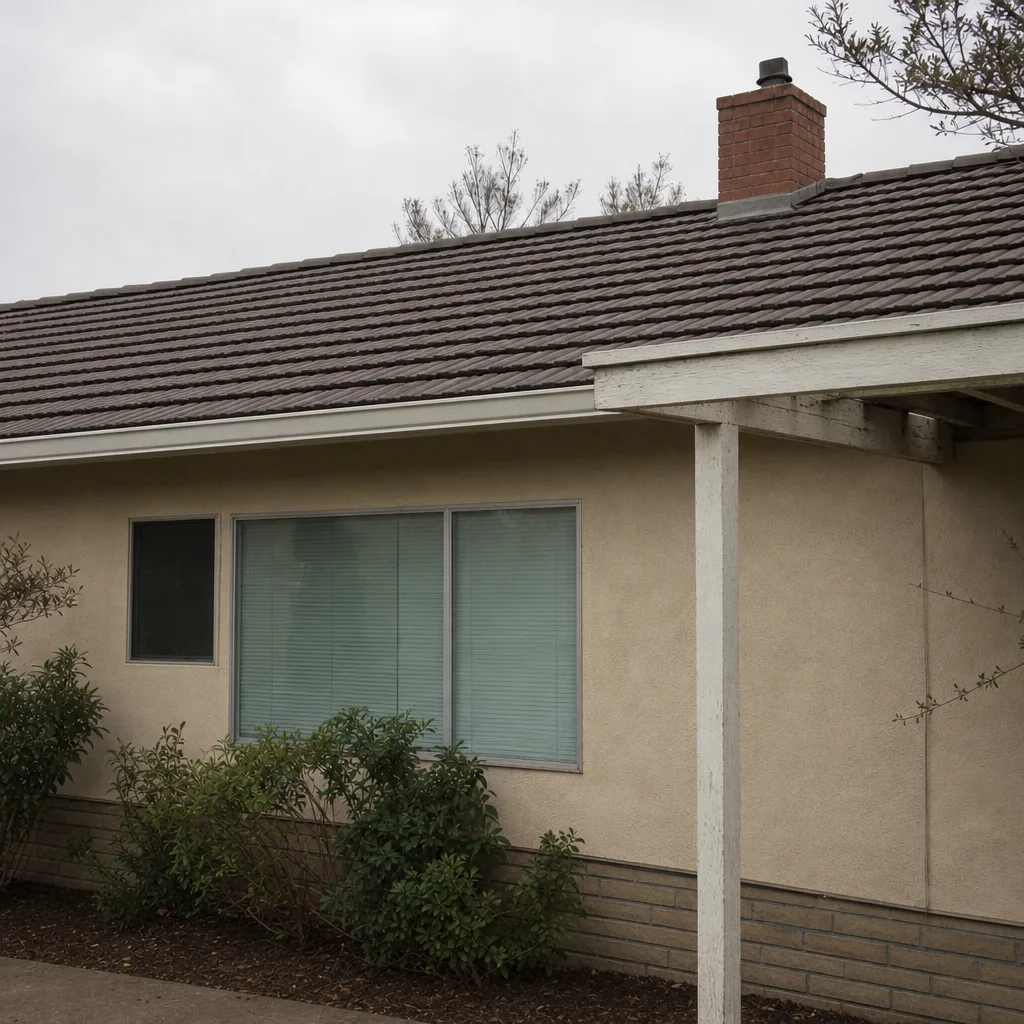 After
Frequently Asked Questions
Once a year, ideally in spring before the heat sets in, plus an extra look after any significant monsoon or hail event. Tile roofs are durable, but the underlayment and flashing underneath them have a shorter life and deserve a seasonal check. A quick ground-level walk plus an attic flashlight check can be done by any homeowner; a professional roof walk once a year rounds it out.
Yes – and this is the most common way tile roofs fail. The tiles shed water, but the underlayment underneath is what actually keeps it out. When the underlayment breaks down or flashing pulls away, water gets in with every tile perfectly intact. That’s why the early warning signs in this guide focus on flashing, grit in the gutters, and attic moisture rather than cracked tile alone.
That’s efflorescence – mineral salts migrating to the tile surface as moisture moves through. A light even film is usually harmless. But white bloom concentrated along tile joints, at valleys, or around wall intersections means moisture is being pushed through those spots repeatedly, which points to a water source above the underlayment. Get it checked if the pattern is concentrated.
It depends on the condition of the underlayment, not the tile. If the tile is sound and the underlayment has only failed in a few spots, a targeted repair is often possible. If the underlayment is degrading across the roof, replacement of the underlayment (with the tile reset or replaced as needed) is usually the right call. A professional inspection of the deck and underlayment settles it – we show the photos before we talk numbers.
No. Tile is brittle, and the surface is slick even when dry. A fall from a roof is a serious injury, and walking on tile can crack the very tiles you’re trying to protect. Ground-level checks with binoculars and a flashlight attic inspection catch almost everything worth knowing. Leave the roof walk to a trained, insured professional.
Because a local roofer with a published address and license number is still there when you have a question six months later. Out-of-state storm chasers come through Paradise after hailstorms and disappear. Ask for a license number, a physical address, and a written promise. We publish all three.
The Bottom Line
The signs that matter on a tile roof aren’t the ones most people watch for. Cracked tiles and ceiling stains are late-stage. Flashing displacement, efflorescence in the wrong pattern, underlayment grit in the gutters, a sagging roofline, and a damp attic show up far earlier – often 6-12 months before any leak appears inside. Do the five ground-level checks each season, do the attic flashlight check twice a year, and call a professional the moment two or more signs line up. Reading your Paradise roof early is the difference between a targeted repair and a full replacement.
If you’re ready to have your tile roof looked at the right way – ground up, deck down, no pressure – call Shepherd & Sons Roofing Paradise at (833) 676-0557 for a free estimate. You’ll get a real person on the phone and a written second opinion on any estimate you’ve already got.
Written by the team at Shepherd & Sons Roofing Paradise.