
Last updated November 17, 2026
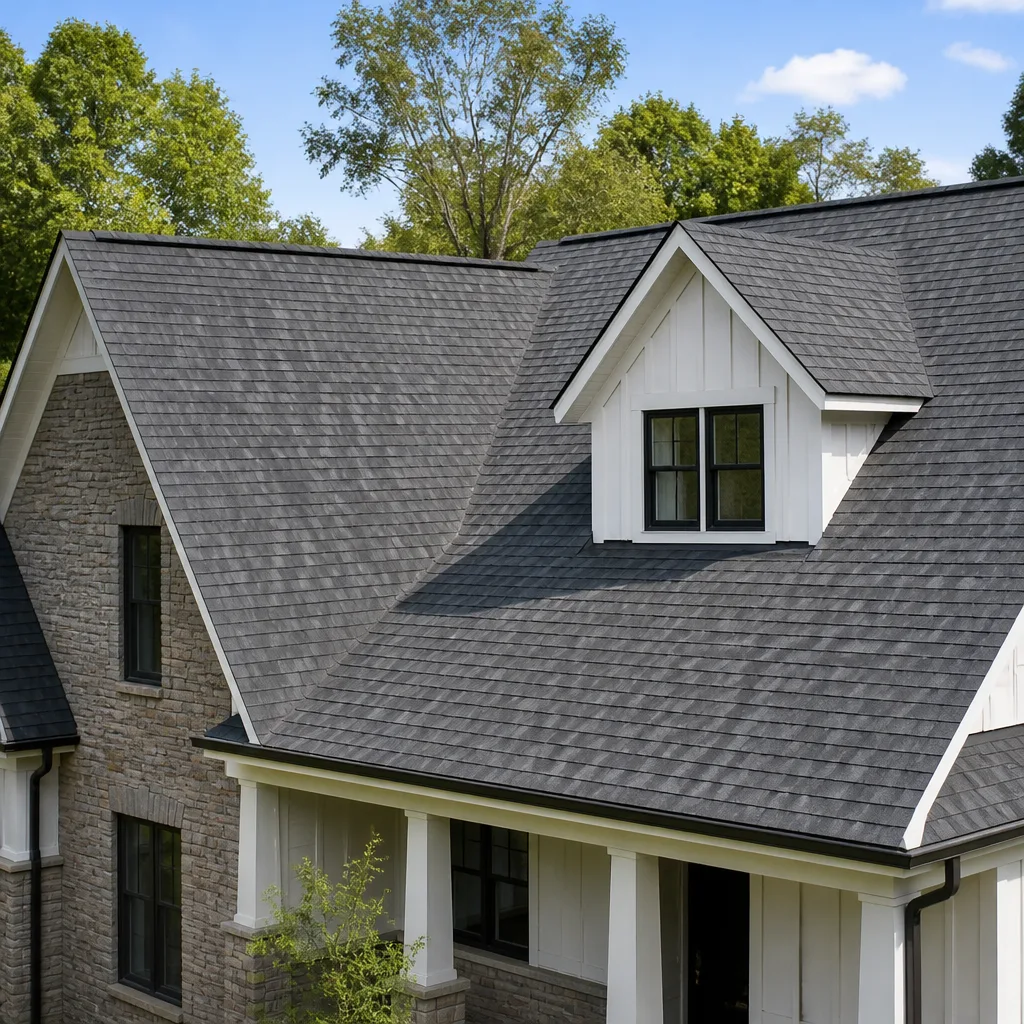 Architectural shingles
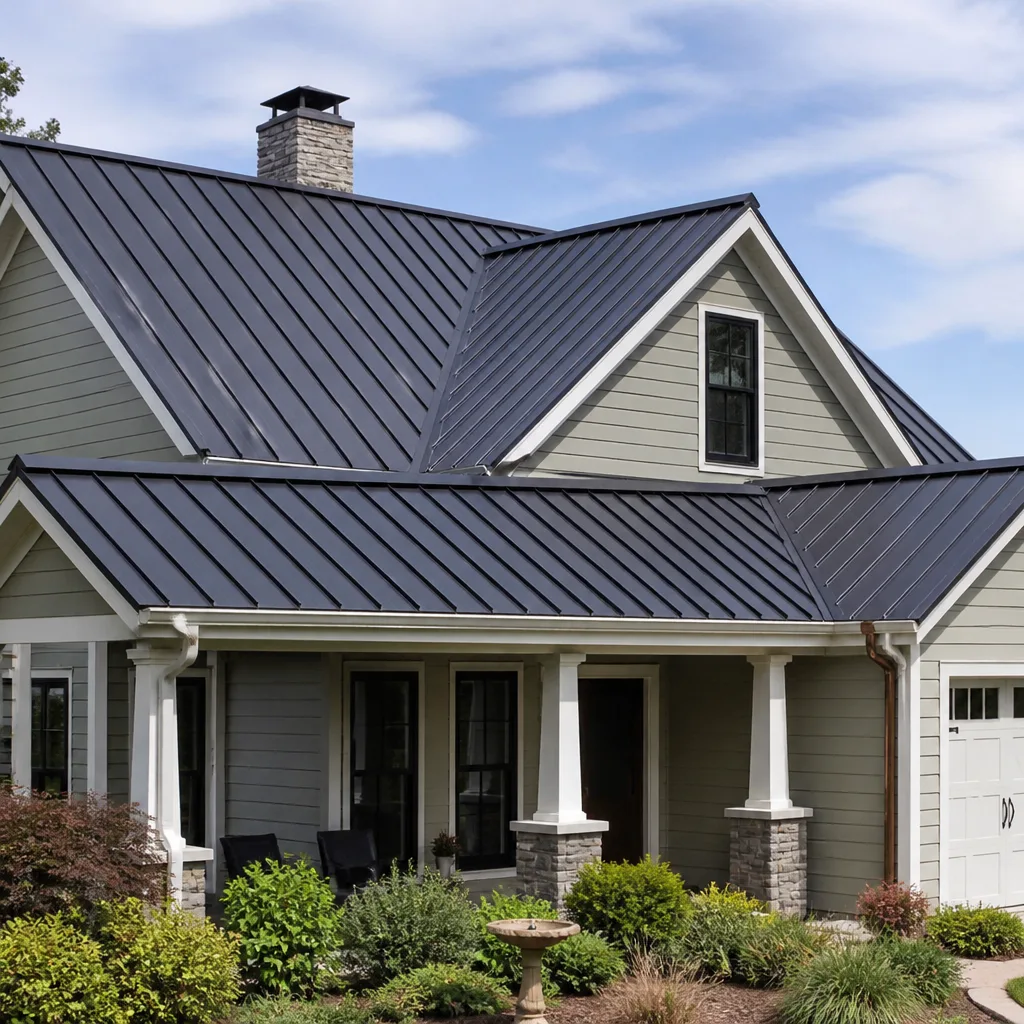 Metal roofing
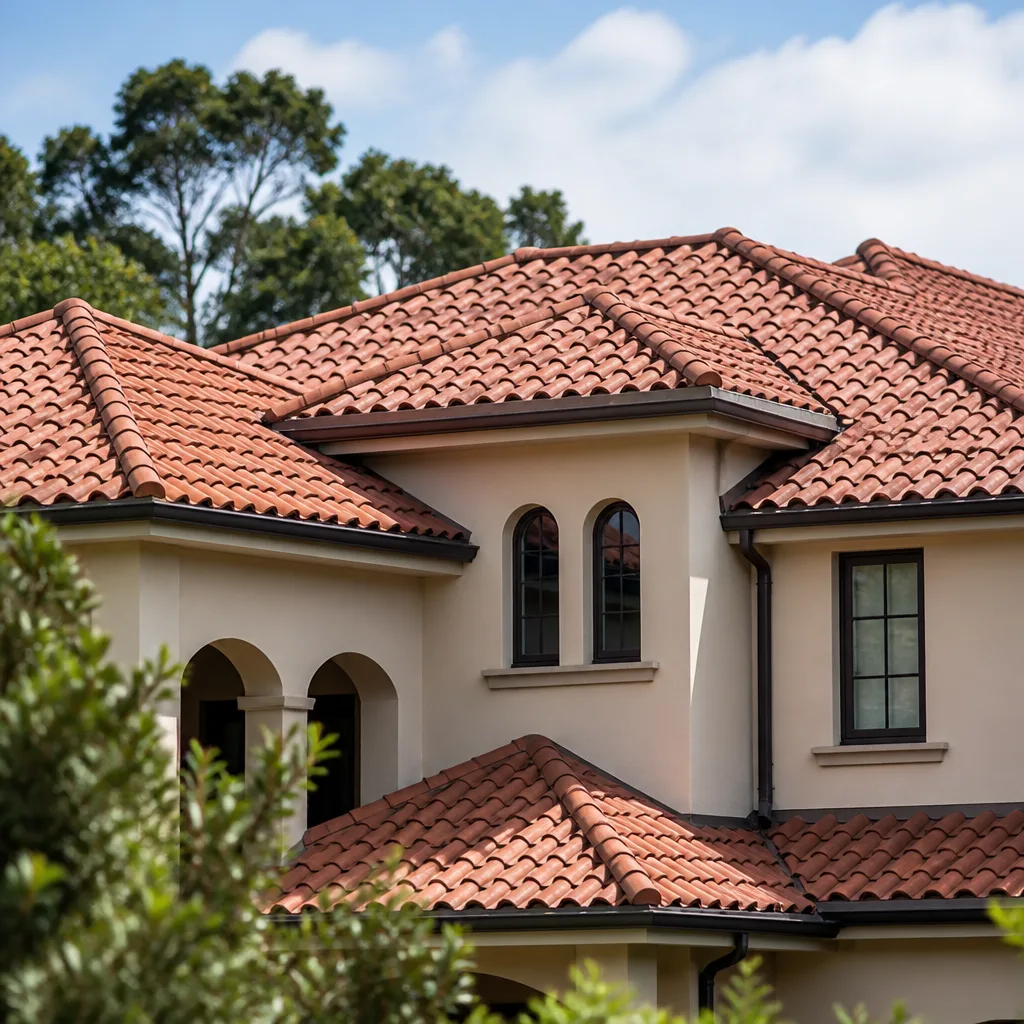 Tile roofing
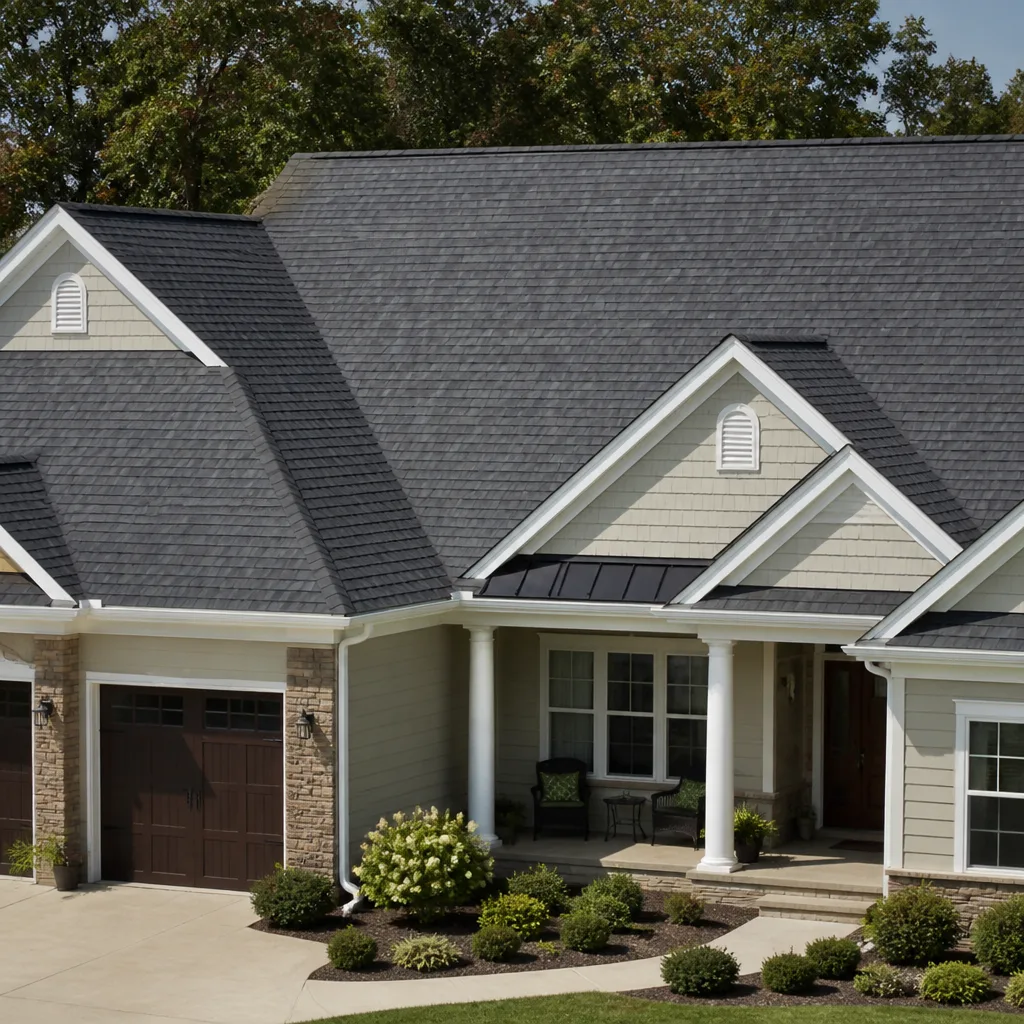 GAF
 Owens Corning
 Flat & low-slope
Free roof inspection with deck photos before we talk money - GAF and Owens Corning certified installation
The Complete Roof Replacement & Installation Guide for Paradise Homeowners
I’ve seen a $12,000 roof installation fail in four years because the ventilation was never fixed when the new decking went down. The shingles were fine. Everything under them was cooking. That’s the thing about a roof replacement in Paradise: the shingles get all the attention, but they’re the last decision in a long chain. Decking, underlayment, ventilation, attic interaction, flashing, and the permit inspection all compound on each other. Get one wrong and it quietly drags the other five down with it. This guide walks you through the whole system, in the order the work actually happens, so you can read a bid like someone who’s been on a roof.
Quick Answer
A roof replacement in Paradise typically runs $9,500 to $22,000 for an average single-family home, with most falling in the $13,000 to $17,000 range once full tear-off, new decking, underlayment, and ventilation corrections are included. The final number depends less on which shingle you pick than on what’s found under the old roof and whether your attic ventilation gets corrected while the deck is open. Get a written line-item bid that names decking, flashing, and ventilation as separate line items, not lumped into “miscellaneous.”
Styles & brands we work with
- Architectural shingles
- Metal roofing
- Tile roofing
- GAF
- Owens Corning
- Flat & low-slope
Table of Contents
- Why a Paradise Roof Is a System, Not a Shingle
- Class 4 Impact-Resistant Shingles and Your Insurance
- The Ventilation Math Most Bids Skip
- Full Tear-Off vs. Overlay: What’s Ever Acceptable
- How to Read a Paradise Replacement Bid Line by Line
- The Clark County Permit and Inspection Process
- Choosing Materials: GAF, CertainTeed, Atlas, and Metal
- What the Job Timeline Actually Looks Like
Why a Paradise Roof Is a System, Not a Shingle
A roof is five layers working together: the decking that holds everything, the underlayment that sheds the first water, the flashing that seals the edges and penetrations, the ventilation that lets the attic breathe, and the shingles on top. Every one of those can be installed to spec and the roof can still fail if the pieces don’t match. I’ve walked attics in Paradise where the shingles were a top-shelf product and the deck was soft from trapped moisture. The homeowner paid for quality and got a failed roof anyway, because nobody calculated the intake and exhaust.
Paradise sits in the Mojave high desert with summer highs routinely over 105°F and surface temperatures on a dark shingle roof reaching 160°F or more. That heat load drives everything. It cooks the underlayment, dries out the decking, and makes attic ventilation not a nice-to-have but the single most important thing keeping your roof from aging prematurely. When we take off a roof in Paradise and find curled, brittle, dried-out underlayment at eight years old, the diagnosis is almost always the same: the attic couldn’t get rid of its heat.
This is the reason a replacement should always start with the deck, not a shingle sample. Before anyone talks money, they should be up in the attic and on the deck, showing you what’s there.
- Decking: the structural base; soft or delaminated sheathing must be replaced, and how much gets replaced is a real cost driver.
- Underlayment: your first line of defense at the eaves and valleys; it degrades fast in heat-driven attics.
- Flashing: metal at valleys, walls, chimneys, and pipe boots; most leaks start here, not in the field shingles.
- Ventilation: balanced intake and exhaust sized to your attic square footage.
- Shingles or panels: the visible layer that protects the rest from sun and rain.
Class 4 Impact-Resistant Shingles and Your Insurance
Class 4 impact-resistant shingles are rated to survive a two-inch steel ball dropped from 20 feet without cracking, and in Paradise that rating matters for two reasons. The first is hail, which does hit the valley. The second, and the one most homeowners miss, is that many carriers offer a meaningful premium discount for a Class 4 roof in this hail zone. The discount can run 10% to 30% off the wind and hail portion of your policy, sometimes more. Over a decade that’s real money, and it’s why we tell Paradise homeowners to ask their carrier before they pick a shingle, not after.
Here’s how to do it right:
- Call your insurance carrier and ask two questions: do you offer a Class 4 impact-resistant discount, and what documentation do you need?
- Ask the bidder to quote a Class 4 product alongside the standard line so you can see the real price gap. It’s often $400 to $900 more on a typical Paradise roof.
- Get a manufacturer’s Class 4 certification or product spec sheet with your paperwork, because the claim usually needs proof.
- Confirm the installer registered the product with the manufacturer so your warranty is intact.
We set Class 4 lines from brands like Atlas and CertainTeed regularly, and when a homeowner shows us a carrier quote, the math usually makes the upgrade pay for itself well inside the first decade. On top of the insurance angle, Class 4 products tend to carry longer material warranties, which matters in a climate that works a roof this hard.
The Ventilation Math Most Bids Skip
Balanced attic ventilation is measured in net free area (NFA). The widely accepted standard is one square foot of NFA for every 150 square feet of attic floor, split evenly between intake at the eaves and exhaust at the ridge or near it. If you have a 1,800-square-foot attic, that’s 12 square feet of NFA total, six for intake and six for exhaust. Most failed roofs we inspect in Paradise have plenty of exhaust and almost no intake, which means the attic pulls air from wherever it can, often through gaps in the ceiling into your living space, and the heat never clears.
Here’s how to check whether your roof’s ventilation is actually right, and what to insist on in a replacement:
- Find your attic square footage. Length times width of the attic floor, then divide by 150 for the total NFA you need in square feet.
- Halve that for intake and exhaust. Exhaust should roughly equal intake, never exceed it by much.
- Count existing vents. Every vent has an NFA rating printed on it or available from the manufacturer. Add them up honestly.
- Fix it while the deck is open. If the numbers don’t balance, the replacement is the only time it’s cheap to correct. Add intake at the soffits or exhaust at the ridge.
- Seal the attic floor. Correcting ventilation without air-sealing the ceiling below just moves the problem. Ask about it.
This is the step that gets skipped when a bidder hands you a one-line quote with no ventilation line item. When you review bids, ask directly: what’s the calculated NFA for my attic, and where are the intake and exhaust numbers? A pro can answer in a minute. If they can’t, that tells you something.
Full Tear-Off vs. Overlay: What’s Ever Acceptable
A full tear-off means stripping the roof down to the decking, inspecting and repairing the deck, and building up from bare wood. An overlay means laying new shingles over the old ones. For a Paradise home, overlay is almost never the right call, and here’s why. The old underlayment, flashing, and decking are the parts most likely to have failed in this heat, and an overlay hides all three. You also can’t correct ventilation from above, and you can’t inspect for soft decking. An overlay buys you a few years of coverage while the real problems underneath keep getting worse.
The narrow case where an overlay is ever acceptable: one existing layer in good condition, no evidence of leaks or soft decking, and a homeowner who needs a short bridge of a few years before a full replacement. That’s it. And even then, it’s a decision to make with eyes open, not one to let a bidder talk you into because it’s cheaper up front.
What a proper full tear-off includes:
- Strip every layer down to the wood deck.
- Inspect the decking board by board and replace any soft, delaminated, or rotted sheathing.
- Correct or confirm ventilation while the deck is open.
- Install a high-temperature-rated underlayment suited to desert heat.
- Replace all flashing: valleys, wall terminations, and pipe boots.
- Install the field shingles and ridge cap to the manufacturer’s nailing pattern.
If a bid offers an overlay as the “budget option” without telling you what it means for the decking and ventilation underneath, push back. You want to hear the words “full tear-off” in the bid, and you want the decking allowance to be a real number, not “we’ll see when we get up there.” You can read more about how we handle this on our Roof Replacement & Installation in Paradise page.
How to Read a Paradise Replacement Bid Line by Line
A good bid is line-item, not a lump sum. When you’re comparing three quotes, the line items are how you find the buried problem. Here’s what a fair Paradise replacement bid should lay out separately, with rough ranges for a typical single-family home:
- Tear-off and disposal: $1,500 to $3,500 depending on layers and dump fees.
- Decking replacement: $75 to $150 per sheet of sheathing replaced; allowances for 5 to 10 sheets are common.
- Underlayment: $400 to $900 for a high-temp-rated product.
- Flashing: $300 to $800, itemized for valleys, walls, and boots.
- Ventilation corrections: $400 to $1,200 if intake or exhaust needs to be added or rebalanced.
- Shingles or panels: $5,500 to $14,000, the bulk of the bid, driven by material and roof complexity.
- Permit and inspection fees: a real, separate line, not “included.”
Two red flags to watch. First, any line that says “miscellaneous,” “allowance,” or “to be determined.” That’s where surprise costs hide. Second, a decking allowance that’s too low to be honest. If a bidder allows for one sheet of decking replacement on a roof that’s likely to need eight, the low number they handed you is fictional. A fair bid says what decking will cost and how the count gets settled. Ask for a firm scope, not a friendly price. If you want a second set of eyes on any written estimate, our Shepherd & Sons Roofing Paradise home page lays out how to request a free second opinion.
The Clark County Permit and Inspection Process
A full roof replacement in the Paradise area requires a building permit through Clark County, and the work gets inspected by a county inspector when it’s done. The permit isn’t a formality. It’s the paper trail that keeps the job honest and protects you when you sell the home. An unpermitted roof can complicate a sale and can void a warranty, and out-of-state crews that skip it leave you holding the consequences years later.
Here’s the sequence to expect and what to watch for:
- Permit pulled before work starts, in the homeowner’s name and address. Get the permit number in writing before anyone touches the roof.
- Pre-inspection or dry-in inspection if the county requires it, where the deck and underlayment can be checked before shingles go on. This is your chance to see the deck photos too.
- Final inspection after the roof and flashing are complete, verifying the installation matches code and the approved scope.
- Permit closed out and the inspection record provided to you, not just promised over the phone.
What to watch for: a contractor who says “we don’t need a permit for a roof.” That’s usually false here, and it’s a signal to walk. And watch the flashing inspection specifically, since most leak failures trace back to it. Ask to see the final inspection sign-off once the job is done. If a roofer can’t or won’t produce it, that’s a problem.
Choosing Materials: GAF, CertainTeed, Atlas, and Metal
You have real choices on the material layer, and they should be driven by your budget, your insurance situation, and how long you plan to stay. Asphalt shingles remain the default in Paradise because they’re the best balance of cost and performance in this climate, and the premium architectural lines from GAF, CertainTeed, and Atlas hold up well when the deck and ventilation are handled right. A name-brand shingle is only as good as the nailing pattern beneath it, which is why the wind rating comes from the install, not the wrapper. The nailing pattern earns the wind rating, not the shingle wrapper.
If you’re planning to stay in the house for the long haul, a Metal Roofing in Paradise page is worth a read: metal panels reflect more of the desert sun, tend to last longer, and can lower attic temperatures noticeably. The trade-off is a higher up-front number. For homeowners staying put, that trade often works. For someone replacing a roof to sell, a Class 4 shingle is usually the smarter spend.
Whichever direction you go, ask three questions of every bidder: Which manufacturer’s product are you quoting, exactly? Is it Class 4 rated? And what’s the material warranty, in years, and who honors it? The answers should be on paper.
What the Job Timeline Actually Looks Like
A typical Paradise roof replacement takes one to three days of on-roof work once the permit is issued, with larger or more complex roofs running four to five. The permit process adds time up front, usually a week or two. A sensible schedule looks like this:
- Week one: get your three written bids, ask the ventilation and decking questions, and review line items side by side.
- Week two: choose the contractor, sign the scope, and let the permit get pulled.
- Days one to three of work: tear-off, deck inspection, ventilation corrections, underlayment, flashing, then shingles.
- Final step: the county inspection and the permit close-out, plus your photos, spec sheet, and warranty paperwork.
Ask what the crew does about your landscaping and AC unit, how dumpsters get placed, and whether they protect the driveway from nails. The answers happen in the details, not in the sales pitch.
Common Mistakes to Avoid
- Comparing only the bottom-line number. A bid that’s $4,000 cheaper often just skips the ventilation and understates the decking. Ask what’s missing, not just what’s lower.
- Letting the decking be a “we’ll see.” A bid without a real decking allowance is a number you can’t trust. Ask what sheets run and how the count settles.
- Ignoring ventilation on a re-roof. In Paradise’s heat, correcting ventilation is cheap while the deck is open and nearly impossible to fix later without tearing the roof apart again.
- Skipping the permit to save time. County files show whether a roof was permitted. A missing permit can hurt a sale and void a warranty.
- Picking a shingle before calling the insurer. The Class 4 insurance discount in this hail zone is real money, and you want that conversation before you sign, not after.
- Accepting an overlay as the “budget option.” It hides the decking, underlayment, and flashing failures this climate is most likely to produce.
- Not asking to see the deck photos. Any honest roofer will show you the boards under the shingles before money changes hands. It’s the simplest test of whether the crew is being straight with you.
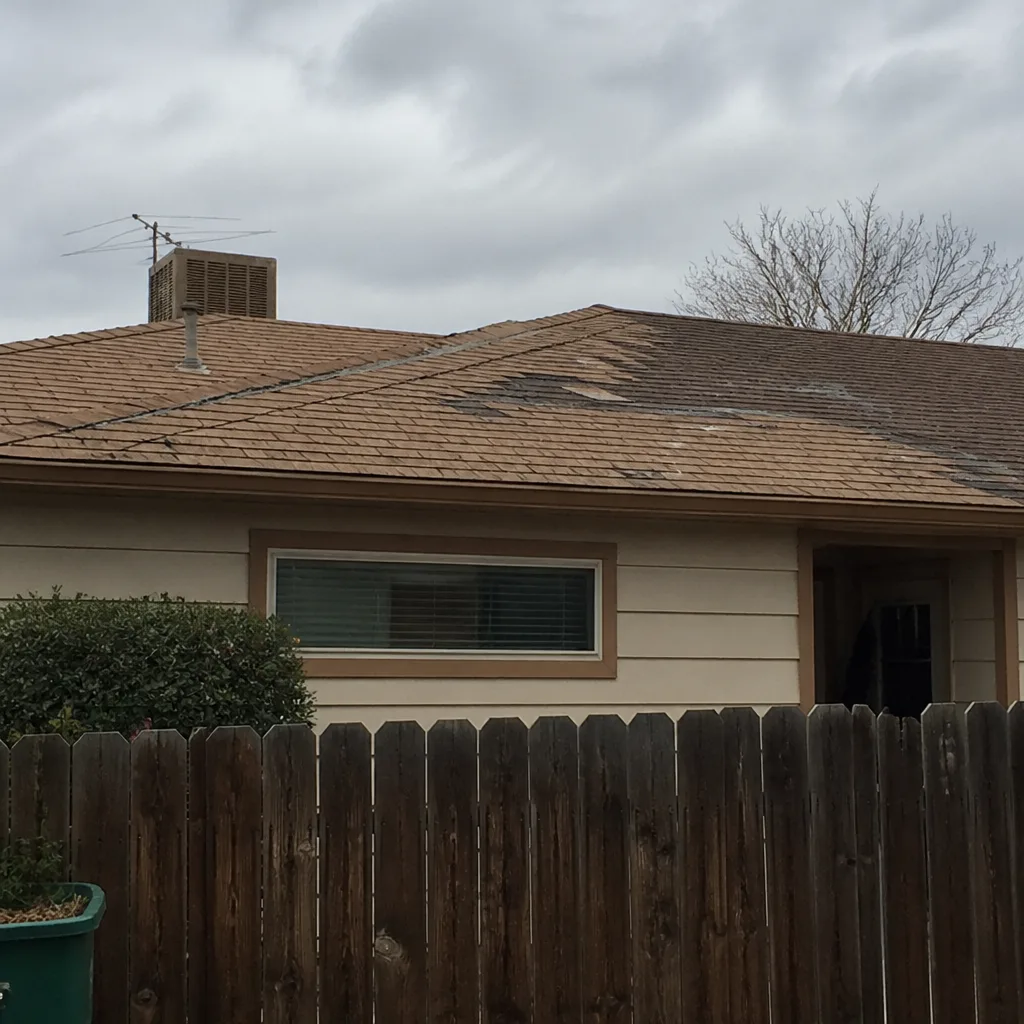
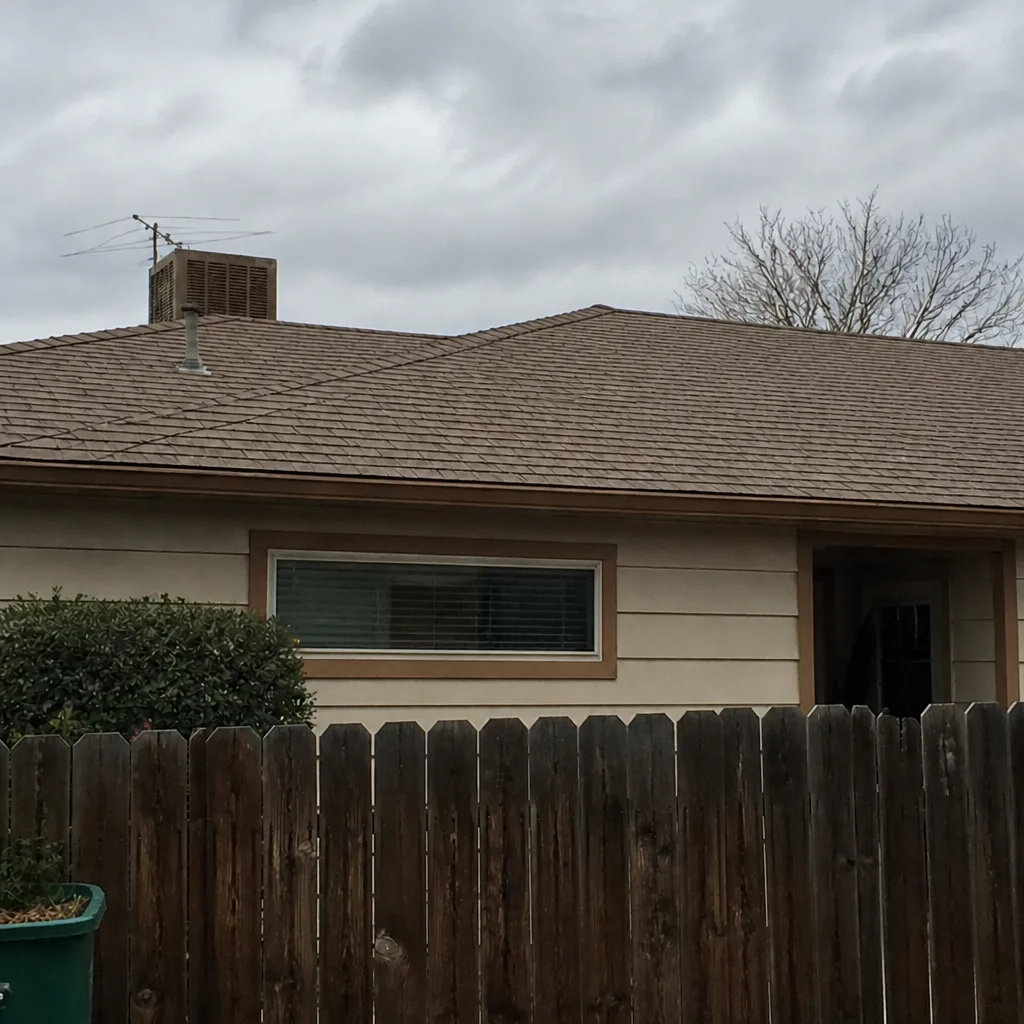
See the difference
 Before
 After
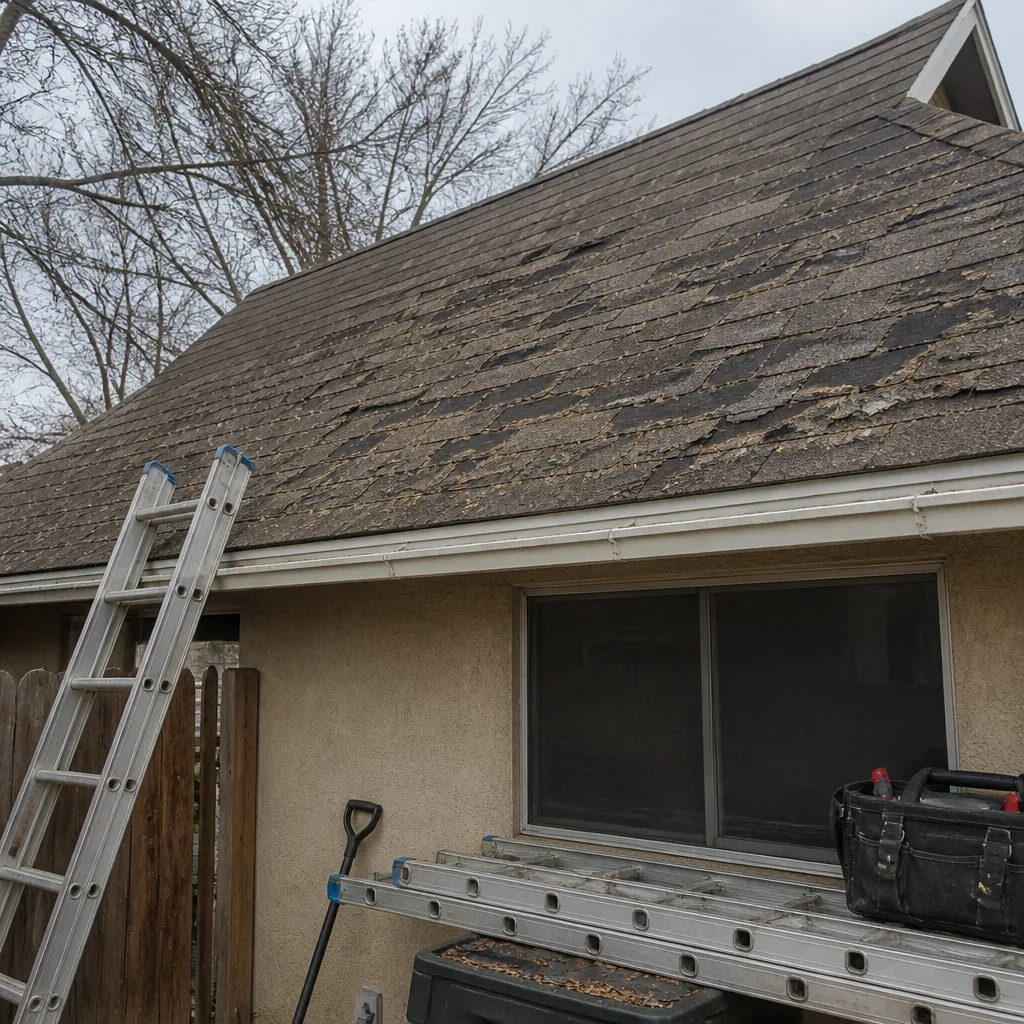 Before
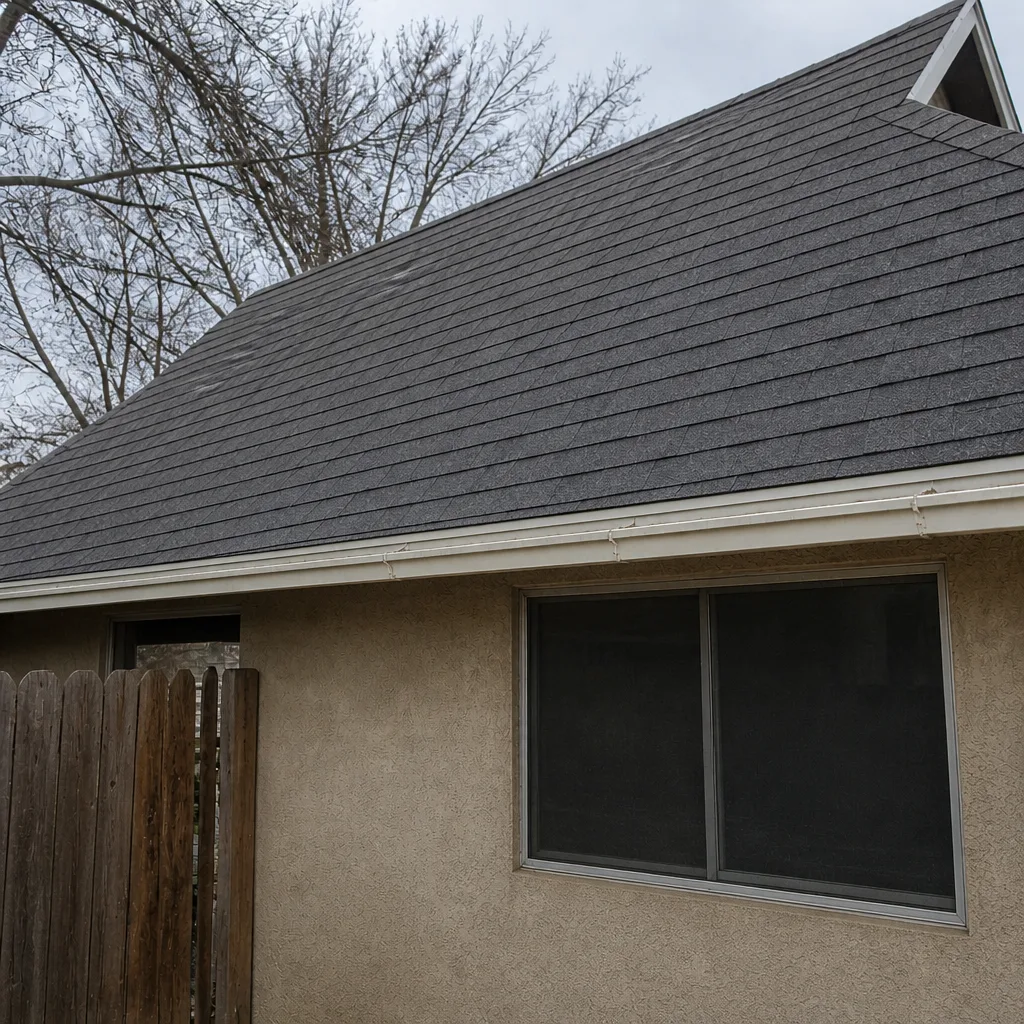 After
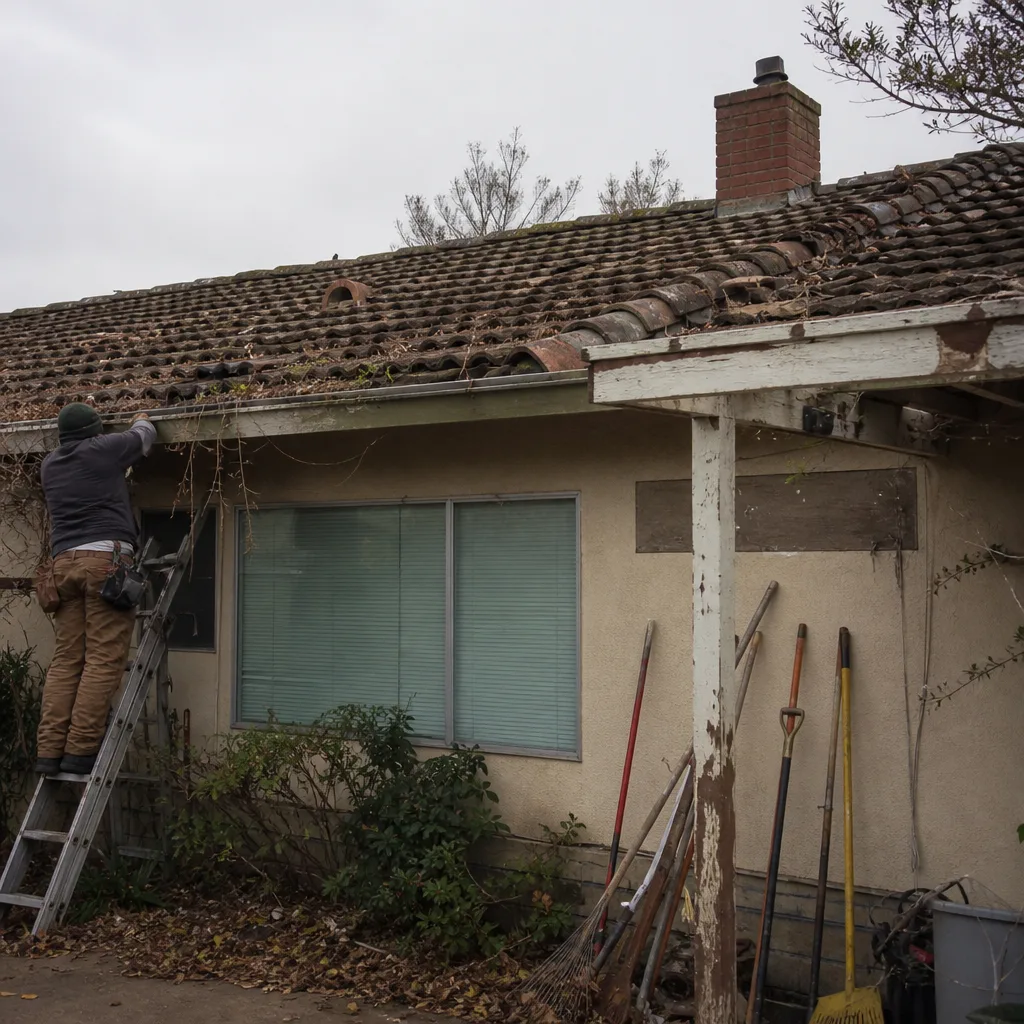 Before
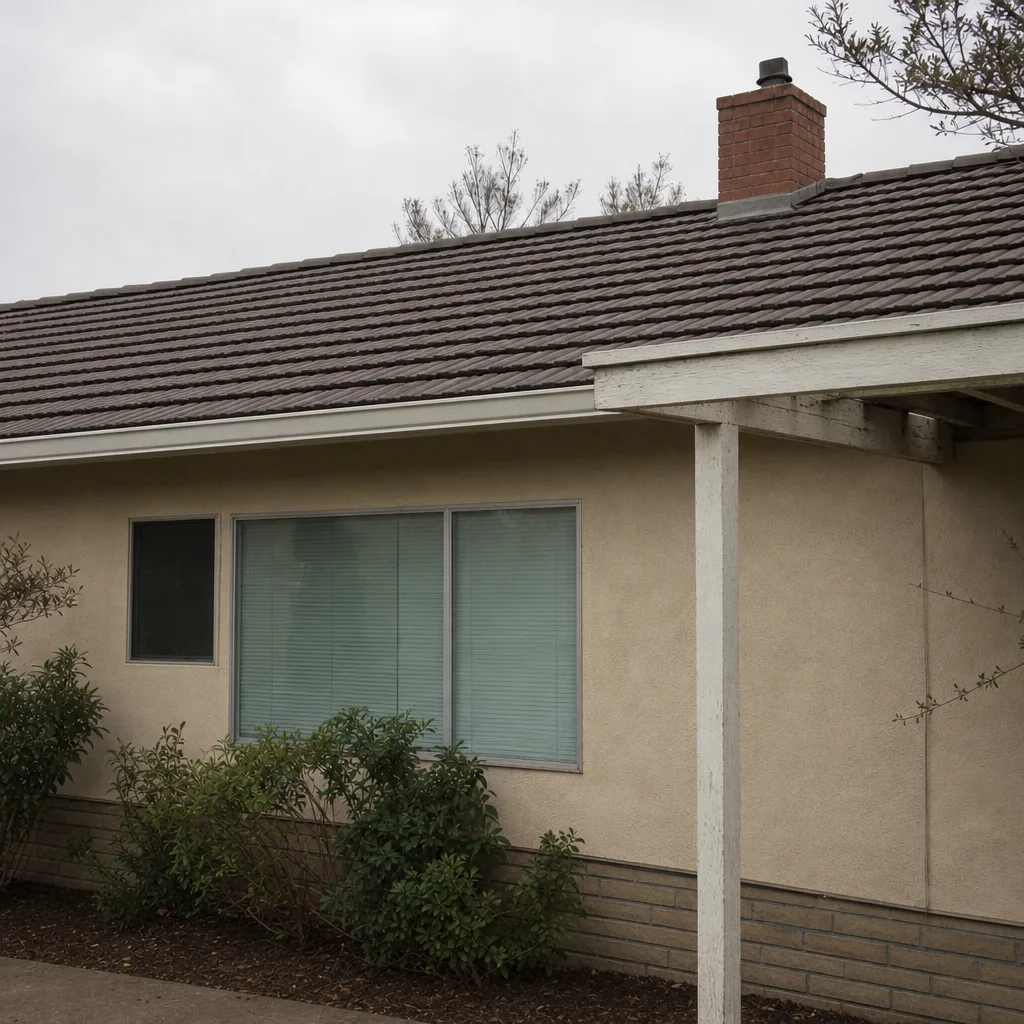 After
When to Call a Professional
Call a professional when you spot curled or missing shingles, granules collecting in the gutters, water stains on the attic ceiling, daytime light through the roof deck, or any roof that’s hit 18 to 20 years old in this heat. Call sooner if a storm just passed through. And if someone’s given you a written estimate and you’re not sure what’s in it, that’s the moment to get a second opinion, before anyone touches the roof. This isn’t a job for ladders and YouTube: a fall from roof height is a serious injury, and the decking, flashing, and ventilation work underneath is where the real skill and liability live. Shepherd & Sons Roofing Paradise offers free estimates in Paradise, and we’ll show you the deck photos before we talk money. Call (833) 676-0557. Our technicians have up to 30 years of experience, and every job carries a written 90-Day Done Right Promise. If you’re weighing repair against replacement first, the Roof Repair in Paradise page walks you through how to tell the difference.
Frequently Asked Questions
A typical single-family roof replacement in Paradise runs $9,500 to $22,000, with most landing between $13,000 and $17,000 once full tear-off, decking, underlayment, flashing, and ventilation are included. The biggest swing factors are how much decking needs replacing and whether ventilation gets corrected. Call (833) 676-0557 for an exact quote, and estimates are free.
Yes. A full roof replacement in the Paradise area requires a permit through Clark County and a final inspection, and the paperwork should be pulled before work starts. Ask for the permit number in writing up front. A roofer who says a roof doesn’t need a permit is one to walk away from. Estimates are free if you want a second look at any quote.
It shouldn’t if the bid was written right. A fair bid names the decking allowance, the flashing, the ventilation corrections, and the permit fee as separate lines. The only honest change is decking that turns out to be soft beyond the allowance, and that should be priced per sheet in writing. Call (833) 676-0557 with your bid and we’ll tell you what’s missing.
A tear-off strips the roof to bare decking so the deck, underlayment, and flashing can all be inspected and replaced; an overlay lays new shingles over the old roof and hides those layers. In Paradise’s heat, an overlay is almost never the right call because it hides the very parts most likely to have failed. We recommend full tear-off on just about every Paradise replacement.
Most Paradise roofs take one to three days of on-roof work once the permit is issued, with larger or more complex roofs running four to five days. The permit itself usually adds a week or two up front. Ask your contractor what the actual workday looks like so you can plan around it.
Often yes, because many carriers offer a premium discount for a Class 4 roof in this hail zone, and the upgrade typically costs $400 to $900 more on a typical home. Confirm with your insurer what discount they’ll honor and what documentation they need before you choose a product. Call (833) 676-0557 and we’ll quote both lines side by side so you can see the real gap.
The Bottom Line
A roof replacement in Paradise is a system decision. The shingles are the last choice, not the first, and the decking, underlayment, ventilation, and flashing underneath are what actually decide whether the roof lasts 25 years or starts failing in five. Get a written line-item bid, verify the ventilation math, insist on a full tear-off, confirm the permit gets pulled and the inspection closes out, and call your insurer before you pick a Class 4 shingle. Do those things and the roof you pay for today is the roof you still have in 2050. If you want a straight answer on any bid, call Shepherd & Sons Roofing Paradise at (833) 676-0557 for a free estimate. A live person answers, and the estimate costs you nothing.
Written by the team at Shepherd & Sons Roofing Paradise.