
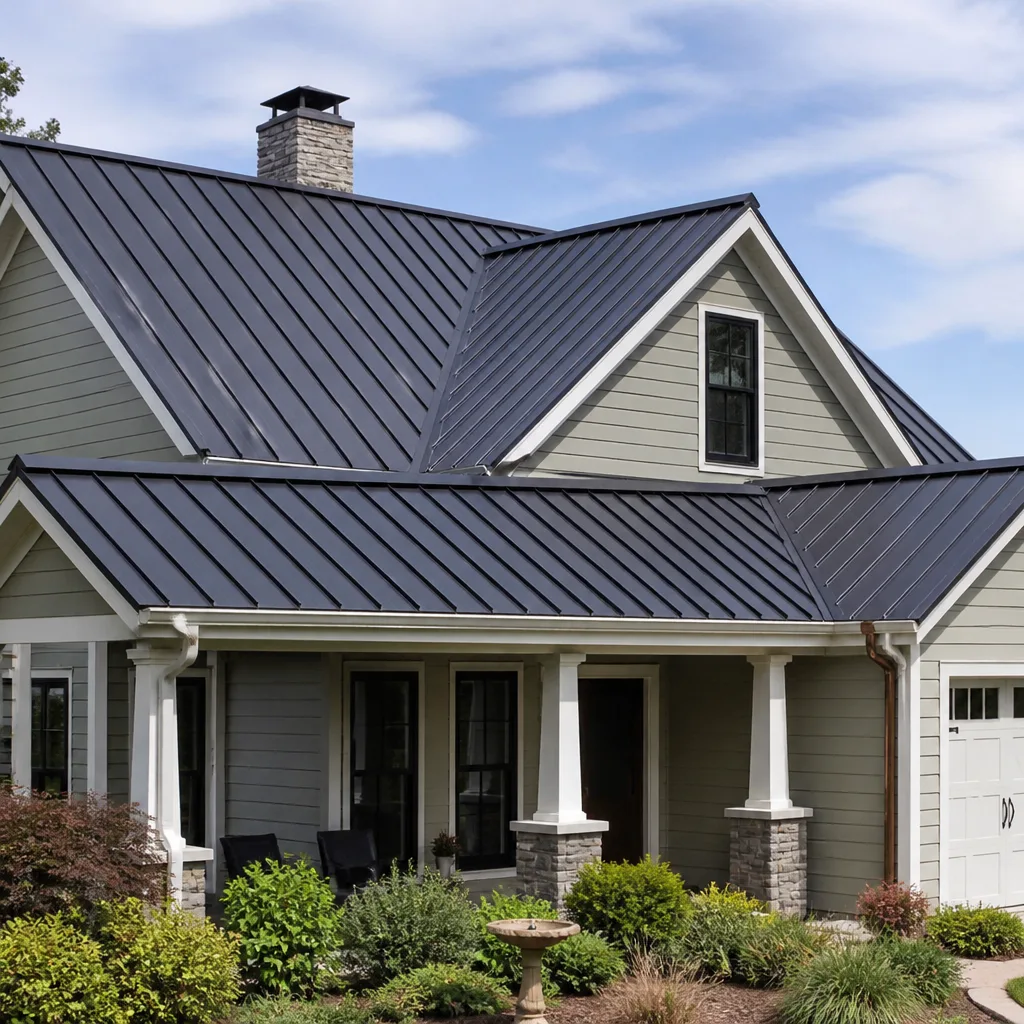
 Metal roofing
 Architectural shingles
 Tile roofing
 GAF
 Owens Corning
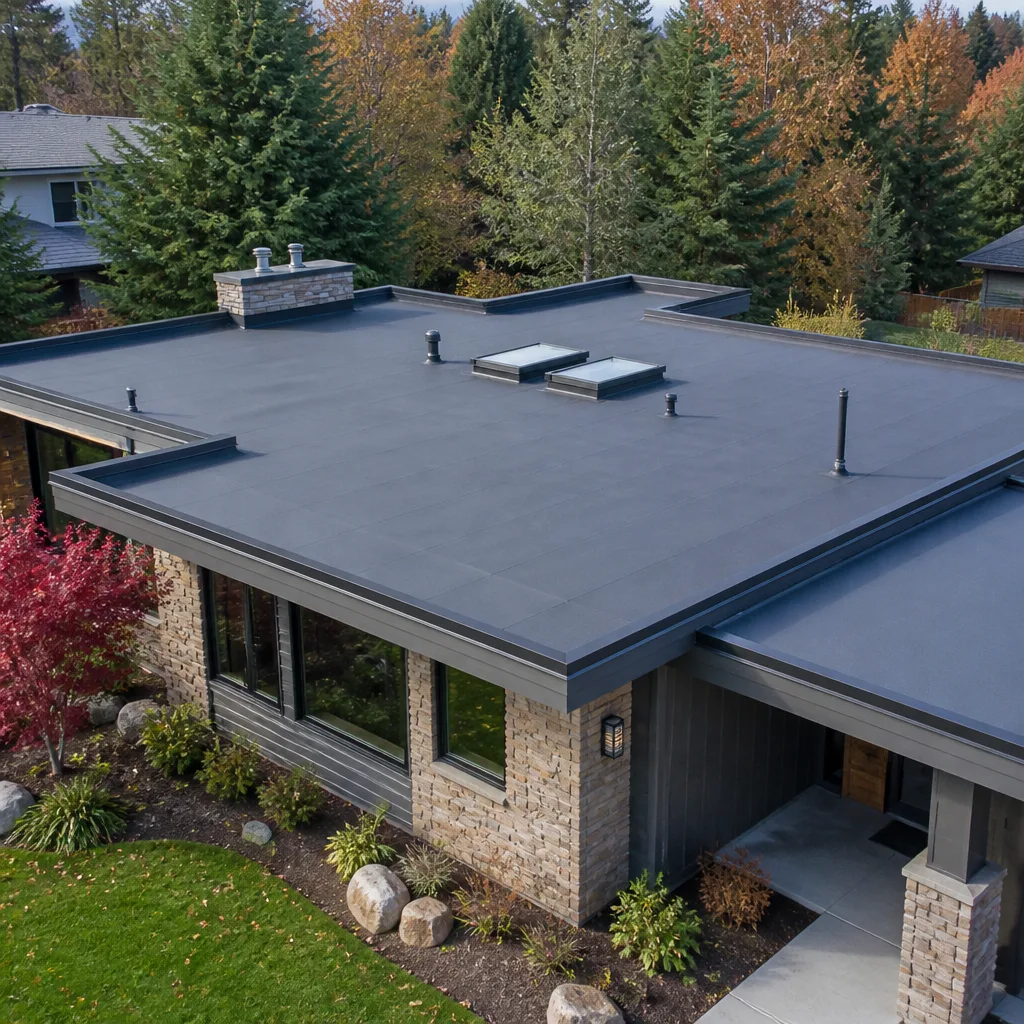 Flat & low-slope
Free roof inspection with deck photos before we talk money - GAF and Owens Corning certified installation
Styles & brands we work with
- Architectural shingles
- Metal roofing
- Tile roofing
- GAF
- Owens Corning
- Flat & low-slope
See the difference
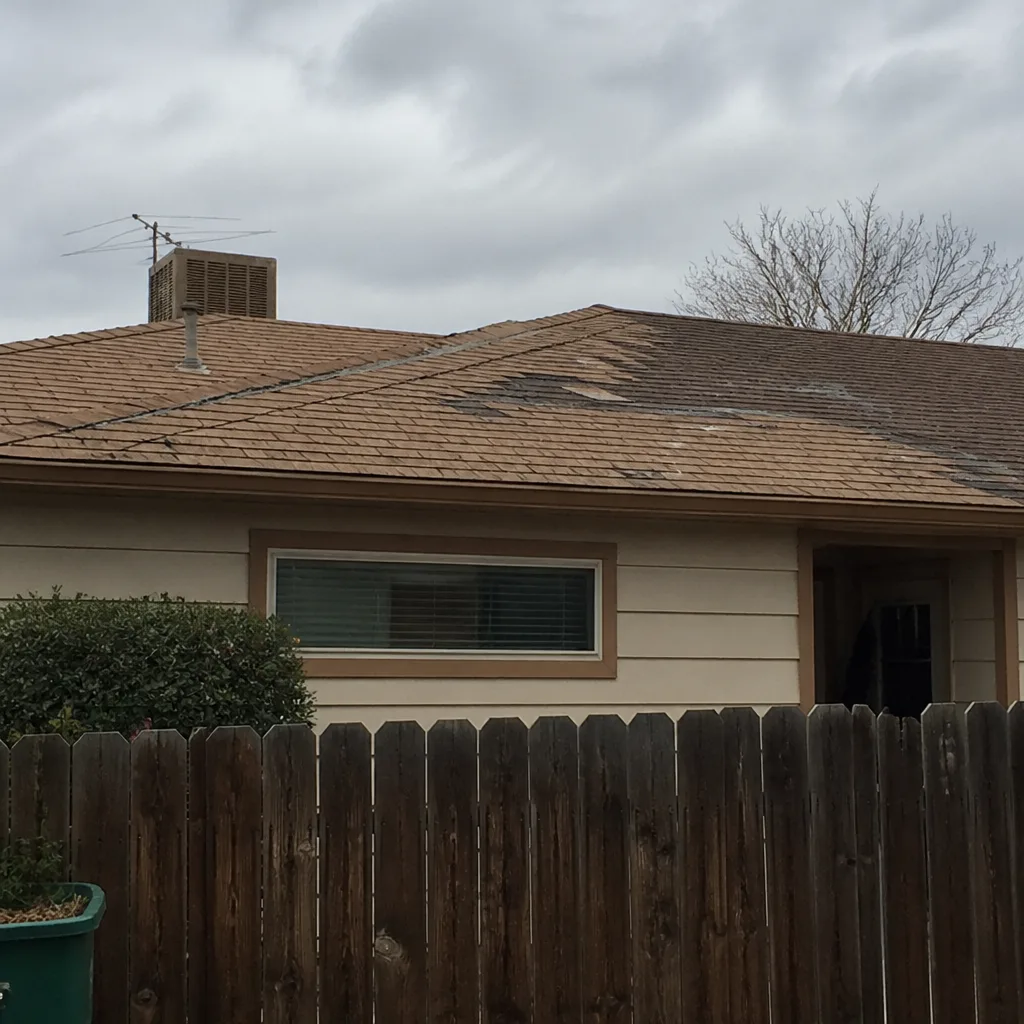 Before
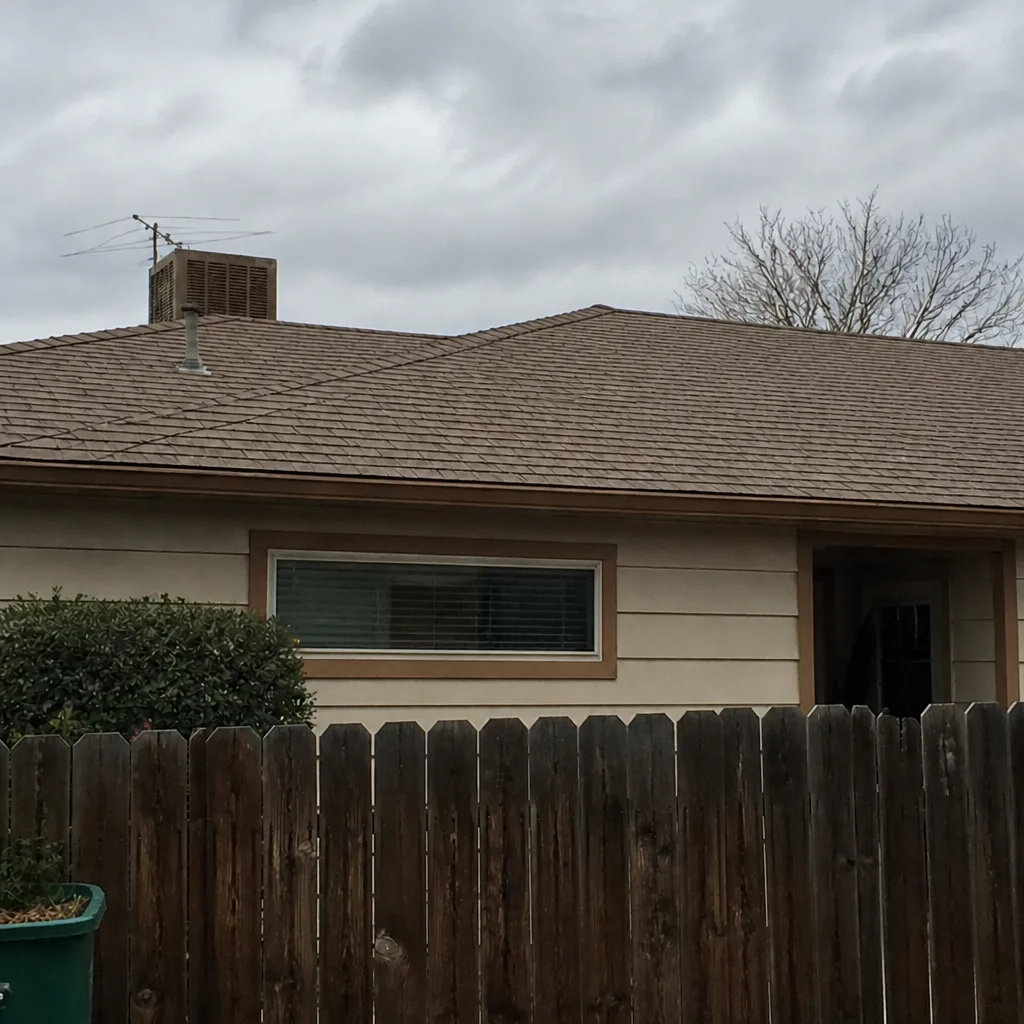 After
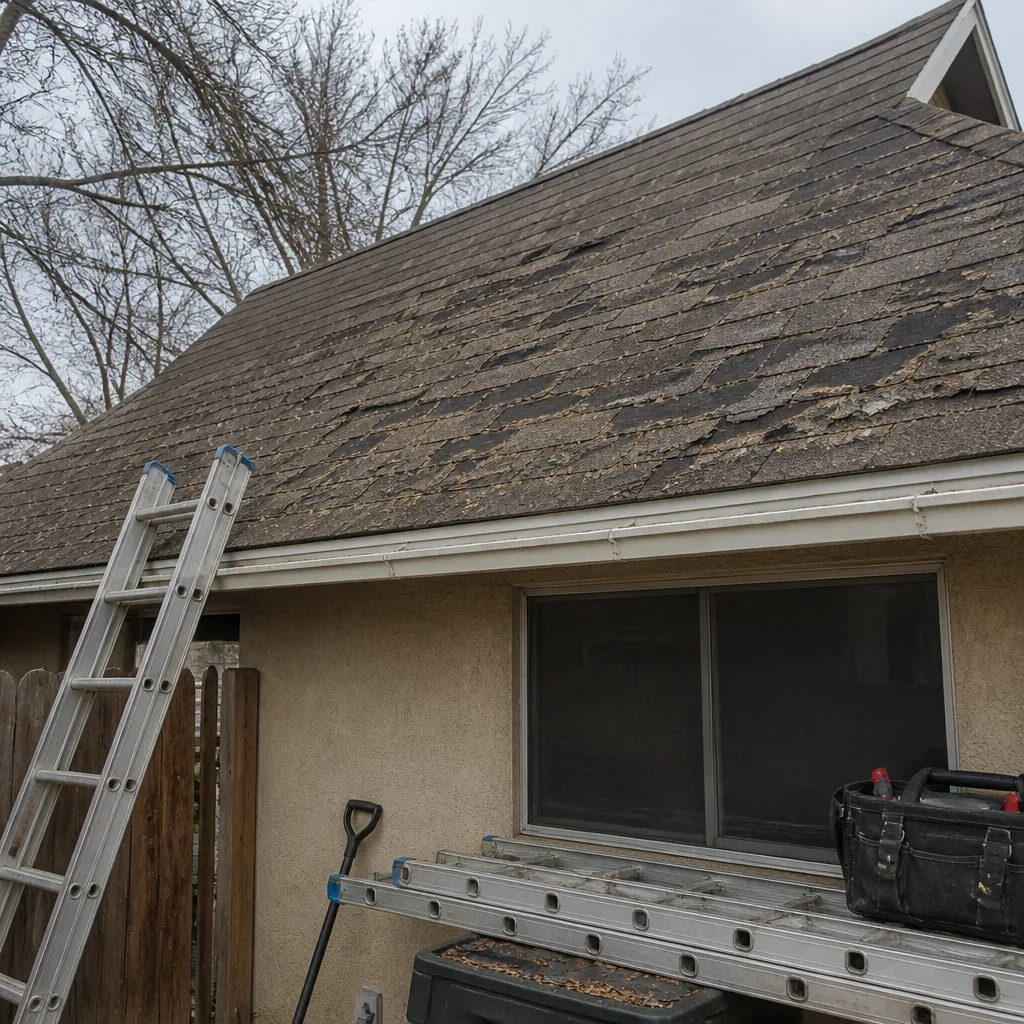 Before
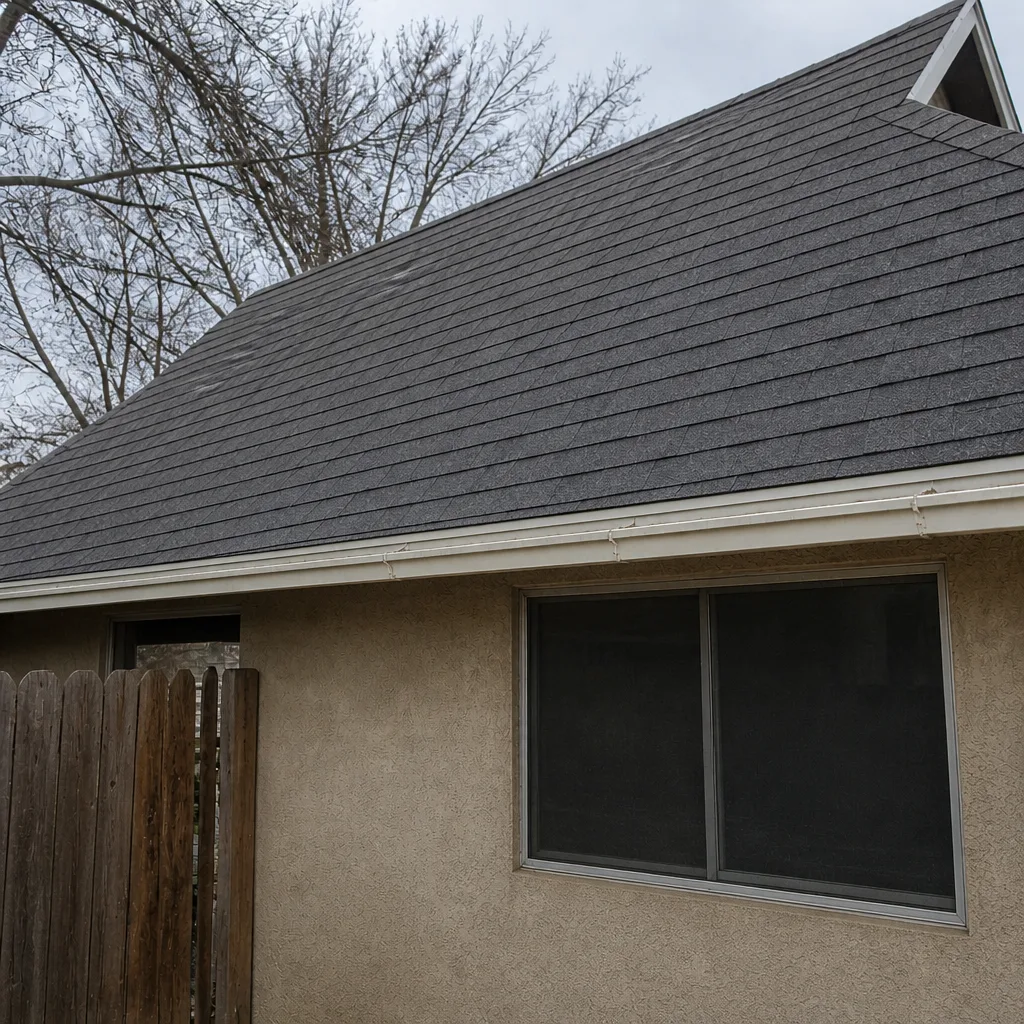 After
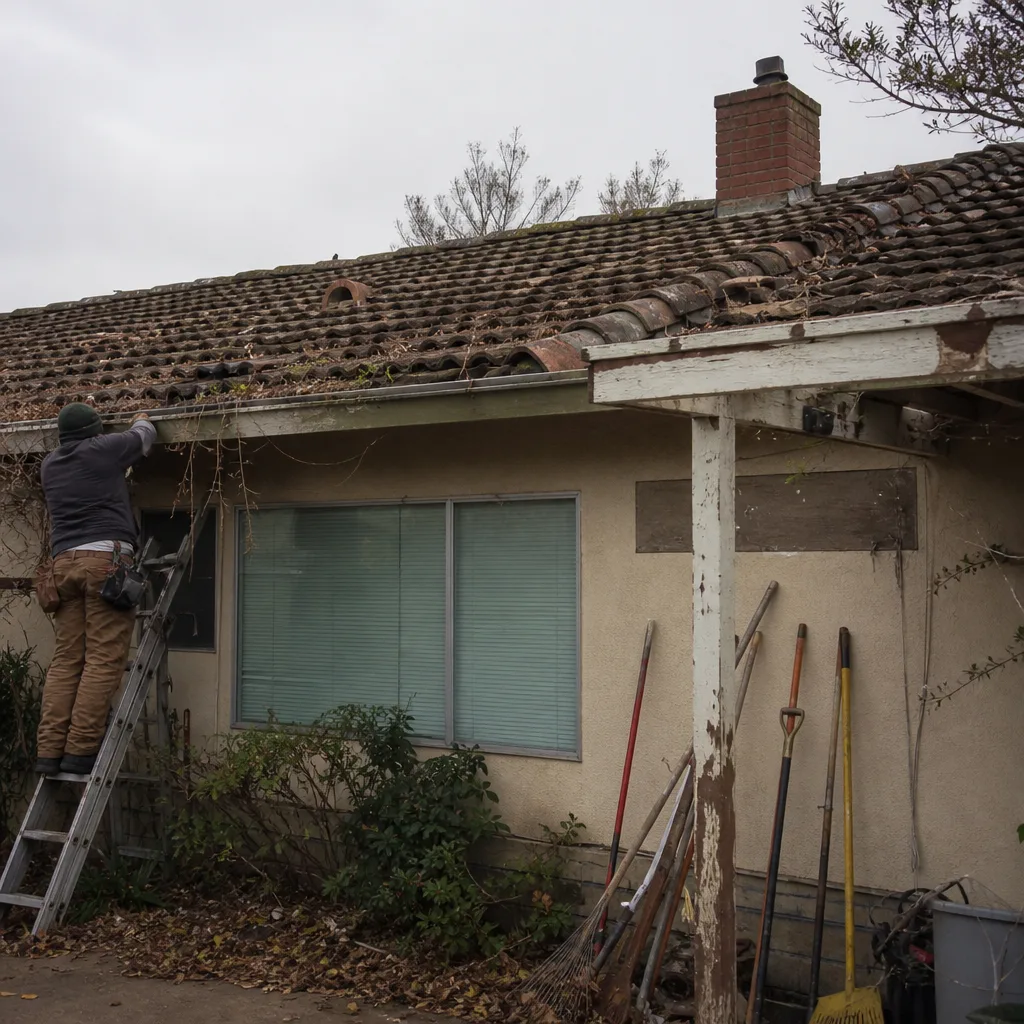 Before
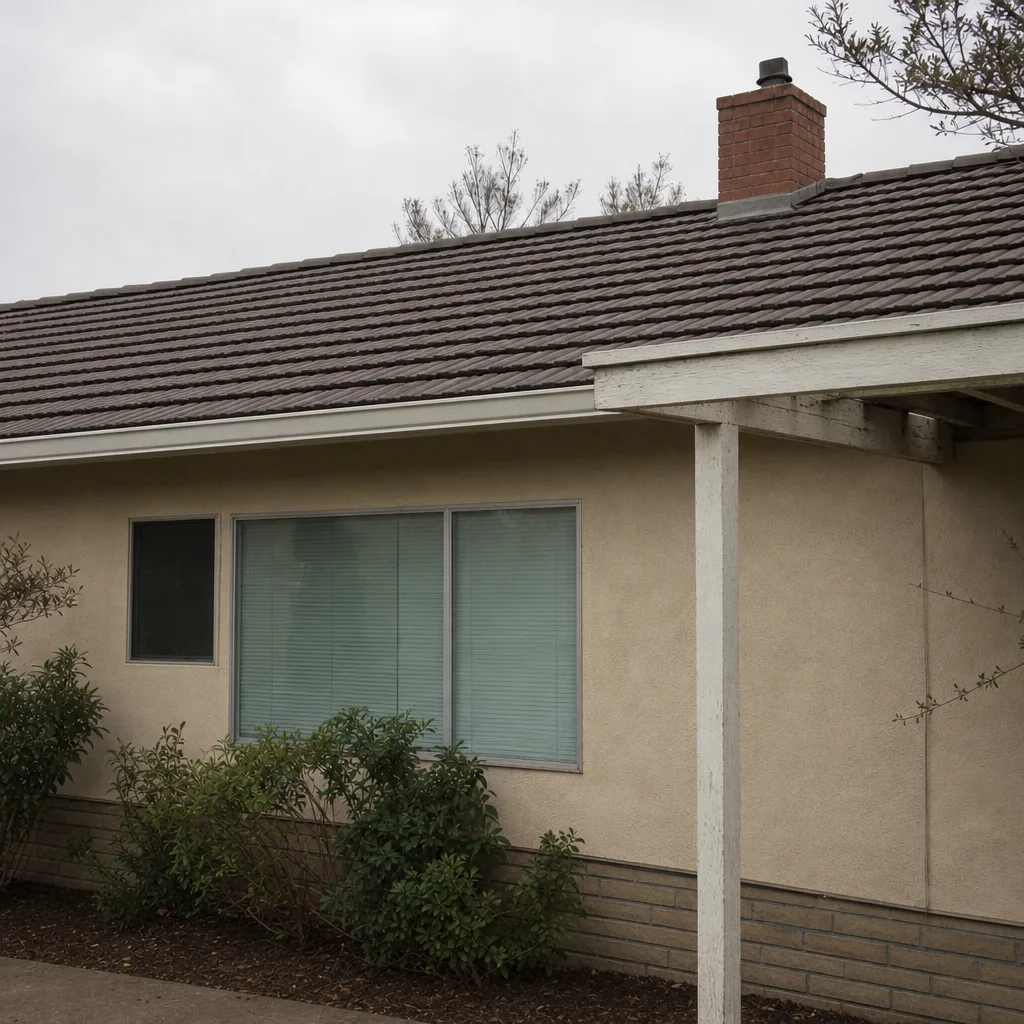 After
How to Find a Roof Leak in Paradise, NV: Start With the HVAC, Not the Rain
To find a roof leak in Paradise, NV, start by ruling out your HVAC condensate line, then walk the flat membrane in a grid and check every penetration flashing from newest to oldest. On a low-slope roof, the source is almost never directly above the ceiling stain – water travels sideways across the membrane, sometimes 10 to 15 feet, before it finds a way in. If you’ve had three contractors up there and nobody found it, the leak isn’t a mystery: it’s a diagnostic problem that needs a method. Call (833) 676-0557 for a live person and a free second opinion.
We get calls every summer from property managers who swear their roof is leaking – and it hasn’t rained in six weeks. Nine times out of ten, it’s a condensate line from a rooftop HVAC unit that overflowed onto a membrane seam that was already open. Finding that isn’t a roofing problem. It’s a diagnostic one.
Why a Paradise Roof Leak Is Rarely Where the Stain Is
Paradise is an unincorporated township whose building stock grew up around the Strip’s timeline – a fast 1960s through 1980s boom of tract homes near the Strip, low-rise apartment complexes, and flat commercial and motel buildings along Paradise Road and Flamingo. A lot of that inventory is low-slope or dead-flat. On those roofs, water does not run to the lowest visible point the way it does on a pitched shingle roof. It sits, it wicks, and it travels horizontally between the membrane and the insulation until it hits a penetration, a drain ring, or the edge of the deck.
That’s why the wet spot on your ceiling tells you almost nothing about where the failure is. A stain in the middle of a unit can track back to a seam fifteen feet away that only opens when the roof surface is hot enough to pull it apart. You need a systematic walk, not a guess.
The Five-Step Flat Roof Leak Diagnostic We Use in Paradise
This is the order that saves time and money. Rushing to the water test first is how contractors spend two hours wetting a roof that was never the problem.
- Rule out HVAC condensate overflow. In a place where it rains a handful of times a year, this is the single most common cause of a “leak” we get called out for. Look at the condensate line, the pan, and the path it drains.
- Check every rooftop penetration flashing, oldest install first. Vents, exhausts, conduit supports, rooftop equipment curbs – age them and start with the oldest.
- Probe the membrane blisters. A soft or wet blister means water is already trapped inside the system, and that detail changes how the repair gets scoped.
- Check drain bowl seals and scupper flashings after any monsoon event. These fail quietly and only show up when water backs up.
- Run a controlled water test on the suspect zone only – and only after steps one through four have narrowed it down. Wetting the whole roof tells you almost nothing.
If you’d rather put eyes on the exact problem, our Roof Repair crew walks this sequence on Paradise low-slope roofs. And if you want to compare our scope against someone else’s quote, a free second opinion covers the diagnostic walk, not just a competing bid on work somebody already scoped.
Why a Visual Inspection Alone Can Miss a Paradise Leak
Here’s the part that trips up even experienced eyes. In Paradise’s dry climate, seams fail from thermal cycling, not rain erosion. Surface temps on a dark flat roof can push past 150°F by mid-morning in summer, and the gap between a 40°F winter night and a triple-digit afternoon pulls adhesive and caulk apart over and over. A seam that opens at peak heat and lets water in can look perfectly sealed again by the time a roofer climbs up the next cool morning.
So a visual check at 8 a.m. can come back clean and the roof can still leak at 3 p.m. That’s why a wet blister probe, a penetration check, and a targeted water test matter more than a walk-around on these roofs. It’s also why we show deck photos before we talk money. You should see what we see.
What to Look for on a Pitched Roof in Eastern Paradise
Not every Paradise roof is flat. The tract homes east of the Strip have pitched shingle roofs, and those follow a different protocol. Start at the highest penetration and work down: chimney, then vent pipes, then ridge cap. In this dry heat, failed step flashing around penetrations is the most common source, because thermal cycling pulls caulk and mortar joints apart far faster than rain ever erodes them. If your stain sits near a chimney or a plumbing vent, that’s the first place to look.
Quick Cost Reference for Paradise Leak Diagnostics and Repair
These are the ranges we work in for Paradise properties. Every roof is different, so treat these as a starting point, not a bid.
| What you need | Typical range |
|---|---|
| Diagnostic walk and leak trace (flat or pitched) | No trip charge inside our own county |
| Seam or flashing repair on low-slope membrane | $250 – $650 |
| HVAC curb or condensate-related roof repair | $200 – $500 |
| Penetration re-flash on pitched shingle | $180 – $400 |
| Full tear-off for repeatedly patched 1960s-70s flat roof | Quoted after inspection |
Two things to keep in mind before anyone touches your roof: a roof is measured in squares, so ask any bidder how many they counted, and ask what shingle or membrane system they’re proposing by name. We set products from CertainTeed, Owens Corning, IKO, and Atlas, and naming the system keeps the bids comparable. Standing offers apply too – $40 off any repair over $200, and a 10% senior and veteran discount.
One more operator detail worth knowing: crews schedule tear-offs at dawn around here, because a dark flat roof is too hot to work on safely by mid-morning. If a bidder promises a midday tear-off in July, ask them how they plan to do it without cooking their crew. For broader repair questions, our Roof Repair in Paradise page covers scope and scheduling.
Key Takeaways
- On a Paradise flat roof, the leak source is almost never directly above the ceiling stain – water migrates 10 to 15 feet across the membrane first.
- Rule out HVAC condensate overflow before anything else; it’s the most common “leak” we chase in the dry season.
- Thermal-driven seam failures can close back up in cool morning temps, so a clean visual check doesn’t rule out a leak.
- Pitched roofs in eastern Paradise follow a different order: start at the highest penetration and work down.
- Deck photos come before the diagnosis conversation – you should see what the roofer sees.
FAQs
On a flat roof in Paradise, rule out HVAC condensate overflow first, then check penetration flashings from newest to oldest, probe any blisters, check drain and scupper seals, and only then run a controlled water test on the suspect zone. The horizontal migration on flat membranes is why a vertical drop from the ceiling stain fails so often. If you want a trained eye on it, call (833) 676-0557 – the second opinion is free.
A ceiling stain appearing during a dry stretch in Paradise is most often an HVAC condensate line overflowing onto an already-open membrane seam. Rooftop cooling units run hard for months here, and the condensate has to go somewhere. That’s a diagnostic call, not a roofing guess. Call (833) 676-0557 and we’ll walk the roof and find the source.
Yes – a roof leak that shows up only in the afternoon or only on hot days is usually a seam that opens as the roof surface heats past 115°F to 150°F and closes as it cools. That’s thermal movement, not rain. It’s why we check seams at temperature and rely on blisters and probes rather than a cool-morning visual pass. If your leak is intermittent, call (833) 676-0557 for an exact look.
A free second opinion is worth it when the first diagnosis doesn’t match where the water travels – which is common on Paradise low-slope roofs. Our second opinion covers the diagnostic walk, not just a competing bid on a repair somebody else scoped. If a 1970s flat roof has been patched repeatedly, you’ll want to know whether it’s a repair or a tear-off before you spend money on either. Call (833) 676-0557 – estimates are free and there’s no trip charge inside our own county.
If you’d rather have it looked at, Shepherd & Sons Roofing Paradise offers a no-pressure assessment on any Paradise roof – flat, pitched, or somewhere in between. We’ll show you the deck photos before we talk money, and a live person answers the phone around the clock. Call (833) 676-0557 for a free estimate.
Written by the team at Shepherd & Sons Roofing Paradise, serving Paradise, NV.