
 Metal roofing
 Architectural shingles
 Tile roofing
 GAF
 Owens Corning
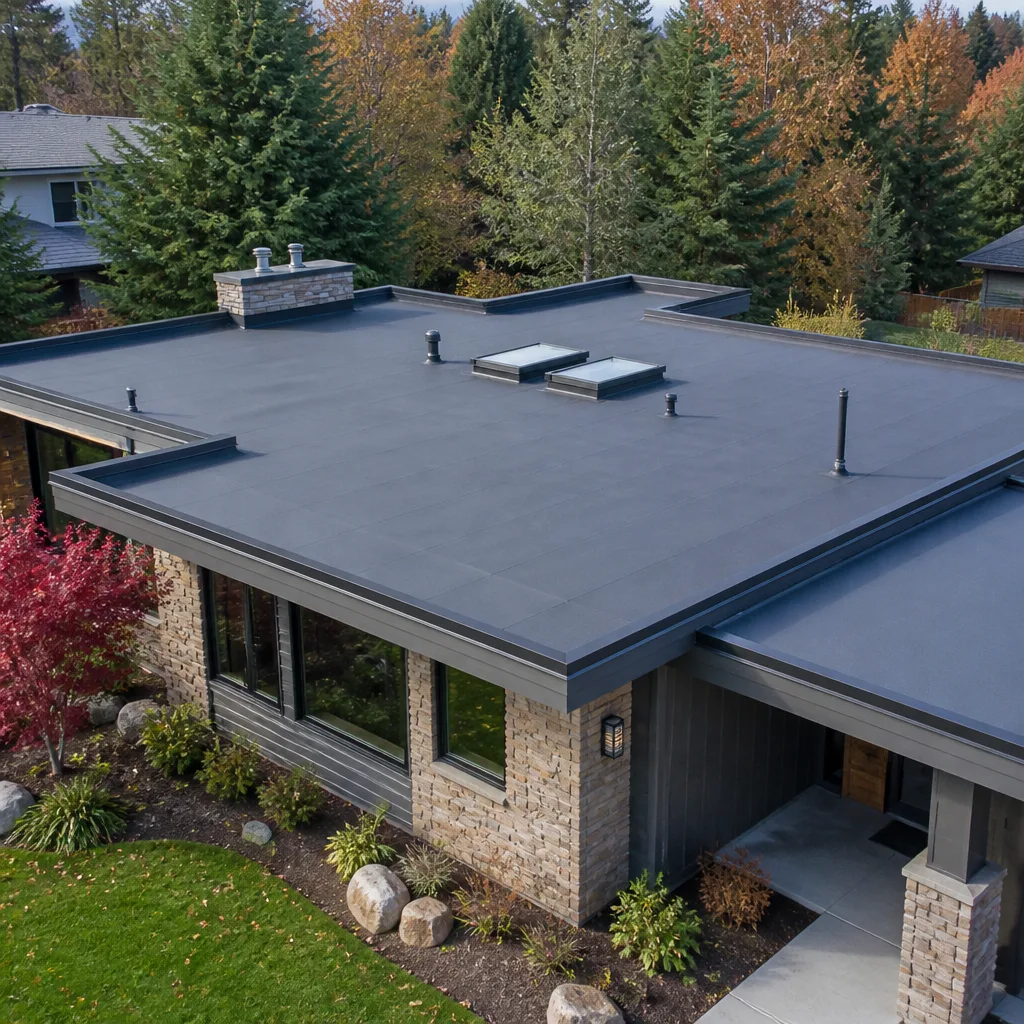 Flat & low-slope
Free roof inspection with deck photos before we talk money - GAF and Owens Corning certified installation
Styles & brands we work with
- Architectural shingles
- Metal roofing
- Tile roofing
- GAF
- Owens Corning
- Flat & low-slope
See the difference
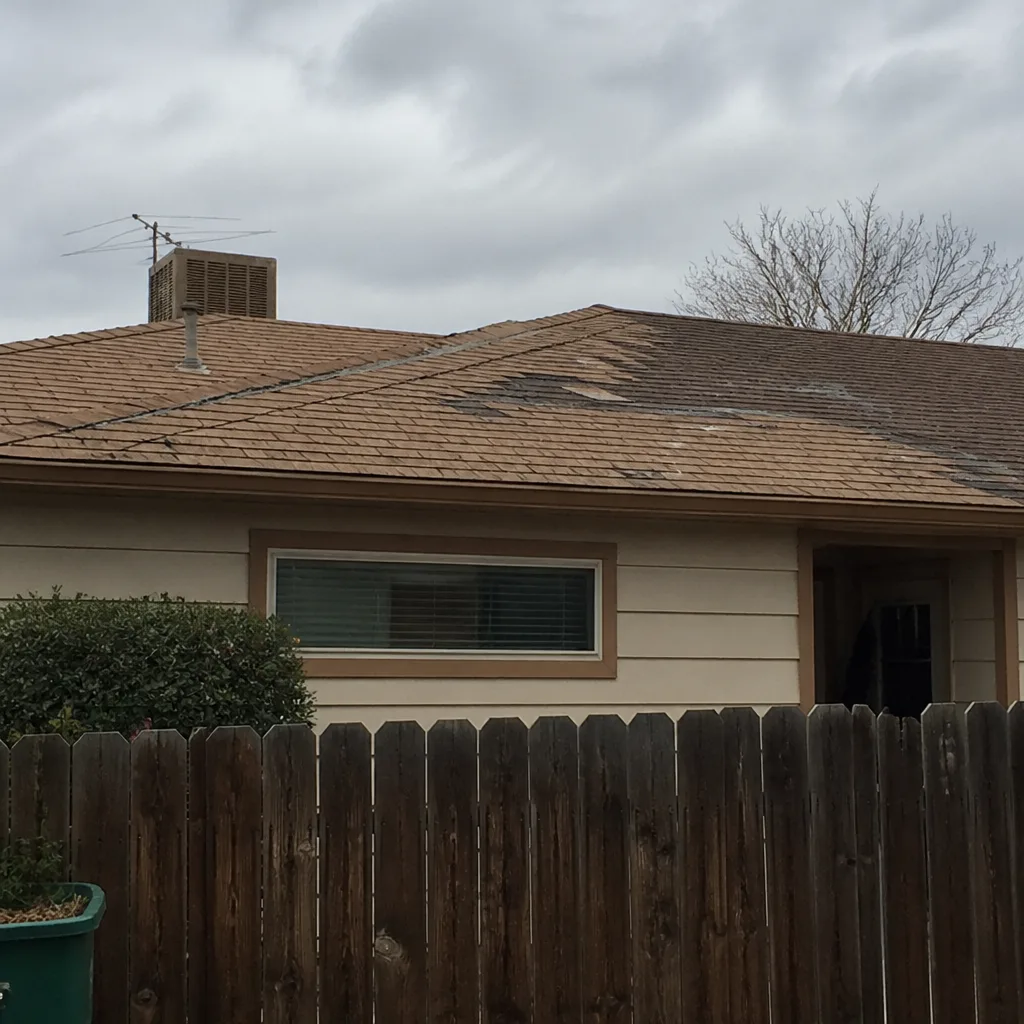 Before
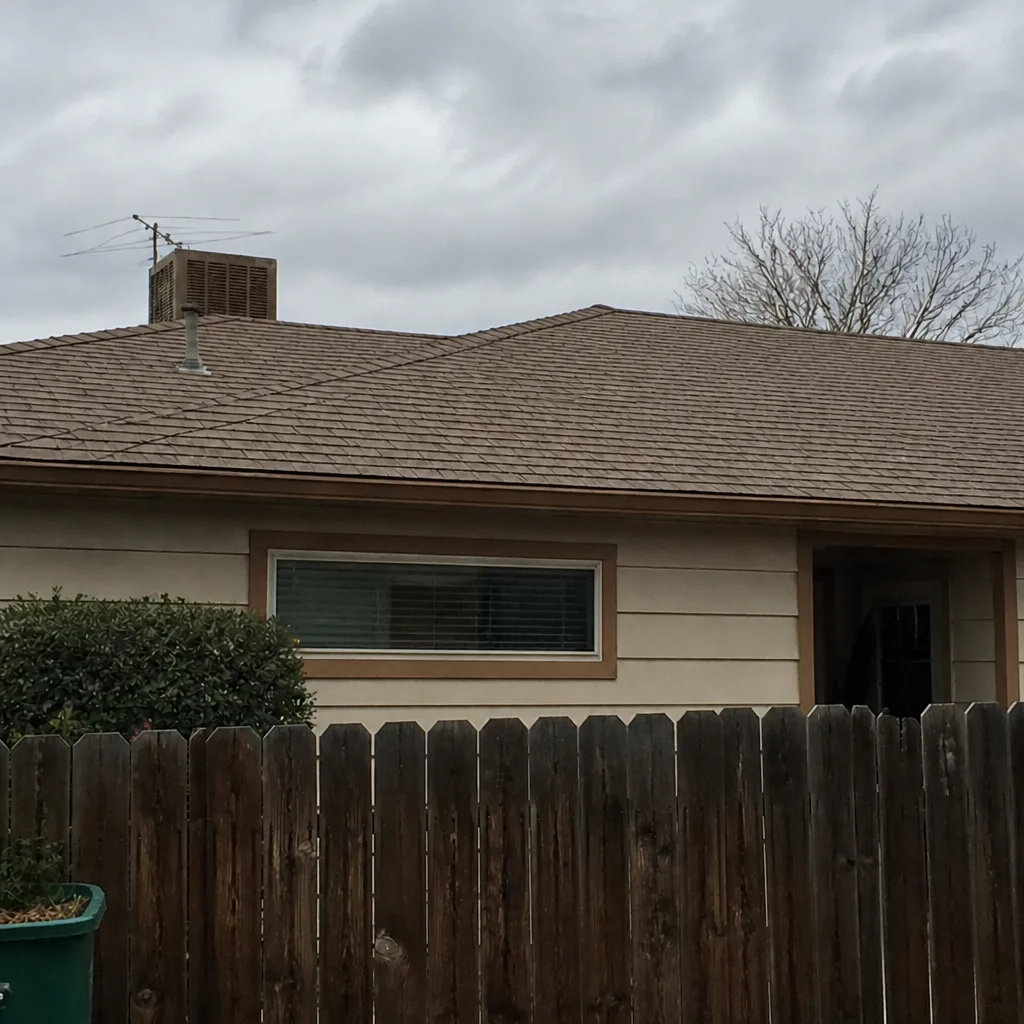 After
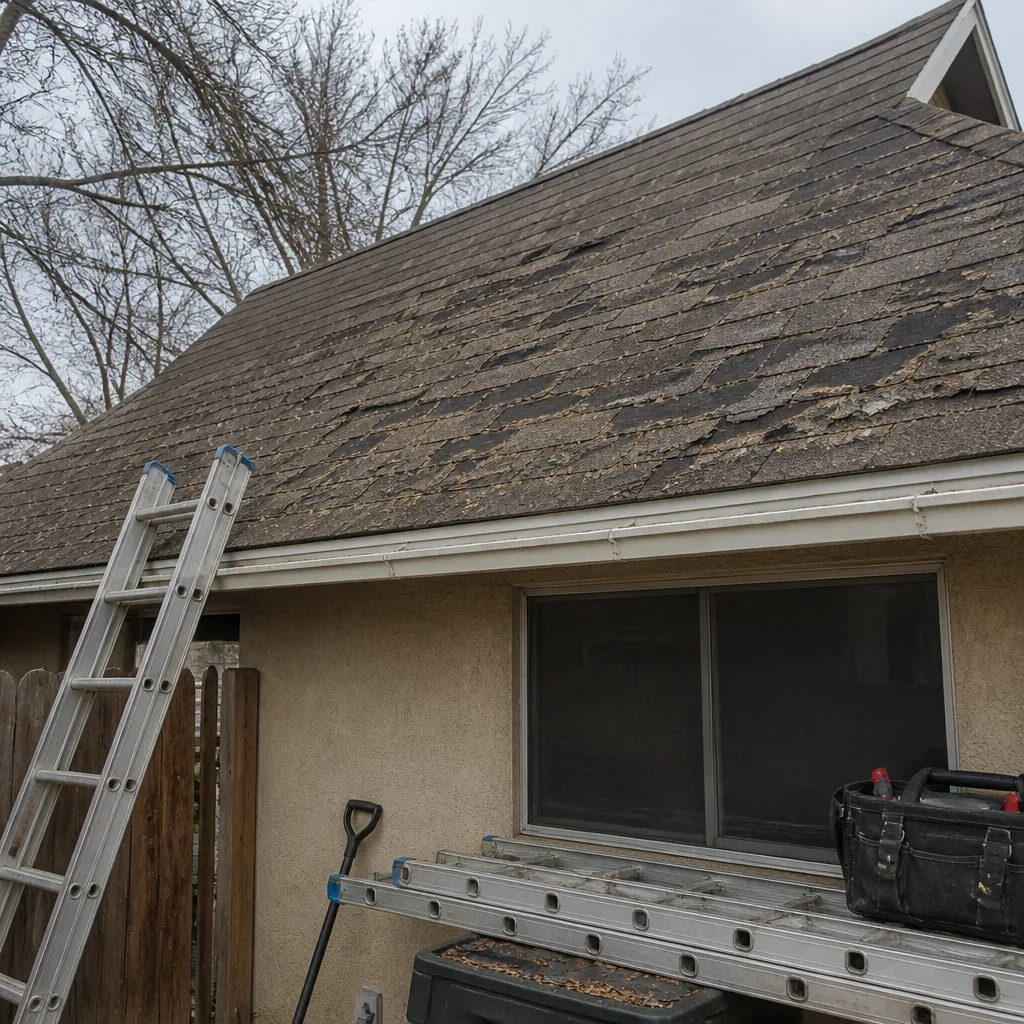 Before
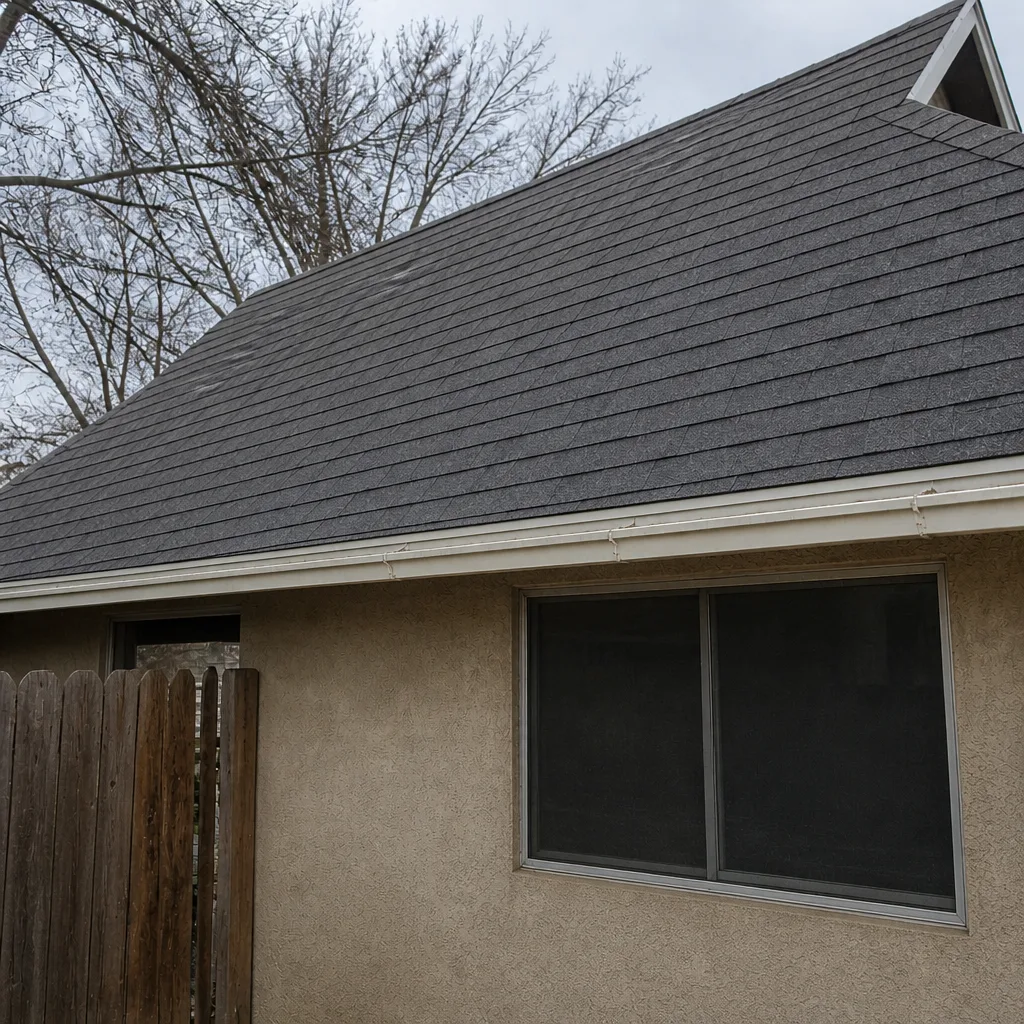 After
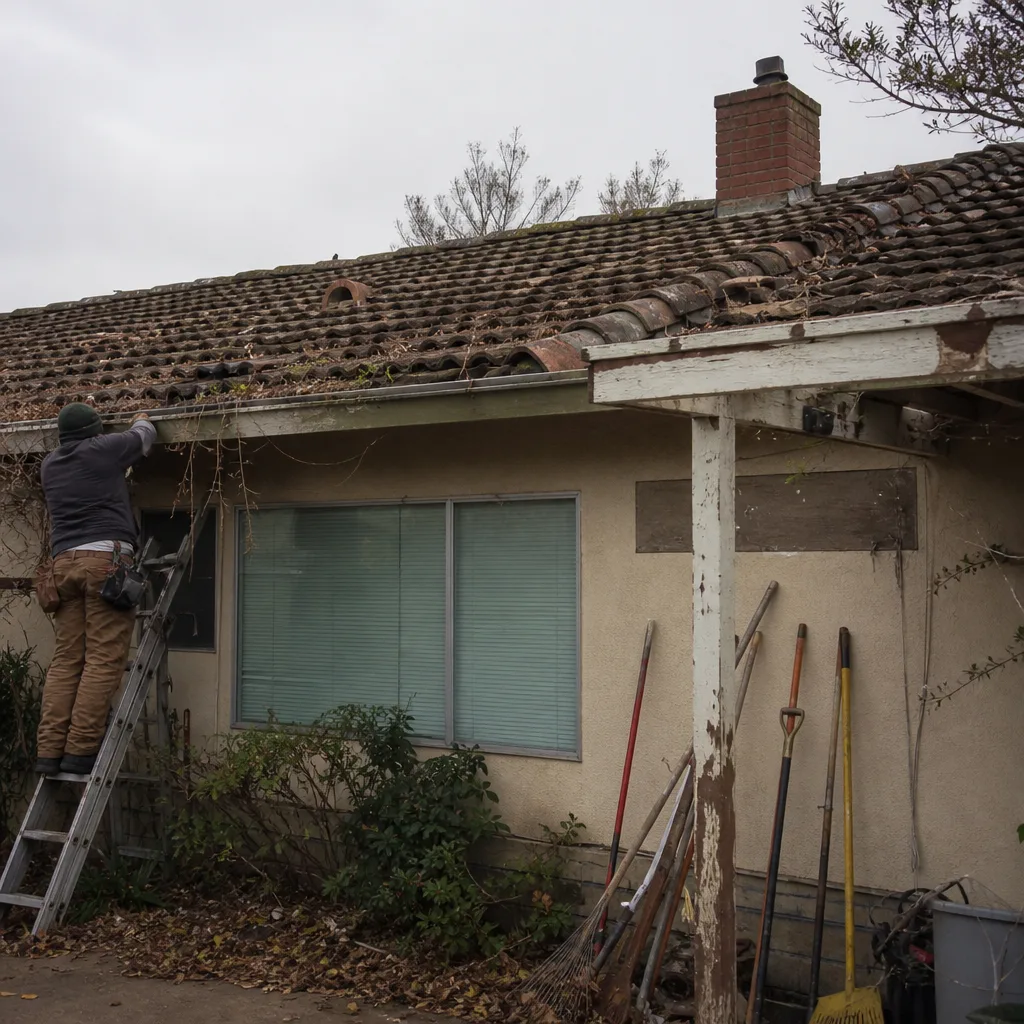 Before
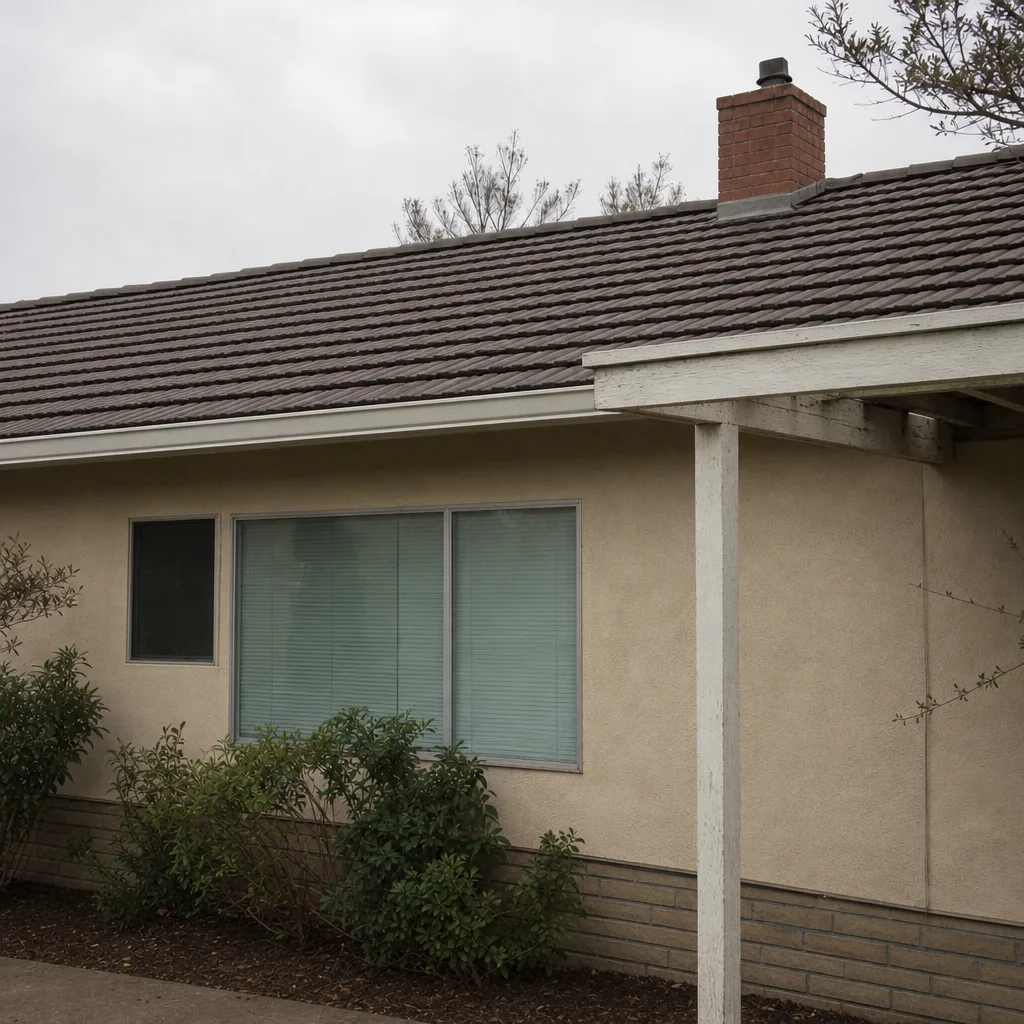 After
How to Clean Gutters in Paradise, NV: What to Actually Clear on a Flat Roof
The short answer most Paradise property owners need: on a flat or low-slope roof, “cleaning gutters” means clearing the roof drain bowl, the strainer, and any perimeter scupper openings of desert grit, windblown debris, and migrating gravel ballast, plus checking the internal downspout connection below the bowl. Standing water that can’t drain within 48 hours is a Clark County code and structural problem.
If your building is one of the thousands of flat-roofed apartments and casino-adjacent commercial structures near the Strip, you probably don’t have gutters in the usual sense at all. What you have is a roof drain that can back up and pond enough water to load a deck past its design limit. Most owners don’t touch it until after the damage shows up inside. Here’s what to clear, how often, and when to get someone on the roof. If water’s already backing up, call (833) 676-0557 and we’ll come take a look.
Why Paradise’s “Gutter” Problem Isn’t a Leaf Problem
Paradise went up fast during the 1960s-80s boom, and the building stock reflects it. You’ve got low-rise apartment complexes and mid-century motels along Paradise Road and Flamingo sitting on original flat and low-slope decks, and a residential market that skews flat far more than the pitched-tile neighborhoods elsewhere in the Valley. Those flat roofs drain through interior drains (cast-iron or PVC bowls set into the deck) and perimeter scuppers, not a run of gutter and downspout along the eave.
So the debris that clogs them is nothing like what a generic gutter guide describes. We’re not talking about oak leaves in October. In Paradise it’s:
- Windblown desert grit that silts up the strainer and settles in the bowl
- Cottonwood fluff drifting off neighboring properties, which mats into a felt-like layer over the strainer
- Gravel ballast that migrates across the deck over years and ends up in the drain
- Failing membrane and adhesive debris from UV-baked seams shedding into the bowl
That last one matters more than people think. Extreme summer heat and intense UV bake flat and asphalt roofs here, accelerating membrane cracking and adhesive failure, so the roof itself is shedding material into the drains you’re trying to keep open.
How Often Should You Clear Roof Drains in Paradise?
Twice a year is the right rhythm for a desert flat roof, and it’s a different calendar than the spring-and-fall leaf schedule most gutter guides assume. Clear once before the July-September monsoon window so a sudden downpour finds an open drain, and once after the winter wind season when grit and ballast have had months to migrate. Miss the pre-monsoon pass and a single afternoon storm can pond a deck that was fine all spring.
This isn’t just housekeeping. Ponded water accelerates membrane degradation and can exceed the roof’s design load. Clark County building standards expect a flat roof to drain within 48 hours. Standing water past that is a drainage failure you want fixed before it turns into a structural one.
What Should You Actually Look For When You Get Up There?
Ask these in order and you’ll catch the real problem instead of just scooting debris around. Work safe – a flat roof is still a fall hazard, and dark decking can run past 150°F by mid-morning in summer, which is why our crews schedule tear-offs at dawn. If you’re not comfortable up there, that’s a good reason to have it checked.
- The strainer. Is it seated and clear, or matted over with fluff and grit? A missing or loose strainer lets debris straight into the bowl.
- The drain bowl itself. Scoop out the silt and gravel that settle to the bottom. This is where most of the blockage lives.
- Perimeter scuppers. Clear every scupper opening on the parapet so water has more than one way off the deck.
- Low spots and ponding rings. Look for the telltale dirt rings and stains where water stands after a rain. Those show you where the deck has settled.
- Seam and flashing condition. Cracked, blistered, or lifted seams near the drain are how an interior leak starts.
One thing above is easy to miss and worth a professional check: the internal downspout connection below the bowl. A clogged internal downspout five feet under the drain is invisible from the roof, and it’s the most common cause of what looks like a failed drain cleaning – you cleared the bowl, the water still backs up, and nobody knows why. That’s the difference between a surface scoop and an actual inspection. When we’re on a flat roof for any service call, we check the strainer, the bowl, and that internal connection as a matter of course. It’s the kind of thing that turns a five-minute fix into a full drain rebuild if you wait.
When to Clear It Yourself and When to Call
If you can safely reach a strained drain bowl and you see obvious debris on top, clearing the strainer and skimming the bowl is reasonable maintenance. What isn’t a good DIY project: pulling up a drain assembly to reach a blockage below the deck, patching membrane around a drain, or diagnosing why water ponds in one spot no matter how clean the bowl is. Those call for someone who knows what the deck looks like underneath.
This is where Shepherd & Sons Roofing Paradise comes in. Every roofing job is backed by the written 90-Day Done Right Promise – if it’s not done right, we make it right, and one call brings us back. Our technicians have up to 30 years of experience with flat and low-slope systems, and we install membrane and accessory products from names like GAF, CertainTeed, and Owens Corning, so we know what’s actually on your deck. For the full picture of what we handle, see our Gutters & Accessories page.
What Does Drain and Gutter Service Cost in Paradise?
Here’s a straight look at typical line items. Exact pricing depends on roof access, deck size, and how much debris and ballast has built up, but these ranges hold for Paradise work.
| Service | Typical Range |
|---|---|
| Roof drain bowl + strainer clearing (per drain) | $75-$175 |
| Perimeter scupper clearing (per opening) | $40-$90 |
| Internal downspout clearing / rodding | $150-$350 |
| Drain rebuild (bowl, strainer, connection) | $400-$950 |
| Full flat-roof drain inspection (with other service) | No trip charge inside Clark County |
Two standing offers worth knowing: $40 off any repair over $200, and a free second opinion on any written estimate. We also waive the trip charge inside our own county, which means there’s no reason to skip a drain inspection when we’re already out for another roofing service. A roof is measured in squares – ask any bidder how many they counted, and ask whether the drain inspection is included or an upcharge.
If you want the leak-prone parts handled or a proper flat-roof assessment, our related guide to Gutters & Accessories in Paradise walks through the accessory options that hold up to this climate.
FAQs
Twice a year: once before the July-September monsoon and once after the winter wind season. That timing beats the spring-and-fall leaf schedule most guides suggest, because the debris here is desert grit, cottonwood fluff, and gravel ballast rather than leaves. Call (833) 676-0557 if you’re not sure when yours was last done.
Usually because the internal downspout connection below the drain bowl is clogged, which you can’t see from the roof. Clearing the bowl won’t help if the pipe underneath is plugged. Clark County standards expect flat roofs to drain within 48 hours, so standing water past that needs a real inspection – call us for a free estimate and we’ll trace it.
Not for a simple surface clearing, but you do for anything involving the drain assembly, internal piping, or membrane around the drain. Pulling a drain or patching a deck without the right training risks the leak you were trying to prevent. Our technicians have up to 30 years of flat-roof experience – call (833) 676-0557 to have it done right.
A properly seated drain strainer and clean perimeter scuppers do most of the work, so keep them intact and clear. If your drains clog every season, upgrading the strainer or rebuilding the bowl is usually cheaper than repeated cleanings. We’ll give you a free second opinion on any estimate – call (833) 676-0557.
If you’d rather have it looked at than climb up there yourself, Shepherd & Sons Roofing Paradise offers a no-pressure assessment in Paradise – call (833) 676-0557. Same shop, same name on the license, and a live person answers day or night. We’ll be there.
Written by the team at Shepherd & Sons Roofing Paradise, serving Paradise, NV.