
Roof Repair: Repair or Replace? How Paradise Homeowners Decide
If a roofer recommends full replacement before he’s been on your roof and looked at the decking, the recommendation is based on nothing. Here’s the actual decision framework we use, and why we talk homeowners out of replacements a few times a month. Repair wins when damage is isolated and the roof has years left. Replacement wins when repair costs climb past roughly 30% of replacement and the deck is compromised. The math isn’t complicated, but you have to see the deck to do it.
If you’d rather have someone pull the deck photos and walk you through the numbers than climb up there yourself, call (833) 676-0557.
What’s the 30% rule, and when does it not apply?
The industry benchmark is straightforward: when the repair bill crosses about 30% of what a full replacement would cost, replacement usually pencils out better over time. Spend $1,800 patching a roof that would cost $6,000 to replace and you’ve eaten 30% of the future bill for a fix that might last three years. At that point you’re renting life from your roof instead of buying it.
But that threshold isn’t fixed. It moves with the roof’s remaining age. On a 20-year-old roof with five years of service left, a $1,500 repair is 25% of replacement cost and it means patching a roof that’s already near the end. On a 10-year-old roof, that same $1,500 buys you a decade of service and the math flips. The 30% rule is a starting line, not a finish line.
Here’s how we think about it in Paradise:
- Roof 15+ years old, repair over 30% of replacement: replace. You’re throwing good money at a roof that’s telling you it’s done.
- Roof under 10 years old, repair under 30%: repair, unless the deck is bad.
- Roof 10 to 15 years old: this is where the deck condition and the actual scope of damage decide it. No shortcut here.
- Any age, storm damage only on one slope: often repairable even at a higher percentage, because the rest of the roof is sound.
Ask any bidder how many squares they counted and what the repair percentage comes out to. A roofer doing real math will answer without flinching.
How do you estimate remaining life on a Paradise roof?
You need three things: installation date, shingle type, and what the sun and wind here have actually done to it. Paradise gets brutal UV for eight or nine months a year, and that’s what ages a shingle faster than rain ever does. An asphalt shingle rated for 25 years on paper may see 18 to 20 in full southern exposure here.
Start with the install date. If you don’t know it, look at the permit history at the county or the date on the decking underlayment. Then match the shingle.
- 3-tab asphalt: typically 20 years rated, expect closer to 15 to 18 in full Paradise sun.
- Architectural asphalt (IKO, Atlas, Tamko and similar): 25 to 30 years rated, expect 20 to 25 with heat and UV.
- Metal or tile (Boral and similar): 40 to 50+ years, and the finish matters more than the panel.
Then subtract for what you see: granule loss in the gutters, curling on south-facing slopes, exposed matting. If you’re calling it on remaining life alone, be honest about the difference between the rated number and the Paradise number. That gap is where a lot of premature replacements get sold.
Why the decking decides more than the shingles do
The shingles are what everybody looks at. The decking is what actually matters. On any job over about 15 years, our first question is always about the deck, not the shingles, because a roof that looks rough on top can be perfectly sound underneath, and a roof that looks okay on top can be sitting on wood that’s soft from years of trapped moisture.
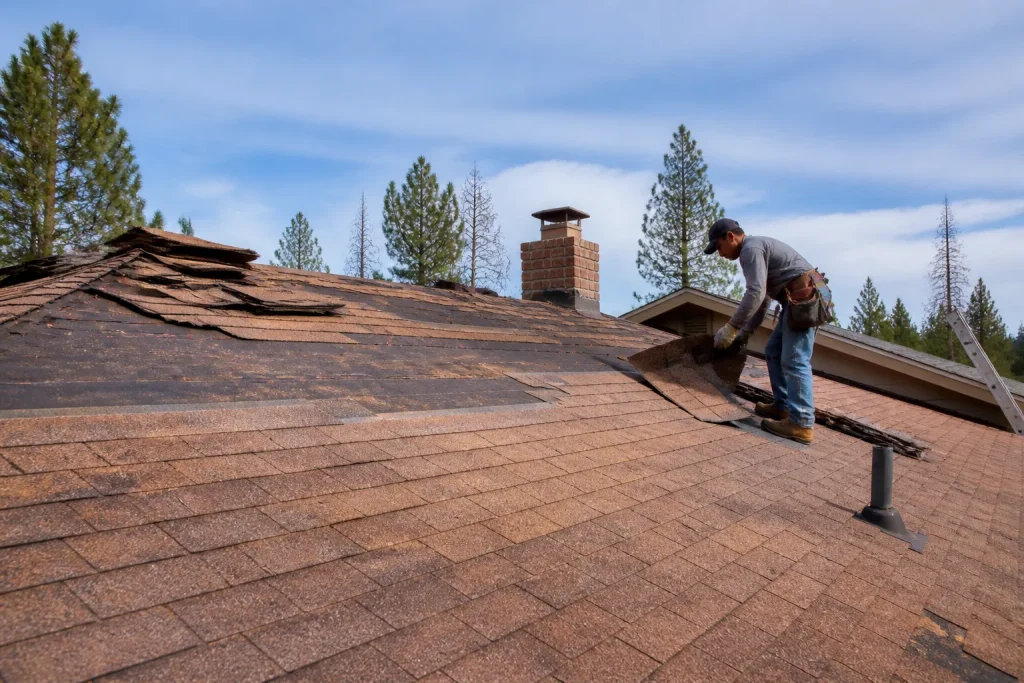
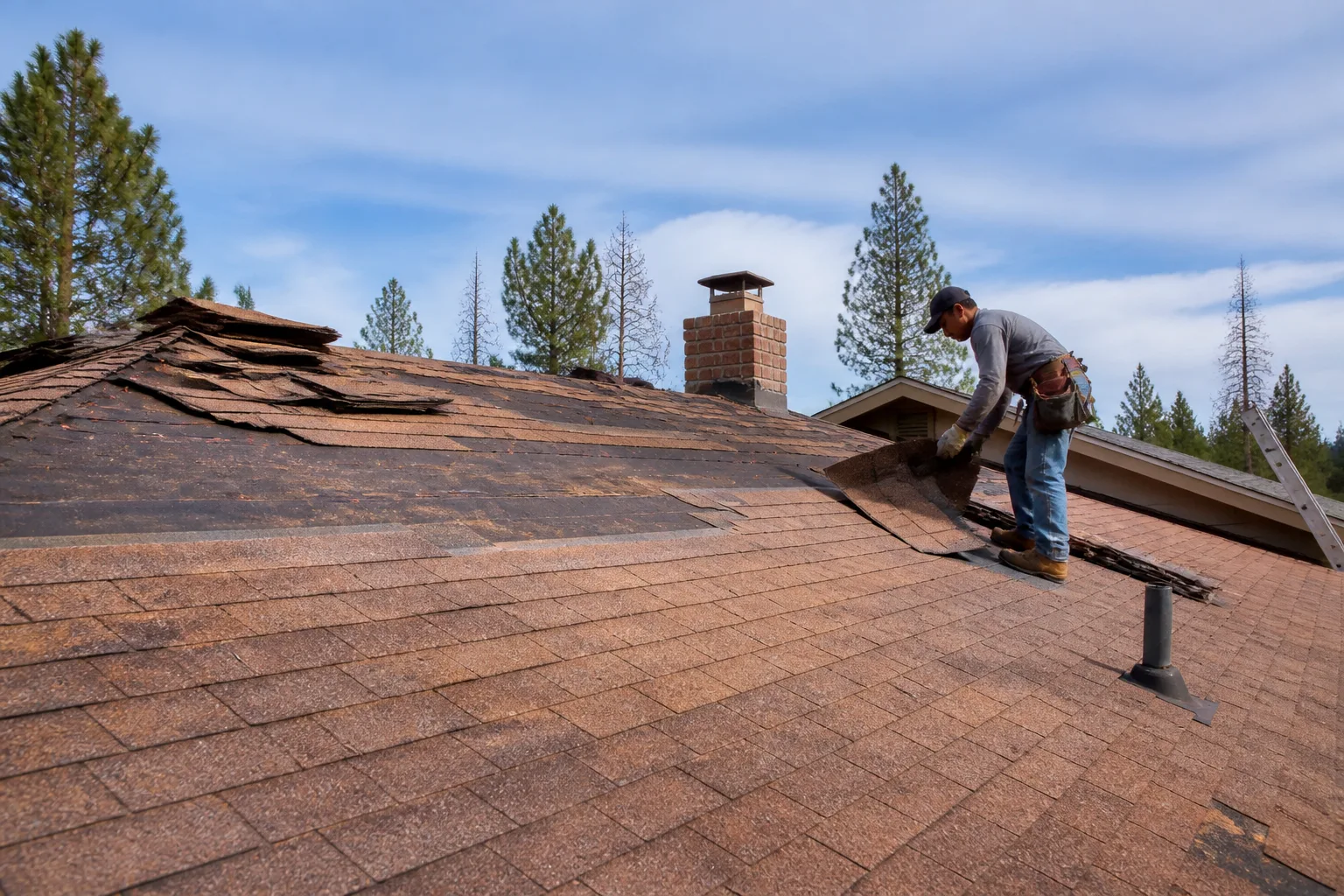
Deck problems we see in Paradise homes: rotted sheathing around penetrations and chimneys, sagging between rafters from old water damage, and delamination where the original builder used thinner panel. None of that shows in a photograph from the driveway. A painter’s ladder and one look under a lifted shingle tells you more than a drone does.
This is why a rough-looking roof can be a repair and a clean-looking one can be a replacement. If the deck needs 40% of its sheathing replaced, a repair on top of it is wasted money. If the deck is solid, a repair on a rough roof adds real years. You have to look. Any bid that skips that step is a guess dressed up as an estimate.
We pulled one apart over in the Paradise Hills area not long ago where the surface looked fine but three valleys were soft enough to push a screwdriver into. The owner had been quoted a repair by one outfit that never went up. That’s the difference between a roofer and a salesman. If yours won’t show you the deck photos before talking money, find one who will.
Insurance logic vs. homeowner logic
An adjuster and a homeowner can look at the same report and reach opposite conclusions, and both are being rational. The insurance company is pricing risk across thousands of homes. You’re pricing one decision on one roof you have to live under.
Insurance adjusters often lean toward repair when the damage is contained to a slope or two, because their job is to restore the covered loss, not to improve the roof. That’s their math. Your math is different. If the roof is 18 years old and the adjuster approves a slope repair, patching it may satisfy the claim but leave you with a mismatched, aging roof that fails again in three years. You may be entitled to a better outcome than the first offer states.
- Adjuster’s lens: what did the storm damage, and what’s the cheapest covered fix?
- Homeowner’s lens: what leaves me with a sound roof, and what’s this really going to cost me over ten years?
Those two questions don’t always have the same answer. A free second opinion on any written estimate exists precisely for that gap, whether the estimate is from an insurer’s preferred contractor or anyone else.
When to call a pro instead of guessing
Some of this you can figure out yourself. Walking the yard after a storm to spot missing shingles, checking the ceiling of an upstairs room for water stains, and pulling your permit history to confirm the roof’s age are all reasonable. But the moment it involves climbing on a wet roof, lifting shingles, or judging deck condition, that’s a trained eye’s job. Roof pitch and height are unforgiving, and Paradise roofs get slick fast in the heat and dust.
If you’d rather the decision be made by someone who’ll show you the deck photos and explain the percentage, call (833) 676-0557 and we’ll come out. We’ll tell you straight when a repair will do the job. We do it more often than you’d think.
Related services in Paradise: If repair is the answer, our Roof Repair in Paradise page covers what a straight repair job looks like. If replacement is the call, see Roof Replacement & Installation in Paradise, and for a longer-horizon option, Metal Roofing in Paradise.
The Bottom Line
The repair-or-replace decision comes down to four facts: the repair cost as a percentage of replacement, the roof’s remaining life, the condition of the decking, and what you can live with for the next decade. When repair comes in under 30% of replacement and the deck is solid, repair usually wins. When it climbs past that and the wood underneath is soft, replacement is the honest answer. Everything else is salesmanship.
We’re not going to tell you to replace a roof that has years left, and we’re not going to patch a roof that’s already gone. Same address since 1996, name on the license, and a written 90-Day Done Right Promise on every job, so if something’s not right, one call brings us back. If you’re in Paradise and need help deciding, Shepherd & Sons Roofing Paradise offers free estimates and a free second opinion on any written estimate. Call (833) 676-0557.
For the full picture of what we do, visit the Shepherd & Sons Roofing Paradise home.
Frequently Asked Questions
As a general guide, repair on isolated damage tends to run a fraction of what a full replacement costs, and the decision hinges on the percentage. When a repair quote lands under about 30% of the replacement figure and the deck is sound, repair is usually the smarter spend. For an exact number on your roof, call (833) 676-0557. Estimates are free.
No. A recommendation to replace made from the driveway or from photos alone isn’t based on the thing that matters most, which is the decking underneath. A reliable roofer climbs up, checks the condition of the sheathing, and shows you what he found before quoting a number. If you’re handed a replacement bid with no deck inspection, get a second opinion.
It depends on the age of the rest of the roof. A slope repair can last years if the untouched slopes still have life left, but if the whole roof is near the end of its service window, a patch may be re-renting time you don’t have much of. That’s why we look at remaining life, not just the damaged slope, before recommending a repair.
Because appearance is the shingle, and the shingle isn’t the structure. Granule loss and curling look alarming but can be cosmetic or limited to sun-facing slopes, while the deck and flashing underneath stay dry and solid. A thorough inspection tells you whether the problem is skin-deep or structural. That’s the question a repair-or-replace decision actually turns on.
Written by the team at Shepherd & Sons Roofing Paradise.
Need Roofing Help?
Call Shepherd & Sons Roofing Paradise - licensed & insured, here with fast after-hours help in Paradise.
(833) 676-0557