
5 Mistakes to Avoid With Tile Roofing
Walking a tile roof after a storm is standard practice. Doing it without plywood walk boards placed just right will crack about three tiles for every one you came up to fix, and most homeowners never see it happen. Six to eighteen months later, water shows up in the ceiling and nobody connects it to the inspection that “went fine.” In Paradise, where the sun bakes tile at 115°F and the monsoons dump an inch of rain in under an hour, tile roofs punish sloppy work quietly. These are the five mistakes we see most.
Mistake #1: Letting Someone Walk Your Roof Without Boards
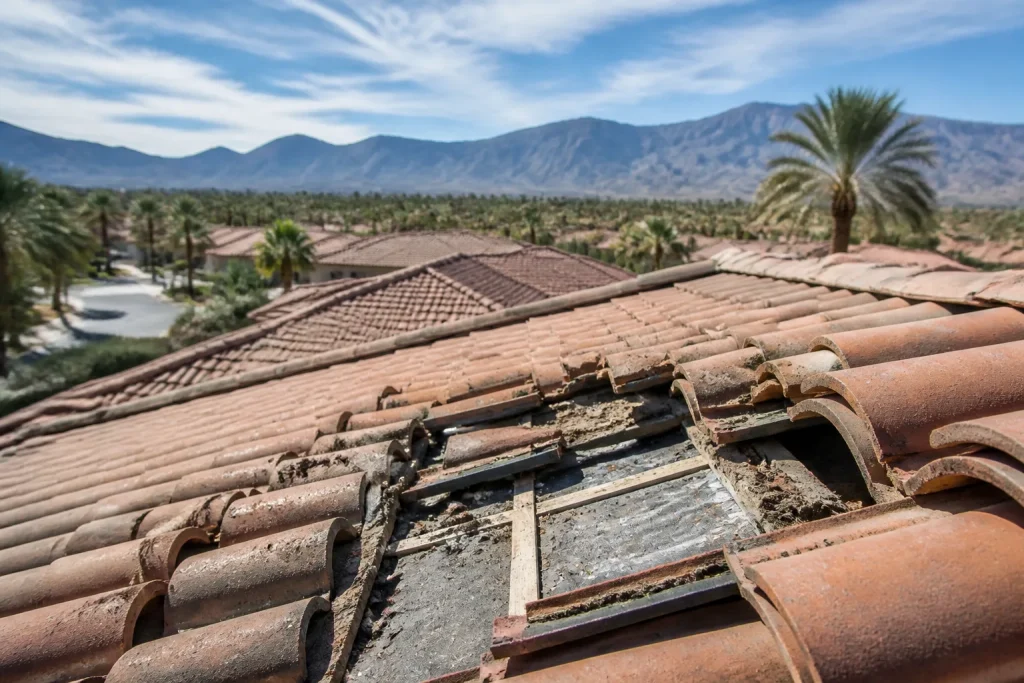
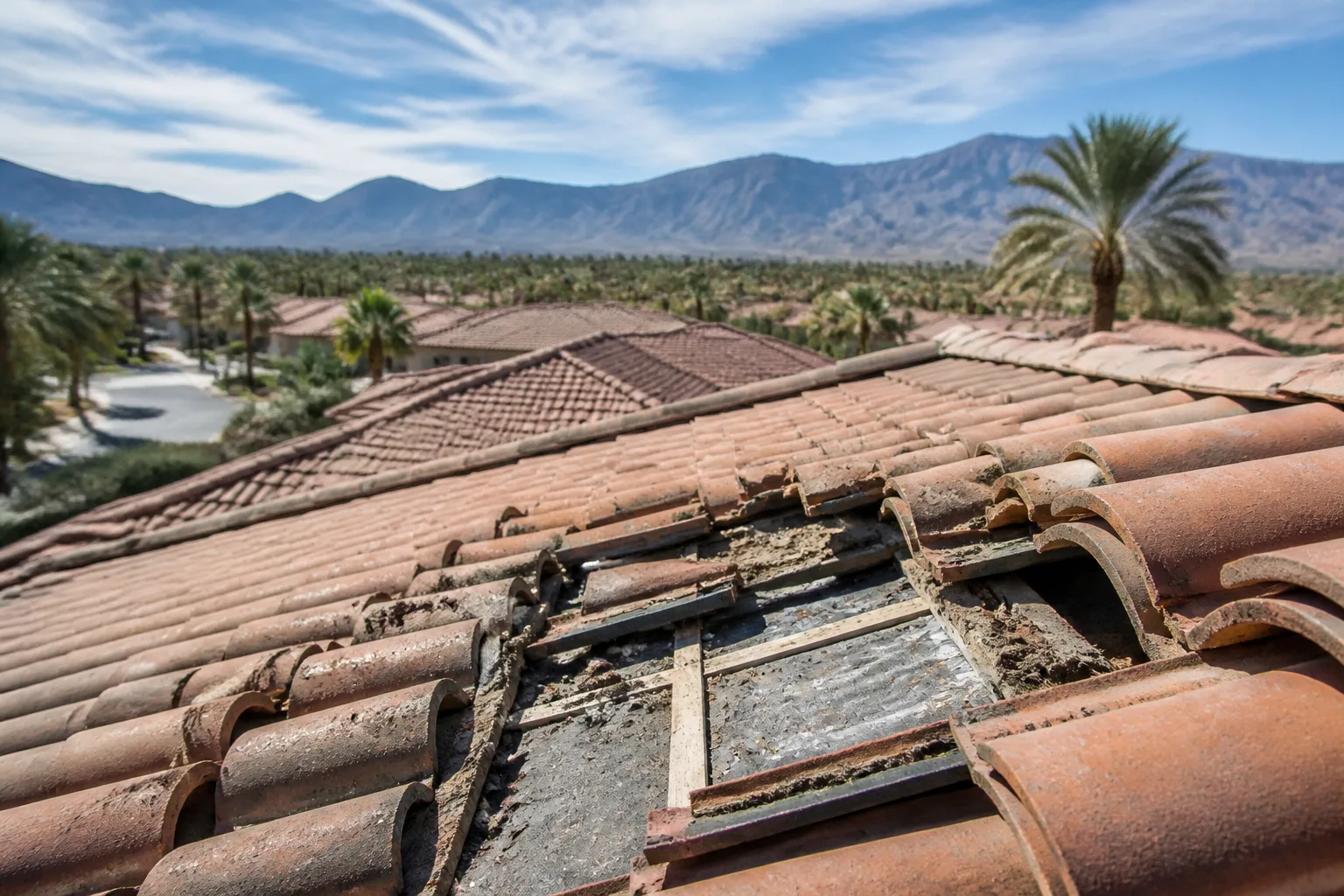
Tile is not shingle. A shingle roof flexes and forgives a careless boot; a concrete tile breaks under a concentrated load, often invisibly. The tile on top looks fine from the ground while the break runs underneath, spider-webbing toward the underlayment. That crack lets water in slow, then suddenly. By the time you spot a wet ceiling in your Paradise kitchen, the underlayment has been soaking for a season and a half.
What proper foot traffic looks like:
- Plywood walk boards laid across the field of tile, not over the ridge caps, distributing weight across several tiles at once.
- Feet on the boards, never on the tile for anything but a quick step. Two hands free, no reaching.
- Constant repositioning as the work moves. Boards that stay put too long crush the tile they’re protecting.
- A walk-around afterward checking for hairline cracks the eye misses from up close.
If you’re comparing bids, ask how the crew will walk your roof. A roofer who shrugs and says “we’re careful” hasn’t told you a thing. The answer you want involves boards by name. This is also the reason a repair that looked simple grows once someone opens it up: three cracked tiles under the one you knew about. A free second opinion on a written estimate is a cheap way to hear a second pair of eyes say whether the count makes sense. If the repair turns out bigger than a quick fix, our Roof Repair in Paradise page breaks down what’s involved.
Mistake #2: Trusting Caulk to Fix Mortar-Set Ridge Caps
Those ridge caps sitting on a bed of mortar at the top of your roof take a beating in Paradise. Daytime the tile and mortar push out in the heat; night the whole assembly pulls back in. That cycle runs every single day of the year here, and it cracks mortar faster than the tile itself ever wears out. So the mortar separates, the cap rides loose, and someone shows up with a tube of caulk.
Caulk is the wrong fix, and it’s the one that gets sold most. Here’s why it lets you down:
- Caulk moves differently than mortar. It flexes, the mortar doesn’t, so the caulk peels away at the seam within a season or two.
- It traps water. The crack you were trying to seal was letting some water escape. Cap it and that moisture sits against the tile bed.
- It hides the real problem. A loose cap means the mortar bed failed. The fix is a fresh mortar set, done with the right mix and refreshed on a tile roof exposed to Paradise heat.
A quick spot of caulk on a cracked cap is the roofer’s polite way of resetting the clock until it fails again. Do it right and a mortar-set ridge line holds for years. Do it lazy and you’ll be calling the same number again.
Mistake #3: Skimping on the Underlayment Weight
Here’s the piece almost nobody talks about: the tile is not the waterproofing. It’s a rain screen. The layer doing the real work is the underlayment underneath, and on a tile roof in desert heat it lives a hard life. The tile holds and radiates heat straight down onto it. Choose a thin, standard felt and the heat bakes it brittle years before the tile wears out.
When you re-roof a tile roof in Paradise, the underlayment choice is where quality gets won or lost:
- Standard 30-lb felt is the cheap floor. It will do a job, but under a thermal mass roof in this heat it ages fast.
- A tile-specific high-temperature underlayment is built for exactly this. It shrugs off the heat the tile radiates and outlasts the felt by a wide margin.
- Ask the bidder to name the product and its temperature rating in writing. If they can’t, that’s your answer.
Underlayment that fails first means the whole tile roof comes off to replace a layer nobody sees. We carry products from Boral, GAF, CertainTeed and Owens Corning, and the right high-temp membrane is not an upsell on a tile re-roof. It’s the part that keeps the roof dry. If you’re weighing a full re-roof against a repair, our Roof Replacement & Installation in Paradise page walks through what a proper tile re-roof includes.
Mistake #4: Mixing Clay and Concrete Tile on the Same Roof
Both are tile, so they should play together fine, right? They don’t. Concrete tile and clay tile expand at noticeably different rates as they heat and cool. In a Paradise summer that’s twice a day, every day. Mix them and every spot where one meets the other becomes a fighting match, and the loser cracks first.
This shows up in repairs more than you’d think. A small batch of replacement tile gets ordered to fix a storm break, and it’s the wrong material, or the wrong color match from a different maker. The contractor sets it anyway because it’s close, and the homeowner is happy from the ground. Two summers later the seams between the old tile and the new are cracking in a zigzag.
What to get right:
- Match the material type, not just the color. Concrete goes with concrete; clay goes with clay.
- Match the maker when you can. Boral makes tile in sizes and profiles that don’t always line up with a different brand’s.
- Blend the new tile in. Pull replacement tile from under the ridge or a hidden slope so the color difference reads as weathering, not patchwork.
- Keep a few spares. A dozen spare tile stored in the garage saves a hunt after the next hailstorm.
A good repair leaves the roof looking like it was never touched. Mixing materials leaves a map of every repair for the next owner to find.
Mistake #5: Ignoring the Valley Flashing Sizing
Paradise monsoons are not gentle. An inch of rain in under an hour turns every valley on the roof into a river, all at once. Valley flashing is the channel that river runs through, and on a tile roof it has to be sized for the worst hour, not the average drizzle. Undersized flashing overflows at the edges before it ever drains, and that water goes straight under the tile and into the house.
What goes wrong and how to catch it:
- The valley isn’t wide enough for the water volume a Paradise monsoon delivers. Water outruns the channel and backs up under the tile.
- The flashing is set too flat or with a low lip. It can’t move that volume out fast enough before it spills.
- The underlayment under the valley is the wrong weight or lapped poorly, so the moment the flashing fails, so does the ceiling below.
Valley flashing is easy to cover up and easy to get wrong. During an inspection, look for staining in the valleys, grit washing off the tile in channels, and any sign of lifting or rusting metal. Those are the telltales that your valley is losing the fight with Paradise storm volume. A contractor who knows tile but not desert weather won’t think to check it.
When to Call a Pro
You can handle the walk-around from the ground. If you spot cracked tile, water staining, loose ridge caps or grit washing down a valley, that’s our cue. Nobody should be up on a tile roof in Paradise heat without the right gear and boards, and a fall off a tile roof is a bad way to spend a summer. Our technicians have up to 30 years of experience with tile roofing, and we’ll show you the deck photos before we talk money. Call (833) 676-0557 for a free second opinion on any written estimate, and ask us the hard questions.
Related services in Paradise: Shepherd & Sons Roofing Paradise home for the full picture of what we do, Metal Roofing in Paradise if you’re weighing a switch from tile, and our repair page for anything that’s already leaking.
The Bottom Line
Tile roofing is a long-lived, low-maintenance roof when it’s installed and serviced right, and most problems come down to five things: bad foot traffic, caulk over mortar, cheap underlayment, mismatched tile, and undersized valley flashing. Get those right on your Paradise roof and it will last decades. Get them wrong and you’ll be chasing leaks you can’t see the cause of.
Here’s the short list to keep handy:
- Ask how the crew walks your roof. Boards, or nothing.
- Never caulk a cracked ridge cap. Reset the mortar.
- Insist on tile-specific high-temp underlayment, named on the bid.
- Match concrete to concrete, clay to clay, and blend the new tile in.
- Check the valleys after the first big storm. That’s where monsoons win.
At Shepherd & Sons Roofing Paradise, same address since 1996, a live person answers the phone when you call, and every job carries our written 90-Day Done Right Promise. One call brings Bill back. If you’re in Paradise and want a straight answer on your tile roof, we offer free estimates and no trip charge inside our own county. Call (833) 676-0557.
Frequently Asked Questions
A cracked tile from a careless walk often shows up as a leak or a wet ceiling six to eighteen months later, with no obvious cause from inside. Look for hairline cracks in the tile field, especially along a path where a worker would’ve walked, and for grit washed into a valley below. If you suspect hidden cracks, get an inspection that uses walk boards and checks the tile underneath, not just the surface.
Caulk is the wrong fix and it’s what most people get sold. Ridge cap mortar cracks under daily thermal cycling in Paradise heat, and caulk peels away from the mortar within a season or two. The right repair is a fresh mortar bed, reset with the right mix. Call (833) 676-0557 for a free estimate on a proper repair.
A tile-specific high-temperature underlayment, not standard 30-lb felt. The tile radiates a lot of heat onto the layer underneath, and cheap felt ages fast under thermal mass in desert heat. Ask the bidder to name the exact product and its temperature rating in writing. If they can’t, that tells you what you need to know.
It depends on how many tiles broke and how much is hidden under them, which is why we walk the roof before quoting. We’ll show you the deck photos and give a written line-item quote with no surprise numbers. Estimates are free, and we offer $40 off any repair over $200. Call (833) 676-0557 for a straight answer.
Written by the team at Shepherd & Sons Roofing Paradise.
Need Roofing Help?
Call Shepherd & Sons Roofing Paradise - licensed & insured, here with fast after-hours help in Paradise.
(833) 676-0557